

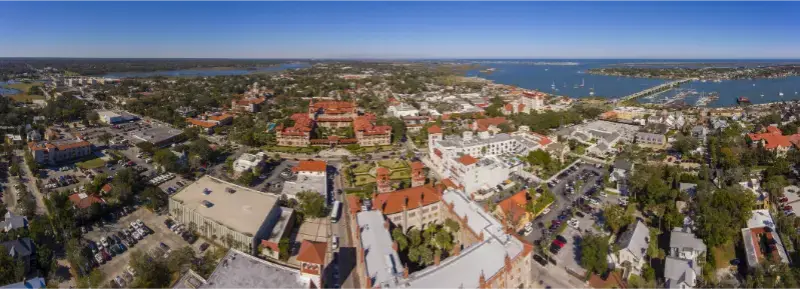
St. Augustine is one of the rare Florida destinations where the main attraction is not weather, beach or theme parks but layers of history you can walk through. Founded by the Spanish in 1565, it is widely recognized as the oldest continuously occupied European-founded city in the contiguous United States. Yet the city is more than a colonial postcard: Spanish fortifications, Gilded Age architecture, African American history, civil-rights landmarks, Flagler-era hotels and Atlantic beaches overlap within a compact area.
Two nights is the sweet spot for most first-time visitors. That gives you one full historic day and enough time for Anastasia Island or a slower museum morning. St. Augustine also fits naturally after Orlando; see our Orlando Travel Guide and Best Beaches in Florida for the wider route.
St. Augustine at a glance
| Question | Practical answer |
|---|---|
| How many days? | 1 full day minimum; 2 nights is much better. |
| Do you need a car? | Not in the historic core; useful for beaches and wider northeast Florida. |
| Best base? | Historic District for first visits; Anastasia Island for beach emphasis. |
| Top sight? | Castillo de San Marcos. |
| Best combination? | Historic core + Lincolnville/Flagler history + Anastasia Island. |
| Good from Orlando? | Yes, but overnight is far better than a rushed day trip. |
Why St. Augustine matters
St. Augustine’s story predates the familiar English-colonial narrative of the United States. Spanish Florida, Indigenous peoples, Africans—both free and enslaved—British rule, the return of Spain, U.S. territorial expansion and later Gilded Age tourism all left marks. Reading the city through those layers makes the visit much more rewarding than simply photographing ‘old streets.’
Castillo de San Marcos: start here
The coquina-stone fortress dominates the waterfront and is the strongest place to begin understanding the city’s strategic importance. Construction began in the 17th century after earlier wooden defenses proved vulnerable. Inside, exhibits and ranger interpretation explain military life, colonial power and the fort’s changing role under different flags.
As of 2026, the National Park Service lists standard adult admission at $15, valid for seven consecutive days, with children 15 and under admitted free. The site is cashless. Fees and operating details can change, so verify them before arrival. The city parking lot directly in front is convenient but limited; the municipal parking garage nearby often makes a simpler base for exploring on foot.
Walk St. George Street—but do not stop there
Pedestrian St. George Street is the most visited part of the historic core, filled with shops, restaurants and historic sites. Walk it once, but branch onto side streets and the waterfront. The city becomes more interesting when you move from commercial pedestrian blocks to residential architecture, old churches, plazas and fort views.
Cathedral Basilica and Plaza de la Constitución
The plaza is a geographic and historic anchor. Spend time here rather than crossing it only on the way to another attraction. The cathedral and surrounding civic buildings help illustrate the long continuity of Spanish, colonial and American public life.
Flagler College: understand the Gilded Age transformation
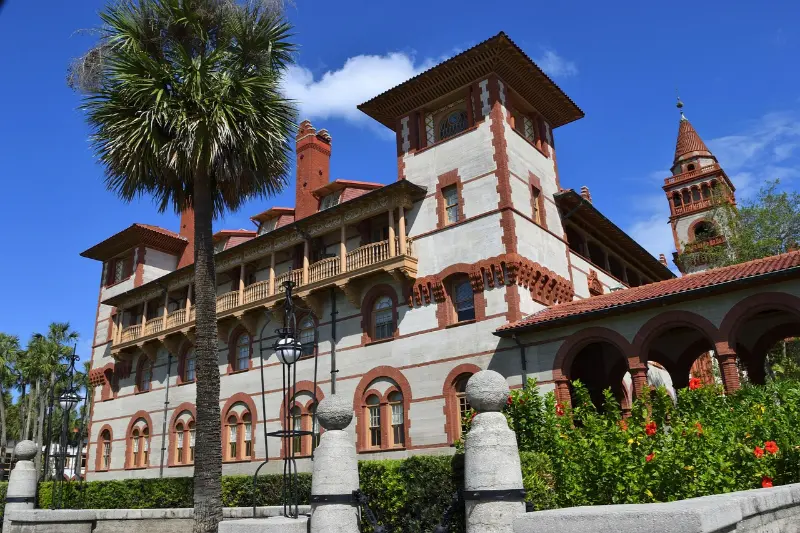
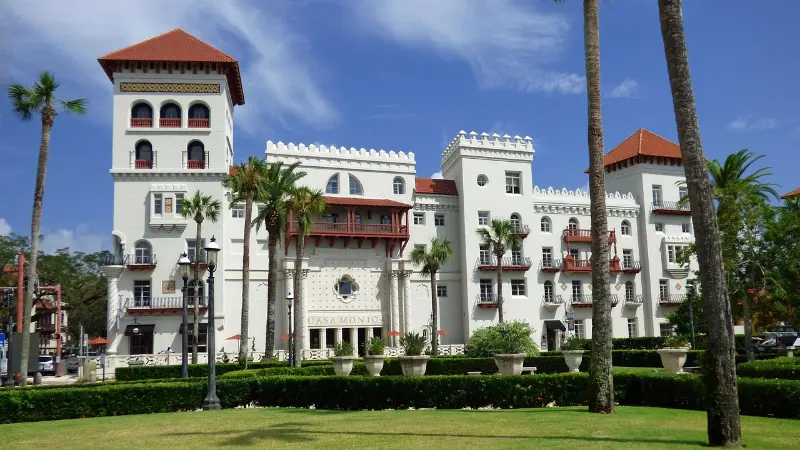
The former Ponce de León Hotel—now Flagler College—shows how St. Augustine was reinvented for wealthy winter travelers in the late 19th century. Henry Flagler’s railroad and hotels helped transform Florida tourism. A guided visit, when available, makes the architecture and stained glass far more meaningful than a quick exterior photo.
Lightner Museum and Alcazar history
Across from Flagler College, the Lightner Museum occupies another former Flagler-era resort building. Its collections can feel eclectic, but the building itself is a major part of the story. Visiting both sites creates a useful contrast with the much older Spanish city.
Lincolnville: civil-rights history many visitors miss
Lincolnville, founded after the Civil War by formerly enslaved people, is essential to a fuller understanding of St. Augustine. The neighborhood later played a major role in the Civil Rights Movement, including protests that drew national attention in 1964. Do not reduce this history to a quick sign-reading stop; seek museums, walking tours or interpretation that centers local voices.
Fort Mose: an even earlier African American story
Fort Mose Historic State Park commemorates the first legally sanctioned free African settlement in what became the United States, established under Spanish Florida. It adds a crucial dimension to the region’s history of slavery, freedom, empire and refuge. The site is outside the walkable core, so plan transport.
Anastasia State Park and St. Augustine Beach
After a history-heavy day, Anastasia Island provides dunes, Atlantic beach, paddling and a completely different pace. Anastasia State Park is the best choice for a nature-oriented beach day, while St. Augustine Beach has restaurants and a more conventional beach-town feel. If you have only one night in town, do not sacrifice the historic core for several beach hours unless sand is a major trip priority.
St. Augustine Lighthouse
The lighthouse and maritime museum on Anastasia Island combine coastal views with maritime history. The tower climb is physically demanding, so travelers with mobility, heat or height concerns should assess whether the museum grounds alone justify the visit.
A perfect 2-day St. Augustine itinerary
Day 1 — Historic St. Augustine
- Arrive early and park once near the historic core.
- Castillo de San Marcos before midday crowds and heat.
- Walk the waterfront, plaza and St. George Street.
- Lunch away from the busiest tourist block.
- Flagler College tour or Lightner Museum.
- Explore Lincolnville in the late afternoon.
- Dinner in the historic area and an evening walk after day-trippers leave.
Day 2 — deeper history + coast
- Fort Mose or another history-focused morning.
- Cross to Anastasia Island.
- Lighthouse or state park depending on interests.
- Beach time and an early dinner near the coast.
- Return to the historic core for a final evening if staying centrally.
Ghost tours: fun, history or both?
St. Augustine’s age and architecture make ghost tours popular. Treat them as entertainment informed by local stories, not as substitutes for serious history. A good guide can use legends to point out buildings and events you might otherwise miss; a bad one can flatten complex history into spooky anecdotes. Read recent reviews and choose the tone you want.
Where to stay
Compare available accommodation for your dates, budget and preferred location before you finalize your route.
- Historic District: best for first visits, evening atmosphere and parking the car once.
- Uptown / north of the core: quieter historic feel with walkability depending on exact location.
- Lincolnville: character, local dining and access to civil-rights history.
- Anastasia Island: best for beach-focused trips and families prioritizing space/pools.
- St. Augustine Beach: conventional beach vacation base with drives into the historic city.
Compare accommodation: compare hotels and other stays on Booking.com.
Do you need the trolley?
The hop-on/hop-off trolley can be useful for first-time orientation, hot days and visitors who prefer less walking. It is not necessary for healthy travelers staying centrally. A good compromise is one trolley loop for context, then exploring the compact historic core on foot.
Parking strategy
Driving block to block in the historic district is usually less efficient than parking once. The city’s Historic Downtown Parking Facility near the Visitor Information Center is a common starting point. The smaller lot in front of the Castillo can fill quickly and has vehicle-size restrictions. If your hotel includes parking, consider leaving the car there until you head to Anastasia Island.
St. Augustine with children
The fort, lighthouse, trolley and beach create a strong family combination. Keep museum time selective and alternate history with movement. Children who are bored after two indoor historic houses may become engaged again by cannon views, a lighthouse climb or sand.
St. Augustine in summer
Heat and humidity change the order of the day. Visit the Castillo and outdoor streets early, use museums or a long lunch in the hottest hours, then return outside later. Thunderstorms can temporarily close the Castillo’s upper gun deck; weather closures do not necessarily mean the entire fort is inaccessible.
Nights of Lights and holiday season
The winter Nights of Lights period transforms the historic core and attracts major crowds. It can be beautiful and festive, but hotel rates, traffic and parking demand rise. Book early if the lights are the purpose of the trip; avoid peak event weekends if you primarily want quiet historical exploration.
What most first-time guides leave out
- St. Augustine’s Black history is foundational, not an optional side note.
- The city has multiple historical eras; Spanish colonial architecture is only one layer.
- The best evening atmosphere arrives after many day-trippers leave.
- The beach is close enough to combine, but a beach-first hotel changes the entire trip rhythm.
- Parking once and walking is usually easier than trying to drive between attractions.
Useful official resources
- Castillo de San Marcos National Monument
- Castillo fees and parking information
- City of St. Augustine
- Anastasia State Park
- Fort Mose Historic State Park
Is St. Augustine worth adding to a Florida trip?
Yes, particularly because it prevents Florida from becoming one repeated vacation formula. After theme parks, beach resorts or South Florida, St. Augustine offers a city where the main pleasure is understanding how centuries of history accumulated in a small walkable place. Give it one night at minimum; two lets the city become more than a day-trip backdrop.
St. Augustine as a stop on a longer road trip
St. Augustine fits especially well between Orlando and coastal Georgia, or as the historic anchor of a northeast Florida trip with Amelia Island and Jacksonville. If you are driving north, spend the night rather than arriving for lunch and leaving before the city changes after dark. The compact historic core rewards an evening walk when shops are still open but tour buses have thinned out.
Food worth looking for
The city’s food scene reflects Spanish, Southern, coastal and Minorcan influences. Datil pepper appears in sauces and condiments, seafood is a natural choice, and historic dining rooms can be atmospheric. Do not assume the oldest-looking restaurant is automatically the best; use one heritage meal for context and spend another meal in Lincolnville, Uptown or on Anastasia Island to see a broader local scene.