

A Florida Panhandle road trip looks easy on a map: Pensacola, Navarre, Destin, 30A and Panama City Beach line up along the Gulf, often only an hour or two apart. That apparent simplicity is exactly why people rush it. The value of Northwest Florida is not the mileage; it is the contrast between a historic city, protected seashores, fishing towns, resort strips, coastal dune lakes and carefully designed beach communities. If you change hotels every night, you spend the trip moving luggage through beach traffic instead of understanding those differences.
This route is designed for roughly seven to ten days, with a shorter five-day option for travelers willing to choose fewer bases. It complements our Destin & Emerald Coast guide and statewide Florida Road Trip.
- 1Day 1: Pensacola historic core and waterfront
- 2Day 2: Pensacola Beach / Gulf Islands seashore
- 3Day 3: Navarre morning, continue to Fort Walton or Okaloosa Island
- 4Day 4: Destin beach + HarborWalk or fishing
- 5Day 5: Water experience or Henderson Beach, then move to South Walton
- 6Day 6: Grayton + Seaside + one eastern 30A community…
- 7Day 7: Panama City Beach / St
Panhandle road trip at a glance
| Trip length | Recommended structure |
|---|---|
| 5 days | Pensacola 1–2 nights + Destin/Okaloosa 1–2 + 30A/Panama City Beach 2. Skip side trips. |
| 7 days | Pensacola 2 + Navarre/Fort Walton 1 + Destin 2 + 30A/Panama City Beach 2. |
| 10 days | Pensacola 2 + Navarre 1 + Destin/Okaloosa 2 + South Walton/30A 3 + Panama City Beach 2. |
| 14 days | Slow the route down, add state parks, barrier-island time and an extra beach/weather day rather than more hotel changes. |
Where the route really begins
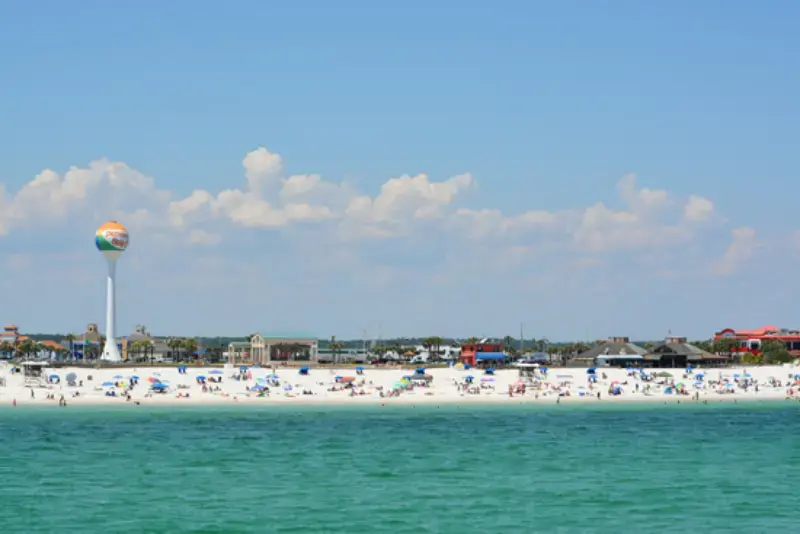
Pensacola is the strongest western starting point because it gives the trip history and urban texture before the beach towns. Its downtown and nearly 500 years of European-era history contrast with the resort corridor farther east. Pensacola Beach and the Gulf Islands National Seashore add the first long sand-and-dune landscape. If aviation interests you, the Naval Air Station area can add another layer, but public access rules can change, so verify them before planning the day.
Stop 1: Pensacola — 2 nights
Use the first afternoon for downtown and Palafox Street rather than racing to the sand. On the second day, cross to Pensacola Beach and spend time in the protected coastal environment beyond the busiest commercial section. A city-and-beach split makes Pensacola feel different from every later stop. If you arrive in summer, schedule outdoor history early and use the hottest part of the day for lunch or indoor museums.
Stop 2: Navarre — day trip or 1 night
Navarre is useful because it resets the pace. It is less famous internationally than Destin, and that is part of the appeal. The beach-and-sound setting suits travelers who prefer long sand walks, fishing and a quieter base. One night is enough for most road trips; two can work if the trip is deliberately slow. Navarre also breaks up the drive so that Destin does not become your first experience of the Emerald Coast.
Stop 3: Fort Walton Beach and Okaloosa Island
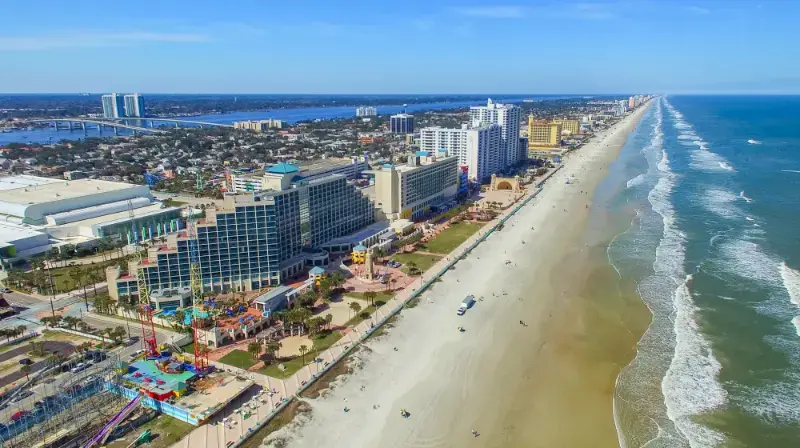
Fort Walton Beach provides a more everyday Gulf Coast town experience, while Okaloosa Island gives you beach access with Destin close by. Travelers who find Destin hotel prices or traffic frustrating should compare this area carefully. Staying west of Destin can also make the next morning easier if you want to visit a beach before driving east.
Stop 4: Destin — 2 nights
Destin earns two nights because one day can be water-focused and the other beach-focused. Use the Destin guide to choose between Henderson Beach State Park, Crab Island, fishing charters, HarborWalk and quieter alternatives. In 2026 Henderson Beach requires a day-use reservation, a good example of why road trips need live operational checks rather than a fixed printed checklist.
Scenic 30A is not just a road
County Road 30A is an officially designated scenic highway, and the signed scenic segment is about 19 miles. But the “30A experience” spreads across a broader network of South Walton communities. South Walton promotes 26 miles of Gulf shoreline and 16 beach neighborhoods, from Dune Allen and Grayton to Seaside, Alys Beach, Rosemary Beach and Inlet Beach. The point is not to photograph every town sign; choose two or three communities whose personalities are actually different.
Grayton Beach
Grayton is the best counterweight to the more manicured towns. It has a looser, older beach-town character and strong access to state-park nature. If you like outdoor time, art and a less polished atmosphere, give Grayton more time than Seaside.
Seaside and WaterColor
Seaside is architecturally influential, compact and highly photogenic, but it can feel more like a destination within a destination than a conventional Florida town. Visit early morning or late afternoon if you want to see the streets without peak crowds. WaterColor next door extends the polished resort environment.
Alys Beach and Rosemary Beach
Alys and Rosemary are design-forward and walkable, appealing to travelers who enjoy architecture, food and boutique lodging. They are not “secret Florida.” Prices can be high, and some beachfront access is tied to accommodations. South Walton maintains an interactive access map that distinguishes public and private areas; check it before assuming a famous town name guarantees public beach access.
The access issue most road-trip guides underplay
Along parts of South Walton, the difference between seeing the Gulf and having convenient public beach access matters. More than 50 bay and beach access points exist, but amenities vary, and some resort/community beach areas have access restrictions for guests. Build the beach plan around a confirmed public access with parking, restrooms or tram options instead of picking a beach by Instagram photographs alone. In peak season, park-and-ride or beach-tram options can be far less stressful than circling residential streets.
Stop 5: Panama City Beach — 1 to 2 nights
Panama City Beach provides a more developed finale with broad beaches, family attractions and easy access to protected areas such as St. Andrews State Park. One night is enough if you mainly want a final beach stop; two lets you add boating, shell-island access or a slower state-park morning. If your flight leaves from Northwest Florida Beaches International Airport, ending here can also reduce backtracking.
Best airports for an open-jaw trip
- Pensacola International (PNS): best western gateway.
- Destin–Fort Walton Beach (VPS): practical for the central Emerald Coast.
- Northwest Florida Beaches International (ECP): useful for Panama City Beach/South Walton and a one-way itinerary.
- Compare one-way rental-car fees before assuming an open-jaw route saves money. Sometimes the airfare and car drop fee erase the time advantage.
A 7-day itinerary
- Day 1: Pensacola historic core and waterfront.
- Day 2: Pensacola Beach / Gulf Islands seashore.
- Day 3: Navarre morning, continue to Fort Walton or Okaloosa Island.
- Day 4: Destin beach + HarborWalk or fishing.
- Day 5: Water experience or Henderson Beach, then move to South Walton.
- Day 6: Grayton + Seaside + one eastern 30A community; do not try to “collect” all 16 neighborhoods.
- Day 7: Panama City Beach / St. Andrews State Park and departure or extra night.
When to take this road trip
Late April through May and late September through October often provide a good balance of warm weather and fewer peak-summer crowds, but shoulder seasons still have event weekends and hurricane risk in fall. June through August brings the hottest temperatures, family demand and frequent afternoon storms. Winter is peaceful and often inexpensive, but this should be treated as a coastal sightseeing trip rather than guaranteed swimming weather.
Road-trip mistakes to avoid
- Changing hotels every night because the distances look short.
- Assuming every pretty beach neighborhood has simple public parking.
- Ignoring beach flags and lightning because the Gulf looks calm.
- Planning outdoor stops at noon in July instead of using mornings and evenings.
- Booking a nonrefundable late-summer itinerary during hurricane season.
- Treating US 98 drive times as fixed during peak-season traffic.
What makes the Panhandle different from South Florida
Northwest Florida is culturally and geographically closer to the Gulf South than Miami. The seasons feel more pronounced, the road-trip pace is slower, the beaches are dominated by pale quartz sand, and many travelers drive in from Alabama, Georgia, Tennessee and the Midwest. If you expect tropical Keys scenery, you will be looking for the wrong thing. The Panhandle’s identity is Gulf water, dunes, pine forest, fishing and small communities arranged between military, state-park and resort landscapes.
Panhandle road trip FAQ
- Is 30A worth it if you already stay in Destin? Yes if you care about architecture, cycling, smaller communities and state-park nature; less essential if your priority is boating and resort amenities.
- Can you do Pensacola to Panama City Beach in one day? Yes as transportation. No if the goal is a meaningful road trip.
- Do you need a 4WD vehicle? No for the standard route. Use a normal rental car unless a specific activity has separate vehicle requirements.
- Is the Panhandle good for children? Very. The easiest family version uses two or three bases and prioritizes beach access over constant sightseeing.
- What should you check daily? Beach flags, radar, access/parking rules and any park reservation requirements.
What to pack differently for the Panhandle
Bring a light layer outside midsummer because Northwest Florida can feel surprisingly cool behind cold fronts, especially in winter and early spring. Water shoes are optional on sandy beaches but useful for paddling. A compact cooler, refillable bottles and a beach shade system save money across multiple stops. Keep a small overnight bag accessible so you do not unpack the entire car at every short stay.
A note on coastal dune lakes
South Walton is one of the few places in the world known for coastal dune lakes—shallow freshwater lakes near the Gulf whose outlets can periodically connect with the sea. They are an excellent reason to kayak or visit state-park landscapes rather than spending every hour on open beach. Treat them as fragile ecosystems: use established access, avoid trampling dunes and follow local water-quality or wildlife notices.
Looking for the right place to stay? Compare hotels and accommodation on Booking.com.