

The South Rim is easier to enjoy when you stop treating its overlooks as a checklist. One stretch of path can reveal several different canyons within the canyon: a narrow cleft below your feet, a broad terrace farther out, and distant walls fading toward the horizon. Walking slowly between a few places often tells you more than repeatedly finding another parking space.
There are three useful areas to understand: the visitor center and village, Hermit Road to the west, and Desert View Drive to the east. Each asks for a different kind of day. This guide puts those pieces together, with current access notes, realistic overnight choices, and options for travelers who want the scenery without a strenuous descent.
Compare available accommodation for your dates, budget and preferred location before you finalize your route.
First check: lodging, trails, and the date of your visit
The South Rim is open for daytime visits, but its accommodation situation needs a separate check. On October 18, 2026, the authorized concessioner's website still carries a park-lodging closure alert linked to Stage 4 water restrictions. Lodging in Tusayan is described as remaining open. Confirm the operation of your chosen property for your dates before arranging a nonrefundable trip around it.
For walking, use the dedicated current trail bulletin. Bright Angel is open only to Mile-and-a-Half Resthouse before a temporary closure toward Havasupai Gardens, listed through October 22. Other inner-canyon closures remain in effect. These are dated conditions, not permanent descriptions of the trails. Keep your sightseeing and any below-rim hiking plans distinct so a trail restriction does not unsettle the entire visit.
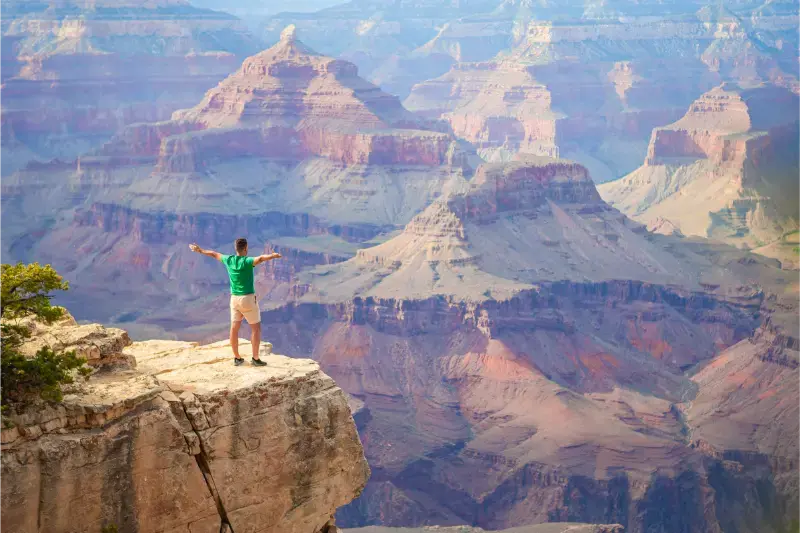
Eastern viewpoints need attention too. Desert View Drive's official page lists Lipan Point and its access road closed through December 23, 2026 for rehabilitation. Select open viewpoints and allow staff instructions to override a saved itinerary. With so much to see from the rim, there is little reason to build a day around entering a closed area.
Arrive with one first stop in mind
If you enter through the South Entrance, the visitor center area is a practical starting point for understanding the layout. Park once, locate the services you need, and make your first view at Mather Point. There may be people gathered at the most obvious railings; give yourself a little time to settle before deciding the entire rim feels crowded.
Entrance queues and full parking areas can affect arrival. An early start helps, but it is not a reservation for an empty park. Keep water, a snack, sun protection, and any necessary layers accessible in the car rather than buried in luggage. If you are arriving after a long drive, a modest first outing is enough. Save the more elaborate shuttle plan for a rested morning.
Coming from Page or the northeast, Desert View may be your natural first encounter. That entrance places you at the eastern end of the developed South Rim, with a scenic drive still ahead before the village. Do not estimate your hotel arrival from the gate alone. The stops you wanted along the way are part of the journey and need their own time.
Mather Point, Yavapai, and the value of a short rim walk
Mather Point gives a broad introduction. Then choose a manageable section toward Yavapai, checking the surface, weather, and return plan for your group. The pleasure lies in changing perspective: a formation that looked like a single wall separates into ridges, while a side canyon becomes visible where the first viewpoint suggested only shadow.
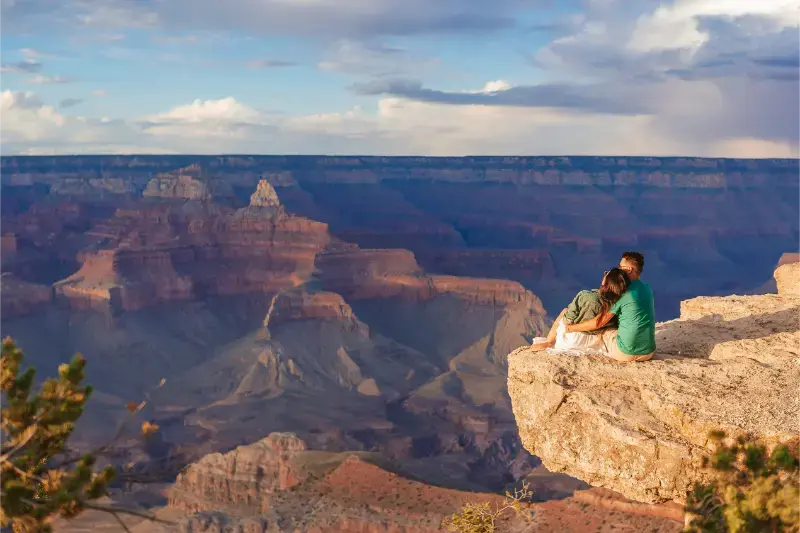
At Yavapai, geological interpretation can help turn those patterns into something you can recognize. Check the museum's visitor information for current opening arrangements before depending on an indoor stop. Even if you are not usually a museum traveler, this is a useful place to slow down and begin reading the view. Allow time outside afterward to look again with that context in mind.
Choose a turnaround that leaves the group comfortable. You do not need to complete the entire Rim Trail, which extends far beyond a casual introductory walk. A short section followed by lunch and another viewpoint can be a full morning. For wheelchair users or anyone needing a smoother route, identify the particular accessible segment and facilities rather than assuming all rim paths are equivalent.
Grand Canyon Village: include the human story
The village adds architecture and the history of tourism to the natural setting. Walk the public areas at a pace that allows you to notice how buildings meet the rim. Think about the contrast between the relative comfort of the developed area and the demanding terrain immediately beyond it. Interpretation can make a village visit more than a stop to buy provisions.
Historic lodging names appear frequently in travel planning, but current operations come first. A building’s exterior, restaurant, public areas, and overnight rooms may have different access arrangements. Confirm a specific service instead of assuming that one open doorway means the whole property operates normally. The NPS accommodation information is a useful starting point alongside the operator’s notices.
Make food part of the schedule. A proper pause gives everyone a chance to decide what they still want to do. If the group is tired after the first walk, an easier afternoon at selected overlooks may be better than adding a hike. If a restaurant matters to you, check reservations and hours before leaving the village for a long shuttle outing.
Hermit Road: use the bus to create a good half-day
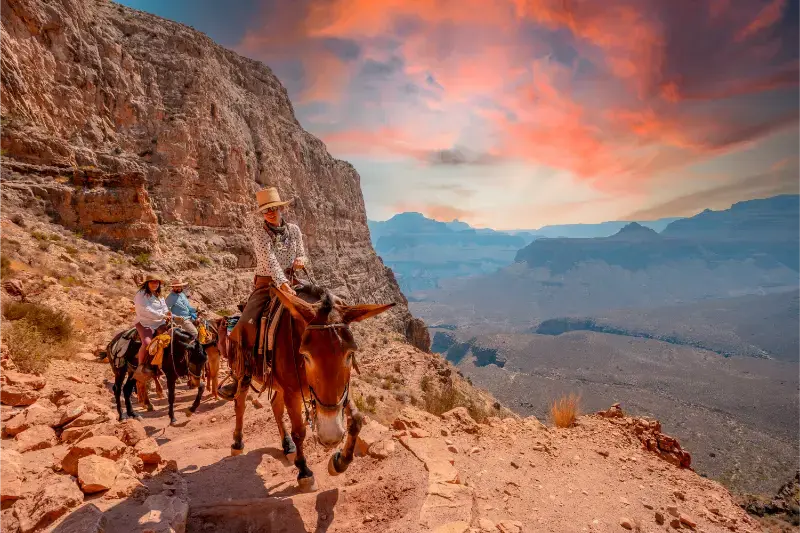
Hermit Road lies west of the village. During the main shuttle season, most private vehicles cannot use it, so think in terms of the Red Route and selected walks between stops. The fall 2026 shuttle page lists the Red, Orange, Blue, and early Hikers’ Express services; the Tusayan Purple Route is closed at this check. Recheck the system for your own travel dates.
A rewarding plan might use two or three overlooks with time at each, rather than boarding and leaving at every stop. Read the route’s directional stopping pattern before choosing a one-way walk; not every stop serves both directions in the same way. Include queue time and the return to the village. You will enjoy the views more without mentally chasing the next bus throughout the outing.
Hopi Point and other well-known overlooks may attract company around evening light. Decide whether you want that shared experience or a quieter moment earlier in the day. If staying for sunset, know the final return arrangements and carry a warm layer. Do not leave the transport question until the sun has disappeared and the group is cold.
Desert View Drive: leave space between the stops
The eastern drive connects the village area with Desert View. Unlike Hermit Road during its restricted season, it normally allows private vehicles, subject to conditions and local restrictions. Grandview, Moran, and Navajo Point offer possibilities, but you can select a few according to your time. Yaki Point has separate access restrictions and is not simply another drive-up stop on the road.
The Desert View visitor page is worth checking for current services. At this review, the market and trading post are scheduled to close for winter on October 19, 2026. Bring food and water if traveling beyond that point. The Watchtower’s upper levels have capacity and ticket arrangements, distinct from access to the surrounding overlook; an arrival late in the day may not include a climb.
Desert View can pair well with an onward journey toward Page. Keep the day honest, though: a scenic drive with several walks and a cultural stop takes longer than the road mileage suggests. If your Page tour has a fixed check-in the same afternoon, you may end up hurrying through both places. A morning departure with a flexible arrival is more forgiving.
Choose rim walking or a descent for its own merits
A rim walk keeps the horizon open and gives you frequent opportunities to stop or shorten the outing. Below the rim, the rock closes around you and the route begins with downhill effort. That difference is appealing, but it also changes the planning. The return climb can be slow, hot, and more demanding than expected.
If you want a descent, research one route in detail before the visit. South Kaibab has exposed scenery and shuttle access; Bright Angel has a different alignment and currently restricted access. Neither should be added casually after a tiring sightseeing morning. Our hiking guide focuses on those decisions. Do not interpret a short distance on a map as proof that a trail suits your group.
You can also make the South Rim a walking holiday without descending. Use shorter sections on different days and observe how light changes familiar formations. That approach is particularly useful for mixed groups, with some travelers happy to walk farther while others prefer a nearby viewpoint. Agree on meeting places and timing before separating, and do not assume phone reception will solve every coordination problem.
A one-day plan with a clear center
With one full day, begin around Mather and Yavapai, include a selected rim walk, and take a proper break. Spend the afternoon in either the village and Hermit Road area or along the eastern drive. Choose according to what matters most: shuttle-linked overlooks and walking to the west, or an independent scenic drive and Desert View to the east.
This leaves some locations for another visit, which is a reasonable outcome. Trying to see every sector can turn the day into transport. A short descent would replace part of that sightseeing plan rather than fit invisibly on top. For a family, choose the day’s strongest experience and let the remaining time respond to energy and weather.
With two days, separate the western and eastern areas. Use one morning for walking or a carefully planned hike, and keep the other less demanding. Weather can then influence the order without undoing the whole trip. An extra morning is also useful if the canyon was hazy, windy, or difficult to see on arrival.
Where to sleep and what to include in the quote
Tusayan is the closest outside-park comparison for many South Entrance visits. Check the actual property, breakfast arrangements, parking, cancellation terms, and total including tax. You still need to enter the park and reach the day’s starting point, so allow time for the gate and parking. A hotel address near the entrance is not an assurance of immediate access to the rim.
Williams can appeal for a town stay and railway-related plans; Flagstaff adds a larger high-country base. Both require more travel for repeated South Rim visits. Compare them with your whole route rather than the nightly rate alone. If the canyon is the central experience, a closer night may be worth more than amenities you will scarcely use after a long return drive.
Under normal operations, in-park accommodation offers different advantages, from village proximity to a setting farther back among trees. These are future comparisons until operations and availability are confirmed. Preserve a flexible reservation while notices remain in force. For current fees, consult NPS admission information; qualifying pass coverage and nonresident rules may alter the total for your party.
Finish with a little room in the day
Check local forecasts, carry the layers you need, and download the route map before arriving. Winter ice, summer storms, and strong sun can change which plan feels comfortable. Keep the last part of the day relatively simple, especially if a substantial drive follows. Enjoying the canyon should not depend on using every minute of daylight.
Before leaving, you might return to one viewpoint you liked earlier. The familiarity can be more satisfying than one final new stop. Look for a ridge that has moved into shadow or a band of rock that catches warmer color now. A South Rim visit becomes memorable through that kind of attention, even when the itinerary on paper looks pleasantly modest.
Compare the options
| Choice | What it offers | Planning detail |
|---|---|---|
| Visitor center and village | First view, selected rim walk and interpretation | Park once when practical |
| Hermit Road | Western overlooks with seasonal shuttle access | Check direction and final return |
| Desert View Drive | Eastern drive with selected stops | Lipan Point is currently closed |
| Two days | Separate western and eastern outings | Keep weather flexibility |
Find your bearings
Open the map in a new tab · Orientation map; use the official local map for trail access and closures.
Frequently asked questions
Can I drive Hermit Road whenever I want?
No. Most private vehicles are restricted during the main shuttle season. Check current exceptions, dates and weather notices.
Is Desert View a separate hotel area?
No overnight hotel lodging is available at Desert View. Campground access has its own seasonal arrangements.
Can I assume every rim path is wheelchair accessible?
No. Confirm the specific section, grades, surfaces, facilities and weather conditions.
Plan the next part of your trip
- Grand Canyon National Park Travel Guide: South Rim, North Rim & Planning Tips
- Grand Canyon Hiking Guide: Best Trails for Every Level
- 7 Days in Arizona: The Best First-Time Itinerary
Arrange your stay and activities
Some booking links below are affiliate links. We may earn a commission if you book through them.
Compare stays: Grand Canyon South RimBrowse tours and experiencesCompare rental cars
Match the location, meeting point and cancellation terms to your itinerary before booking.
Official sources and visitor information
- Delaware North: current South Rim lodging operational alert
- Grand Canyon: October 15, 2026 trail closures and water bulletin
- Grand Canyon: Desert View Drive and Lipan Point closure
- Grand Canyon: Yavapai Museum of Geology
- Grand Canyon: overnight lodging closure notice and alternatives
- Grand Canyon: fall 2026 shuttle routes and road restrictions
- Grand Canyon: current Desert View services and Watchtower access
- Grand Canyon: entrance fees, annual passes and nonresident charges
Last updated: October 18, 2026.