

Destinations › Pacific USA › Alaska travel guide › Skagway Travel Guide: Klondike History, White Pass & Smarter Port Planning
Skagway is easy to underestimate because so many visitors see it on a cruise schedule. The compact downtown is genuinely walkable, but its value is larger than a few restored storefronts: this is where Klondike Gold Rush history, the White Pass transportation corridor, the ghostly remains of Dyea and some of Southeast Alaska’s most dramatic mountain access all meet within a small area.
The best visit starts by deciding whether you are treating Skagway as a six-hour port call or as a two-night base. Day visitors need a strict order of priorities because summer cruise days can be extremely busy. Overnight travelers gain something different: quieter streets after ships depart, more flexibility for weather and time to explore Dyea or a trail without racing a departure clock.
Skagway Travel Guide at a glance
| Best for | Gold Rush history, mountain scenery, rail journeys, walkable heritage and cruise-port extensions |
| Ideal stay | 1 night for a deeper port visit; 2–3 nights for Dyea, hiking or a slower Southeast itinerary |
| Main access | Cruise ship, Alaska Marine Highway, air, or road through Canada and the Klondike Highway |
| Car useful? | Not for central Skagway; useful if you are driving the Klondike Highway or visiting beyond town |
| 2026 detail | The international Chilkoot Trail border crossing is closed; overnight permits apply on the U.S. side during the permit season |
Start with the Klondike story before taking the train
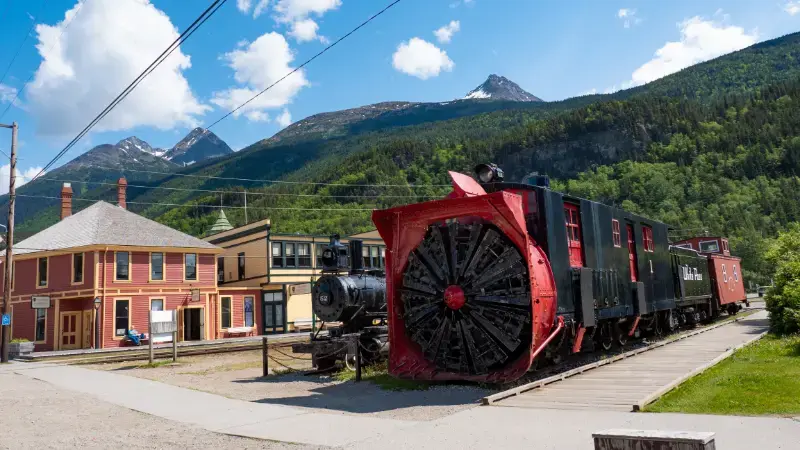
The National Park Service protects much of the historic core through Klondike Gold Rush National Historical Park. The visitor center is in the old White Pass & Yukon Route depot at 2nd and Broadway, which makes it the logical first stop. A short orientation here helps the false-front buildings, railroad infrastructure and surrounding passes make sense as parts of one story rather than separate attractions.
The strongest way to use downtown is to alternate preserved buildings with the larger landscape. The boomtown existed because tens of thousands of people were trying to reach the Yukon goldfields. Once you understand the logistical challenge—supplies, passes, weather and transport—the town’s scale becomes more interesting. In summer 2026, the NPS visitor center is open daily from May through September, with October opening tied to cruise-ship days; always recheck hours before arrival.
Treat the White Pass route as landscape and history, not only an excursion
The White Pass corridor is one of the reasons Skagway feels different from other Southeast ports. Whether you experience it by rail or road, the route climbs quickly from tidewater into steep valleys and subalpine terrain. The appeal is not simply “taking a scenic train”; it is seeing how engineering solved the same geographic obstacle that shaped Gold Rush travel.
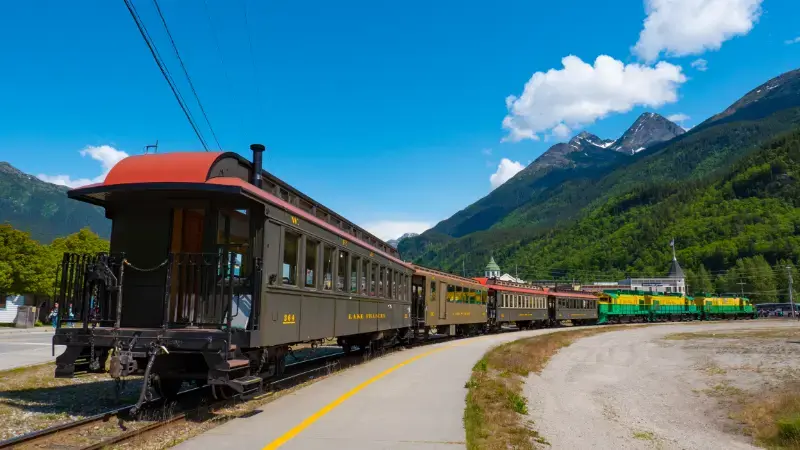
Weather changes the experience. Low cloud can hide the highest views while creating moody waterfalls and forest scenery closer to town. If the mountain panorama is your priority, avoid scheduling every other activity around an exact photograph you saw online. On a cruise call, leave a comfortable buffer between an independently booked excursion and all-aboard time; on an overnight stay, put the weather-dependent mountain outing on the day with the better forecast.
Know the 2026 Chilkoot Trail rules before planning around the famous crossing
The Chilkoot Trail is historically international, running about 33 miles from Dyea toward Bennett in British Columbia, but 2026 is not a normal through-hike year. The National Park Service states that hikers may use the U.S. or Canadian sides only and must turn around at the international border; crossing the border via the trail is illegal in 2026. That is a major planning detail, not a footnote.
For overnight hikers on the U.S. side, a validated permit is required during the June 1–September 12 permit season, camping is limited to designated campgrounds, and the group must attend a mandatory safety orientation at the Chilkoot Trail Center in Skagway. If the Chilkoot is central to your trip, build the itinerary from the current NPS instructions first, then book accommodation and transport around those rules rather than relying on older trip reports.
Visit Dyea for the quieter half of the Gold Rush landscape
Dyea is one of the best ways to understand why Skagway deserves more than a commercial downtown walk. The former boomtown stood at the head of the Taiya River valley and served travelers using the Chilkoot route. Today the experience is much quieter: forest, tidal flats, traces of the old settlement and trail access replace the concentrated storefronts of Broadway.
Dyea works especially well for travelers with an overnight stay because transport takes time and services are limited. Treat it as a landscape-and-history excursion, not a place where you will find a dense attraction list. Carry what you need, respect private and protected areas, and check current road and trail conditions after heavy rain. Pairing downtown Skagway in the morning with Dyea later gives a much more complete sense of the area.
Use the cruise-ship rhythm to your advantage
Skagway can receive very large numbers of cruise visitors on peak summer days; the National Park Service notes that the town may see up to roughly 11,000 visitors in a day. That means crowd management is part of good planning. If you are staying overnight, do your most popular downtown stops early or after late-afternoon departures and use midday for a trail, Dyea or a longer excursion.
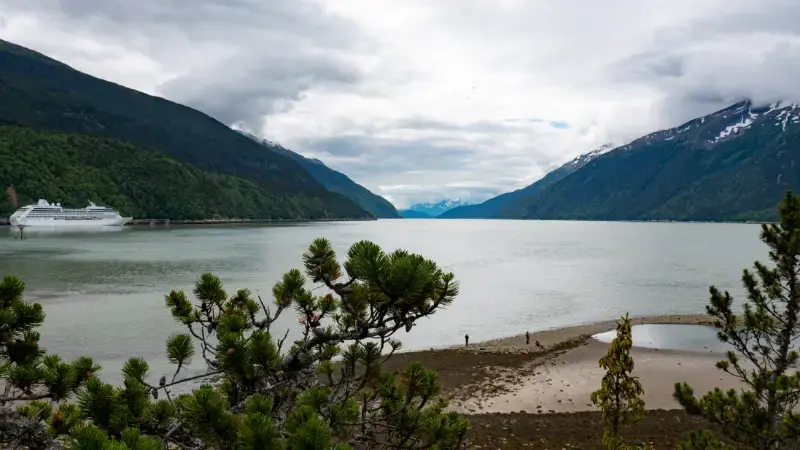
If you are arriving by ship, reverse the logic: choose one anchor experience first, then fit a focused historic walk around it. Trying to combine a long rail trip, multiple museums, shopping, a distant hike and a restaurant lunch often turns the day into clock-watching. A stronger port day has one major excursion, one historical layer and one flexible block close to the docks.
Add a short hike instead of forcing a wilderness day
Skagway is surrounded by steep terrain, but a worthwhile hiking day does not require a backcountry expedition. Shorter local options can provide forest, water and elevated viewpoints while keeping you close enough to town for an afternoon museum visit or ship departure. Trail surfaces can be wet and roots slick even when downtown feels dry, so footwear matters more than mileage suggests.
For longer hiking, the planning standard changes quickly. Weather can shift, daylight does not remove the need for turnaround discipline, and some routes leave easy rescue access behind. Check current conditions locally, carry layers and water, and do not treat a cruise timetable as compatible with a hike that has uncertain travel time.
Where to stay in Skagway
Compare available accommodation for your dates, budget and preferred location before you finalize your route.
Downtown is the easiest choice for travelers arriving by ferry, rail or ship because the historic district, restaurants and many tour departures are close together. A central room also lets you enjoy the town after day-trip traffic falls away. If you are traveling with a car, parking and road access may matter more than being on the busiest block.
Before paying a premium, check whether your plan actually needs two nights in town. One night can transform a cruise-style visit by giving you an evening and early morning without crowds; two or three nights make more sense when Dyea, hiking or the Chilkoot corridor is a core goal. You can compare Skagway accommodation on Booking.com and then compare the exact location against your planned departure points rather than choosing by hotel name alone.
How to fit Skagway into a Southeast Alaska itinerary
Skagway combines naturally with the Inside Passage, Juneau and nearby Haines. The Alaska Marine Highway can be part of an independent itinerary, but ferry frequency is not designed around a daily tourist circuit, so build from the published schedule. Road travelers can also connect Skagway to the Yukon via the Klondike Highway, which makes the town unusual among Southeast communities.
A practical independent sequence is Juneau or Haines first, then Skagway for one or two nights, followed by a road continuation into the Yukon if that is part of the larger trip. For cruise travelers, Skagway works best when you use your limited port time to do something difficult to replicate elsewhere, especially the Klondike landscape and White Pass corridor.
Practical planning checklist
Skagway is at its best when the day connects history to geography. Instead of treating downtown, the railroad and Dyea as separate boxes, use them to understand why this narrow valley became a transportation bottleneck during the Gold Rush and why it remains one of Alaska’s most memorable gateways today.
- Check the Klondike Gold Rush National Historical Park for current visitor-center hours, Chilkoot permits, trail alerts and 2026 border restrictions.
- Download your ship, ferry or transport schedule before leaving reliable mobile coverage.
- Carry a waterproof layer even if the morning is clear; mountain weather can change faster than downtown plans.
- If driving into Canada, verify border documents and rental-car rules before departure.
- Keep your final hour in port close to the ship or ferry terminal rather than on the far side of an uncertain transfer.
Continue planning your Alaska trip
Continue with our Inside Passage guide, Ketchikan, Sitka and Juneau. If your Alaska trip also includes the road system, use the Alaska Railroad guide and best time to visit Alaska guides to decide where Southeast Alaska fits in the larger itinerary.