

Destinations › Pacific USA › Alaska travel guide › Haines Travel Guide: Chilkat Eagles, Scenic Roads & Quieter Southeast Alaska
Haines is one of Southeast Alaska’s most useful “slow down” stops. It sits close enough to Skagway and Juneau to fit into an Inside Passage trip, yet it feels less engineered around a single cruise-day rush. The town combines a working harbor, Tlingit and frontier history, arts, access to the Chilkat Valley and one of Alaska’s most famous bald-eagle habitats.
The key planning advantage is that Haines is both maritime and road-connected. You can arrive by ferry or air, but unlike many Southeast communities you can also drive north into Canada and connect with the Alaska Highway. That makes Haines valuable not only as a destination but as a hinge between an Inside Passage itinerary and a longer road trip.
Haines Travel Guide at a glance
| Best for | A quieter Southeast base, bald eagles, scenic drives, local culture and outdoor time |
| Ideal stay | 2–3 nights; longer for hiking, fishing or a road-and-ferry itinerary |
| Access | Road, air and water; Haines is about 45 miles from the U.S.–Canada border |
| Wildlife highlight | Alaska Chilkat Bald Eagle Preserve, with the largest concentrations in late fall and early winter |
| Trip role | A flexible link between the Inside Passage and the Alaska Highway/Yukon corridor |
Understand why Haines feels different from nearby ports
Haines receives cruise traffic, but its geography spreads visitors across the waterfront, historic areas, the highway corridor and outdoor sites. The result is a town where a two-night stay can feel meaningfully different from a port call. You have time to see the harbor at working hours, visit museums without rushing and drive into the Chilkat Valley when weather and light are better.

This slower rhythm is the main reason to choose Haines over adding another short stop. If your itinerary already includes busy Ketchikan or Skagway days, Haines can provide contrast. It is especially strong for travelers who value scenery and wildlife but do not want every experience packaged as a timed excursion.
Make the Chilkat Bald Eagle Preserve a seasonal decision
The Alaska Chilkat Bald Eagle Preserve is not equally dramatic every month. Travel Alaska notes that eagles use the area year-round, but the extraordinary concentrations occur from October through February, when salmon and open water attract thousands of birds. The main viewing corridor lies along the Haines Highway, with posted pullouts, interpretive features and river views.
In summer, the preserve still matters, but expectations should change. You may see eagles and other wildlife, and guided river or road outings can add interpretation, yet the famous mass gathering is a late-fall and early-winter phenomenon. This distinction is important because many summer visitors arrive expecting the photographs they have seen from November.
Drive the Haines Highway even if wildlife is not the only goal
The road north from Haines is one of the town’s signature experiences because it moves quickly from coastal settlement into a broad river-and-mountain landscape. The preserve lies along this route, but the drive is worth doing for scenery alone. If you continue into Canada, the road ultimately connects toward Haines Junction and the Alaska Highway network.
Plan the drive with border logistics in mind. A simple local scenic outing may stay entirely in Alaska, while a longer day requires passports or other appropriate travel documents and enough time for border formalities. Do not let a mapping app turn an international scenic drive into a casual “one-hour detour” without checking current conditions and return timing.
Use Haines museums to add context, not as rainy-day leftovers
Haines has a stronger cultural layer than many quick itineraries suggest. Local museums and heritage sites explain the Chilkat Valley, Tlingit history, pioneer settlement, art and the region’s relationship with wildlife. Spending even a couple of hours indoors can make later drives and river views more meaningful because you recognize why the valley has supported both communities and wildlife for generations.
This is particularly useful on mixed-weather days. Instead of canceling an outdoor plan and defaulting to souvenir shopping, pair a museum block with a shorter drive or harbor walk. Southeast Alaska weather often arrives in bands, so a flexible indoor/outdoor schedule can preserve the day.
Plan wildlife viewing with distance and habitat in mind
Haines is excellent wildlife country, but that does not make every roadside sighting safe. Eagles concentrate where food is available, and bears may also be present around salmon streams and other productive areas. Use designated pullouts, do not block the highway, and never approach an animal because another visitor appears to be closer.
The preserve itself exists to protect critical habitat as well as viewing opportunities. Staying in designated areas reduces stress on birds and keeps people out of river margins where surprise encounters are more likely. For specialized wildlife photography, a local guide can be more valuable than simply carrying a longer lens because timing, access and behavior matter as much as equipment.
Choose outdoor time based on conditions, not a fixed checklist
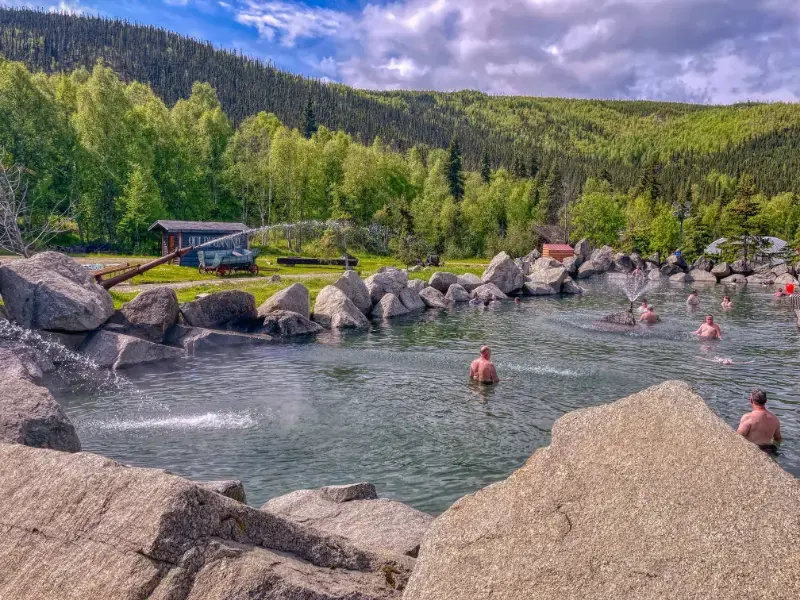
Summer in Haines supports hiking, paddling, fishing and camping, while winter opens a very different set of possibilities. The town’s official tourism office describes summer broadly as April through September and winter as October through March, but actual trail, snow and water conditions can shift within those windows. Treat seasonal labels as planning frameworks rather than guarantees.
For a short stay, choose one major outdoor activity and leave space for a scenic road, museum or waterfront walk. On a longer stay, use weather to decide which day gets the more exposed activity. This is a better strategy than committing every day to a specific trail before you arrive.
Where to stay in Haines
Compare available accommodation for your dates, budget and preferred location before you finalize your route.
Central Haines is convenient if you want to walk to restaurants, harbor areas and local services. Highway-side or more rural lodging can be attractive for travelers with a car who prioritize views, quiet and early departures toward the Chilkat Valley. Neither choice is universally better; the right location depends on whether your trip is town-centered or road-centered.
Two nights is a useful minimum because it gives you a full day between transport days. Three nights is stronger when wildlife or hiking is important, since it gives you one weather buffer. You can compare Haines accommodation on Booking.com, but check the map carefully: “Haines” can include properties that are not practical for walking to the downtown core.
Build a realistic Haines itinerary
If you have one full day
Start in town with a museum or heritage stop, then drive the Haines Highway toward the Chilkat Bald Eagle Preserve. Use the afternoon for a short trail, harbor walk or another cultural stop. In summer, do not build the whole day around seeing thousands of eagles; treat wildlife as part of a broader valley experience.
If you have three nights
Use the first evening for town, one full day for the Chilkat Valley and scenic road, and the second full day for a larger outdoor experience such as hiking, paddling, fishing or a guided wildlife outing. The extra night also makes ferry delays or poor weather less disruptive.
Connect Haines with Skagway, Juneau and the road system
Haines pairs naturally with the Inside Passage, Skagway and Juneau. The Alaska Marine Highway is the independent traveler’s key tool, but sailings vary, so plan from the actual schedule rather than assuming daily service. A vehicle makes Haines unusually versatile because you can arrive by ferry and then continue north by road.
For official local planning, use the Haines visitor information and the Travel Alaska preserve page. These are especially useful for seasonal events, road-access questions, preserve information and current visitor services.
Practical details that improve the trip
Haines is not a destination that needs a giant attraction checklist. Its strength is the combination of a small town, a remarkable river valley and transport options that let you continue either by water or by road. Travelers who give it two or three nights often find that this flexibility is exactly what makes the stop memorable.
- Carry rain protection and warm layers even on summer days; valley and waterfront conditions can differ.
- Use designated wildlife pullouts and give eagles, bears and other animals space.
- If you plan to drive into Canada, confirm documentation, insurance and rental-car permissions before arrival.
- Build ferry days conservatively and avoid a tight same-day connection to a flight.
- Download maps and schedules before leaving town if your day depends on areas with weak mobile coverage.
Continue planning your Alaska trip
For more Southeast planning, read Skagway, Juneau guide and the Inside Passage guide. If you are turning Haines into a road trip, combine it with the broader best time to visit Alaska guide so weather and daylight match the route you want to drive.
Final planning perspective
The most useful way to plan this part of Alaska is to protect the pieces that cannot be replaced easily—remote transport, limited-capacity excursions, weather windows and scarce lodging—while leaving ordinary meals, short walks and flexible sightseeing movable. Alaska itineraries become stronger when the schedule contains deliberate slack. A free half day is not wasted time if it prevents one delayed flight, ferry, road closure or storm from damaging several reservations in a row. Keep confirmation numbers and key addresses available offline, carry layers and basic food and water beyond what an urban itinerary would require, and verify current conditions with the official source linked in this guide shortly before departure.