

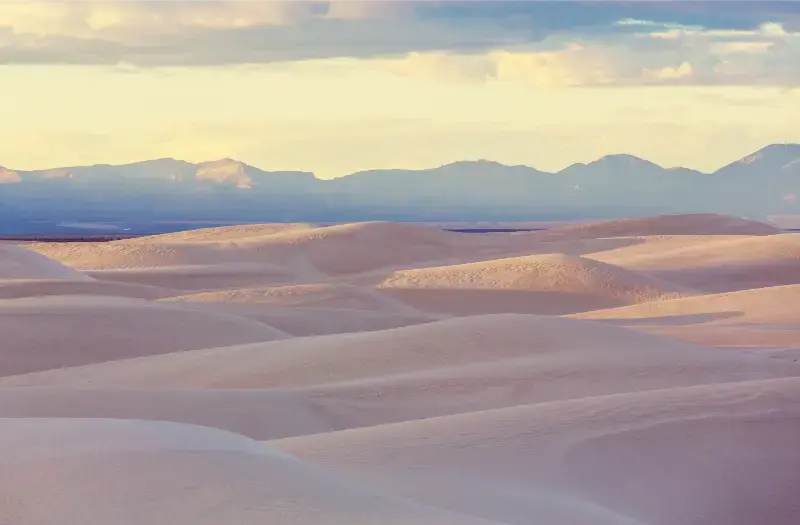
White Sands National Park looks simple on a map: one entrance, one scenic road and a vast field of bright gypsum dunes. In practice, light, temperature, wind and military testing can change the experience from one hour to the next. The park is most memorable when you give yourself time to leave the pavement, walk into the dunes and watch shadows reshape the landscape. Because there is little natural shade and the white surface reflects intense sun, timing matters more here than the number of attractions you can check off.
Understand Dunes Drive before you arrive
Dunes Drive is the park’s main access road into the gypsum dunefield. The surface transitions from pavement to hard-packed gypsum, which can look like snow but usually drives like a firm unpaved road under normal conditions. The route is relatively short, yet stops for walks, photography and sledding can easily fill half a day. Do not plan White Sands as a fifteen-minute viewpoint. The landscape becomes more impressive the farther you walk from the busiest pullouts, provided you keep track of your route.
Compare available accommodation for your dates, budget and preferred location before you finalize your route.
Check missile-test closures the day before
White Sands Missile Range is adjacent to the park, and military testing can require Dunes Drive to close for periods of up to about three hours. US 70 between Las Cruces and the park can also be affected during some tests. The closure schedule can change with short notice, so check the park’s official closure page the day before and again before departure if timing is critical. A rigid schedule built around a single sunset window is risky if a test or weather event shifts access.
Plan for current 2026 operating hours
The park opens at 7 a.m. and normally closes around sunset, with seasonal variations. For the 2026 summer period from May 22 through September 7, the park closes one hour after sunset, creating extra evening time. The visitor center generally operates 9 a.m. to 5 p.m. Hours can change, so verify them for your exact date rather than relying on an old screenshot or travel blog. Thanksgiving and Christmas are closed dates listed by the park.
Try dune sledding safely
Sledding is popular on steeper dunes, especially with plastic saucers. Choose a slope with a clear runout and no vegetation, roadway or other visitors below. Wax can make a saucer faster, which is fun but also increases the need for space. The gypsum can be surprisingly abrasive after repeated runs, and the climb back up is more tiring than it looks in summer heat. Families should use shorter sessions, carry water and avoid the hottest part of the afternoon.
Choose a walk that matches heat and navigation
Short boardwalks and marked trails provide easy introductions, while longer routes move into open dunes where footprints disappear quickly in wind. The Alkali Flat Trail is demanding despite the word “flat”; walking on sand-like gypsum, exposure and route-finding make it much harder than the mileage suggests. Start early, carry more water than you expect to need and turn around if markers become difficult to follow. During storms or extreme heat, choose a shorter experience rather than forcing a planned hike.
Photograph the dunes without damaging them
Morning and late afternoon create the strongest texture because low-angle light produces shadows along dune ridges. Midday can flatten the landscape visually and intensify glare. Protect camera gear from windblown gypsum, and do not trample vegetation just to create an isolated composition. Footprints are part of a busy public landscape; walking farther from major parking areas often gives cleaner scenes without needing to cross closed or restoration areas.
Where to stay near White Sands
Alamogordo is the most practical base for White Sands, with hotels, restaurants and supplies close enough for an early start or sunset return. Las Cruces offers more dining and a larger city atmosphere but requires a longer drive and can be affected if US 70 closes for missile testing. Compare places to stay in Alamogordo on Booking.com. If sunset is a priority, staying in Alamogordo reduces the late-night drive.
Combine White Sands with Alamogordo and Las Cruces
The New Mexico Museum of Space History in Alamogordo pairs naturally with a half-day dune visit, particularly for families or on very hot afternoons. Las Cruces and Old Mesilla work well before or after White Sands on a southern New Mexico road trip. Organ Mountains–Desert Peaks National Monument adds rugged hiking near Las Cruces. Do not combine White Sands and Carlsbad Caverns casually in one sightseeing day; the drive is long and both parks deserve real time.
Best time to visit White Sands
October through April offers cooler walking temperatures, though winter mornings can be cold and occasionally windy. Spring can bring strong winds and blowing gypsum. Summer is extremely hot during the day, so early morning and evening are far better. Monsoon storms can build in July and August and create dramatic skies, but lightning exposure on open dunes is serious. The park is beautiful year-round if you adapt your schedule to conditions rather than insisting on midday.
A realistic half-day plan
Arrive early or about three hours before sunset. Stop first at the visitor center if you need orientation, then drive into the dunefield and choose one short walk. Save sledding or a longer photography stop for later, when the heat is lower and shadows improve. If staying for sunset, be mindful of the announced closing time and the drive back to the gate. This simple structure usually produces a better visit than hopping between every signed stop.
Heat, hydration and children
The white surface can make the air feel deceptively bright and dry. Carry water for every person, use sunscreen on exposed skin and protect eyes with sunglasses. Children can overheat quickly while repeatedly climbing dunes. Take shade breaks in your vehicle or at developed areas because natural shade is scarce. Never rely on the appearance of cool white ground to judge temperature. In winter, the opposite problem occurs: wind can make sunset surprisingly cold.
Common White Sands mistakes
Do not arrive without checking military closures, and do not schedule a same-day flight or long transfer with no buffer. Avoid hiking deep into the dunes without understanding route markers. Do not underestimate how tiring sledding becomes after repeated climbs. Finally, protect electronics and vehicle interiors from fine gypsum, which gets into shoes and bags easily. A towel, spare footwear and a simple brush can make the drive afterward more comfortable.
Useful resources
Protect the landscape
White Sands is resilient enough to receive many visitors, but dune vegetation and biological soil areas are still vulnerable. Use established parking areas, follow closures and avoid driving or walking into protected restoration zones. Pack out every piece of trash, including broken sleds. The park’s visual emptiness can make impacts seem temporary, but repeated shortcuts and abandoned plastic accumulate quickly in a fragile desert ecosystem.
Sledding gear and cleanup
Plastic saucers are the usual choice for dune sledding because they are light and easy to carry uphill. Some visitors wax the bottom to increase speed, but faster is not always better when children or crowded slopes are involved. Inspect the runout before every descent and move away from the base of the slope after stopping. Broken sleds are a recurring litter problem in dune environments, so take damaged plastic with you rather than leaving it beside a parking area. A change of socks and a bag for gypsum-covered shoes also makes the car ride afterward much more comfortable.
What sunset actually requires
Sunset at White Sands is memorable, but it requires more planning than simply checking the clock on your phone. Drive far enough into the dunes to find a legal parking area, give yourself time to walk to a safe viewpoint and remember that the gate closes on the park’s schedule. After the sun drops, color changes quickly and temperatures can fall, especially outside summer. Keep a flashlight accessible without shining it toward other photographers, note how to return to your vehicle before darkness, and begin the drive out with enough time to meet the announced closure.
Leave room for local conditions
A successful visit to White Sands National Park Guide depends on more than mileage. Check official alerts on the morning of travel, keep water and layers in the car, and leave one flexible hour around outdoor plans. New Mexico can shift from strong sun to wind or thunderstorms quickly, while elevation creates very different temperatures between a city and a nearby mountain road. If a closure or storm changes the plan, use the time for a museum, meal or shorter walk rather than trying to force the original itinerary. That flexibility is especially valuable on multi-stop road trips, where one late day can otherwise create problems for every reservation that follows.
Related New Mexico guides
- Santa Fe New Mexico Travel Guide
- Albuquerque New Mexico Travel Guide
- Taos New Mexico Travel Guide
- Carlsbad Caverns National Park Guide
Frequently asked questions
How long do you need at White Sands?
Three to five hours is a good first visit; photographers and hikers may want longer.
Can White Sands close for missile testing?
Yes. Dunes Drive can close temporarily, and US 70 may also be affected. Check official closure information before traveling.
Where should you stay?
Alamogordo is the easiest base for early or late access.
Is summer a good time?
It can be, but plan around early morning or evening and take heat exposure seriously.
Continue with the New Mexico travel guide to compare destinations, routes and seasons across the state.