

Best Places to Visit in Wisconsin: Cities, Great Lakes, Parks & Small Towns. Wisconsin is easiest to understand as several different travel regions rather than one uniform Midwest destination. Milwaukee and Madison deliver city culture and food; Door County and Lake Geneva offer classic resort landscapes; the Apostle Islands bring Lake Superior wilderness; Wisconsin Dells focuses on family entertainment; and state parks such as Devil’s Lake add serious hiking. The best itinerary usually combines two or three regions that fit together geographically instead of trying to drive from every headline destination to the next.
Why this destination belongs in a Wisconsin trip
The state rewards repeat visits because the distance between southern cities and the Lake Superior shore is substantial. A first-time traveler might focus on Milwaukee, Madison and Door County, while an outdoor trip could center on Bayfield, Apostle Islands and northern forests. Families may prefer Wisconsin Dells plus a state park. The following places are not a ranking so much as a toolkit for building the right version of Wisconsin for your interests.
Essential places and experiences
Milwaukee
Milwaukee combines Lake Michigan, major museums, the Historic Third Ward, food markets, brewing history and neighborhood culture. It is one of the best arrival points for travelers coming from Chicago or flying into Wisconsin. Two days is enough for the core, while a third allows time for neighborhoods or an easy regional day trip.

Madison
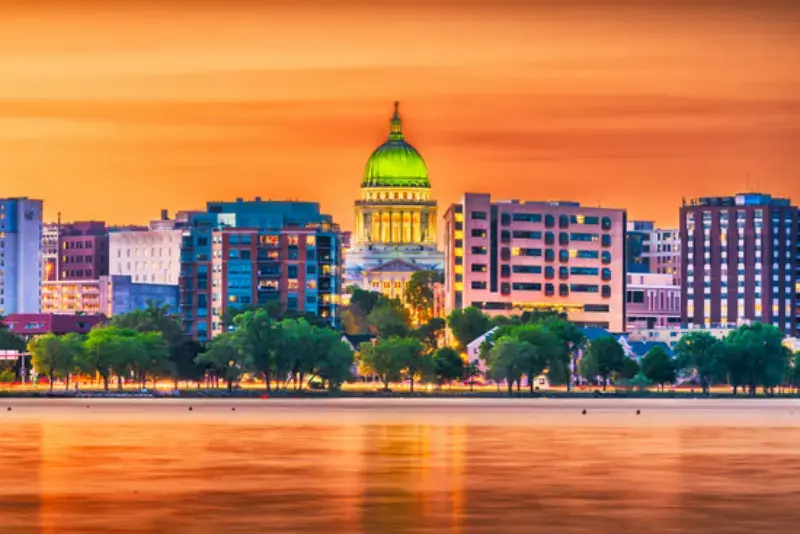
The state capital is built around lakes, the Capitol and the University of Wisconsin. It is walkable, bike-friendly and especially strong for farmers-market culture, casual food and outdoor time. Madison pairs naturally with Devil’s Lake or Wisconsin Dells and is a good choice for travelers who prefer compact cities.
Door County
Door County is a peninsula trip rather than a single town. Fish Creek, Ephraim, Sister Bay, Sturgeon Bay, Peninsula State Park, lighthouses and Washington Island all compete for time. The best visits slow down, choose a geographic base and avoid crossing the peninsula repeatedly.
Wisconsin Dells
The Dells are famous for waterparks, but the Wisconsin River and nearby state parks add a natural dimension. Families can build a multi-day resort trip, while adults can focus on river scenery, spas and outdoor areas. Choose accommodation carefully because resort amenities can be a major part of the experience.
Green Bay
Green Bay is essential for Packers fans but also offers museums, family attractions and a practical gateway to Door County. Game weekends create a completely different travel environment from ordinary weekends, so accommodation and parking strategy matter.
Lake Geneva
Lake Geneva is a classic resort escape within easy reach of Chicago and Milwaukee. The historic Shore Path, boat cruises, beaches and lake communities make it ideal for a relaxed weekend. Summer is busy, while fall provides excellent walking weather.
Apostle Islands National Lakeshore
The Apostle Islands are Wisconsin’s great Lake Superior adventure: 21 islands, sea caves, beaches, lighthouses and marine weather that demands respect. Bayfield is the main gateway for many first-time visitors. Build flexibility into any plan involving boats or kayaks.
Devil’s Lake State Park
Devil’s Lake is one of the state’s strongest hiking destinations, with steep bluff trails, easier lakeshore paths and swimming areas. It pairs well with Baraboo, Madison or Wisconsin Dells and is especially rewarding when you arrive before peak crowds.
Bayfield
Bayfield is worth time beyond its role as an Apostle Islands gateway. The harbor, orchards, downtown and ferry connection to Madeline Island create a strong small-town Lake Superior experience. It is particularly attractive in late summer and fall.
Great River Road
Western Wisconsin along the Mississippi offers bluff scenery, river towns and a slower road-trip rhythm. Places such as La Crosse, Prairie du Chien and smaller communities can form a completely different Wisconsin trip from the Great Lakes side.
The Northwoods
Northern Wisconsin lakes, forests and cabins appeal to travelers who prioritize fishing, paddling, quiet roads and outdoor time over a dense sightseeing list. Accommodation is dispersed, so this region is best planned around a specific lake or town rather than a vague goal of seeing the whole north.
Spring Green and southwest Wisconsin
The rolling Driftless Area adds farm landscapes, winding roads and cultural attractions around Spring Green. It combines well with Madison and makes a useful alternative for travelers who have already visited the state’s best-known lake destinations.
Where to stay
Compare available accommodation for your dates, budget and preferred location before you finalize your route.
For a statewide trip, use several bases instead of one central hotel. Milwaukee and Madison are logical southern anchors; Door County deserves its own base; Bayfield is the practical gateway for Apostle Islands; and Wisconsin Dells or Baraboo works for central family and park attractions. Reducing one-night stays makes the driving feel far less dominant.
Compare current accommodation options for Wisconsin and choose a base that fits the actual shape of your itinerary.
Check hotels and staysGetting around
Outside central Milwaukee and Madison, a car is usually the most practical way to travel. Wisconsin’s distances are manageable, but a trip from the southeast to Lake Superior still takes a large part of a day. Plan routes in geographic clusters and avoid crossing the state merely to add one famous stop. Ferries, boat tours and seasonal roads can add fixed timing to otherwise flexible drives.
A car is useful for lakefront drives, state parks and multi-stop Wisconsin trips. Compare vehicle categories and one-way conditions before booking.
Compare rental carsFood and local flavor
Wisconsin food is part of the travel experience: cheese, supper clubs, Friday fish fries, bratwurst and beer are familiar themes, while local fish, cherries, farmers markets and modern restaurants add regional variation. The best food itinerary is not a list of clichés; try one or two state signatures and then eat according to the community you are visiting.
Best time to visit
Summer offers the most complete range of festivals, beaches, ferries and boat trips. Fall is excellent for foliage and road trips, especially in Door County, northern Wisconsin and bluff country. Winter has skiing, snow activities and indoor city attractions, while spring is quieter but can be variable. Lake Superior and Lake Michigan create local weather conditions that deserve attention in every season.
How to structure the trip
A practical first 10-day Wisconsin route might combine Milwaukee, Madison, Devil’s Lake or Wisconsin Dells, Green Bay and Door County. A separate northern trip can focus on Bayfield, Apostle Islands and the Northwoods. Trying to combine both at full depth in one short vacation usually sacrifices the slower lake and small-town experiences that make Wisconsin distinctive.
Practical planning that makes the visit easier
Build each day around one primary experience and a small geographic cluster rather than a long list of unrelated stops. Wisconsin travel is usually more enjoyable when you protect time for lakefront walks, meals and weather changes. Check parking rules, seasonal access, ferry or tour schedules and state-park requirements shortly before departure, because operational details can change after an article is published. If a reservation would be difficult to replace—such as a boat tour, major event, ferry-linked activity or peak-season lodging—book that first and keep lower-priority stops flexible.
For driving days, estimate time using the actual route rather than straight-line distance. Lakefront roads, small towns, construction and scenic stops can make a transfer longer than expected. Avoid scheduling a major ticketed attraction immediately after the longest drive of the trip. When traveling with children or mixed mobility levels, identify a shorter alternative for every demanding hike or long walking day so the group can adjust without losing the entire itinerary.
Family, accessibility and weather notes
Wisconsin destinations are generally easy to adapt for families, but the details differ by place. Museums and urban attractions often have straightforward accessibility information, while bluff trails, beaches, sea caves and historic paths can be uneven or steep. Use official accessibility pages when mobility is a deciding factor. Near the Great Lakes, conditions can feel much cooler and windier than inland forecasts suggest, so layers are useful even in summer. Water activities should be planned around current marine conditions, not only air temperature.
Budget and reservation strategy
For Wisconsin, separate fixed costs from flexible spending before you book. Accommodation, parking, ferry or cruise tickets, major attractions and rental cars are the items most likely to change the shape of the trip. Compare the total price rather than the headline rate: resort fees, parking charges, admission, fuel and minimum-stay rules can matter more than a small difference in room price. Reserve the experiences that would be difficult to replace, especially on summer weekends and fall-color dates, but avoid prepaying every meal and minor attraction. Keeping part of the budget and schedule flexible makes it easier to react to weather, traffic or a place you unexpectedly want to spend more time in.
Photography and sightseeing are usually better early or late in the day, when waterfronts, downtown streets and popular overlooks are less crowded and the light is softer. Midday can then be used for museums, lunch, a drive to the next cluster or a lower-priority stop. This rhythm also reduces the temptation to rush between distant attractions merely because they appear close on a map. If a day already includes a long hike, boat trip or major museum, resist adding another time-sensitive reservation in the evening; Wisconsin trips tend to work best when one important experience has room to breathe.
Check current tours and bookable experiences for this destination. Availability changes by date and season.
Compare current accommodation options for Wisconsin and choose a base that fits the actual shape of your itinerary.
Compare accommodationContinue planning Wisconsin
- Lake Geneva Wisconsin Travel Guide: Shore Path, Boats, Resorts & Weekend Tips
- Apostle Islands National Lakeshore Guide: Sea Caves, Islands, Kayaking & Lighthouses
- Devil’s Lake State Park Wisconsin Guide: Bluff Trails, Beaches & Hiking Tips
- Bayfield Wisconsin Travel Guide: Apostle Islands, Orchards, Lake Superior & Ferry Trips
Official resources to check before your trip
Frequently asked questions
How many days should I allow?
For a focused city or small-town visit, two full days is a useful starting point. Outdoor regions and destinations involving ferries, boat tours or several communities benefit from three days or more because weather and transfer time matter. If this stop is part of a larger Wisconsin road trip, avoid reducing every destination to one night simply to increase the number of pins on the map.
Do I need to book far in advance?
Peak summer weekends, fall-color dates, major sports events, popular resorts, boat tours and limited-capacity activities deserve early attention. Ordinary museums, parks and casual restaurants often allow more flexibility. The best strategy is to reserve only the experiences that would materially change the trip if sold out, while keeping weather-dependent parts adaptable.
Can I visit without a car?
Central Milwaukee and Madison are the easiest Wisconsin destinations without a car. Most peninsula, state-park, Lake Superior and multi-stop itineraries are much simpler with one. If you prefer not to drive, build the trip around a single walkable base and book tours or transfers that explicitly solve the transportation gap rather than assuming rideshare will be available everywhere.