

Dubuque Iowa Travel Guide: Mississippi River, Museums, Bluffs & Historic Downtown. Dubuque has one of Iowa’s strongest combinations of scenery and attractions. The Mississippi River defines the city, but the surrounding Driftless bluffs, historic architecture, museums and nearby recreation areas give the destination enough variety for a full weekend. It is also positioned well for Dyersville, Galena in Illinois and the Great River Road north toward Effigy Mounds.
- Best base: Downtown or the Port of Dubuque
- Time to allow: 2 nights
- Car: Useful for bluffs and regional day trips
- Best timing: Late spring through fall for the widest mix of river and outdoor experiences
Why this destination belongs in an Iowa trip
Dubuque has one of Iowa’s strongest combinations of scenery and attractions. The Mississippi River defines the city, but the surrounding Driftless bluffs, historic architecture, museums and nearby recreation areas give the destination enough variety for a full weekend. It is also positioned well for Dyersville, Galena in Illinois and the Great River Road north toward Effigy Mounds.
Iowa travel works best when you resist the temptation to judge distance only by interstate mileage. Scenic roads, museum stops, local events and small-town detours can easily turn a short transfer into a full travel day. Build the itinerary around one or two priorities, then let secondary stops remain flexible. That approach produces a trip that feels local rather than rushed.
Compare current accommodation options and choose a base that fits the actual shape of your itinerary.
Check hotels and staysBest things to do and how to plan them
National Mississippi River Museum & Aquarium

The National Mississippi River Museum & Aquarium is the city’s major indoor attraction and deserves more than a rushed hour. It combines river ecology, history, vessels and hands-on interpretation, making it useful for both adults and families. The Port of Dubuque setting adds context because you are learning about the river beside the river itself. Check current tickets, exhibits and special programs before visiting, especially if a temporary experience is important to your group.
Fenelon Place Elevator
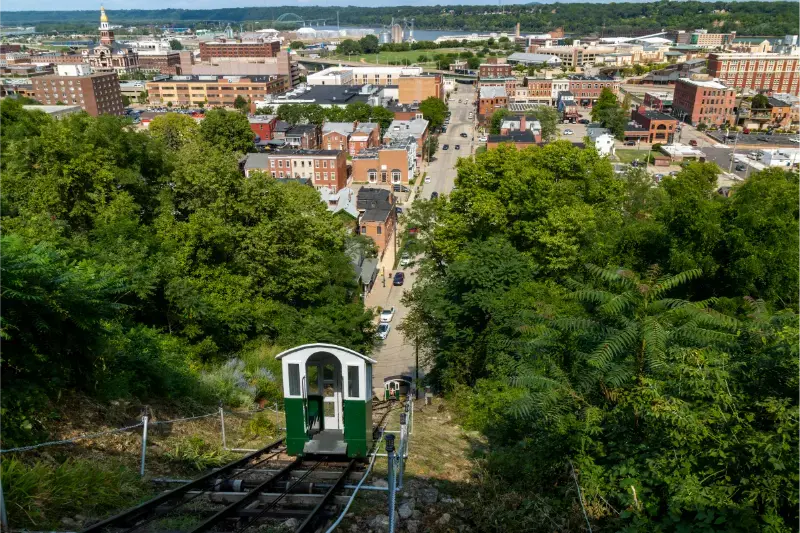
The Fenelon Place Elevator is a short historic cable-car ride that climbs from the lower city to a viewpoint above downtown. Travel Iowa promotes it for the broad views over Dubuque and toward Illinois and Wisconsin. Operations are seasonal and weather-sensitive, so verify before building your day around it. Even if you ride only once, the upper area helps explain the city’s steep topography and why neighborhoods, downtown and riverfront feel vertically separated.
Mines of Spain Recreation Area
Mines of Spain provides the outdoor counterweight to Dubuque’s museums. Trails pass through wooded and prairie landscapes near the Mississippi, and the area works for hiking, wildlife watching and a quieter half-day away from the city center. Choose trail length based on conditions rather than trying to collect every viewpoint. After rain, heat or winter weather, check current park information and carry more water than a city-focused day would normally require.
Historic downtown and architecture
Dubuque’s downtown is best explored slowly enough to notice the older commercial buildings, churches, theaters and river-era streetscapes. The city’s history includes mining, river trade, immigration and industrial growth, and those layers remain visible. Instead of driving from one landmark to another, park and walk a compact section, then move to the Port of Dubuque or bluff attractions separately. This reduces the constant elevation changes that can make the city feel more spread out than it appears on a map.
Grand Opera House and cultural venues
The Grand Opera House and other performance spaces make an evening in Dubuque more interesting than simply returning to the hotel after sightseeing. Check the calendar early because live performance is date-specific and can be the reason to shift your itinerary. If a show is not available, the downtown restaurant and bar scene still supports a relaxed evening, particularly when you stay centrally.
Great River Road viewpoints
Dubuque is a natural base for exploring Iowa’s Great River Road. You do not need to drive a huge distance to experience the landscape: short northbound or southbound segments reveal bluffs, river towns and overlooks that feel very different from central Iowa. Build in time for unscheduled stops because the value of the route is the sequence of views and communities, not simply reaching another city as fast as possible.
Where to stay
Compare available accommodation for your dates, budget and preferred location before you finalize your route.
Downtown or the Port of Dubuque is the most practical starting point for most visitors. The cheapest room is not always the best value if it forces repeated drives, parking fees or late-night highway travel. For a short stay, prioritize location and the ability to walk to dinner or your first attraction. For a road trip, parking and easy highway access may matter more than being directly in the center.
Weekend demand can change dramatically around university events, festivals, sports, concerts and summer celebrations. Check the local event calendar before assuming a normal hotel market. If one specific date is essential, reserve lodging first and build the less capacity-limited parts of the trip around it.
How many days do you need?
On day one, focus on the river museum, Port of Dubuque, downtown and the Fenelon Place Elevator if operating. Day two can begin at Mines of Spain, continue with a scenic drive or another cultural site and finish downtown. A third day is ideal for Dyersville, Galena or a longer Great River Road segment.
If your schedule is shorter, cut stops rather than compressing them. A good one-day visit should still include time for a meal, a walk and an unscheduled pause. With extra time, add a nearby place that changes the landscape or cultural focus instead of repeating similar attractions in the same district.
Food and local culture
The city’s food scene is strongest when you combine downtown and riverfront choices rather than eating only near major attractions. River views are appealing, but historic neighborhoods and local breweries can offer a more relaxed atmosphere. If you are traveling on a busy summer weekend or during a festival, reserve the one dinner you care most about and leave lunches flexible around museum and trail timing.
Check opening days as well as hours. In smaller Iowa communities, some independent restaurants and museums may close one or two days each week, and seasonal businesses can reduce schedules outside peak months. That makes a flexible lunch and one planned dinner a more reliable strategy than trying to reserve every meal.
Getting there and getting around
Useful for bluffs and regional day trips. Iowa’s interstates make the state easy to cross, but many of the most interesting places sit away from freeway exits. Download offline maps before rural scenic drives and keep fuel levels comfortable when you leave the larger cities. In winter or during severe thunderstorms, check road conditions before a long transfer rather than assuming normal travel times.
For routes beyond the walkable core, compare car sizes and rental conditions before booking.
Compare rental carsBest time to visit
Late spring through fall for the widest mix of river and outdoor experiences. Spring can bring variable weather and storms, summer offers long daylight but higher heat and event crowds, fall is excellent for walking and scenic drives, and winter requires a more deliberate weather plan. The best month therefore depends more on what you want to do than on one universal “perfect” season.
For any attraction tied to flowers, foliage, river levels, outdoor performances or seasonal recreation, verify conditions close to departure. Bloom timing, water levels, trail surfaces and event dates vary; use local reports and the current calendar when choosing your visit. Treat official local updates as the final source for time-sensitive decisions.
Visiting with kids
Dubuque is one of the easier Iowa destinations with children because the river museum provides a substantial indoor anchor, while parks and the funicular-style elevator add variety. Avoid combining too many long museums in one day and check seasonal operations before promising a ride or outdoor activity.
Common planning mistakes
- Trying to fit too many towns into one day because driving distances look short on a map.
- Assuming seasonal attractions, tours or small museums operate every day of the year.
- Booking a cheaper hotel so far from the core that parking and driving dominate the trip.
- Ignoring event calendars that can transform traffic, room prices and restaurant demand.
- Leaving every meal and fuel stop until the last minute on rural or scenic-road days.
What to combine with this stop
Dyersville is the obvious baseball-and-movie day trip, while Effigy Mounds and the northern Great River Road create a more scenic extension. Cedar Rapids and Iowa City work better as a separate east-central cluster than as rushed same-day add-ons.
For more detailed planning, continue with Iowa City Travel Guide Cedar Rapids Iowa Travel Guide.
Continue planning Iowa
Official resources to check before your trip
Frequently asked questions
Is Dubuque Iowa worth visiting?
Yes if the destination matches the interests described in this guide and fits naturally into your route. The strongest Iowa trips combine a small number of distinctive places rather than stopping everywhere for an hour. Give the main experience enough time, then use minor attractions as flexible additions.
Do you need to book far in advance?
Ordinary weekdays often allow more flexibility, but festival weekends, university events, summer Saturdays and limited-capacity tours can require earlier reservations. Book the hardest-to-replace item first—usually lodging, a special event or a timed tour—then keep general sightseeing flexible.
Can you visit without a car?
Useful for bluffs and regional day trips. Even when the central district is walkable, regional Iowa itineraries usually become much easier with a car because scenic byways, parks and small towns are spread out. If you stay car-free, choose accommodation carefully and confirm local transportation before arrival.
A well-planned Iowa trip leaves room for what you discover after arrival. Use reservations for the experiences that truly require them, verify time-sensitive details on official websites, and keep enough space in the day for the places that turn out to deserve longer than expected.