

Lead is one of the rare Black Hills towns where the story did not end when the gold-rush era faded. The Homestake Mine shaped the city for generations, and the same underground landscape now supports world-class physics research at the Sanford Underground Research Facility. That mining-to-science transition gives Lead a depth that is easy to miss if you only drive through on the way to Deadwood.
A good visit should connect three layers: the enormous Open Cut and mining history, the visitor-center explanation of underground science, and the steep town itself. Do not expect an underground tourist mine at Sanford Lab. The public experience is on the surface, and that distinction matters because misleading expectations are one of the most common reasons visitors leave disappointed.
- Best use: Half-day history-and-science stop or one night paired with Deadwood
- Realistic time: 3–5 hours for the core; longer if adding museums, trolley or hiking
- Best for: Mining history, science, geology and northern Black Hills travelers
- Main planning risk: Expecting public underground access at Sanford Lab
- Best pairing: Deadwood, Spearfish, Mickelson Trail and northern Black Hills drives
Is Lead worth stopping when Deadwood is next door?
Yes, particularly for travelers who like industrial history, geology or science. Deadwood interprets the gold-rush frontier in a theatrical historic district; Lead explains what large-scale mining became and what happened after the mine closed. Seeing both towns provides a more complete story than choosing one solely because it has more famous architecture.
Lead is less necessary if your itinerary is already overloaded and your group has little interest in museums or science. In that case, a scenic drive through town may be enough. But if you have even three hours, the Sanford Lab Homestake Visitor Center and Open Cut view add a subject you will not encounter elsewhere in the Black Hills.
What to see in Lead
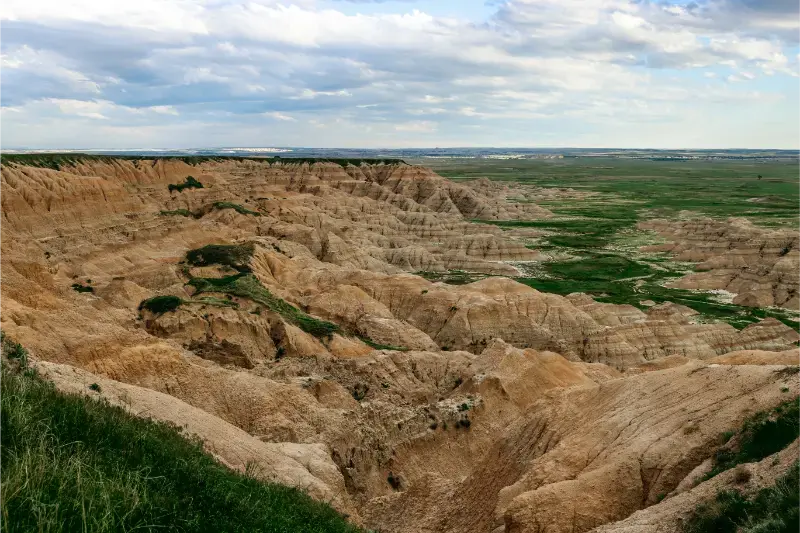
Start at the Sanford Lab Homestake Visitor Center
The visitor center is the best orientation because it ties together the Homestake Mine, the city and present-day science at the Sanford Underground Research Facility. Exhibits explain the deep underground workings, Nobel Prize-connected research and the experiments now using the former mine environment. Admission is currently free, which makes it easy to spend more time than a simple overlook stop.
The observation area looks toward the Open Cut, giving physical scale to mining history. Remember that this is not a descent into the lab. Public underground access is not part of the standard visitor experience, and seasonal trolley tours around Lead explicitly remain above ground.
Look at the Open Cut as industrial landscape, not just a hole
The Open Cut is visually dramatic, but the visitor center provides the context needed to understand why it matters. Mining transformed the terrain, economy and population of Lead. The best experience is to connect what you see outside with the diagrams and stories inside.
Photographs flatten scale. Spend a few minutes looking at the benches, walls and relationship between the cut and town rather than snapping one image and leaving.
Explore town history beyond the visitor center
Historic buildings, the Homestake Opera House area and local exhibits extend the story into community life. The opera house was built by the mining company and once contained far more than a performance space, reflecting the company-town infrastructure that shaped Lead.
Opening hours vary more than at a national park. If a specific interior tour matters, verify it before planning the day. Lead is still worthwhile when a small museum is closed, but your route should not depend on a seasonal door being open.
Use Lead as a trail and northern Black Hills access point
The Mickelson Trail runs close to the Lead/Deadwood area, and outdoor options can balance a museum-heavy morning. This is useful for mixed-interest groups: some travelers can spend longer with mining exhibits while others plan a ride or walk.
Because Lead sits at elevation and on steep terrain, weather can differ from lower-elevation towns. Keep a layer in the car even when Rapid City feels warm.
How much time do you need?
Three hours is enough for the visitor center, Open Cut viewpoint and a short look around town. A half-day is better if you enjoy science or industrial history. One night works well when Lead is paired with Deadwood, especially if you want to avoid changing hotels between two neighboring towns.
Do not schedule Lead as a 30-minute stop immediately before a timed Deadwood activity. The visitor center is most rewarding when you read the exhibits rather than rushing between photo points.
Where to stay: Lead or Deadwood?
Compare available accommodation for your dates, budget and preferred location before you finalize your route.
Lead can feel quieter and more residential, while Deadwood offers a stronger evening entertainment scene. Prices and availability vary by event, so compare both instead of assuming Deadwood is always more expensive. For trail users, the best hotel is often the one closest to the trailhead or shuttle plan rather than the historic district.
During major regional events, the entire northern Black Hills can sell out. Book early if your dates overlap the Sturgis Rally or a large festival.
Best season and weather
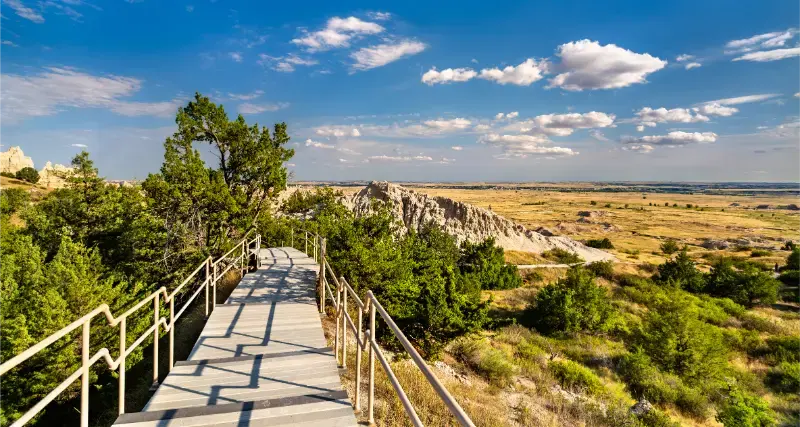
Summer provides the easiest combination of visitor services, trolley tours and outdoor activities. Autumn can be excellent for cool walking weather. Winter gives Lead a mountain-town atmosphere but requires more attention to road conditions, snow and reduced hours.
Because the city sits in the northern Black Hills, do not assume an I-90 forecast describes conditions in town. Check locally before setting out on a trail or steep side road.
What to cut if you are short on time
Keep the Sanford Lab Homestake Visitor Center and Open Cut. Cut minor museums or a trolley if schedules do not align. The visitor center alone communicates the distinctive mining-to-science story that makes Lead different from nearby towns.
If your group is primarily interested in Wild West history and has only a few hours for both towns, focus on Deadwood and save Lead for another trip. The worst compromise is rushing both until neither has context.
Common planning mistakes
The largest mistake is expecting to tour the active underground laboratory. Another is treating Lead as a suburb of Deadwood with nothing of its own. The city’s identity is tied to a huge industrial operation and a modern scientific facility, not simply overflow lodging.
Also do not underestimate steep streets or winter ice. A short map distance can feel different on foot when elevation and grade are involved.
How to combine Lead with nearby stops
Lead and Deadwood make an easy shared day. Spearfish can be added if you are using it as your overnight base, while a Mickelson Trail ride can turn Lead into the logistics center for a more active day. Avoid adding Custer State Park to the same day; the scenic-road time makes that combination much less efficient than it appears.
If continuing south, change bases after finishing the northern Black Hills. That reduces repetitive driving and leaves more daylight for Needles Highway, Sylvan Lake and Black Elk Peak.
How to explain Lead to children and non-science travelers
The science story can sound abstract if your group is not already interested in physics. Start with physical scale: the Open Cut, the mine cage, models of the underground workings and the idea that researchers use a former gold mine because deep rock shields experiments from interference at the surface. Those tangible elements make neutrinos and dark-matter research easier to understand without needing a technical background.
For children, let the visitor center be interactive rather than lecture-based. Spend less time on every text panel and more time connecting objects to the landscape outside. For adults who care more about history, focus on how the Homestake Mine shaped housing, employment and civic institutions. Lead works because science and history share the same physical place.
A half-day Lead and Deadwood strategy
Begin in Lead at the Sanford Lab Homestake Visitor Center while everyone is fresh enough to read exhibits. Walk or drive through the historic core, then continue to Deadwood for lunch and its museums or historic district. This order prevents Lead from becoming the stop you squeeze in after a full Deadwood afternoon when the visitor center is about to close.
If you are staying in Deadwood, you can reverse the sequence the next morning, but keep the two towns conceptually separate. Lead tells a story of industrial mining and scientific reuse; Deadwood emphasizes frontier history, gambling-era culture and preservation. Seeing both in one day works precisely because they are different, not because they are interchangeable.
Parking, steep streets and accessibility
Lead’s topography matters. Streets climb sharply in places, so travelers with mobility limits should not assume a short map distance will feel easy on foot. Park strategically near the visitor center or the specific historic site you want to see, then move the vehicle if necessary rather than turning the day into an unnecessary hill workout.
Winter magnifies those grades. Snow and ice can make sidewalks and side streets more difficult even when the main highway is clear. If accessibility is important, call attractions directly about entrances, parking and elevator access instead of relying only on general city information.
Compare lodging close to the places you actually plan to use, then check rental-car terms before locking the route.
Check accommodation optionsCompare rental cars
Official information to check before you go
Use the Sanford Lab Homestake Visitor Center’s current visitor page for opening hours, exhibits and public-program information. Seasonal trolley schedules should be checked separately, and standard public visits do not include underground access.
Continue planning South Dakota
Pair Lead with our Deadwood travel guide and, for an active day, the Hill City guide helps compare another Mickelson Trail base farther south.