

Illinois Road Trip: A Realistic 10-Day Itinerary from Chicago to Route 66 and Shawnee. A 10-day Illinois road trip designed around realistic drives, two-night bases and enough flexibility for weather, museums and Route 66 detours.
Choose the length of stay, reserve the experiences that matter most, and group stops that fit naturally together. Compare driving with other transport options, and leave out distant attractions when reaching them would consume time you would rather spend at the main destinations. The goal is a trip that still works when traffic, weather, crowds or normal delays change the day.
- Best for: first-time visitors who want city, road-trip history and nature in one route
- Route shape: Chicago → Starved Rock → Route 66/Springfield → southern Illinois
- Realistic driving: keep most transfer days under 3–4 hours before sightseeing stops
- Best rhythm: 3 nights Chicago, 1 near Starved Rock, 2 Springfield, 2 southern Illinois, final flex night
- Biggest mistake: collecting roadside stops without protecting time for the major anchors
Days 1–3: Chicago without a rental car
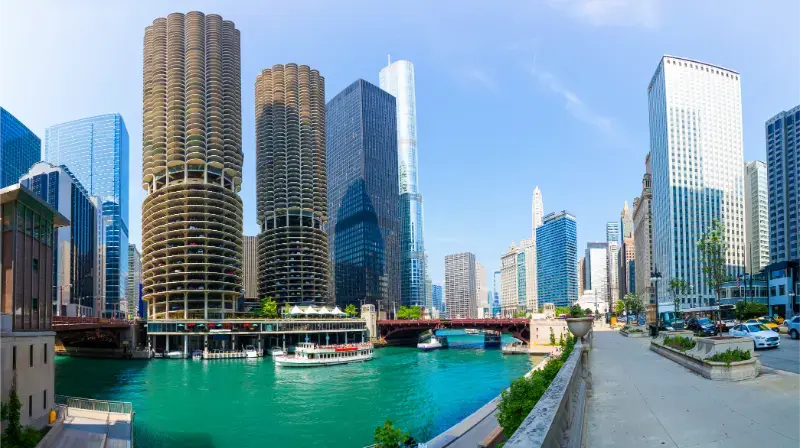
Start the trip in Chicago and postpone the rental car. Parking is expensive, traffic adds friction, and the core sights are better connected by walking and public transit. Use the first day for the river, Millennium Park and the lakefront; the second for museums and architecture; the third for neighborhoods, food or a ballgame.

The important planning decision is not which attraction to add, but how many timed reservations to accept. One major reservation per half-day is enough. Keep at least one block flexible so weather can determine whether you choose the lakefront, a museum or an indoor observation deck.
Day 4: Chicago to Starved Rock
Pick up the car after breakfast and leave central Chicago outside the worst commuter window if possible. Starved Rock is under 100 miles southwest of the city, but traffic and suburban road construction can make the transfer longer than the map suggests. Arriving before lunch gives you time for a focused afternoon hike.
Because 2026–27 trail work affects some connections, stop at the visitor center before committing to a long loop. French Canyon, Starved Rock overlook and other accessible sections can be combined based on the day’s closures. Waterfalls depend on recent rainfall, so build the visit around scenery and hiking rather than a guarantee of flowing water.
Day 5: Starved Rock to Pontiac and Springfield
Use the morning for a short final walk, then join the Route 66 corridor. Pontiac is one of the best intermediate stops because it provides museums, murals and enough context to make later roadside attractions more meaningful. Keep the stop to two or three hours unless Route 66 history is the main purpose of the trip.
Continue toward Springfield with one or two short stops rather than ten. Bloomington-Normal, Atlanta and Lincoln all have potential, but the day works best when you select one larger stop and one quick photo stop. Arrive in Springfield with daylight left for a walk around the Old State Capitol district.
Day 6: Springfield – Lincoln first, Route 66 second
Make the Lincoln Home National Historic Site your first fixed point because house tours use timed tickets. Add the Abraham Lincoln Presidential Library and Museum, then choose between the Old State Capitol area, Lincoln Tomb or an evening Route 66 stop depending on your energy.
This is a day where staying two nights pays off. You can leave the car parked for part of the day and avoid repacking after several history-heavy attractions. The presidential museum deserves enough time to read and engage with the exhibits rather than being squeezed between photo stops.
Day 7: Springfield to the southwest Illinois Route 66 corridor
Continue south through classic Route 66 territory. Litchfield is a practical lunch or museum stop, while the Collinsville area can position you for the Mississippi River corridor and Cahokia Mounds. The goal is not to complete a checklist of every surviving alignment; it is to understand how the route changes as it approaches metropolitan St. Louis.
If your flight plan uses St. Louis, this is a natural point to end the Illinois portion. For the full 10-day route, continue east or southeast the next morning toward southern Illinois instead of crossing the river and adding another city unless St. Louis is a priority.
Days 8–9: Southern Illinois and Shawnee National Forest
Base yourself around Carbondale, Makanda or another convenient southern Illinois location for two nights. Garden of the Gods is a high-value scenic stop, but it should not be the only reason to drive south. Combine it with Giant City, a second hike, a scenic drive or a slower food and wine day depending on the season.
Southern Illinois roads are less urban and services can be farther apart. Start hikes earlier in hot weather, carry water and avoid finishing a remote trail after sunset. Two nights create the flexibility to move a hike to the clearer or cooler day.
Day 10: Return strategy – choose the airport before the final hotel
The cleanest ending depends on your flight. Chicago is a long return from southern Illinois, so a round trip to Chicago works best when Day 10 is mostly a driving day or when you add an eleventh night. Another option is an open-jaw trip using a different airport if airfare and one-way car fees make sense.
Do the airport math before you book the southern portion. A beautiful final hiking day loses its appeal if it forces a stressful predawn drive. The best final hotel is often the one that reduces departure-day risk, even if it is less scenic.
How to handle Route 66 detours without losing the itinerary
Route 66 rewards curiosity, but it can consume time through repeated short exits, parking and photo stops. Create three tiers before the trip: must-stop places, optional roadside stops and drive-past landmarks. That keeps the day flexible without making every missed attraction feel like a failure.
Download the route before leaving urban areas, especially if you plan to follow older alignments. Historic Route 66 does not always behave like a single modern highway, and GPS may prefer faster roads unless you intentionally select the heritage route.
Where to sleep and why fewer hotel changes help
Three nights in Chicago, two in Springfield and two in southern Illinois create a strong backbone. The Starved Rock and southwest Illinois nights are strategic transition points rather than destinations you must keep if your interests differ.
When comparing hotels, add parking and location to the nightly rate. A slightly more expensive property that eliminates a 40-minute morning backtrack can be better value than the cheapest room. This matters especially on days with timed tours or long rural drives.
Budget priorities for a 10-day Illinois road trip
Spend money where timing or experience quality changes: a central Chicago hotel, one excellent architecture cruise, key museum admissions and a reliable rental car. Save on low-value upgrades, unnecessary airport parking and repeated short rideshares that a better hotel location would eliminate.

Fuel is not usually the largest cost on this route, but parking can be. That is another reason to postpone the car until you leave Chicago. In road-trip towns, parking is generally simpler, so the value of having a car increases dramatically once you move beyond the city.
Packing and car organization for a mixed Illinois trip
A single Illinois itinerary can include city walking, cool lakefront evenings, hot inland afternoons and forest trails. Pack layers, comfortable walking shoes and a separate small daypack so you do not have to unpack the entire car at every stop.
Keep water, a charging cable and a paper or downloaded route available in the car. Historic-road navigation and rural trailheads are easier when the phone is not your only source of directions.
When to shorten the route
Shorten the itinerary when weather delays a day, when a major museum becomes more important than expected, or when the final flight requires a long return. Remove an entire region instead of shaving thirty minutes from every stop.
A strong nine-day trip with one region cut is better than a ten-day trip in which every destination becomes a rushed photo stop.
Compare the total accommodation cost first, then check rental-car prices if your Illinois itinerary extends beyond a single walkable city base.
- Best things to do in Illinois
- Route 66 Illinois road trip
- Starved Rock State Park guide
Frequently asked planning questions
Is 10 days enough for Illinois?
Yes for a first trip that combines Chicago, Route 66, Springfield and one major nature region. It is not enough to see every worthwhile town, so treat the itinerary as a strong sampler rather than a complete circuit.
Should I rent a car at O’Hare on arrival?
Not if your first days are in central Chicago. Use city transit and pick up the car when you leave; this avoids downtown parking costs and unnecessary driving.
Can I add Galena?
Yes, but Galena pulls the route northwest and adds significant mileage. Add it by replacing southern Illinois or by extending the trip rather than forcing it into the same 10 days.
How many nights should I spend in Springfield?
Two nights is ideal for a first visit because it protects time for Lincoln sites and Route 66 without turning the city into a rushed lunch stop.
What is the hardest day?
The final return from southern Illinois to Chicago can be the longest and least scenic. Plan the departure airport and final hotel before locking the rest of the route.
Practical decision guide
If your itinerary is already crowded, decide what Illinois Road Trip is supposed to add to the trip. This itinerary is designed to reduce backtracking. If you remove southern Illinois, use the extra nights for Galena and northwest Illinois; if you remove Chicago, expand Route 66 and small-town stops instead of simply shortening the trip. Keep the stop when it creates a different experience, shortens a long driving day, or gives you access to something that cannot be replicated at the next destination. Cut it when it creates backtracking only to repeat the same type of museum, viewpoint, shopping district or roadside stop you already have elsewhere.
Build each day around one fixed priority and two flexible secondary stops. Reserve limited-capacity tours first, then place free or untimed attractions around them. For road-trip days, calculate from hotel door to hotel door rather than using only the headline drive time: parking, fuel, food, construction, restrooms and photo stops can easily add an hour or more.
Weather should usually change the order of the day rather than cancel the day. Put museums, visitor centers or long meals into the hottest, coldest or stormiest hours, and use the more comfortable part of the day for walking, overlooks and outdoor stops. This is especially useful in Illinois, where conditions can change quickly between the Lake Michigan shoreline, central prairie and southern hills.
Families and multigenerational groups generally have a better trip with fewer transitions. Two substantial experiences, a comfortable meal and one flexible outdoor stop often feel fuller than five rushed attractions. The same principle helps with accessibility: check parking-to-entrance distances, stairs, terrain and rest opportunities before committing to a tightly timed sequence.
Finally, protect the onward journey. Avoid using every remaining daylight hour if the next overnight requires an unfamiliar rural drive. Arriving with enough daylight to find parking, eat and settle in is part of efficient road-trip planning, not lost sightseeing time.
Final planning take
The strongest Illinois trips are selective. Reserve the experiences that truly depend on time slots, use geography to group the rest, and protect enough open time for weather, food and spontaneous stops. A trip with fewer hotel changes and better route logic usually delivers more of the state than an itinerary that tries to collect every famous name.