

Best Things to Do in Chicago: 25 Essential Experiences for a First Visit. A priority-ranked Chicago sightseeing guide that helps first-time visitors choose what is genuinely worth their time and how to group attractions efficiently.
Choose the length of stay, reserve the experiences that matter most, and group stops that fit naturally together. Compare driving with other transport options, and leave out distant attractions when reaching them would consume time you would rather spend at the main destinations. The goal is a trip that still works when traffic, weather, crowds or normal delays change the day.
- Top first-timer experience: Chicago River architecture cruise
- Best free combination: Millennium Park + lakefront + Riverwalk
- Best art stop: Art Institute of Chicago
- Best museum cluster: Museum Campus
- Best strategy: choose 2–3 major experiences per day, not 8–10
1. Take an architecture cruise on the Chicago River
If you choose only one paid sightseeing experience, make it an architecture cruise. It gives you history, skyline views and orientation at the same time. The experience is especially useful early in the trip because later walks through the Loop and River North make more sense once you understand the river’s role.
Allow more time than the cruise duration for check-in and boarding. Weather on the water can differ from the streets, so bring a layer even when the forecast looks mild.
2. Walk the Chicago Riverwalk
The Riverwalk works before or after a boat tour, but it is not redundant. At street level you notice bridges, public spaces, restaurants and building details that pass quickly from the water.
Walk a focused section rather than treating the entire riverfront as a race. Use bridge crossings to change perspective and connect naturally toward Michigan Avenue or the Loop.
3. See Millennium Park and Cloud Gate
Cloud Gate is the obvious landmark, but the larger Millennium Park area is what makes the stop worthwhile. Gardens, public art and connections to Maggie Daley Park and the lakefront make it an easy flexible block.
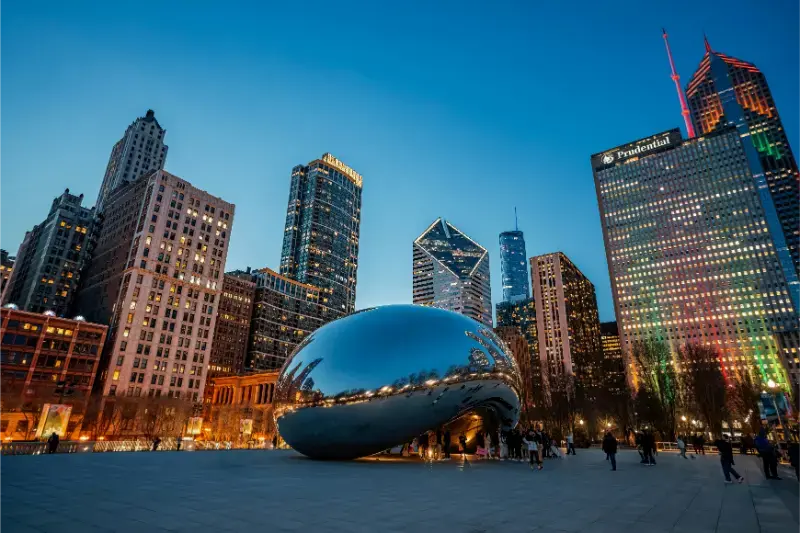
Go early when you want cleaner photos, or later when the park feels more active. Do not build an entire day around a single sculpture.
4. Spend real time at the Art Institute of Chicago
The Art Institute is not a quick photo stop. If art matters to you, reserve several hours and choose galleries in advance so the size of the museum does not become tiring.
Pair it with Millennium Park because the locations are adjacent. That creates a strong indoor–outdoor day without extra transit.
5. Use Museum Campus for both museums and skyline views
The Field Museum, Shedd Aquarium and Adler Planetarium area can occupy an entire day, especially for families. Choose one or two institutions rather than attempting all three in a rushed sequence.
Even without a ticket, the lakefront paths around Museum Campus provide some of the best skyline views in the city.
6. Walk the lakefront
Chicago’s lakefront changes the feeling of the city. The path, beaches, parks and open water make it possible to combine a major urban destination with long outdoor breaks.
Choose a segment near the rest of your day instead of commuting to a distant beach simply to say you visited the lake. The value is access and contrast, not mileage.
7. Explore the Loop’s architecture at street level
The Loop rewards slow walking. Historic skyscrapers, elevated train tracks, theaters and civic buildings create a different experience from the river cruise.
Use a self-guided architecture route or a professional walking tour if you want depth. Otherwise, select a few buildings and leave time to look up rather than moving between map pins.
8. Choose an observation deck only when visibility is good
A high-level view can be excellent, but it is weather-dependent and expensive compared with free skyline views from the lakefront. Check cloud cover before committing your best daylight hours.
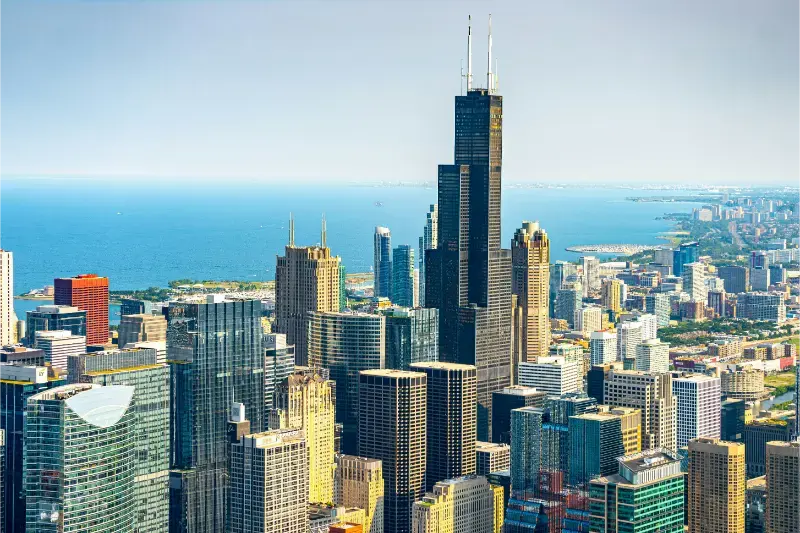
Sunset times are popular, so reserve if that moment matters. Otherwise, keep the deck flexible and use it as a clear-weather bonus.
9. Eat one classic Chicago food without turning it into a contest
Deep dish, tavern-style pizza, Italian beef and hot dogs are part of the city’s food identity, but you do not need to compare multiple versions of each. Choose one classic that fits your neighborhood and spend the rest of the trip exploring the broader dining scene.
Food is most useful when it complements the route. A famous restaurant is not worth a 45-minute detour if it breaks an otherwise coherent day.
10. Spend an evening outside the Loop
A neighborhood evening gives the trip a different rhythm. Lincoln Park, West Loop, Wicker Park, Logan Square and other areas each offer distinct combinations of food, nightlife, parks and local streets.
Choose one that fits your interest and stay there for dinner. The goal is depth, not collecting neighborhood names.
11–15. Sports, music, comedy, theater and waterfront time
Chicago’s live experiences are often more memorable than another museum. A Cubs game at Wrigley Field, a theater performance, blues or jazz, comedy, or a summer concert can become the anchor of an evening.
Check the event calendar before locking hotel dates. A major game or festival can also change lodging prices and transportation demand.
- Wrigley Field or another sports event when in season
- A blues or jazz venue matched to your evening area
- Theater in the Loop when you want an indoor night
- Comedy or improv for a lighter evening
- Navy Pier or a lake cruise when waterfront time is the priority
16–20. Add depth with targeted museums and cultural sites
After the major first-time attractions, choose museums based on interests rather than fame. Science, history, contemporary art and neighborhood cultural institutions can all justify time, but the city becomes exhausting when every morning and afternoon is indoors.
Alternate museum blocks with outdoor or food experiences. This is especially important with children, who may enjoy a park, beach or boat ride more after a long gallery visit.
21–25. Use the final slots for your travel style
The last five experiences should reflect why you came. Architecture fans can add a second tour; food travelers can build a neighborhood tasting day; families can prioritize parks and interactive museums; repeat visitors can spend more time away from downtown.
This approach is better than following a generic top-25 list literally. A first visit is successful when the city’s strongest themes match your interests, not when every famous attraction is checked off.
What is worth skipping when time is short
Skip an attraction when it repeats a view or experience you already have. For example, two observation decks in a three-day trip rarely add as much value as a neighborhood evening or a second museum matched to your interests.
Likewise, do not force Navy Pier, a stadium tour or a distant restaurant into the itinerary simply because it appears on a top-things list. Chicago rewards selective depth.
How to avoid attraction fatigue
Alternate indoor and outdoor blocks. A museum morning, lakefront walk, relaxed lunch and architecture cruise usually feels better than three large museums in a row.
The city’s public spaces are not filler. River bridges, parks, neighborhoods and lakefront paths are part of the destination and often become the memories that make the trip feel less scheduled.
Compare the total accommodation cost first, then check rental-car prices if your Illinois itinerary extends beyond a single walkable city base.
Frequently asked planning questions
What are the top three things to do in Chicago?
For a first trip: an architecture cruise, Millennium Park/lakefront time and one major museum or neighborhood experience.
What can I do for free?
Millennium Park, the Riverwalk, lakefront paths, many neighborhoods and skyline viewpoints from public spaces are excellent free experiences.
Is three days enough?
Yes for the core sights if you group them geographically. Add a fourth day for neighborhoods, sports or a second major museum.
Should I buy a city pass?
Only after pricing the exact attractions you genuinely want. A pass saves money only when its included sights match your realistic schedule.
What is the biggest planning mistake?
Crossing the city repeatedly for isolated attractions. Group each day by area and keep one flexible block for weather or delays.
Practical decision guide
If your itinerary is already crowded, decide what Best Things to Do in Chicago is supposed to add to the trip. Rank your Chicago list into must-do, would-like and weather-dependent experiences. Reserve the must-do items, place the would-like items near them geographically, and keep the weather-dependent choices flexible until the forecast is clear. Keep the stop when it creates a different experience, shortens a long driving day, or gives you access to something that cannot be replicated at the next destination. Cut it when it creates backtracking only to repeat the same type of museum, viewpoint, shopping district or roadside stop you already have elsewhere.
Build each day around one fixed priority and two flexible secondary stops. Reserve limited-capacity tours first, then place free or untimed attractions around them. For road-trip days, calculate from hotel door to hotel door rather than using only the headline drive time: parking, fuel, food, construction, restrooms and photo stops can easily add an hour or more.
Weather should usually change the order of the day rather than cancel the day. Put museums, visitor centers or long meals into the hottest, coldest or stormiest hours, and use the more comfortable part of the day for walking, overlooks and outdoor stops. This is especially useful in Illinois, where conditions can change quickly between the Lake Michigan shoreline, central prairie and southern hills.
Families and multigenerational groups generally have a better trip with fewer transitions. Two substantial experiences, a comfortable meal and one flexible outdoor stop often feel fuller than five rushed attractions. The same principle helps with accessibility: check parking-to-entrance distances, stairs, terrain and rest opportunities before committing to a tightly timed sequence.
Finally, protect the onward journey. Avoid using every remaining daylight hour if the next overnight requires an unfamiliar rural drive. Arriving with enough daylight to find parking, eat and settle in is part of efficient road-trip planning, not lost sightseeing time.
Final planning take
The strongest Illinois trips are selective. Reserve the experiences that truly depend on time slots, use geography to group the rest, and protect enough open time for weather, food and spontaneous stops. A trip with fewer hotel changes and better route logic usually delivers more of the state than an itinerary that tries to collect every famous name.