

Best Places to Visit in Indiana: Cities, Dunes, Small Towns and Road Trip Stops. Indiana is easy to underestimate because its best experiences are spread across several very different regions: Lake Michigan dunes in the north, major museums and sports in Indianapolis, university towns, wooded hills in the south, historic resort communities and one of America’s most surprising architecture cities.
For a first trip, the best strategy is not to collect as many pins as possible. Choose a coherent route and give each stop enough time to feel different. Four days works for one city plus one nature region; seven days is ideal for a focused road trip; ten days lets you include northern and southern Indiana without spending every afternoon in the car.
- Best first city: Indianapolis
- Best nature stop: Indiana Dunes National Park
- Best scenic weekend: Brown County + Nashville
- Best college-town atmosphere: Bloomington
- Best family city: Fort Wayne
- Most distinctive cultural stop: Columbus architecture
- Car: strongly recommended for a multi-destination trip
How to choose the right Indiana destinations
Indiana is easiest to plan when you stop treating it as a state that needs to be “covered” and instead choose two or three experiences that are geographically compatible. The state is compact enough for road trips, but not so compact that zigzagging between Lake Michigan, Indianapolis and the southern hills feels efficient. A first trip usually works best around one anchor city, one nature area and one smaller place with a very different atmosphere.
Indianapolis is the broadest first-time base because it combines major museums, sports, neighborhoods, food and easy highway connections. Indiana Dunes National Park is the obvious choice if Lake Michigan, beaches and hiking matter. Brown County and Bloomington pair naturally for rolling hills, forest, art, university culture and good food. South Bend works for Notre Dame and industrial history, while Fort Wayne is especially strong for families. Farther south, French Lick and West Baden offer a historic-resort weekend, and Columbus is the state’s most distinctive architecture stop.
The 10 places that deserve priority
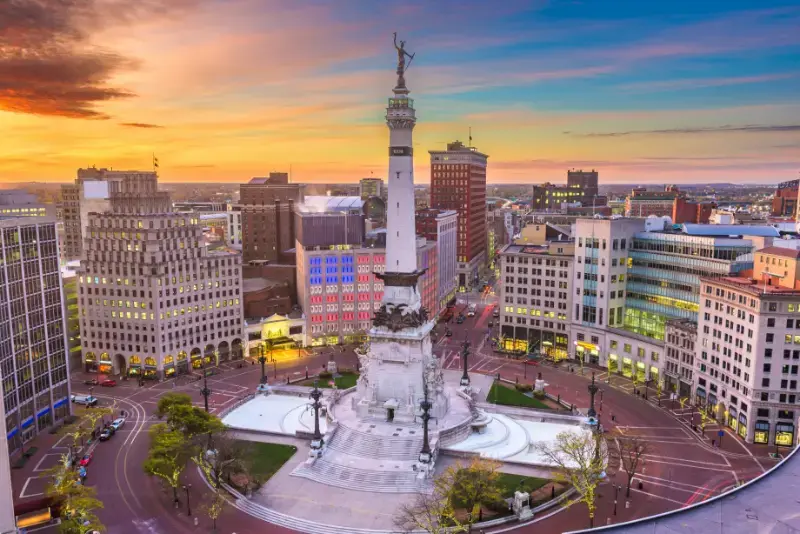
1. Indianapolis
Choose Indianapolis if you want the greatest variety in one base. A two-day stay can combine Monument Circle, White River State Park, a major museum, the Canal Walk, neighborhoods such as Mass Ave or Fountain Square, and the Indianapolis Motor Speedway area. Families can build an entire day around The Children’s Museum of Indianapolis; adults without children may prefer to divide the same time between art, history, food and the Speedway. The practical advantage is flexibility: bad weather does not ruin the trip because there are enough serious indoor attractions.
2. Indiana Dunes National Park
The Dunes are Indiana’s most dramatic natural contrast: sand, Lake Michigan, forests, wetlands and industrial skylines sharing the same horizon. Do not plan the park as a single beach stop. West Beach is useful for first-timers, Cowles Bog is better for hikers, and the smaller beaches reward visitors who arrive early and accept fewer facilities. The national park extends for roughly 15 miles along the lakeshore and has about 50 miles of trails, so one full day is a sensible minimum if nature is the purpose of the trip.
3. Brown County and Nashville
Brown County is the state’s classic scenic getaway. Nashville supplies galleries, crafts, restaurants and lodging; Brown County State Park supplies hiking, overlooks, forest roads and the sense that you have left central Indiana behind. Autumn foliage gets the publicity, but the area is often more enjoyable in late spring or September, when trails and roads are less congested. Two nights let you enjoy a morning hike, an afternoon in town and a scenic drive without turning the weekend into a race.
4. Bloomington
Bloomington works because Indiana University and southern Indiana’s landscape meet in one compact city. The campus and Kirkwood Avenue are easy to combine on foot, while Monroe Lake and Hoosier National Forest add outdoor options nearby. Food is a genuine reason to stay: the university brings a larger international dining scene than many visitors expect from a city of this size. Check the IU calendar before choosing dates because football, graduation and major events can change both traffic and hotel rates.
5. South Bend
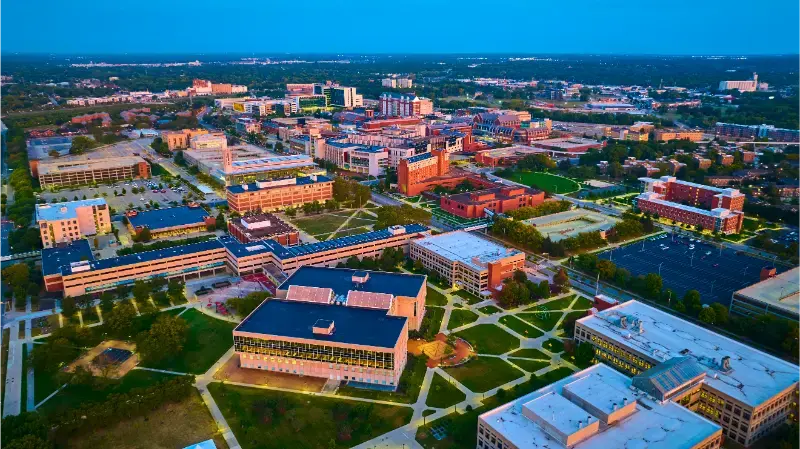
Notre Dame is the most recognizable reason to visit South Bend, but a good weekend does not need to revolve around a game. The Studebaker National Museum and The History Museum tell the region’s industrial story, the St. Joseph River gives downtown a strong physical identity, and Mishawaka adds a riverwalk and additional dining and lodging. On football weekends, reserve early and allow the event to shape the itinerary instead of pretending it is an ordinary city-break day.
6. Fort Wayne
Fort Wayne is one of the state’s best choices for families. The zoo can take a substantial part of a day, Science Central is an excellent weather-proof attraction, and the Foellinger-Freimann Botanical Conservatory gives downtown another reliable stop. Promenade Park and the city’s trail network make it easy to add outdoor time. For a two-day family trip, the city offers enough variety without requiring long cross-town drives.
7. French Lick and West Baden
This is the place to choose for a slower resort-oriented escape. West Baden Springs Hotel’s domed atrium is the architectural headline, while French Lick adds historic hotel atmosphere, the scenic railway and access to Patoka Lake and the wooded hills of southern Indiana. The area is better as an overnight than as a rushed day trip. It rewards long breakfasts, a scenic drive and time to enjoy the historic properties rather than a list of checkboxes.
8. Columbus
Columbus is unusually rich in modern architecture and public art for a city of its size. Start at the Visitors Center, take a guided architecture tour if the schedule works, and then revisit the buildings that interest you most at your own pace. The Miller House is a major draw when tours are available. Columbus pairs exceptionally well with Brown County, creating an easy two-day combination of design and landscape.
9. Lafayette and West Lafayette
Purdue University gives West Lafayette energy, while downtown Lafayette adds historic architecture, local restaurants and a more traditional Midwestern city center. The Wabash River connects the two, and Prophetstown State Park gives the area an outdoor half-day. This is a particularly useful stop on an Indianapolis–Chicago drive because it is interesting enough to justify an overnight rather than merely serving as a fuel break.
10. Madison
Madison, on the Ohio River, is the small historic town to add when architecture, river scenery and slower travel appeal more than major attractions. The historic district, nearby Clifty Falls State Park and the riverfront create a strong one- or two-night stop. It also fits naturally into a southern Indiana route that continues toward Louisville, making it more practical than a stand-alone detour on a northern itinerary.
A realistic 7-day Indiana road trip
Days 1–2: Indianapolis. Use downtown as the base and keep one day mostly central. On the second day, choose the Speedway plus a neighborhood rather than driving across the metro repeatedly.
Day 3: Columbus and Brown County. Drive south to Columbus for architecture in the morning, then continue to Nashville and Brown County State Park. Stay in or near Nashville.
Day 4: Bloomington. Spend the morning on a Brown County trail if weather is good, then move to Bloomington for the IU campus, downtown and dinner.
Day 5: Lafayette/West Lafayette. Head north via Indianapolis or take the most efficient route for current traffic. Explore Purdue and downtown; stay locally.
Days 6–7: Indiana Dunes. Finish at Lake Michigan. One day can focus on a classic beach-and-trail combination; the second gives you flexibility for weather, a longer hike or the adjacent state park. From here, Chicago is a natural onward destination.
This route intentionally leaves out South Bend, Fort Wayne and French Lick. Trying to add all three would turn a seven-day trip into a sequence of long drives. A good road trip has omissions. If Notre Dame matters more than Bloomington, substitute South Bend and keep the northern half of the state as the focus.
Best time to visit Indiana
Late April through June is excellent for cities, campus towns and hiking, although spring storms can disrupt outdoor plans. September and October bring cooler weather and foliage, especially in Brown County, but football weekends and peak-color weekends can raise lodging rates. Summer is best for Lake Michigan beaches and Patoka Lake, while winter can work surprisingly well for Indianapolis, Fort Wayne and other museum-rich cities.
Indiana’s weather can shift quickly, so avoid building an itinerary where every day depends on one outdoor attraction. Pair a weather-sensitive stop with a city or museum option whenever possible. That simple choice makes the trip far more resilient.
Do you need a car?
A car is strongly recommended for a multi-destination Indiana trip. Indianapolis can be visited without one if you stay central and use ride-hailing for outlying attractions, but Brown County, the Dunes, French Lick, Columbus combinations and most state-park travel are significantly easier by car. Distances are manageable, yet rural roads and park access points often make drive times longer than a quick glance at mileage suggests.
Budget and booking strategy
Indiana is often good value compared with Chicago or major coastal destinations, but event dates matter more than average nightly rates. Indianapolis around major races or conventions, Bloomington on IU weekends, South Bend for Notre Dame football and Lafayette for Purdue events can all become expensive quickly. Book the date-sensitive cities first, then fill in flexible nature stops around them.
Indiana with children
For families, Indianapolis and Fort Wayne are the strongest city bases, while Indiana Dunes adds a beach-and-nature day. South Bend works well when you combine the zoo, museums and riverfront; Lafayette has family attractions plus Prophetstown. Brown County is better for children who enjoy hiking, cabins and outdoor time than for families looking for structured attractions every hour.
Common planning mistakes
- Trying to visit the entire state in one week instead of choosing a coherent region.
- Arriving at Indiana Dunes beaches late on a summer weekend and assuming parking will be easy.
- Ignoring university and sports calendars when booking Bloomington, South Bend or Lafayette.
- Treating Brown County as a two-hour shopping stop and missing the state park.
- Assuming French Lick is “on the way” when your route is entirely northern Indiana.
- Scheduling too many museum interiors back-to-back in Indianapolis rather than mixing them with neighborhoods and outdoor spaces.
Frequently asked questions
How many days do you need for Indiana?
Four days is enough for one city plus one nature region; seven days works well for a focused road trip; ten days gives you room to include both northern and southern Indiana without spending every afternoon in the car.
What is the best first destination?
Indianapolis is the safest all-round choice. If your priority is nature, choose Indiana Dunes; if you want a slower scenic weekend, choose Brown County.
Is Indiana worth a road trip?
Yes, especially if you build the route around contrast: a major city, a university town, a lakeshore or forest region, and one distinctive small city such as Columbus or Madison.
Compare rental cars for your Indiana trip
Check places to stay in Indianapolis
For hotels, compare several bases rather than booking the first “central” result. The right place to stay changes dramatically between a museum weekend in Indianapolis, a beach trip to the Dunes and a cabin-focused Brown County escape.
Activities and tours are most useful in Indianapolis and in destinations where guided interpretation adds context, such as architecture or history. Leave enough text and planning space between commercial widgets so they support the article rather than interrupt it.
Visit Indiana – official state tourism site. Check current opening hours, seasonal operations, parking notices and event-day changes shortly before your visit.