

Fort Wayne Indiana Travel Guide: Family Attractions, Downtown, Trails and a 2-Day Plan. Fort Wayne is one of Indiana’s easiest family city breaks: enough major attractions to fill two days, a compact downtown, a strong park-and-trail network and prices that are often easier to manage than in larger Midwestern cities.
Choose a base that suits the length of your stay and the places you most want to visit. Compare transport options, check event dates when assessing hotel prices, and add nearby stops only when there is enough time to explore them without rushing the rest of the day. For a first visit, 2 days for families; one long day works for a single headline attraction plus downtown, but it undersells the city.
- Best for: Fort Wayne Zoo for a substantial half-day or more, science central, including its public planetarium
- Realistic time: 2 days for families; one long day works for a single headline attraction plus downtown, but it undersells the city.
- Where to stay: Downtown for walkability and riverfront evenings; north or southwest Fort Wayne if easy parking and highway access are more important than nightlife.
- Best time: Late spring through early fall for the fullest mix of zoo, parks and trails; winter remains viable if you build the trip around indoor attractions.
- Car: A car is optional for the compact core, but useful if you add outer neighborhoods or regional day trips.
- Best add-on: South Bend, Indianapolis or a northeast-Indiana road trip; do not underestimate drive times if you are crossing the state after a full attraction day.
Why Fort Wayne is worth your time
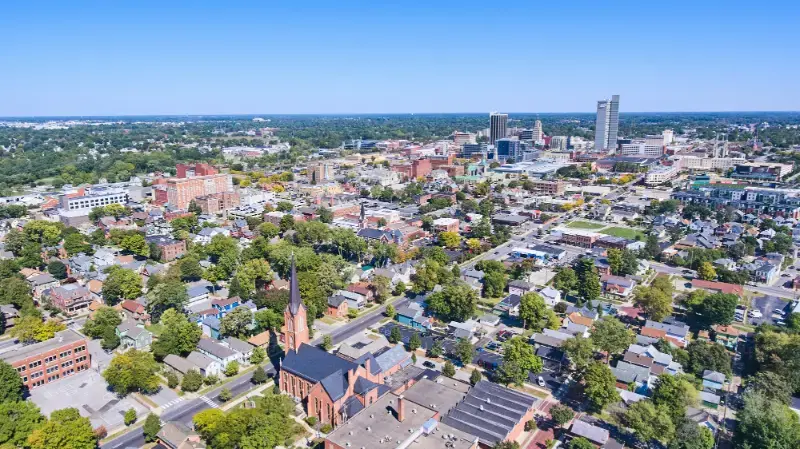
Fort Wayne is one of Indiana’s easiest family city breaks: enough major attractions to fill two days, a compact downtown, a strong park-and-trail network and prices that are often easier to manage than in larger Midwestern cities. The key is not to measure the destination by the number of famous sights. It is to ask whether the place gives you a different experience from the rest of an Indiana itinerary. Here, the answer is yes: the strongest attractions, neighborhoods and outdoor spaces can be combined without spending the entire day repositioning the car.
That makes Fort Wayne especially useful in a multi-stop trip. You can give it a clear purpose, arrive with a short priority list, and still leave room for weather or spontaneous stops. Travelers often lose time in smaller American destinations by assuming everything is five minutes apart. In practice, parking, campus traffic, event closures, park entrances and meal stops create friction. A plan with fewer priorities and better sequencing usually feels richer.
What to do first
- Fort Wayne Zoo for a substantial half-day or more
- Science Central, including its public planetarium
- Foellinger-Freimann Botanical Conservatory
- The Landing, Promenade Park and downtown riverfront
- The city’s extensive trail system and neighborhood parks
For a first visit, do not treat those five ideas as equal boxes to tick. Put the most time-sensitive or reservation-dependent experience first, then build the rest of the day around geography. If a museum, guided tour, sporting event or seasonal facility has fixed hours, anchor the day there. Flexible walks, parks, viewpoints and neighborhoods belong around that anchor.
How to prioritize when you only have one day
Choose one headline experience from the list above, one compact district for walking and food, and one secondary stop that works even if you arrive later than expected. That three-part structure is more resilient than a six-stop schedule. It also leaves time for parking, coffee, a weather delay and the unplanned place you notice along the way.
What to add on a second day
The second day should change the rhythm rather than repeat it. If day one is museum-heavy, use day two for outdoors, campus walking, a scenic drive or a neighborhood. If the first day is dominated by a park or major attraction, make the second more urban. The aim is contrast, which is what makes a short trip feel longer in a good way.
A realistic 2-day itinerary
Day 1: the essential Fort Wayne experience
Start early enough that parking and opening hours do not dictate the entire day. Spend the morning on Fort Wayne Zoo for a substantial half-day or more. Allow more time than the attraction’s minimum advertised visit length; the real visit also includes walking from the car, orientation, restrooms, photos and any short wait at entry. Around lunch, move to a compact dining area rather than driving to a famous restaurant on the opposite side of town.
Use the afternoon for Science Central, including its public planetarium and, if energy remains, add Foellinger-Freimann Botanical Conservatory. Keep the evening simple: choose the district where you already are, take a walk, and eat locally. Short city breaks improve dramatically when dinner does not require another 35-minute transfer at rush hour.
Day 2: the side of the destination most people skip
Use the second morning for The Landing, Promenade Park and downtown riverfront. This is also the best slot for an outdoor attraction in warm weather because temperatures and crowds are usually lower. After lunch, finish with The city’s extensive trail system and neighborhood parks or a nearby place that fits your onward route. If you are checking out that day, park once and avoid returning to the hotel unless necessary.
If weather turns poor, reverse the order and protect indoor attractions for the rainy hours. If a major event is taking place, allow it to reshape the day. Event traffic can be the difference between a relaxed itinerary and one that spends its best hours in queues.
Where to stay in Fort Wayne
Downtown for walkability and riverfront evenings; north or southwest Fort Wayne if easy parking and highway access are more important than nightlife. The “best” hotel area is therefore not universal. A walkable room that costs slightly more can save parking fees and two daily drives; a highway hotel can be better value if every planned attraction requires a car anyway.
Before booking, plot the first attraction of each morning and the final area of each evening. If both are on the same side of the destination, staying nearby can reduce a surprising amount of backtracking. Also check event calendars before locking in non-refundable rates; university weekends, races, festivals and tournaments can change prices far more than the normal difference between weekdays and weekends.
Check places to stay in Fort Wayne
For a broader comparison, use the accommodation map rather than choosing only by star rating. In Midwestern cities and park regions, a property that looks “central” in a booking list may still require a drive for the places you actually want to visit.
Getting around and parking
A car is optional for the compact core, but useful if you add outer neighborhoods or regional day trips. Even when you drive, the smartest strategy is usually to park once for each half-day rather than moving the car between nearby sights. Downtown streets, campuses and event districts often make a 10-minute walk faster than finding a second parking space.
Download offline directions before rural or park excursions. Cell service is generally reliable around cities, but dead zones and congested networks do happen. For any state park, national park or special event, check the official site shortly before departure for road work, parking changes and seasonal facility hours.
Best time to visit
Late spring through early fall for the fullest mix of zoo, parks and trails; winter remains viable if you build the trip around indoor attractions. There is no single perfect month because the best timing depends on the purpose of the trip. Outdoor-focused visits benefit from mild temperatures and longer daylight; museum-heavy weekends are much less sensitive to weather. Peak-event weekends can be worth the premium if the event is the reason you are traveling, but they are poor choices if you only want an ordinary sightseeing weekend.
For photography and walking, early mornings are disproportionately valuable. Streets are quieter, parking is easier and summer heat is lower. In autumn, do not assume peak foliage occurs on the same weekend every year. Weather patterns shift the color window, so use current local reports rather than old social-media dates.
Families, pace and accessibility
Families should plan fewer transitions than adult-only groups. One major attraction before lunch and one flexible stop afterward is usually enough, especially when children need meal breaks or downtime. Identify playgrounds, parks or open public spaces near the main attractions so the day contains moments where nobody needs to “perform sightseeing.”
Accessibility varies by attraction, trail and historic property. A destination may be generally accessible while a particular overlook, old building or trail is not. Check the official accessibility page for the exact attraction, and call ahead when an elevator, wheelchair route, sensory accommodation or accessible parking space is essential to the visit.
Food and evening strategy
Do not build every meal around a famous name. A useful food plan has one meal you care about and leaves the others flexible. Lunch near the morning attraction reduces driving; dinner near the hotel lets you enjoy the evening without worrying about parking again. College towns and larger cities often have more diverse dining than visitors expect, while resort and park regions may have limited late-night options.
On busy weekends, reserve dinner when reservations are available. If they are not, eat a little earlier than the local peak. This matters most after major sports events, concerts and festivals, when thousands of people leave the same venue at the same time.
What to combine with Fort Wayne
South Bend, Indianapolis or a northeast-Indiana road trip; do not underestimate drive times if you are crossing the state after a full attraction day. The right combination should reduce, not increase, zigzagging. Pair destinations that sit along the same onward route or offer a strong contrast. Two museum-heavy cities back-to-back can blur together; a city plus a lakeshore, forest or architecture stop usually creates a more memorable trip.
For broader planning, start with our guide to the best places to visit in Indiana. Other already-published guides that can help you compare the state include: Best Places to Visit in Indiana: Cities, Dunes, Small Towns and Road Trip Stops Indianapolis Travel Guide: Best Things to Do, Where to Stay and a Smart 2-Day Plan Indiana Dunes National Park Guide: Beaches, Trails, Parking and the Best Way to Visit.
Costs, reservations and practical details
Build the budget around lodging, parking and the one or two paid attractions that matter most. Food and incidental costs are easier to adjust. If an attraction uses timed entry, buy the ticket first and then plan nearby activities; if it is walk-up only, have a backup in case capacity or weather changes. Avoid prepaying every hour of the day because that removes the flexibility that makes a short road trip work.
Parking fees vary widely between downtown garages, event lots, campuses and parks. Read the rules at the exact facility rather than relying on an old blog post. Likewise, seasonal attractions may close on weekdays outside summer even when the destination itself is open year-round.
Mistakes to avoid
- Trying to see every headline attraction in one day.
- Ignoring the local event calendar before choosing hotel dates.
- Assuming “downtown” automatically means the best base for your itinerary.
- Driving across town for every meal instead of grouping stops by area.
- Relying on old screenshots for park hours, trail access or parking rules.
- Scheduling a long onward drive immediately after a major evening event.
Useful official information
Visit Fort Wayne – official destination site. Check current opening hours, seasonal operations, parking notices and event-day changes shortly before your visit.
Frequently asked questions
How long should I stay in Fort Wayne?
2 days for families; one long day works for a single headline attraction plus downtown, but it undersells the city.
Where should I stay?
Downtown for walkability and riverfront evenings; north or southwest Fort Wayne if easy parking and highway access are more important than nightlife.
What is the best time to visit?
Late spring through early fall for the fullest mix of zoo, parks and trails; winter remains viable if you build the trip around indoor attractions.
Do I need a car?
A car is optional for the compact core, but useful if you add outer neighborhoods or regional day trips. If you are continuing to another Indiana destination, having a car also prevents you from building the entire route around limited intercity schedules.
What should I combine with this stop?
South Bend, Indianapolis or a northeast-Indiana road trip; do not underestimate drive times if you are crossing the state after a full attraction day.
The strongest Fort Wayne trip is not the one with the longest checklist. It is the one where the morning priorities, hotel location and next destination fit together. Give the headline experiences enough time, keep one part of each day flexible, and use current official information for the details that can change.