

Maryland makes more sense when you picture water first. The Chesapeake Bay divides the state into two very different travel experiences, while the Atlantic beaches lie farther east and the Appalachian ridges rise to the west. Baltimore, Annapolis, a quiet waterfront village and a mountain trail can all belong to the same vacation, but they rarely belong to the same day.
For a first visit, give Maryland five to seven days and choose two or three overnight bases. Spend time in a city, cross the bay if the Eastern Shore interests you, and decide whether your final days belong at the ocean or in the mountains. A weekend works well too, provided you stay within one region. The pleasure here is in the details: a morning beside a working harbor, a museum that changes how you understand the landscape, or a dinner that lasts longer than expected.
Get your bearings before choosing hotels
Baltimore sits toward the upper end of the Chesapeake system, with museums, neighborhoods and a major airport nearby. Annapolis is farther south on the western side of the bay. Across the Chesapeake Bay Bridge, Kent Island opens the way to the Eastern Shore, including Easton, St. Michaels and Cambridge. Continue east and you eventually reach Ocean City and Assateague on the Atlantic.
Western Maryland is a separate trip direction. Frederick is a useful gateway to Civil War sites and the Catoctin Mountains; Cumberland and Deep Creek Lake take you farther into the Appalachians. Trying to see Deep Creek and Assateague during a short break means trading much of that break for driving.
Choose your anchor experience first. If it is the National Aquarium, start with Baltimore. If it is sailing and historic streets, consider Annapolis. If you want marshes, small harbors and seafood, look at the Eastern Shore. Families seeking a beach vacation should compare developed Ocean City with the much less serviced barrier-island setting of Assateague.
How many days do you need?
With two nights, select Baltimore, Annapolis, Frederick or an Eastern Shore town and take one nearby outing. This gives you a full day without luggage transfers. A two-night Ocean City stay also works, although the drive from a western arrival airport can consume a considerable part of each travel day.
Five nights let you pair Baltimore or Annapolis with the Eastern Shore and the coast. Seven nights allow a more comfortable version of that route, or a city-and-mountains vacation with Frederick and western Maryland. Count nights as well as days: arriving late Monday and leaving early Sunday does not provide seven sightseeing days.
A statewide loop should follow the geography rather than a list of attractions. The seven-day Maryland road trip is a useful starting point for a coast-focused vacation. For a mountain-focused trip, remove the Atlantic coast and give those nights to Frederick, Cumberland or the Deep Creek area instead.
Arriving by plane, train or road
Baltimore/Washington International Thurgood Marshall Airport, usually shortened to BWI, is a practical arrival point for central Maryland. It has separate connections toward Baltimore and toward the mainline rail network. The airport terminal and BWI Rail Station are different places, so include the transfer if you are planning to board Amtrak or MARC.
Baltimore Penn Station also receives intercity trains. It is north of the Inner Harbor, which means an onward trip by transit, taxi or rideshare rather than stepping directly into the waterfront district. Washington’s airports can suit trips combining Maryland with DC, but compare the entire transfer with your arrival time before choosing a cheaper flight.
For a city-only break, collecting a rental car immediately can create unnecessary parking costs. For the Eastern Shore, Antietam, mountain parks or Assateague, a car usually gives much more flexibility. An efficient compromise is to explore Baltimore first and collect the car when you leave for the rural part of the trip.
Baltimore or Annapolis: which should come first?
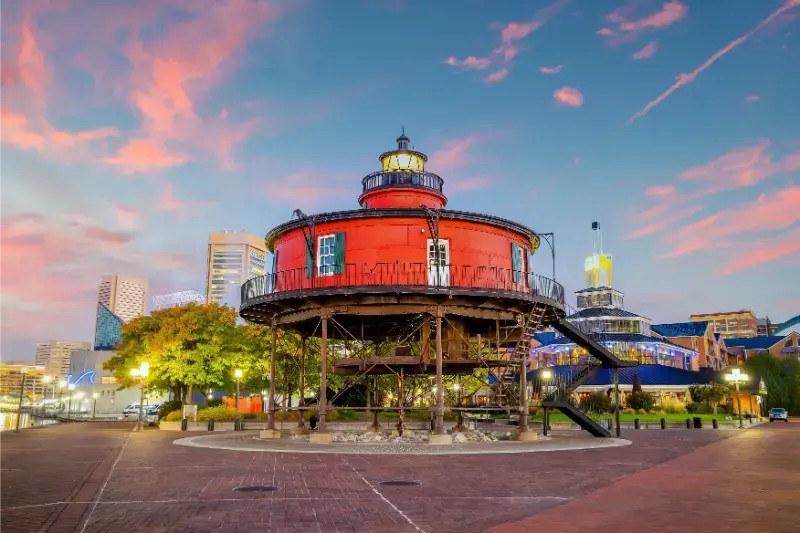
Baltimore offers the greater concentration of major museums and indoor activities. A waterfront walk can connect several districts, but attractions such as Fort McHenry, the Baltimore Museum of Art and the B&O Railroad Museum need their own travel time. Give a large museum a half-day slot instead of treating it as a brief stop between meals.
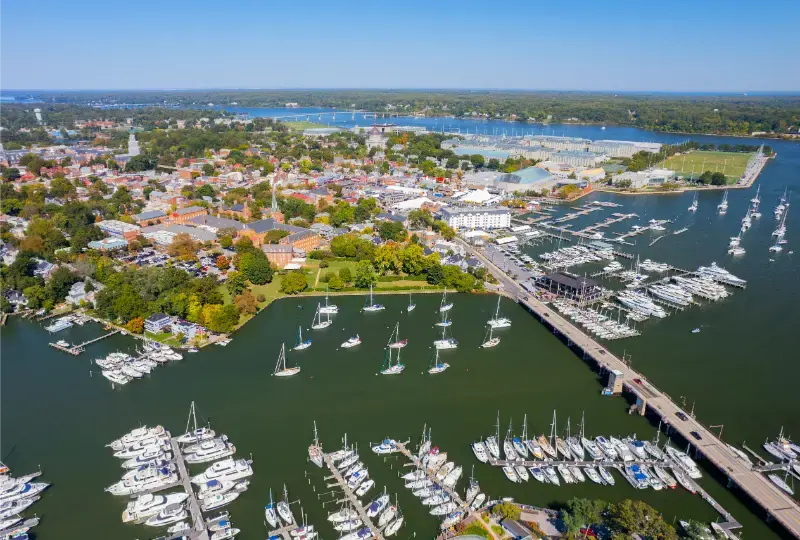
Annapolis is smaller and rewards walking. State Circle, Maryland Avenue, Main Street and Eastport offer different perspectives on the capital without a long list of admissions. A harbor excursion can become the centerpiece of a day, especially if the weather is pleasant.

There are two important planning qualifications. City Dock redevelopment continues into 2027, so familiar waterfront routes and access points may change. The Naval Academy also has specific entry rules; current guidance restricts general access for visitors using foreign passports. International travelers should plan an Annapolis day that stands on its own without Academy admission. The Annapolis guide explains the alternatives.
Crossing the bay and exploring the Eastern Shore
The Chesapeake Bay Bridge carries US 50/301 between the Annapolis area and Kent Island. It is the logical crossing for most routes from central Maryland toward St. Michaels, Cambridge and Ocean City. Summer beach traffic can turn a short-looking map segment into the least predictable part of the day. Build the crossing into your transfer day and avoid attaching a nonrefundable boat departure immediately afterward.
St. Michaels suits travelers interested in maritime history and a compact town. Cambridge is especially useful for Blackwater National Wildlife Refuge and the Harriet Tubman landscape. Easton can work as a practical dining and lodging base between outings. None of these towns is an Atlantic beach resort.
Two nights on the Eastern Shore give you a full day and a second morning to work around weather. A museum-and-harbor day and a marsh-and-history day complement each other well. The Chesapeake Bay guide compares towns by the experience they offer rather than simply ranking their waterfront views.
Ocean City and Assateague serve different vacations
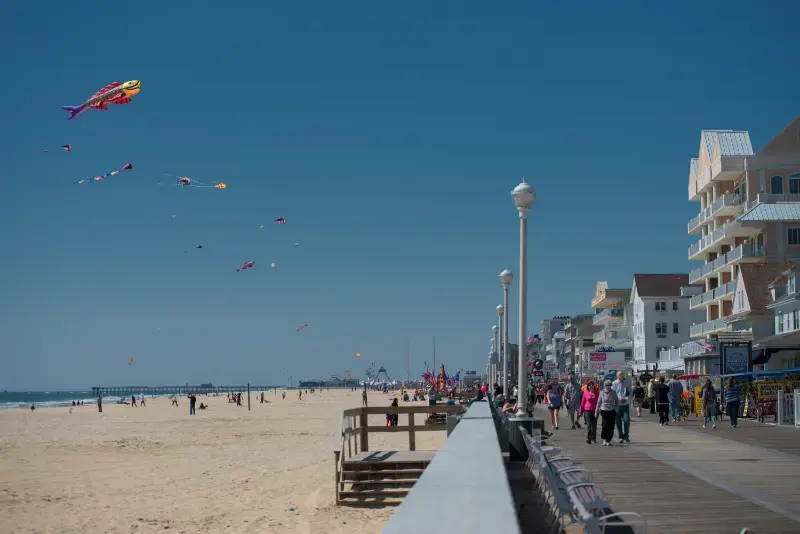
Ocean City is the choice for hotels, condos, boardwalk food, amusements and easy access to a long public beach. Where you stay affects your daily routine: the southern Boardwalk area has a different atmosphere from an uptown condo, and West Ocean City lies across the bridge on the mainland.
Assateague is a barrier island with beaches, dunes, salt marsh and wild horses. In Maryland, a state park and a national seashore share the island but have separate fees, facilities and rules. Neither should be treated as a resort with plentiful shops and restaurants just behind the sand.
A pleasant combination is to sleep in the Ocean City or Berlin area and devote a separate day to Assateague. Take food, water and insect protection, and leave horses space. You do not need an off-road vehicle permit for a normal visit to the paved-access beach areas. Read the Assateague planning guide before choosing an entrance or campsite.
Frederick and the western part of the state
Frederick works particularly well for travelers who prefer a walkable historic center with countryside outings. Carroll Creek, independent shops and the National Museum of Civil War Medicine make a worthwhile town day. Antietam and Sharpsburg add a different, more reflective outing; they are not simply roadside attractions on the way to lunch.
Cumberland is better placed for canal and railroad interests, while the Deep Creek Lake area suits a longer stay built around outdoor recreation. Mountain roads, weather and the distance between trailheads matter more here than the state’s small size might suggest.
Choose lodging near the activities you will actually repeat. A lakeside rental can be excellent for a family staying several nights, but less convenient for a short trip centered on Cumberland. In autumn, keep daylight in mind when returning from walks. In winter, ask about vehicle access and parking conditions at the property itself.
The best season depends on your trip
Spring is appealing for city walks, gardens and historic towns. Coastal wind can make a sunny day feel cool, and some boat services operate limited schedules. Bring layers and check departures before building a day around the water.
Summer is the main beach season and the busiest period for many waterfront destinations. Heat and humidity make long midday walks less comfortable. Book coastal accommodation early when dates are fixed, and look for shade, a pool or an indoor alternative if traveling with young children.
Fall is a strong choice for mixed trips, with comfortable walking weather on many days and changing foliage in the west. Color does not peak everywhere simultaneously. Winter favors museums, food and quiet town stays; the mountains can support a winter sports trip, while waterfront activities become much more weather dependent. Do not assume a summer itinerary operates unchanged in January.
Costs: where the budget usually goes
Accommodation is often the largest variable, particularly at the beach and during major events. Compare the final room or rental price with taxes, resort charges, cleaning fees and parking. A kitchen can save money on a longer family stay, but a cleaning charge can undermine that advantage on a two-night booking.
Separate admission, transport and food rather than using a single daily figure. Ocean City’s public beach has no admission fee, but parking and amusements still cost money. Assateague’s Maryland national seashore currently charges $25 for a seven-day private-vehicle pass; that is a different purchase from state park entry. Check the relevant operator before buying passes.
For a useful budget, total the confirmed lodging, your intended admissions and the actual rental-car quote, then add meal and fuel allowances. Keep an extra margin for tolls, changed weather plans and cancellation terms. Paying more for a central hotel can be worthwhile if it removes a daily parking charge and several short drives.
Traveling with children or limited mobility
Choose one substantial attraction each day and keep the second activity easy to drop. Baltimore museums can occupy much of a child’s attention span; at the beach, walking from the room to the sand may already involve equipment, stairs or a long crossing. Check room access, elevators and parking rather than relying on a generic family-friendly description.
Historic towns often have uneven brick sidewalks and older buildings. Waterfront does not automatically mean step-free, and an accessible museum does not guarantee accessible boarding on a cruise. Ask the operator about the exact route, restroom and transfer arrangements you need.
For a first Maryland vacation, a satisfying plan might be two nights in Baltimore, two around St. Michaels or Cambridge and three near Ocean City. Travelers who prefer hills could replace the entire coastal section with Frederick and western Maryland. Choose the version that makes you want to stop and look around, then give each base enough time to earn its place.
Compare the options
| Trip style | Useful base | Suggested stay | Main focus |
|---|---|---|---|
| City break | Baltimore or Annapolis | 2–3 nights | Museums or historic streets |
| Eastern Shore | St. Michaels or Cambridge | 2–3 nights | Maritime history or marshes |
| Atlantic coast | Ocean City / Berlin area | 3+ nights | Beach days and Assateague |
| Western route | Frederick, then mountains | 4+ nights | Town walks and outdoor time |
Find your bearings
Open the map in a new tab · Orientation map; use the official local map for trail access and closures.
Build your own trip budget
Enter your own quotes and spending allowances in U.S. dollars. The room amount is for your whole group per night. Include taxes and fees in the figures you enter.
Estimated group total:
Formula: (nights × room cost) + (days × travelers × daily food) + total activities + total transport and other costs. This tool uses only the amounts you enter.
Frequently asked questions
Can I visit Maryland without a car?
Baltimore works well as a city break without a car. For the Eastern Shore, Antietam, Assateague and mountain outings, a car usually makes the trip much easier.
Should I choose the coast or the mountains for five days?
Choose one direction after your city stay. Trying to include both the Atlantic and Deep Creek in five days leaves much less time at each destination.
Does a national park pass cover Maryland state parks?
No. Federal passes and state park entry are different systems; confirm admission for each managed area.
Plan the next part of your trip
- Best Things to Do in Maryland: 25 Experiences Worth Your Time
- Maryland Road Trip: 7 Days from Baltimore to the Eastern Shore
- Chesapeake Bay Maryland: Best Towns, Scenic Drives and Experiences
Arrange your stay and activities
Some booking links below are affiliate links. We may earn a commission if you book through them.
Compare stays: Maryland, USABrowse tours and experiencesCompare rental cars
Match the location, meeting point and cancellation terms to your itinerary before booking.
Official sources and visitor information
- Maryland trip ideas
- Annapolis City Dock project updates
- Naval Academy visitor access
- Assateague entrance fees
Last updated: October 16, 2026.