

Annapolis is small enough to explore on foot and varied enough to fill a weekend. Around State Circle, brick streets lead past historic buildings and independent shops; lower down, masts, creeks and working marinas give the capital its maritime character. The best days usually combine a walk, one substantial visit and time on or beside the water.
There are two details to address before you make reservations. City Dock is undergoing a major redevelopment, with work continuing into 2027. The U.S. Naval Academy also has entry restrictions that make older advice about simply bringing a passport unreliable. You can still have an excellent Annapolis visit, including as an international traveler, but your day should not depend on unrestricted access to either location.
How long to stay and who Annapolis suits
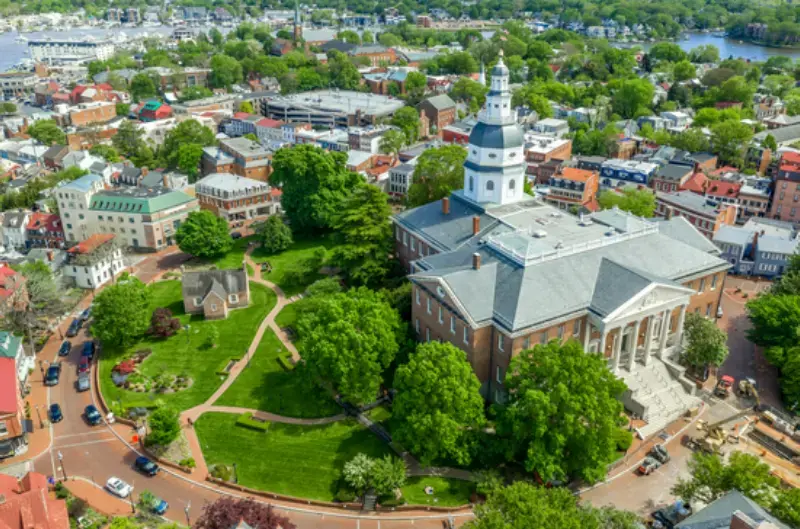
A day gives you time for the historic center, lunch and a harbor activity or museum. Two nights let you explore at a gentler pace, spend time in Eastport and enjoy dinner without watching the clock for a return drive. Annapolis particularly suits travelers who like compact towns, architecture, sailing and a mix of history with outdoor time.
It is also a useful counterpoint to Baltimore. The capital’s appeal is more about streets and waterfront atmosphere than a large cluster of major indoor attractions. If you are traveling with children, choose a specific activity to anchor the day rather than expecting several hours of architecture to hold everyone’s attention.
An overnight is most valuable when your accommodation lets you walk to dinner. If you book farther out to save money, include parking and the drive back in your comparison. The Maryland travel guide explains how Annapolis fits with Baltimore and the Eastern Shore.
Arriving and parking without circling downtown
BWI is a practical airport for Annapolis, but you still need an onward road transfer or a carefully checked transit combination. There is no direct intercity rail arrival in the historic center. For a short visit from Baltimore or Washington, compare driving with current bus options and your required return time.
Once downtown, park once and walk. City garages include Hillman, Gotts Court, Knighton and Park Place, with different positions relative to the waterfront. A garage farther uphill can work well if you begin your visit around the visitor center and State Circle. Check the current rate, payment instructions and any event arrangements instead of following old parking screenshots.
Boat shows, Academy events and busy weekends can change road access and demand considerably. If you have a cruise reservation, add time for the garage, the walk to the dock and check-in. A nominal driving estimate ends when you reach downtown, not when you step aboard.
Walk from State Circle toward the water
Begin around the Maryland State House and State Circle, where the capital’s street pattern makes more sense than it does from the bottom of Main Street. The State House has an important place in both Maryland and national history. Check current visitor access and identification requirements before planning an interior visit, and remember that government business can affect arrangements.
Maryland Avenue offers a different pace from Main Street, with smaller storefronts and historic streets nearby. Take time to look down side streets, but respect private homes and avoid treating residential doorways as public photo settings. A short walk with pauses is often more rewarding than following an exhaustive route.
Continue toward Main Street for shops and a choice of places to stop. The descent toward the harbor is easy to underestimate when planning the return; the same route goes uphill afterward. For anyone who tires on slopes or uneven brick paving, choose a shorter loop and identify a comfortable break before starting.
City Dock construction: plan around the current site
As checked in October 2026, the City Dock project remains active. The city has identified a July 2027 target for the park and Maritime Welcome Center opening. Treat that as a projected construction milestone, not a promise that every waterfront path is available today.
Follow the official access map and on-site pedestrian signs around Dock Street and the work area. Businesses can remain open even when familiar approaches are altered. If you are meeting a guide or boarding a boat, use the operator’s current instructions rather than an old photograph of the meeting point.
The practical response is to give Annapolis more than one waterfront focus. Explore the historic streets, include Eastport, and book a boat only after confirming its departure dock. Do not plan a day that consists entirely of sitting beside an unobstructed City Dock view described in an older guide.
Naval Academy access: read this before booking a tour
The Academy is an active military installation. Current official guidance says foreign passports are not accepted for general public access. Non-U.S. citizens face additional restrictions, with visits limited to specified official-event arrangements involving authorized sponsorship or escort. A normal commercial tour booking does not by itself resolve those conditions.
For visitors eligible for general access, acceptable identification includes specified U.S. credentials such as a REAL ID-compliant license or U.S. passport. Security screening and gate arrangements also apply. Check the Academy’s current base-access page before buying tickets; do not rely on a tourism page’s general opening hours as confirmation of admission.
If you cannot visit, keep the rest of the day intact. State Circle, Historic Annapolis sites, Eastport and a suitable harbor cruise provide a full itinerary outside the installation. This is especially important for overseas visitors who might otherwise arrive expecting a passport and a tour ticket to be sufficient.
Choose a historic house or museum
A single historic-site visit can give your walk more substance. Historic Annapolis operates properties and interpretation around town, including the William Paca House and Garden. Check which spaces are open, whether the visit is guided and how long a scheduled tour lasts before building your day around it.
Choose according to interests. A house-and-garden visit suits travelers who enjoy architecture, domestic history and formal outdoor spaces. The Museum of Historic Annapolis can help put the town’s stories into a wider framework. One focused visit leaves more room to notice how the surrounding streets relate to the material you have just seen.
Historic buildings may have stairs and access limitations. Ask about the exact route if step-free access matters. A garden, ground floor and upper-floor tour can have different arrangements, so a general statement that a site welcomes all visitors does not answer every practical question.
Sailing, cruises and time on the water
Decide what you want from a boat outing. A narrated harbor cruise is often the simplest choice for an overview. A sailing trip offers a different atmosphere and may involve more exposure to wind and motion. A private charter gives more control over the group experience, usually at a higher total cost.
Read the details that shape the actual outing: duration, boarding steps, seating, toilets, shade, food policy and weather cancellation terms. A vessel described as suitable for families may still be awkward with a stroller or difficult for someone who cannot manage a step across a moving gangway.
Avoid booking the final departure on a tightly scheduled arrival day. Summer traffic and parking are unpredictable enough without a boat deadline. If the water is your main reason for visiting, stay overnight and choose a flexible period in the middle of your stay, with an indoor alternative available.
Cross to Eastport for another side of Annapolis
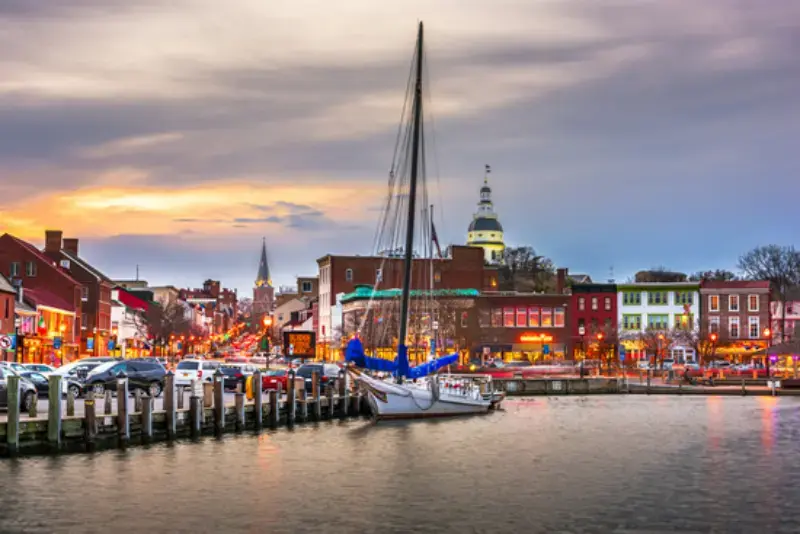
Eastport lies across Spa Creek and gives the visit a more residential and marina-oriented feel. The bridge walk provides changing views, but it is still an extra out-and-back if you are sleeping downtown. Include that distance when planning the afternoon.
The Annapolis Maritime Museum is a useful anchor here, connecting the area with oysters, watermen and the bay environment. Check the museum’s operating schedule separately from any sailing or special event it offers. A waterfront lunch and a museum visit make a coherent Eastport half-day without needing several additional stops.
Water taxis may offer another way to move around when operating. Verify the service, pickup point and final return rather than assuming it functions like a frequent city bus. For visitors with mobility concerns, ask directly about boarding; a short crossing is not automatically an easy transfer.
A day plan and a weekend version
For a day trip, arrive early enough to park comfortably and begin around State Circle. Add one interior visit if open and relevant, then stop for lunch before walking toward the accessible waterfront areas. In the afternoon, choose either a confirmed boat outing or Eastport and the maritime museum. This leaves a manageable walk back to the car.
For two nights, use the first afternoon for orientation and dinner. Give the next morning to the historic center and your chosen museum, then keep the afternoon for the water. On the final morning, return to a street you enjoyed or visit Eastport before leaving. There is no need to repeat the entire downtown circuit.
If Annapolis is a stop before the Eastern Shore, let the final morning stay flexible. Cross the Bay Bridge without attaching a narrow museum admission window on the other side. St. Michaels makes a natural next base for maritime history, while Cambridge is better positioned for marshes and the Harriet Tubman sites.
Where to stay and eat
Compare available accommodation for your dates, budget and preferred location before you finalize your route.
Downtown accommodation is convenient for walking, but ask where the car will be parked and whether that cost is included. Historic inns can have distinctive rooms and a central setting, with stairs, compact bathrooms or limited elevator access. Request the room features you need before paying a nonrefundable rate.
West Street can offer a useful balance of restaurants and access to the center. Eastport suits travelers who prefer evenings near marinas and do not mind the bridge walk. Hotels farther from the historic core can be practical for drivers, particularly if Annapolis is only one stop in a longer trip.
For meals, compare a full seafood dinner with a simpler crab cake or oyster stop according to budget and appetite. Waterfront seating can be lovely, but ask about reservations and seasonal outdoor service. Leave enough time before a cruise; a restaurant meal and a boat check-in do not always fit neatly into the same hour.
Weather, comfort and the final booking decisions
Spring and fall are appealing for walking, while summer brings long evenings, heat and busier weekends. Winter can be enjoyable for a quieter historic-town break, but boat schedules and outdoor dining become less reliable. Wind off the water makes an extra layer useful well beyond the coldest months.
Wear shoes that work on brick and slopes. For children, break the walk with something concrete to look for: boats, bridges, garden features or the shapes of the streets around the State House. For older travelers, a centrally located hotel and a shorter route may improve the visit more than adding another attraction.
Before departure, confirm only the details that can disrupt your day: current waterfront access, the museum’s opening, Academy eligibility if relevant, your boat’s boarding point and parking arrangements. With those settled, Annapolis leaves plenty of room for an enjoyable, unscripted walk.
Compare the options
| Area / visit | Useful plan | Practical detail |
|---|---|---|
| Historic center | State Circle, Maryland Avenue, Main Street | Slopes and brick surfaces |
| City Dock area | Use current pedestrian routes | Construction continues into 2027 |
| Naval Academy | Verify eligibility before tickets | Foreign passports do not allow ordinary general access |
| Eastport | Museum, marinas and another town perspective | Bridge walk or confirmed transport |
Find your bearings
Open the map in a new tab · Orientation map; use the official local map for trail access and closures.
Frequently asked questions
Can international visitors enter the Naval Academy?
Current official guidance does not allow foreign passports for ordinary general access. Non-U.S. citizen visits are subject to specific official-event sponsorship and escort conditions. Check the current base-access rules before buying a tour.
Can I still visit Annapolis during City Dock work?
Yes. Historic streets, museums, shops and Eastport remain reasons to visit; check current access around the worksite and any changed boarding points.
Is Annapolis walkable?
The historic core is compact, but slopes, brick paving and an Eastport return walk can add effort. Choose a route suited to your group.
Plan the next part of your trip
- Maryland Travel Guide: Where to Go, When to Visit and How to Plan
- Chesapeake Bay Maryland: Best Towns, Scenic Drives and Experiences
- St. Michaels Maryland Guide: Maritime History and Waterfront Weekend
Arrange your stay and activities
Some booking links below are affiliate links. We may earn a commission if you book through them.
Compare stays: Annapolis, MarylandBrowse tours and experiencesCompare rental cars
Match the location, meeting point and cancellation terms to your itinerary before booking.
Official sources and visitor information
- Annapolis visitor information
- Current City Dock construction
- Academy visitor requirements
- Historic Annapolis properties
- Historic-site accessibility
Last updated: October 16, 2026.