

Portland is a city best approached on foot and with an appetite. A morning can begin among the brick buildings of the Old Port, drift toward the fishing boats along Commercial Street, and end over a lunch that becomes longer than expected. Beyond the busiest waterfront streets, hills, neighborhood cafés and glimpses of Casco Bay give the city more room to breathe.
Two or three nights make a rewarding first visit. There is enough here for a full city break, yet Portland also works beautifully at the beginning of a Maine road trip. Give it an evening of its own. The combination of a good meal, a harbor breeze and a short walk back to your room is one of the strongest reasons to stay rather than pass through.
Compare available accommodation for your dates, budget and preferred location before you finalize your route.

Start in the Old Port, then look beyond it
The Old Port’s appeal lies partly in its scale. Short blocks make it easy to explore without deciding on a strict route, while old brick façades and uneven paving provide a welcome contrast to the road that brought you into town. Exchange Street, Fore Street and their connecting lanes offer shops, cafés and places to pause. Look up occasionally: the upper stories tell more of the neighborhood’s architectural story than a sequence of storefronts alone.
Commercial Street follows the water, but this is not an uninterrupted pedestrian promenade. It remains a busy street beside working wharves, with loading areas, private operations and traffic. Public views of the harbor appear between buildings and at permitted access points. Enjoy those openings without assuming every dock is a visitor walkway. The working character is part of what makes Portland feel like a real port.
For an easy first afternoon, leave the car in one suitable place and make a loose loop through the district. Browse before dinner, take a waterfront pause, then walk inland again for your reservation. A comfortable pair of shoes matters here: cobbles, pavement changes and the city’s hills make themselves felt over several hours, particularly with luggage, a stroller or limited mobility.
Let food give the day a little structure
Portland’s dining reputation can tempt visitors into an exhausting series of bookings. A more enjoyable approach is to reserve the meal you care most about and let the rest of the day stay open. A bakery breakfast, a casual waterfront lunch and one thoughtful dinner give you variety without making the city feel like a timetable. Popular dining rooms can fill well ahead on summer weekends, so that one reservation is worth making early.
Seafood offers plenty of ways to eat. A lobster roll is convenient, but a whole lobster is a slower, messier occasion, often better enjoyed when there is no urgent plan afterward. Haddock, oysters and chowder provide alternatives. Read the menu’s portions and inclusions before comparing prices: a roll served on its own is a different purchase from a full meal with sides.
Portland also rewards stepping beyond the seafood expectation. Coffee shops, bread, seasonal vegetables and kitchens drawing on different food traditions contribute to the city as much as its lobster signs. Leave room for an ordinary neighborhood meal. If you are traveling with children or anyone sensitive to long waits, an earlier dinner and a nearby dessert stop can be a more comfortable evening than pursuing the hardest table to obtain.
Congress Street and the Arts District
Walking inland from the waterfront changes the atmosphere. Congress Street brings you into a more everyday urban setting, with cultural institutions, shops and streets used by residents as well as visitors. The Portland Museum of Art anchors a substantial indoor outing at Congress Square. It is a place to spend time looking, not simply somewhere to shelter for ten minutes when rain arrives.
The museum’s published admission is $20 for adults, $18 for seniors and students age 22 or older, and free for everyone 21 and younger. Its current regular hours are 10 a.m. to 6 p.m. daily, with Friday opening until 8 p.m. and free admission from 4 to 8 p.m. Those details can make a late-afternoon visit particularly appealing, though holidays and special arrangements deserve a final check.
Allow a couple of hours if art is an important part of your trip, then continue with a café or a nearby walk rather than immediately scheduling another major museum. Families may prefer a shorter visit centered on a handful of works. The museum’s own family and accessibility information is useful for choosing the right arrival point and making the visit comfortable.
Find open water at the Eastern Promenade
The Eastern Promenade offers a different Portland from the close streets of the Old Port. Open grass, paths and bay views make it a good place to stretch the afternoon. Ships and islands give the horizon something to hold your attention, and the setting lends itself to a simple pause with a drink or a picnic rather than another paid attraction.
Decide how much walking you want before connecting it to downtown. The city rises away from the water, and a route that looks short on a phone can include a noticeable climb. You can make the promenade the main outdoor part of the day, or take transport one way and walk a chosen section. That is often more pleasant than discovering the return hill when everyone is already tired.
Weather changes the experience. On a clear afternoon the bay can look invitingly calm; another day may bring wind or low cloud. Carry a layer even when the streets feel warm. For visitors who need an accessible route, consult current city information for the particular path and access point, since the wider promenade area includes different slopes, surfaces and connections.
Cross Casco Bay with a purpose
A ferry ride lets you see Portland turn into a skyline behind the water. Casco Bay Lines operates island services from the city, and its current route information is the place to begin. Choose the island experience first: a short exploration ashore is different from spending most of the outing aboard a scenic sailing. Do not assume every departure offers the same stops, duration or ticket rules.
Peaks Island is a familiar option for a first island visit, but it still needs a little preparation. Read the day’s outward and return timetable, allow boarding time and decide how you will move around after arrival. Walking distances accumulate quickly if you try to circle more shoreline than expected. A modest route with a meal or a harbor pause can be more satisfying than attempting the whole island in a narrow interval.
Keep the ferry day light on fixed evening commitments. Wind and operating conditions can alter plans, and a boat schedule leaves less freedom than a city walk. Bring water, sun protection and a warm layer for the crossing. If your group is uncertain about boats, compare a shorter trip with a longer excursion before purchasing; the novelty of departure does not tell you how everyone will feel after an hour on deck.
Portland Head Light is a Cape Elizabeth outing
The lighthouse most closely associated with Portland stands outside the city, in Cape Elizabeth’s Fort Williams Park. That distinction is useful when arranging transport. A taxi or rental car journey needs to include the return, and a timed tour may offer less freedom to linger than traveling independently. Walking there from the Old Port is not a sensible default sightseeing connection.
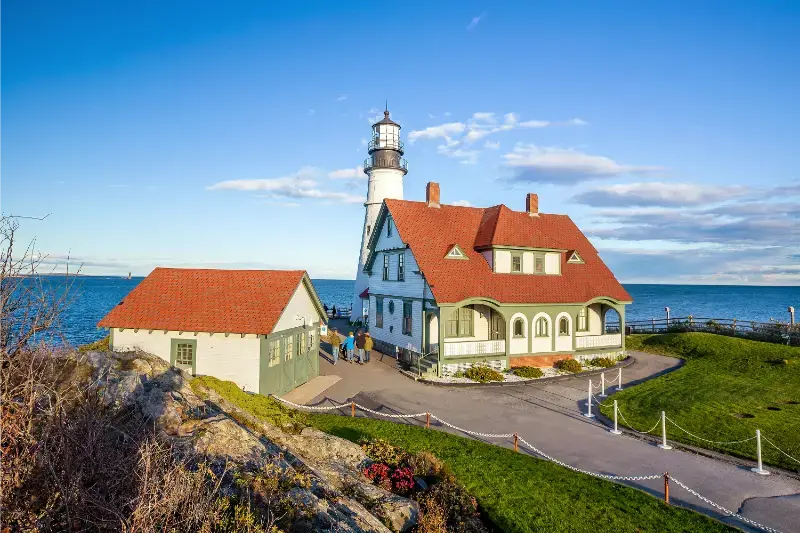
Fort Williams Park is free to enjoy and opens from sunrise to sunset. Its designated paid lots currently have a two-hour minimum of $6, then $2 for each additional hour; the overflow lot has no parking charge. Payment arrangements and posted signs govern the actual visit. Museum entry is separate, and an ordinary arrival at the park does not include access to the lighthouse tower.
Set aside enough time to enjoy the grounds as well as the famous view. The sea, the rocky edge and the grassy slopes make this a good place for a quieter afternoon after downtown. Stay on authorized paths and keep back from exposed ledges. A windy or misty day can be atmospheric, but it also calls for sensible footing and realistic expectations about visibility.
Where a hotel location changes the trip
For a first visit centered on restaurants and walking, the Old Port or a nearby downtown address is usually the easiest choice. You can return to your room between outings and go to dinner without moving the car. Compare the complete cost, including parking, taxes and any mandatory fees. A slightly higher room rate may buy a much simpler evening, especially over two or three nights.
The Arts District area suits travelers who want Congress Street, the museum and an urban neighborhood feel. Around the eastern side of the peninsula, look carefully at the actual walking route rather than assuming every address is an easy, level waterfront stroll. The character can be appealing, but hills and distances still matter when returning after dinner.
Airport and highway hotels can make sense before a flight or for a road trip focused on value. They bring a different pattern: drive or ride into town, arrange parking, then return after the meal. South Portland is a separate municipality with its own useful locations, not simply another name for the Old Port. Match the address to the way you intend to spend the day.
Arriving by train, plane or car
The Downeaster connects Boston North Station with Portland and continues to Freeport and Brunswick. Portland’s stop is the Transportation Center on Thompson’s Point Road, away from the historic waterfront. Reserve enough time and money for the final transfer to your accommodation. Travelers arriving through another Boston rail terminal should also account for the connection across the city to North Station.
Portland International Jetport is convenient for beginning or ending a southern Maine trip. A central stay can work without a rental car, while a wider itinerary becomes easier with one. If you will spend the first days in the city, compare collecting the car on departure with paying to keep it parked throughout. Check pickup hours and the actual rental location before relying on that saving.

Drivers should select parking for the whole planned outing. A short-stay space is a poor match for lunch, browsing and a museum visit combined. Private garages, hotel parking and city meters have different terms. Photograph the relevant signs or payment confirmation, then enjoy the city on foot. Repeatedly returning to move the car is an easy way to lose the relaxed rhythm Portland offers.
A two-day visit with a clear sense of place
On arrival day, settle into your hotel and take the Old Port slowly. Keep the afternoon flexible enough for a late arrival, then make dinner the evening’s main event. The following morning, visit the museum or explore Congress Street before lunch. Spend the afternoon at the Eastern Promenade, with time to rest before a second dinner. This is already a full and varied city stay.
With another day, choose either a Casco Bay outing or Cape Elizabeth. Both can be rewarding; combining them with an ambitious museum visit and several dining reservations makes the schedule brittle. A third night is especially helpful for travelers who enjoy meals as part of the destination rather than a quick refueling stop.
For the journey onward, Freeport offers shopping and coastal nature, while Camden and Rockland lead into the Midcoast. Ogunquit and the Kennebunks lie to the south and suit a beach extension. Portland does not have to compete with those places. Its particular contribution is the pleasure of a small, walkable city where a harbor, an art collection and a memorable dinner can all belong to the same day.
Compare the options
| Experience or choice | What it offers | Planning detail |
|---|---|---|
| Old Port | Food, browsing and waterfront views | Working wharves are not all public |
| Arts District | Museum and Congress Street | A substantial indoor visit |
| Casco Bay | Choose an island or sailing | Confirm both outward and return |
| Cape Elizabeth | Fort Williams and Portland Head Light | Separate transport from downtown |
Find your bearings
Open the map in a new tab · Orientation map; use the official local map for trail access and closures.
Frequently asked questions
Is Portland Head Light in downtown Portland?
No. It stands in Fort Williams Park in Cape Elizabeth and needs its own transport plan.
Does the Downeaster arrive in the Old Port?
No. Portland’s station is at the Transportation Center on Thompson’s Point Road, with an onward transfer to downtown.
How long should I stay?
Two nights allow a city introduction and a full day. A third night makes room for an island or lighthouse outing.
Plan the next part of your trip
- Freeport Maine Guide: Shopping, Wolfe’s Neck and Easy Coastal Stops
- Camden Maine Travel Guide: Harbor, Mount Battie and Midcoast Weekends
- Kennebunkport Maine Guide: Beaches, Dock Square and Coastal Drives
Arrange your stay and activities
Some booking links below are affiliate links. We may earn a commission if you book through them.
Compare stays: Portland MaineBrowse tours and experiencesCompare rental cars
Match the location, meeting point and cancellation terms to your itinerary before booking.
Official sources and visitor information
- Visit Portland: local visitor information
- Portland Museum of Art: hours, admission and access
- Portland Head Light and Fort Williams: visitor and parking information
- Casco Bay Lines: current ferry services
- Amtrak Downeaster stations and onward connections
Last updated: October 17, 2026.