

Explore Vermont’s capital with the State House, downtown shops, nearby nature and practical day-trip ideas. This guide focuses on practical choices that make a Vermont trip more enjoyable and less rushed.
Meet a different kind of capital
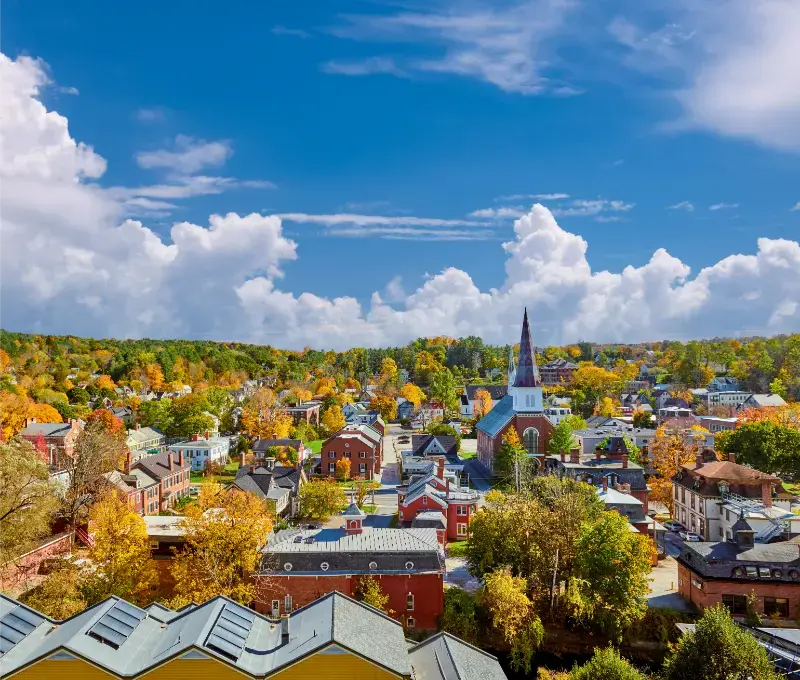
Montpelier is a small, approachable capital rather than a city of broad ceremonial boulevards. The Vermont State House sits at one end of a compact downtown where government work mixes with bakeries, cafés and independent shops. You can get a meaningful feel for the central area in a few hours, but spending a full day lets you add a museum, a hill walk or a meal without rushing. Its modest scale is precisely what makes it distinctive.
Inside the Vermont State House
The gold-domed State House is the city's signature building and an important place to understand Vermont's civic traditions. Guided and self-guided visiting arrangements depend on legislative activity, security rules and the season. Check current visitor information before arriving; government business takes priority over tourism. Even when interiors are unavailable, the exterior and grounds provide a useful starting point for a walking tour of the city.
Downtown on foot
State Street and Main Street form the core of central Montpelier. Bookshops, food businesses and arts venues make the streets enjoyable without any elaborate itinerary. Flooding has affected downtown businesses in recent years, so rely on current merchant information rather than old lists of shops. Buying from businesses that are open now helps support the local economy. The downtown streetscape is compact, but always obey pedestrian signals and respect delivery traffic.
Museums and Vermont history
The Vermont History Museum provides a wider context for the state's political and social development, including agriculture, industry and civic identity. Exhibitions and admission policies change, so verify the museum's operating days. For a more reflective walk, examine the relationship between the State House grounds, nearby government buildings and the commercial streets. This is a good destination for travelers who enjoy learning how small-state institutions function.
Hubbard Park and the tower
Hubbard Park provides an easy escape from downtown streets into forested paths, picnic areas and a stone observation tower. Trails can be muddy or icy, and the tower should be approached according to posted access rules. Unlike a dramatic Alpine summit, this is an accessible way to appreciate local terrain and the transition from town to wooded hillside. Wear proper shoes even for a short loop; some approaches are steeper than they first appear.
Food and nearby excursions
Montpelier has a relaxed dining scene relative to its size, with restaurants that may cater both to legislators and to local residents. Reserve ahead for a special evening on busy dates. Nearby Barre has its own granite-industry history and is worth a separate excursion for travelers interested in Vermont's working heritage. Waterbury and the Mad River Valley are also reachable by car, but packing them all into one afternoon would mean more driving than exploring.
Arrival and transport
Montpelier sits near Interstate 89, making it convenient for road trips between Burlington and central Vermont. The Amtrak station serving the capital is in nearby Berlin rather than directly beside the downtown attractions, so plan the final connection carefully. Local bus services exist but will not cover every countryside stop. Downtown parking is regulated: use signed spaces or facilities and check current rules instead of assuming free all-day parking.
A useful day plan
Start at the State House when visitor access is available, then walk the central streets and have lunch downtown. Choose an afternoon based on weather: a museum if rain threatens, Hubbard Park if paths are in good condition, or a drive to Barre if you want industrial history. Montpelier works particularly well as a stop between larger regions, but allow enough time to eat and explore rather than treating the dome as a highway photo opportunity.
Civic architecture and local identity
The Vermont State House stands out because its scale matches the city around it. Its dome and classical design are recognizable, but the more interesting experience is seeing how a working legislature fits inside a small downtown. The building is a public institution, not a museum with unconditional access. Legislative business, security procedures and tours determine what visitors can see. Even a short exterior visit is more meaningful when paired with the Vermont History Museum or a walk through surrounding government streets.
A slower Main Street afternoon
Montpelier rewards people who enjoy browsing rather than chasing headline attractions. Spend time in independent bookshops and cafés, and look at current listings for galleries or live performances. Downtown is relatively compact, so the real constraint is not distance but business hours and weather. Some merchants have been affected by past flooding and recovery work, making up-to-date opening information especially important. Buying a coffee or locally made item contributes to the businesses that give the city its distinctive character.
Walking in Hubbard Park
Hubbard Park's network of paths gives locals immediate access to woods from the capital. The observation tower is a natural goal for a short hike, though approaching paths vary in gradient and footing. It is a park rather than a fully serviced tourist attraction; carry what you need and check trail conditions during snowmelt. In winter, ice can make apparently simple surfaces difficult. If traveling with someone with limited mobility, do not assume all routes to the tower are accessible simply because the park is close to downtown.
Barre and granite
The neighboring city of Barre has a heritage connected to granite quarrying and stoneworking. This makes it a useful contrast with Montpelier's political role. Its history extends beyond a few monuments to include skilled labor, immigration and industry in central Vermont. Check local museum and quarry-tour offerings before traveling, since access varies. Barre works best as a focused addition for travelers with an interest in craft and industrial history, not as one more obligatory stop squeezed into a crowded capital-city day.
Planning around public events
Legislative sessions, public gatherings and city festivals can make Montpelier livelier while also complicating parking. Before traveling, consult city information for street closures and downtown regulations. If you are visiting primarily for the State House, verify interior-access arrangements directly. A rainy day is suitable for government and museum history, while clearer weather may justify more time in Hubbard Park. A simple two-part plan—civic core first, park or museum second—usually serves the city better than an overplanned schedule.
What makes Montpelier worthwhile
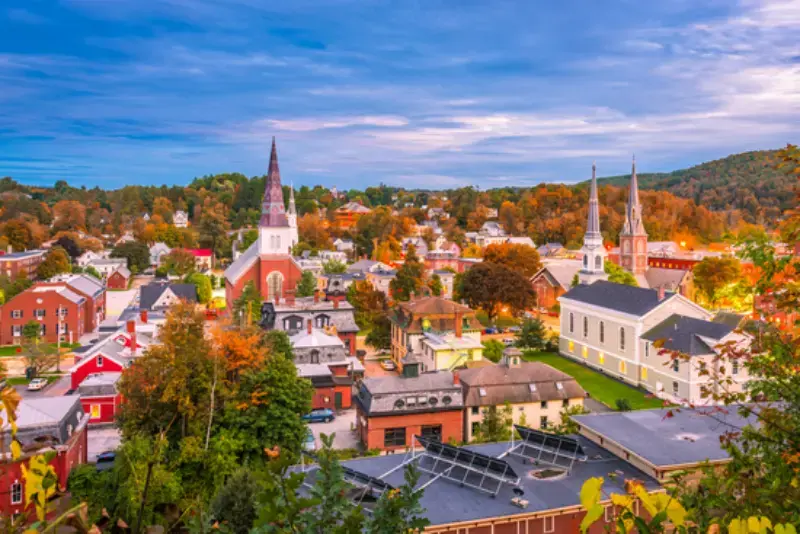
Travelers sometimes bypass the capital in favor of mountains, but Montpelier gives a distinctive perspective on a state known for small communities and engaged local politics. Pair the State House with an independent bookshop, a museum and a nearby green space, and you have a day that balances culture and landscape. It is especially useful when poor mountain weather makes a long hike unattractive.
Practical planning
| Planning question | Best approach |
|---|---|
| Best length of visit | Allow more time for one well-chosen region than for a rushed circuit of distant towns. |
| Transport | Check actual local transport or rental-car needs; rural connections are limited. |
| Seasonality | Confirm seasonal openings, trail notices, and current weather shortly before departure. |
| Reservations | Book limited-capacity attractions and busy-season lodging ahead; policies can change. |
| Local etiquette | Respect private property, signed parking and fragile trails. |
Frequently asked questions
How much time should I allow?
The right duration depends on whether you want a brief introduction or time for a deeper visit. For Montpelier Vermont things to do, start with the principal experience and leave at least one flexible period for weather or an unexpected discovery. Avoid counting only the drive time between points; parking, short walks, meals and entry procedures all add time.
Do I need a car?
For Montpelier Vermont things to do, a vehicle is often the easiest way to reach the surrounding countryside, although some central downtown and shoreline experiences can be explored on foot. Check current public-transit routes separately: a nearby station on a map does not necessarily offer a convenient connection to the attraction you want.
Can I visit year-round?
Many landscapes in Vermont are accessible in every season, but trails, park facilities, guided tours, lake activities and ski services have different schedules. The best approach for Montpelier Vermont things to do is to confirm the relevant operator schedule and current local conditions rather than assume an attraction is open whenever the destination itself is accessible.
Is it suitable for families?
Families can enjoy Montpelier Vermont things to do when the day is paced around realistic attention spans, restroom access and weather. Choose shorter routes when traveling with small children, bring snacks and layers, and verify any age or height requirements for paid activities. A relaxed half-day can be more rewarding than a complicated checklist.
What should I check before leaving?
Review official notices for your main stop, current weather, parking rules and any required timed entry. For Montpelier Vermont things to do, preserve a weather alternative and avoid relying on an old screenshot for operating hours or entrance prices. When a trail or road is closed, use a designated alternative rather than bypassing a barrier.
Official sources
Check current information before traveling: official visitor information, official visitor information.