

Cleveland rewards visitors who look beyond its reputation as a former manufacturing powerhouse. The city sits directly on Lake Erie, has one of the country’s most substantial art museums, pairs a working market with lively food neighborhoods, and keeps its musical identity close to the waterfront. It also occupies a useful position for exploring Cuyahoga Valley National Park. The challenge is geography: some of Cleveland’s best experiences are separated by the Cuyahoga River, highways, and several miles of city streets. A strong first visit focuses on two areas each day instead of crossing town every hour.
At a glance
| Best for | Urban lakefront weekend |
|---|---|
| Suggested time | 2–3 days |
| Getting around | RTA, walking, occasional car |
| Important | Check official schedules and current access notices |
Start on the lakefront, but understand what is there
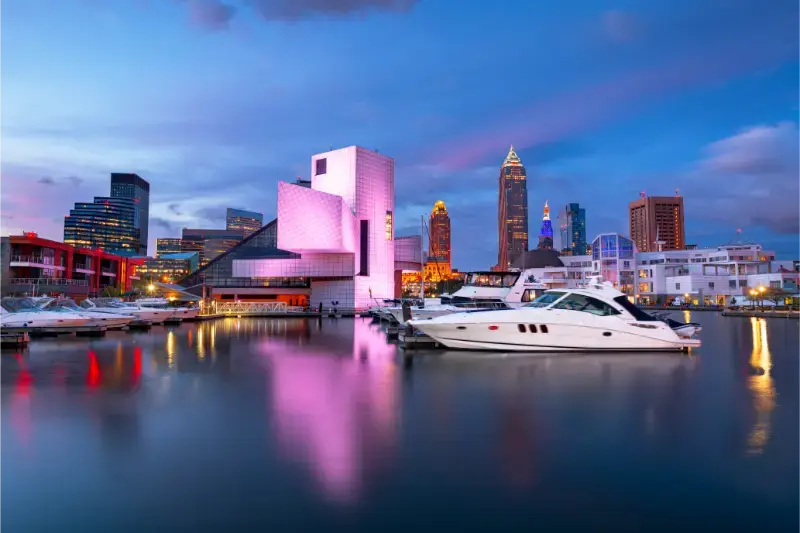
The Rock & Roll Hall of Fame, with its distinctive glass-fronted building, is the obvious starting point for visitors interested in music. The exhibits cover far more than classic rock: artists, producers, recordings, protest movements, performance clothing, and technology all appear in the story. Allow at least two hours, and considerably longer if the exhibits overlap with your favorite musicians. Its ticketing system asks visitors to select a date and time. Special exhibitions can change, so look at the current lineup rather than relying on an old photograph or review. Nearby North Coast Harbor gives the visit a change of pace: step outside to see Lake Erie, the harbor, and the waterfront skyline.
The Great Lakes Science Center is a different kind of stop, particularly valuable with children who want hands-on experiences rather than another gallery of display cases. The historic steamship William G. Mather is associated with the harbor museum complex; ship-tour availability is seasonal and should be checked independently. Do not assume that a ticket for one waterfront attraction includes the others. If you are traveling without children, devote the additional time to the city’s public spaces or the art museum instead of buying tickets out of obligation.
University Circle: an exceptional cluster of museums
University Circle is not simply a university neighborhood. It is Cleveland’s cultural center, home to the Cleveland Museum of Art, Cleveland Museum of Natural History, Cleveland Botanical Garden, and other institutions. The art museum’s permanent collection is a particularly compelling choice on a budget, because general admission to the permanent collection is free; some special exhibitions and events can have charges. The collection stretches across centuries and continents, so choose a handful of galleries rather than attempting to inspect every object in an afternoon. The atrium itself is an attractive place to orient yourself before exploring.
The natural history museum is a logical partner for families and travelers interested in regional geology, paleontology, wildlife, and scientific research. Its exhibitions and visitor circulation have changed during major renovations, making an up-to-date museum map more useful than an old guidebook. The botanical garden offers another kind of immersion, but its admission is separate. University Circle is a place where overscheduling is especially easy: two substantial cultural attractions and a relaxed meal will make a more satisfying day than four rushed entry tickets.
West Side Market and Ohio City food culture
For a distinctly Cleveland food experience, cross to Ohio City and visit West Side Market. The historic market hall, opened in 1912, remains an everyday food market as well as a tourist attraction. Look at the ceiling and the stall arrangement before deciding what to eat; the setting tells an important part of the story. Vendors sell a mix of produce, baked goods, prepared food, meat, and specialties representing the city’s diverse communities. Opening schedules vary by day and can change, so this is not a reliable stop without checking market hours first.
Ohio City also offers coffee shops, breweries, independent restaurants, and residential blocks that reward a walk. Start near the market, explore a few blocks of West 25th Street, then choose lunch based on what is actually open. Avoid treating the neighborhood as one enormous pedestrian entertainment strip. Traffic intersections and distances matter, particularly if you plan to continue toward the river. A short neighborhood exploration works better than a hurried search for every place mentioned on a viral food list.
Downtown Cleveland beyond its best-known museum
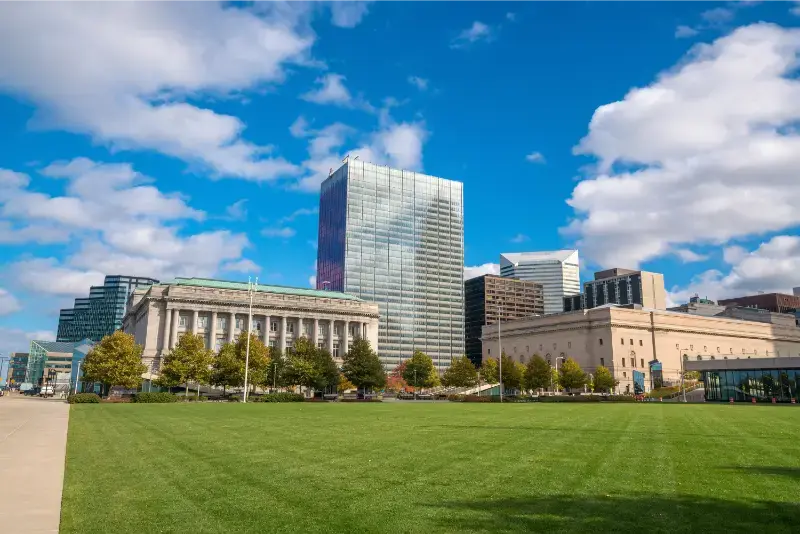
Public Square and the Terminal Tower offer a glimpse of Cleveland’s civic architecture and transportation history. The Old Arcade is a memorable interior with balconies and a long glazed roof; shops and business occupancy change, so enjoy the building as architecture instead of assuming every storefront will be open. Playhouse Square, east of the central business district, has major performing-arts venues and an illuminated streetscape. If you want a concert, Broadway tour, or orchestra performance, check the calendar early and allow enough time to park or arrive by transit without stress.
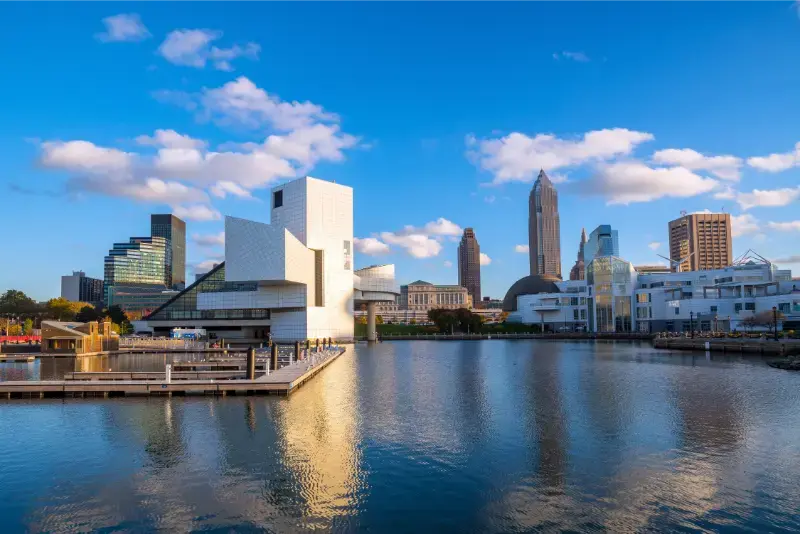
The Cleveland Public Library’s downtown complex is a rewarding quick stop for book lovers and architecture enthusiasts when open. The Flats along the Cuyahoga River provide a different mood: bridges, industrial heritage, converted buildings, and waterfront restaurants. It is worth visiting in daylight to understand the river’s geography. The nightlife-oriented portions can be lively on weekends, but the river valley is not uniformly pedestrian-friendly. Use designated crossings, watch vehicle traffic, and plan your return before it gets late.
Neighborhood choices: Tremont, Little Italy, and Gordon Square
Tremont is a good choice when you want a compact neighborhood with independent dining and views toward downtown. Its older residential streets, churches, and restaurant scene are the appeal; you do not need a long checklist. Little Italy near University Circle is useful for a meal after the museums, but tables on busy evenings can fill quickly. Detroit Shoreway and the Gordon Square Arts District offer smaller performance venues, galleries, and local businesses, making them rewarding alternatives to the biggest downtown sights.
These neighborhoods are not interchangeable and should not all be squeezed into a single afternoon. Pick one according to the practical shape of your day: Little Italy after University Circle; Ohio City after West Side Market; Tremont for an evening meal; Gordon Square for an arts-oriented evening. A visitor who sees one neighborhood slowly often leaves with a clearer understanding of Cleveland than someone who races between five distant restaurant reservations.
Lake Erie beaches, parks, and the changing waterfront
Edgewater Park, within the Cleveland Metroparks system, is an inviting place for skyline photographs, walking, and a view of the lake. Beach conditions, swimming advisories, and seasonal services vary. Check current guidance before swimming, and be prepared for stronger lake winds and cooler water than the air temperature suggests. Sunset over the water is memorable, although weather and cloud cover decide the result. Wendy Park at the mouth of the Cuyahoga River offers another perspective on ships and the working harbor.
Cleveland’s lakefront is not one uninterrupted beach promenade. Some stretches are occupied by industrial uses, port facilities, or busy roads. If your primary goal is an easy waterfront picnic, go to a designated park rather than following the shoreline on a map and assuming that public access continues. For travelers without a car, compare transit routes and the walking distance from the nearest stop; in many situations a short rideshare is more practical than repeated transfers.
Build a realistic two-day Cleveland itinerary
On day one, begin at the Rock & Roll Hall of Fame, take a waterfront break, and have lunch downtown. In the afternoon, see Public Square, the Arcade, or Playhouse Square, selecting a manageable cluster. End with a dinner in Ohio City or Tremont rather than adding a third ticketed attraction. This day brings together Cleveland’s music, architecture, and food without forcing you to drive back and forth across the east side.
On day two, start in University Circle. Choose the Cleveland Museum of Art and one additional museum or garden, then eat in Little Italy. With remaining energy, visit Edgewater Park before sunset, or go directly to a performance if you have evening tickets. Families may instead allocate most of day one to the science center and harbor attractions, keeping day two flexible. If you have a third day, Cuyahoga Valley National Park provides waterfalls, canal history, and a completely different landscape; it deserves its own guide rather than being treated as a 45-minute stop.
Getting around, accessibility, and where to stay
Cleveland Hopkins International Airport is connected to downtown by the Greater Cleveland Regional Transit Authority’s rail system, subject to current schedules and service notices. Downtown, University Circle, and Ohio City have transit connections, but combining all of them often takes planning. RTA’s rail and bus network can work well for a city-focused visit; a rental car becomes more useful for Metroparks destinations, the national park, and multiple widely spaced neighborhoods. Winter snow and road construction can affect travel time, particularly around bridges and freeway junctions.
Stay downtown if you prioritize the waterfront museums, theater, and transit access. University Circle suits travelers focused on museums, medical campuses, or university events. Ohio City or nearby neighborhoods are attractive for independent restaurants, but check parking arrangements, nighttime transit, and whether your lodging is walkable to the places you actually intend to visit. Do not assume every property advertising a Cleveland address is close to the downtown core.
Accessibility varies by site. Large museums publish their own wheelchair routes, accessible entrances, service-animal policies, and sensory guidance. Historic markets and neighborhoods can have crowded aisles, uneven paving, and sidewalk interruptions. When traveling with a wheelchair or stroller, check the specific entrance and parking location of each venue rather than relying on a generic claim that a whole district is accessible.
Seasons, budget, and common planning mistakes
Summer brings waterfront events and longer evenings, while fall can offer comfortable walking weather and colorful trees in the surrounding parks. Winters can be beautiful but cold, windy, and snowy, and an indoor-heavy itinerary is wiser than a rigid beach plan. Spring weather shifts quickly near the lake. Cleveland is suitable year-round precisely because its museums and performance venues provide strong indoor options. High-profile concerts, sporting events, and conventions can raise hotel prices well beyond ordinary weekends.
A moderate budget is possible by balancing free public spaces and the museum of art with one major paid attraction. Food prices range widely from market stalls to fine dining, and downtown parking can add cost. Common mistakes include buying too many museum tickets for one day, arriving at West Side Market on a day with reduced opening, leaving too little time for University Circle, or thinking the national park is part of the downtown waterfront. Planning around geography, not the number of online recommendations, is the real key to enjoying Cleveland.
Official resources and further planning
Before committing to timed tickets, consult the Rock & Roll Hall of Fame’s official ticket page and the websites of the Cleveland Museum of Art, Cleveland Metroparks, RTA, and West Side Market. For a broader Ohio itinerary, the published Ohio destination guide explains how Cleveland fits within the state. The site’s trip-planning hub is useful for the larger logistics, especially when Cleveland is one stop on a multi-city trip.
Continue exploring: Ohio destinations, Trip planning, Road trips.
Frequently asked questions
Is Cleveland worth visiting without a car?
Yes, a downtown and museum-focused visit is possible using RTA and short rideshare trips, but outer parks and Cuyahoga Valley are easier with a vehicle.
How much time should I budget for the Rock Hall?
Allow at least two hours, and longer if the exhibitions and music history are central to your trip.
Is Cleveland Museum of Art free?
General admission to the permanent collection is ordinarily free; ticketed exhibitions and programs may be priced separately.
What is a logical food neighborhood after the West Side Market?
Ohio City surrounds the market and has cafes and restaurants, while nearby Tremont provides another good evening option.
Can I do Cuyahoga Valley and central Cleveland in one day?
It is technically possible to sample both, but a full national-park day plus a separate city day produces a more rewarding trip.
Official sources and current updates
For date-specific operating information, refer directly to Rock & Roll Hall of Fame tickets, Cleveland Museum of Art. These operators publish changes to access, weather closures, tickets, and facilities.