

Best Scenic Drives in Wisconsin: Great River Road, Door County, Northwoods & Rustic Roads. Wisconsin is one of the Midwest’s best states for travelers who enjoy driving as part of the experience rather than simply using highways between attractions. The state combines Lake Michigan and Lake Superior shorelines, Mississippi River bluffs, agricultural backroads, forested Northwoods routes and a formal Rustic Roads program. Travel Wisconsin highlights five designated scenic byways, while the Great River Road alone follows roughly 250 miles of the Mississippi River through more than 30 Wisconsin communities. The best scenic-drive itinerary does not attempt to collect every road. Choose one or two regions and build meaningful stops around them.
Why add this stop to a Wisconsin trip
Scenic driving works especially well in Wisconsin because the landscapes change significantly across the state. A Door County shoreline route feels very different from the Mississippi River bluffs or the pine forests around Minocqua. Drives also connect many smaller destinations that do not justify a separate multi-night stay. The key is to calculate time by stops, not mileage. A route that looks like three hours on a navigation app can easily become a full day after overlooks, cafés, short walks and town visits. That is a feature, not a planning failure.
Compare current accommodation options for Wisconsin and choose a base that fits the actual shape of your itinerary.
Check hotels and staysEssential places and experiences
Wisconsin Great River Road
The Great River Road is the state’s flagship scenic drive. It follows the Mississippi through bluff country and river towns, with La Crosse providing a practical base. Travel Wisconsin describes around 250 miles of route and more than 30 river communities. Do not try to drive the entire Wisconsin section as a same-day out-and-back. Choose a north or south segment, stop at overlooks and allow time for small-town streets, wildlife areas and meals. Fall color can be excellent, but summer offers longer daylight and more waterfront activity.
Door County coastal routes
Door County rewards slow driving between villages, bays, parks and lighthouses. The peninsula is not a single linear scenic road, so build a loop around the places you actually want to visit. Traffic can be heavy on summer and fall weekends, especially around popular villages. Start early, cluster stops geographically and avoid crossing the peninsula repeatedly for individual restaurants or shops. The drive becomes more enjoyable when you accept that you will not see every harbor in one day.
Lake Superior and Bayfield region
Northern Wisconsin offers a different Great Lakes experience: bigger distances, colder water and a wilder feel. Bayfield is a logical base for Apostle Islands trips, while the roads around Lake Superior can be combined with beaches, overlooks and forest. Weather can change quickly, and boat plans may be canceled even when driving conditions remain fine. Build a scenic loop that still works if the water-based portion disappears.
Northwoods routes
Around Minocqua and neighboring lake communities, scenic driving is less about one famous highway and more about forest roads, lakes and small towns. Fall is particularly attractive, but summer provides longer days and easier access to water activities. Keep fuel above half a tank on longer rural loops and download offline maps. Wildlife is more likely around dawn and dusk, so reduce speed and avoid using scenic roads as a late-night shortcut.
Kettle Moraine and southern Wisconsin
Kettle Moraine landscapes give travelers rolling terrain, forests and trail access within reach of Milwaukee, Madison and Sheboygan. This makes the region ideal for a scenic day that combines short drives with hiking or a picnic. Rather than remaining in the car all day, choose one trail or park as the anchor. Seasonal color and spring greenery can be excellent, but road construction and park access should be checked before departure.
Wisconsin Rustic Roads
Wisconsin’s Rustic Roads program is unusual because it formally recognizes smaller roads for natural and scenic qualities. These are not designed for high-speed sightseeing. Expect narrower pavement, local traffic, cyclists, farm equipment and residential areas. Travel slowly, respect private property and use the roads as connectors between other experiences rather than treating them like an amusement ride. Travel Wisconsin provides current inspiration and route information.
Lake Michigan shoreline
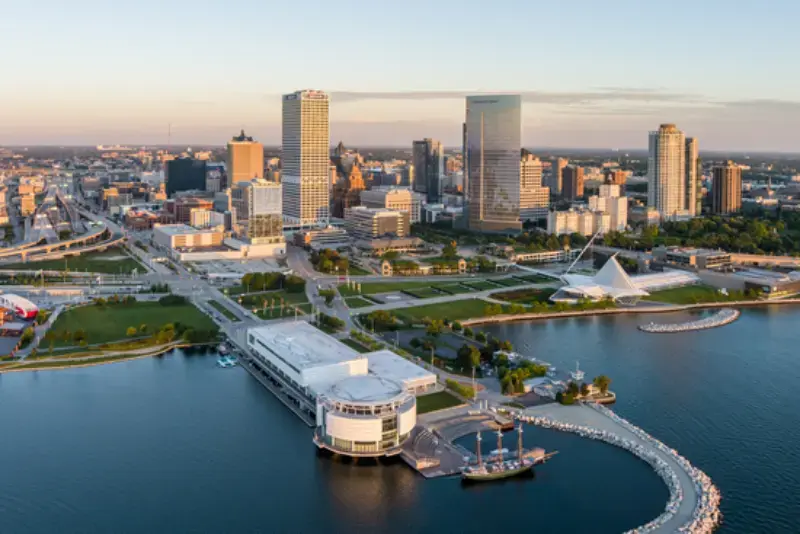
Eastern Wisconsin offers several Lake Michigan segments that can be incorporated into a Milwaukee–Sheboygan–Door County trip. The most rewarding stops are often beaches, harbor towns and short waterfront walks rather than long continuous stretches of unobstructed lake view. Allow time to leave the main road. Weather matters: fog, wind or lake-effect conditions can transform the same route from bright and expansive to dramatic and cold.
How to plan your time
For a first scenic-road trip, choose either western Wisconsin with La Crosse and the Great River Road, eastern Wisconsin with Milwaukee–Sheboygan–Door County, or northern Wisconsin with Minocqua and Lake Superior. Give each region at least two nights if it is the main focus. A cross-state itinerary can combine two, but transfer days should remain simple. Do not schedule a major museum, long hike and six-hour scenic drive on the same day. The road itself deserves daylight and attention.
Where to stay
Compare available accommodation for your dates, budget and preferred location before you finalize your route.
Use towns with food and hotel inventory as bases, then drive loops rather than changing accommodation every night. La Crosse works for the Mississippi corridor; Milwaukee or Sheboygan for southeastern routes; Sturgeon Bay or another Door County community for the peninsula; Bayfield for Lake Superior; and Minocqua for the Northwoods. Staying two nights in one base often saves more usable daylight than moving twenty or thirty miles closer to the next overlook.
Compare current accommodation options for Wisconsin and choose a base that fits the actual shape of your itinerary.
Compare accommodationFood and local flavor
Scenic driving and Wisconsin food pair naturally. Plan one supper-club dinner, fish fry or small-town meal into the route, but avoid making every stop restaurant-dependent. Carry water and snacks so a closed café does not derail the day. In summer and fall, farmers markets and roadside produce can add variety. If alcohol is part of the experience, finish the driving day first or use a designated driver.
Getting there and getting around
A reliable car is obviously central. Compare rental terms if you are flying, especially mileage, one-way fees and insurance. Keep the fuel tank healthy in northern regions and know whether your accommodation has overnight parking. Check tire condition before long rural drives and carry basic winter equipment in cold months. Navigation apps are useful but not infallible; official byway resources and offline maps help prevent accidental detours onto unsuitable roads.
A car is often the simplest way to connect Wisconsin towns, lakefronts, parks and rural stops. Compare total rental cost, insurance terms and one-way fees before booking.
Compare rental carsBest time to visit
Fall is famous for color, but it is not the only good season. Late spring offers fresh landscapes and fewer peak-season crowds, summer brings long daylight and active waterfront towns, and winter can make certain forest or lake routes beautiful for experienced cold-weather travelers. Peak foliage timing varies by latitude and year, so use current reports rather than booking around a fixed historical date. Shoulder seasons also require more attention to seasonal business hours.
Practical planning tips
Start each scenic day with a full or mostly full fuel tank, water and a weather check. Download maps before entering weak-signal areas. Never stop in the roadway for a photo; use safe pullouts. Respect farms, homes and private driveways on Rustic Roads. If a route is crowded, skip a minor stop instead of creating unsafe parking. Most importantly, measure success by the quality of the drive and stops you actually enjoy, not by the number of scenic-road names crossed off a list.
Build this into a longer Wisconsin itinerary
Wisconsin trips work best when overnight bases follow geography. Use Milwaukee and Madison for urban anchors, Door County or Sheboygan for Lake Michigan, La Crosse for the Mississippi River corridor, Bayfield for Lake Superior and Minocqua for the Northwoods. Avoid adding a destination simply because it appears close on a statewide map: two hours of driving each way can consume the relaxed part of a day. A good route usually has fewer hotel changes and more complete experiences. If this stop is a major reason for your trip, give it two nights; if it is a supporting stop, keep expectations focused and continue in the direction of your next base.
Reservations, weather and trip resilience
Reserve only the experiences that would materially disappoint you if they sold out: a limited boat tour, special performance, high-demand resort, tee time, festival weekend or guided activity. Keep weather-sensitive hiking, paddling and scenic driving movable. Wisconsin conditions can vary sharply between Lake Superior, Lake Michigan and inland regions on the same day. Check official sources again shortly before departure, including park alerts, ferry or boat operations, event schedules and road conditions. Building one indoor or low-commitment alternative into each day protects the trip without forcing you to over-plan.
Continue planning Wisconsin
- Milwaukee Wisconsin Travel Guide
- Madison Wisconsin Travel Guide
- Door County Wisconsin Travel Guide
- Wisconsin Dells Travel Guide
- Green Bay Wisconsin Travel Guide
- Lake Geneva Wisconsin Travel Guide
Official resources to check before your trip
Frequently asked questions
How many days should I allow?
Two full days are a useful starting point for a focused city or small-town visit. Outdoor regions, boat-based destinations and multi-community areas are better with three days or more because weather and transfer time matter. If this stop is part of a larger Wisconsin road trip, avoid reducing every destination to one night simply to increase the number of pins on the map.
Do I need to book far in advance?
Peak summer weekends, fall-color dates, major events, resorts, ferries, boat tours and limited-capacity experiences deserve early attention. Ordinary museums, parks and casual restaurants usually allow more flexibility. Reserve the things that are difficult to replace and leave weather-dependent parts adaptable.
Can I visit without a car?
Central Milwaukee and Madison are the easiest Wisconsin destinations without a car. Most lake regions, small towns, state parks, Northwoods routes and multi-stop itineraries are substantially easier with one. If you prefer not to drive, choose a single walkable base and book tours or transfers that explicitly solve the transportation gap rather than assuming rideshare service will be practical everywhere.
More Wisconsin travel guides
-
Wisconsin with Kids: Waterparks, Great Lakes, Museums & Family Road Trips
Plan Wisconsin with kids using waterparks, Great Lakes beaches, museums, zoos, state parks, family-friendly towns and realistic road-trip pacing.
-
14-Day Wisconsin Road Trip: Milwaukee, Madison, Door County, Northwoods & Apostle Islands
Plan a 14-day Wisconsin road trip through Milwaukee, Madison, the Driftless Area, Bayfield, the Northwoods, Door County and Wisconsin Dells.
-
Best Places to Visit in Wisconsin: Cities, Great Lakes, Parks & Small Towns
Discover the best places to visit in Wisconsin, from Milwaukee and Madison to Door County, Apostle Islands, Lake Geneva, Devil’s Lake and the Wisconsin Dells.
-
Best Scenic Drives in Wisconsin: Great River Road, Door County, Northwoods & Rustic Roads
Discover the best scenic drives in Wisconsin, including Great River Road, Door County, Northwoods, Lake Superior, Kettle Moraine and Rustic Roads.
-
Milwaukee with Kids: Museums, Zoo, Lakefront & Easy Family Days
Plan Milwaukee with kids using family-friendly museums, the zoo, lakefront stops, markets, parks and realistic two- or three-day itineraries.
-
Best Things to Do in Milwaukee: Museums, Lakefront, Markets & Neighborhoods
Discover the best things to do in Milwaukee, from lakefront museums and the Historic Third Ward to markets, neighborhoods, breweries and practical trip planning.