

Florida has hundreds of miles of coast, but “small beach town” can mean anything from a quiet fishing port to a design-conscious resort village with expensive vacation rentals. This list is not a ranking of the prettiest sand. It is a guide to different kinds of small coastal places—towns where you can walk to dinner, understand a local identity and spend a few days without feeling that the entire destination is a parking lot attached to a beach.
Some are on the Gulf, some on the Atlantic, and a few sit on islands or bays where the best experience is not classic swimming. Use our Best Beaches in Florida if your only question is sand and water; use this guide if atmosphere matters just as much.
How we chose these towns
- A recognizable town or village identity beyond a row of hotels.
- Walkable or bikeable pockets that reward staying overnight.
- Access to beach, bay or coastal nature.
- A reason to visit beyond “the sand is nice.”
- Geographic variety across Florida rather than 15 neighboring Gulf resorts.
1. Fernandina Beach — historic Atlantic Florida
Fernandina Beach on Amelia Island combines Victorian-era streets, shrimping/port history and Atlantic beaches. It is one of the best choices for travelers who want a real downtown with their beach. Pair Centre Street with Fort Clinch State Park and a morning on the sand. Full planning: Amelia Island Travel Guide.
2. St. Augustine Beach — history nearby, beach pace at night
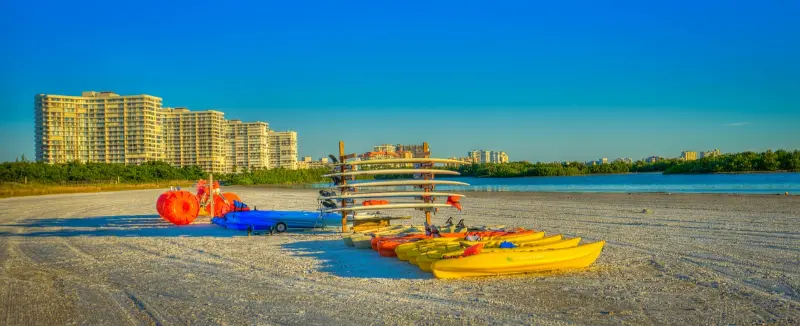
St. Augustine Beach sits outside the densest historic core, letting you combine one of America’s most famous old cities with a calmer coastal base. It is ideal for families who want Castillo de San Marcos and pedestrian streets by day but do not want to sleep in the busiest tourist area. See our St. Augustine guide.
3. Flagler Beach — old-school A1A stop
Flagler Beach is smaller and less polished than major Atlantic resorts, with a classic coastal-road feel. It works best as a one- or two-night stop between St. Augustine and Daytona/New Smyrna. The appeal is simplicity: beach, local restaurants, sunrise and the sense that you are traveling the coast rather than checking into a destination complex.
4. New Smyrna Beach — surf, food and arts
New Smyrna is one of Florida’s strongest small-town alternatives to a big resort beach. Flagler Avenue gives you a walkable beach-oriented district, Canal Street adds arts/history, and surfing gives the destination a clear identity. It also connects easily to Canaveral National Seashore. Compare it with Daytona in our Daytona vs New Smyrna guide.
5. Vero Beach — understated Treasure Coast
Vero is for travelers who want a traditional beach town without Miami/Fort Lauderdale intensity. Cultural attractions and a relaxed barrier-island district make it more than a roadside overnight, while the central Atlantic location fits an Orlando-to-Miami trip. It is especially appealing to couples and repeat Florida visitors who no longer need constant attractions.
6. Lauderdale-by-the-Sea — walkable South Florida
This compact town just north of Fort Lauderdale is a useful choice for travelers who want South Florida weather and beach access without staying in the middle of a larger city. Restaurants and beach are close together, and shore diving/snorkeling culture adds personality. You can still use Fort Lauderdale as a nearby urban day.
7. Islamorada — fishing and water in the Upper Keys
Islamorada feels like a chain of low-rise waterfront businesses rather than a traditional town square, but it has one of the Keys’ strongest identities: fishing, boating, reefs and sunsets. Stay here if you want to be on the water and do not need Key West nightlife. Our Florida Keys Travel Guide shows how it fits the island chain.
8. Boca Grande — polished and quiet
Boca Grande on Gasparilla Island is an upscale, low-key destination with a walkable village, beaches and a strong old-Florida feel. Golf carts and bicycles fit the scale. It is not a bargain beach town, but it is an excellent example of a place where the absence of big attractions is the attraction.
9. Anna Maria — village-style Gulf Coast
The north end of Anna Maria Island delivers cottages, Pine Avenue, piers and a slower pace than many Gulf resort strips. Parking limitations reward travelers who stay on-island and walk or bike. See the Anna Maria Island Travel Guide before booking because the three island communities feel different.
10. Pass-a-Grille — small-scale St. Pete Beach
Pass-a-Grille occupies the southern end of St. Pete Beach and feels much smaller than the resort corridor immediately north. The narrow island, historic grid, restaurants and sunset make it a good car-light stay. It also lets you visit downtown St. Petersburg without giving up the “small beach town” evening atmosphere.
11. Dunedin — Gulf town with islands nearby
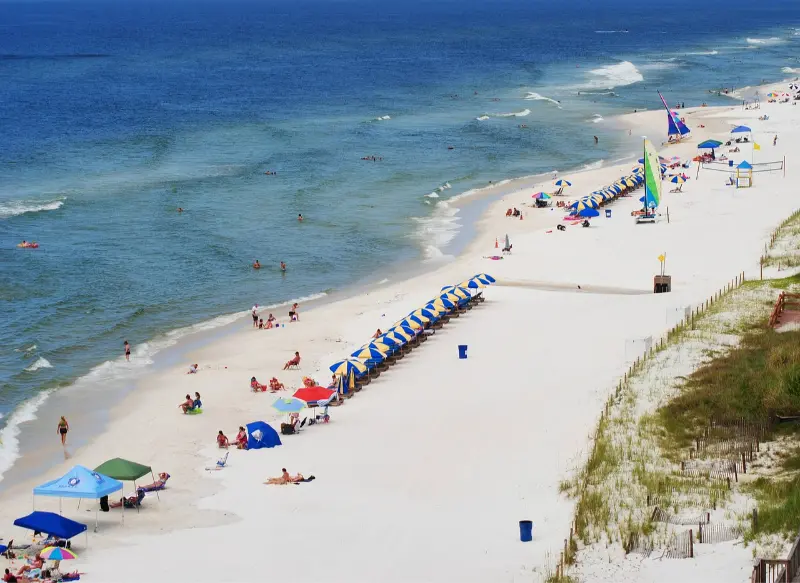
Dunedin is technically on the mainland/intracoastal rather than directly on an open Gulf beach, but it earns a place because the town center, breweries, Pinellas Trail and access to Honeymoon/Caladesi create a complete coastal trip. This is a good choice for travelers who value a walkable downtown as much as sand.
12. Cedar Key — nature before beach
Cedar Key on Florida’s Big Bend is not a classic swimming-beach destination. It is a small island community shaped by fishing, marsh, birdlife and Gulf sunsets. Visit for paddling, seafood and a slower Florida landscape. Storm impacts can affect individual businesses and facilities, so check current conditions before building a long detour around the town.
13. Apalachicola — seafood and historic Gulf character
Apalachicola sits on the bay rather than an open beach, but St. George Island is nearby and the town provides something many Florida coastal trips lack: a working maritime identity and historic streets. Stay here if oysters, seafood, architecture and a road-trip stop matter more than resort amenities.
14. Grayton Beach — bohemian 30A
Grayton is the least polished-feeling of the famous 30A communities, which is precisely why many travelers love it. State-park nature, arts and beach-town history sit beside modern dining. It is a stronger choice than Seaside for visitors who want 30A scenery without making architecture and luxury rentals the whole point.
15. Rosemary Beach — design-forward and walkable
Rosemary Beach is carefully planned, expensive and highly photogenic. Cobblestone streets, courtyards, shops and restaurants make it one of the Panhandle’s most walkable beach communities. It is not “undiscovered old Florida,” and that distinction matters. Choose it because you like design, convenience and a self-contained village—not because you expect a rustic fishing town.
Which small beach town is best for you?
| Travel style | Best matches |
|---|---|
| History + beach | Fernandina, St. Augustine Beach, Apalachicola |
| Surf / younger energy | New Smyrna, Flagler Beach |
| Quiet luxury | Boca Grande, Rosemary Beach |
| Nature / birding | Cedar Key, Grayton Beach, Amelia Island |
| South Florida without big-city feel | Lauderdale-by-the-Sea, Vero Beach |
| Car-light Gulf stay | Anna Maria, Pass-a-Grille, Dunedin |
| Boating / fishing | Islamorada, Apalachicola, Cedar Key |
The small-town mistake: trying to visit too many
Small towns are not collectible souvenirs. Their value comes from staying late enough to see the day-trippers leave, eating breakfast locally and walking the streets without an itinerary. On a 10-day Florida road trip, choose two small coastal towns at most unless the entire trip is specifically designed around them. Otherwise, you recreate big-city pace in places whose attraction is slowness.
Best time for small beach towns
Winter and spring are comfortable and often busy, particularly on the Gulf and in South Florida. Summer brings heat, storms and family travel. Fall can be beautiful but sits within hurricane season. For Panhandle towns, winter water temperatures are cooler than many international visitors expect. For Keys/South Florida towns, winter is peak season. Matching season to latitude matters in a state this long.
Small beach towns FAQ
- Which is best for a first Florida trip? New Smyrna, Anna Maria or Amelia Island are easy to understand and have enough variety for several days.
- Which is most different from Miami? Cedar Key or Apalachicola.
- Which has the best walkability? Rosemary Beach, Pass-a-Grille, Fernandina’s historic core and parts of New Smyrna.
- Do small towns mean cheap? No. Boca Grande, Anna Maria and 30A communities can be expensive precisely because supply is limited.
- Should you book vacation rentals? Often useful for families, but compare cleaning fees, parking, beach access and cancellation terms against hotels/inns.
How to choose one town instead of five
Start with the non-beach part of your personality. History suggests Fernandina or Apalachicola; surfing points to New Smyrna; design and food point to Rosemary; wildlife suggests Cedar Key; car-light Gulf life suggests Anna Maria or Pass-a-Grille. Once two towns have the same reason for being on your list, keep the one that fits the route better.
Why “hidden gem” is often the wrong goal
A town does not need to be secret to feel special. Many genuinely good Florida towns are popular because limited geography and local businesses create a strong sense of place. Searching only for “undiscovered” destinations can send you to places with weak beach access or storm-recovery issues. Look for character, not obscurity.
One more planning note
Before departure, confirm opening hours, reservation systems, beach access, parking, weather alerts and any temporary closures with the official destination or park authority. Florida operations can change after storms, construction, wildlife protection measures or seasonal demand. Use this guide to build the structure of the trip, then use current official sources for the final details of your exact dates.
Looking for the right place to stay? Compare hotels and accommodation on Booking.com.