

Best Things to Do in Indianapolis: Museums, Speedway, Neighborhoods & Culture. Indianapolis rewards travelers who organize the city by districts rather than by a giant checklist. Downtown and White River State Park hold a dense group of museums and landmarks, the Speedway adds a completely different side of the city, and neighborhoods such as Mass Ave, Fountain Square and Broad Ripple are better for food and evening atmosphere. A first visit is strongest when you mix one or two major attractions with time to walk, eat and understand the city instead of racing between every museum.
Start with Monument Circle and the central city
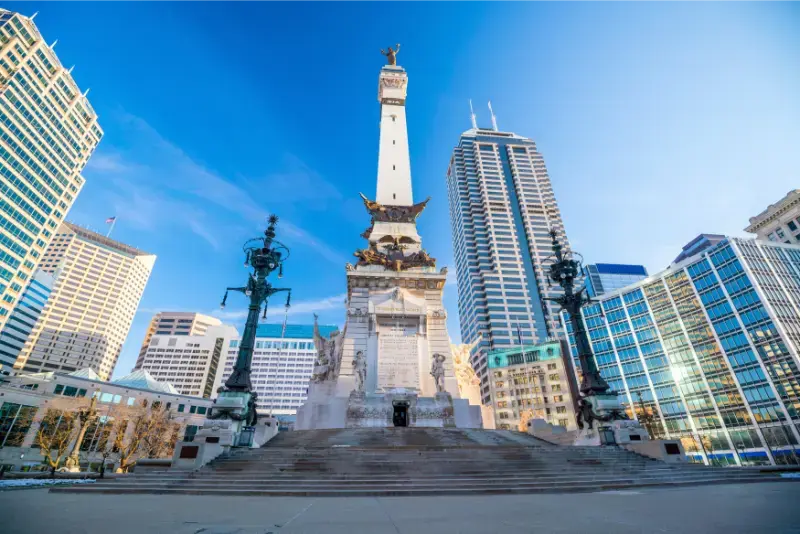
Monument Circle is the easiest place to understand the geometry of central Indianapolis. The Soldiers and Sailors Monument anchors the circle, the Indiana Statehouse is nearby, and several downtown streets lead toward the Cultural Trail, the Wholesale District and the canal. Spend the first hour walking rather than immediately driving to another attraction; it makes the rest of the city easier to navigate.
Downtown is also where Indianapolis feels most event-driven. Conventions, Colts games, Pacers games and major races can change traffic and hotel pricing, so check the city calendar before assuming a normal weekend. When no major event is underway, the central area is straightforward to combine with museums and an evening restaurant reservation.
White River State Park and the canal
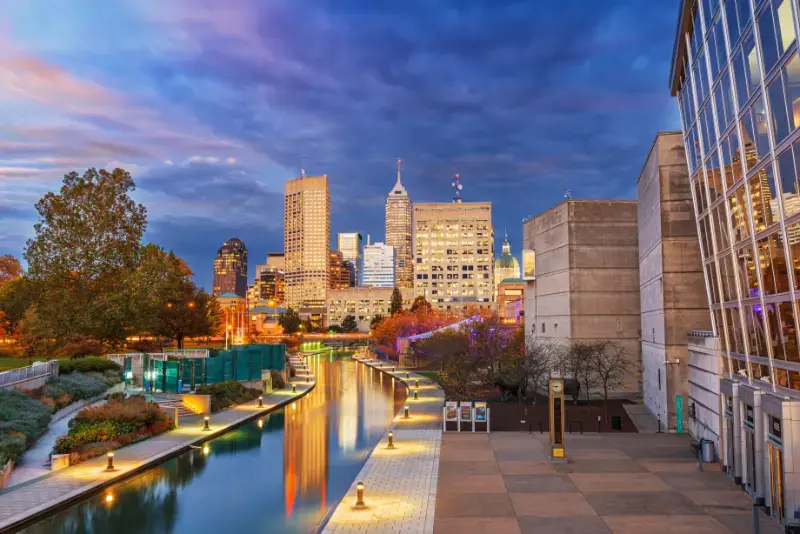
White River State Park is one of the most practical sightseeing zones in Indiana because the Eiteljorg Museum, Indiana State Museum, Indianapolis Zoo and canal sit within the same broader district. You do not need to visit all of them. Pick the attraction that best matches your interests, then use the canal or park paths as a low-pressure break between indoor stops.
The Eiteljorg is particularly distinctive because it focuses on Native American and Western art and culture rather than duplicating the collections found in a typical city art museum. The Indiana State Museum is broader and works well for visitors who want state history, science and natural history in one place. Families often prefer to split these museums across different days rather than attempt them back-to-back.
The Indianapolis Motor Speedway
The Indianapolis Motor Speedway is essential even for many travelers who are not dedicated racing fans because it explains how strongly motorsport shaped the city’s international identity. The museum and track experiences deserve their own half day when they are operating, and the district around Speedway has developed enough restaurants and local businesses to make the trip west of downtown feel purposeful rather than isolated.
Race periods require completely different planning. Around the Indianapolis 500, demand for rooms, transport and tickets rises sharply and road access changes. If the race itself is not part of your trip, another spring weekend or autumn visit usually gives you a calmer version of the same city.
The Children’s Museum and family attractions
The Children’s Museum of Indianapolis is large enough to anchor most of a day, not a quick two-hour stop. Families should decide in advance which galleries and experiences matter most, build in a real meal break and avoid pairing it with another major museum. The scale is one reason Indianapolis works especially well for a two- or three-night family trip.
The zoo, canal and parks around White River State Park offer a useful outdoor counterweight. On hot summer days, schedule the most exposed walking for morning and move indoors in the afternoon. In winter, the museum-heavy visitor mix becomes an advantage because several of the city’s strongest attractions remain useful regardless of weather.
Newfields, art and gardens
Newfields combines art, gardens and landscaped grounds north of downtown, making it a different kind of visit from the denser museum cluster around White River State Park. It works best for travelers who want art without spending the entire day indoors, especially in spring and autumn when the grounds add another reason to visit.
Allow enough time to enjoy the setting instead of treating the museum as another box to tick. If art is a priority, pair Newfields with a restaurant or neighborhood on the same side of the city rather than returning downtown in the middle of the day.
Explore neighborhoods beyond downtown
Mass Ave and the Bottleworks District are easy additions because they sit close to downtown and combine restaurants, entertainment and adaptive-reuse architecture. Fountain Square and Fletcher Place are stronger for independent dining and a more neighborhood-focused evening. Broad Ripple is farther north and makes more sense when you specifically want nightlife, cafés, the Monon Trail or a less downtown-oriented stay.
The Indianapolis Cultural Trail helps connect several central districts by foot and bike. It is not merely transportation; it is a useful sightseeing framework because it encourages you to experience the transitions between neighborhoods. Choose one or two districts based on your interests instead of crossing the city repeatedly for single restaurants.
Sports and event culture
Indianapolis hosts far more than the Indy 500. NFL and NBA games, college events, conventions and major championships regularly reshape downtown. If sports are part of your trip, staying centrally can reduce the need for parking and post-event driving. If they are not, major event dates may still affect room rates and restaurant availability.
Victory Field and seasonal minor-league baseball can be an easier family event than a major professional game, while Lucas Oil Stadium and Gainbridge Fieldhouse keep the center active across different seasons. Always check the official event schedule rather than relying on an old itinerary.
How to organize two or three days
With two days, keep the first day around downtown, White River State Park and Mass Ave, then use the second for the Speedway or Children’s Museum plus one neighborhood. With three days, add Newfields, a second major museum or a slower family day. This pacing leaves room for meals and prevents the trip from turning into a sequence of parking lots.
If Indianapolis is the gateway to a wider Indiana trip, consider picking up a rental car only when you leave the city center. Brown County, Bloomington, Columbus and Lafayette are much easier by car, but downtown parking is an unnecessary expense if the vehicle will sit unused during your first two days.
Compare current accommodation and choose a base that matches the places you actually plan to visit.
Search stays on Booking.com Compare Indiana staysCompare available guided experiences, attraction tickets and activities for your travel dates. Check duration, meeting point and cancellation conditions before booking.
More Indiana travel guides
- Indianapolis Indiana Travel Guide
- Brown County Indiana Travel Guide
- Bloomington Indiana Travel Guide
- Columbus Indiana Travel Guide
- Best Places to Visit in Indiana
Official resources
Final planning advice
For a first trip, do not judge Indianapolis by how many attractions you can fit into a day. The city is more satisfying when you allow one major museum or attraction to be the anchor and use neighborhoods, parks and food to shape the rest of the day.
Check opening hours and ticket policies shortly before travel, especially for the Speedway, museum special exhibitions and major sports weekends. Indianapolis changes quickly around events, and a flexible itinerary is more useful than a rigid hour-by-hour plan.
Common Indianapolis planning mistakes
The most common mistake is treating the city as if every attraction sits on the same downtown block. The Speedway, Children’s Museum, Newfields and Broad Ripple pull in different directions, so grouping by geography saves considerable time.
Another mistake is ignoring the event calendar. A weekend with a convention or major game can feel like a completely different city from a quiet weekend, especially for parking and restaurant reservations.
Getting around Indianapolis efficiently
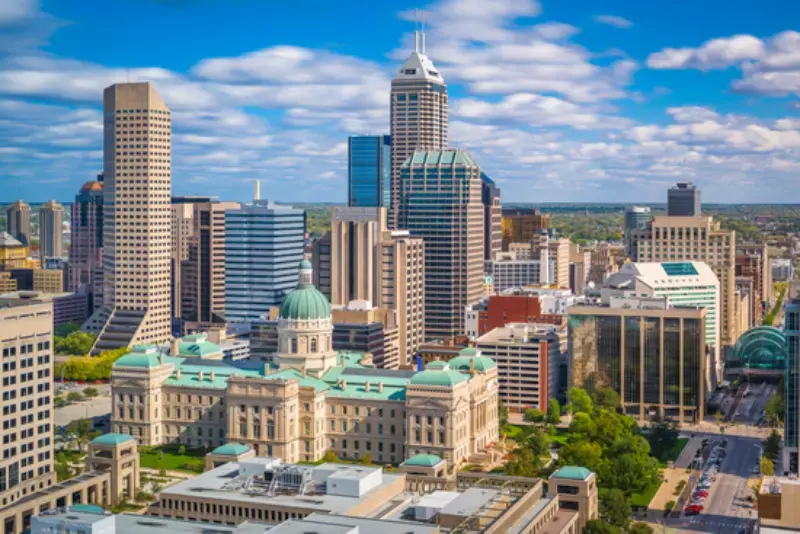
Indianapolis is easiest when you separate the walkable core from attractions that require a vehicle or ride. Monument Circle, the Cultural Trail, Mass Ave and much of White River State Park can be linked without moving the car every hour. The Speedway, Children’s Museum, Newfields and Broad Ripple sit farther apart, so they should be grouped by half-day rather than inserted between downtown stops.
If you are staying centrally, compare hotel parking with the cost of occasional rides. A rental car becomes much more valuable once you leave the city for Brown County, Bloomington or Columbus. Travelers flying in and out of Indianapolis can often save both money and frustration by collecting the car only when the statewide portion of the trip begins.
What to book ahead
Reserve the attractions that are both important to you and capacity-limited. Special Speedway tours, major sporting events, popular museum experiences and weekend restaurants can sell or fill long before ordinary sightseeing does. By contrast, open-air walking around Monument Circle, the canal or the Cultural Trail can remain flexible.
This priority-based approach keeps the itinerary resilient. If weather changes, you can move outdoor walking to another part of the day without losing the reservations that would be hard to replace.
A slower way to plan this trip
A useful way to approach Best Things to Do in Indianapolis is to protect unscheduled time. Indiana trips often combine driving, parking, short walks and attractions with different operating hours, so a schedule that looks light on paper can already fill a full day. Build the route around one or two anchors, then use nearby neighborhoods, parks or cafés to absorb delays without turning them into problems.
Keep accommodation, transport and major ticket reservations flexible where possible. Weather and event calendars can change the best order of a trip, and the ability to swap two days is often more valuable than squeezing another stop into the itinerary.