

For most visitors planning a trip across several parts of Illinois, May, June, September and early October are useful starting points. They make it easier to combine Chicago, small towns and outdoor places without building every day around either winter cold or midsummer heat. That is a recommendation for a mixed itinerary, not a guarantee of weather: a lakefront weekend and a hiking trip in southern Illinois need different choices.
Illinois stretches far enough north to south that one seasonal description cannot explain every destination. Chicago's lakefront can feel very different from an inland afternoon, while southern parks may be comfortable when northern places are still transitioning between seasons. Decide what the trip is mainly for—city culture, beaches, foliage, waterfalls or a driving route—then choose dates that serve that purpose.
| Season | Strong reasons to go | Main consideration |
|---|---|---|
| Spring | Gardens, city walks and greener parks | Rain and variable trail conditions |
| Summer | Lakefront visits and long road-trip days | Heat, storms and popular weekends |
| Fall | Woodland scenery and mixed city-country trips | Color and temperature vary by region |
| Winter | Museums, performances and river-region eagle interest | Ice, shorter daylight and seasonal services |
On this page
March and April: useful for cities, less predictable outdoors
Early spring can work well for Chicago museums, architecture walks between showers and indoor performances. It is less reliable for a trip that depends on long lakefront afternoons or a sequence of outdoor viewpoints. Keep an indoor priority each day and choose a central hotel so you can change direction without spending an hour in transit. A sunny morning is welcome, but carry layers rather than packing as if summer has already arrived.

Across the state, spring rain and thaw can leave trails wet, muddy or temporarily restricted. Waterfall scenery may be attractive, but the amount of water and the condition of the approach are separate questions. Check the actual park notice before heading to a canyon or river trail. A roadside town visit, historic attraction or museum can be a better alternative than continuing along a damaged path because spring was advertised as a hiking season.
May and June: a strong balance for a first road trip
Later spring and the beginning of summer give a mixed Illinois itinerary more options. Chicago's outdoor spaces become easier to use, longer daylight helps with driving stages, and towns and parks can be combined without automatically putting all outdoor activity at dawn. For a first trip, this is a useful period for a few Chicago nights followed by Springfield, a river region or selected parks.
Check individual schedules before assuming every seasonal attraction operates daily. Boat outings, historical-house tours and smaller-town museums can have different calendars from the major city institutions. School holidays, holiday weekends and festivals also affect prices and availability. Book the accommodation and any specific timed experience that define your route, then leave some park and town time flexible enough to respond to the actual forecast.

July and August: plan around heat and popular dates
Summer suits travelers whose priorities include the lakefront, seasonal attractions and a traditional family holiday. It also brings hot or humid afternoons, busy weekends and substantial demand around major Chicago events. Place an indoor museum or a long lunch in the hotter part of the day, and save exposed walking for a more comfortable period. The same adjustment is useful in the river towns and southern parks.
For Chicago beach time, check the beach's opening arrangements and posted water conditions rather than assuming a warm day means swimming is available. For a state-park outing, look at shade, trail difficulty and water needs before departure. A summer itinerary can be enjoyable without being crowded with outdoor stops: choose one substantial activity, then keep the rest of the day near the same base so heat does not turn every transfer into another effort.
September: often the easiest compromise
September can be particularly useful when you want Chicago, outdoor scenery and a driving route in the same trip. The busiest school-holiday period may have passed, yet many outdoor activities remain possible. It is still important to check operating calendars: a seasonal attraction may reduce hours even when the weather remains pleasant. Do not use a summer timetable as proof of autumn availability.
City events, conventions and sports can also keep particular weekends expensive. Compare several dates before concluding that a neighborhood is always beyond your budget. A quieter midweek stay can sometimes make a central location more affordable, while a weekend may be better for an event you actively want to attend. The right choice depends on what you gain from those dates, not just the room-rate difference.
October: foliage, towns and shorter outdoor days
October works well for travelers who enjoy parks, historic towns and fall scenery. Northern and southern locations do not change color on a fixed shared date, and weather influences both the timing and how long leaves remain. Follow current park and local updates if foliage is the principal reason for travel. Avoid making a nonrefundable route depend on the assumption that one specific weekend will always be the peak.
The Morton Arboretum near Lisle can be a useful northern outing, while river-country drives and southern woodland provide different landscapes. Choose one region rather than spending the holiday chasing reports across the whole state. Daylight becomes a more important limit on hiking and sightseeing drives, so finish the outdoor priority before the late part of the afternoon. An evening in a town can then be a pleasant conclusion rather than another long drive to a distant viewpoint.
November through February: build a different trip
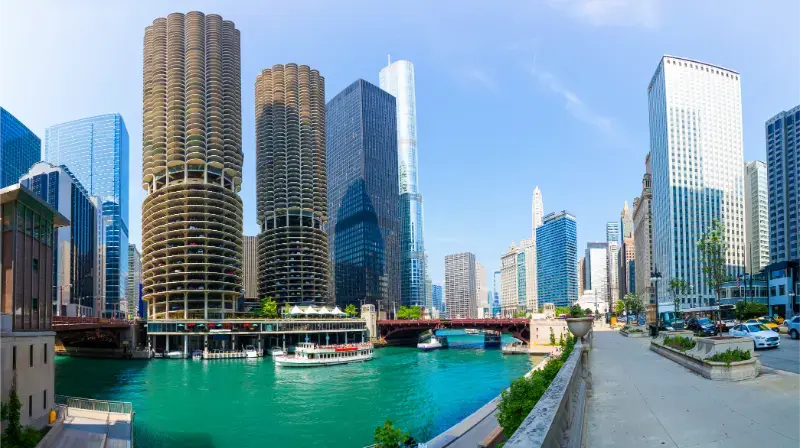
Winter can be rewarding for a city stay focused on museums, food and performances. Chicago's exposed lakefront makes wind and temperature matter even when an attraction is only a short walk away. Choose a hotel with useful transport and dining nearby, and connect outdoor blocks with warm indoor stops. An observation deck is worth considering according to visibility rather than automatically booking the same time you would choose in summer.

Outside the city, winter conditions can affect roads, trails and the operating days of small attractions. Keep a driving route simple and avoid promising a remote scenic stop before checking access. In the Great Rivers region, bald-eagle watching is a particular winter interest, with local and park interpretation helping visitors understand where to go. Wildlife is not guaranteed, and an organized program has different arrangements from stopping independently beside the river.
Choose dates by the experience you want
For a Chicago culture weekend, almost any season can work if the itinerary fits the weather. For architecture cruises and long outdoor walks, check the cruise operator's calendar and give priority to a season with more outdoor flexibility. For a beach-focused stay, summer is the logical starting point, with opening and water conditions still checked for the exact visit.
A statewide family road trip usually benefits from choosing a manageable school-holiday window and limiting transfers. A park-focused trip needs more attention to individual trails than a general seasonal recommendation can provide. If waterfalls are the purpose, read the destination's current information rather than assuming a named canyon always has substantial flowing water. If Christmas programming or a particular festival is the reason, let the event's published dates lead the accommodation plan.
Chicago and southern Illinois require different packing
Layering is useful in Chicago because the lakefront, sheltered streets and air-conditioned buildings can feel different on the same day. Carry a rain layer that is easy to use during a walk instead of leaving it with the luggage. For southern-Illinois park time, choose shoes for the actual terrain and include sun protection and water when conditions call for them.

Check the forecast for the place where you will spend the day, not only the city where your flight arrives. A statewide trip may include several separate weather situations. Keep a clean, dry change accessible after an outdoor outing, especially if the next stage involves a long drive or a museum. This is a practical reason to avoid moving accommodation every night: a stable base makes it easier to adjust clothing and recover after a wet day.
Events can matter as much as the season
Before booking, check conventions, large festivals, sports and local holiday activity for your destination. In Chicago, a major event can affect accommodation well beyond its venue. In a smaller town, an annual festival may be the main reason rooms sell out. Decide whether you want to participate or prefer another date, and make that decision before paying for a nonrefundable stay.
For road trips, check the calendar for every overnight stop rather than just Chicago. A route that looks quiet overall can still intersect a busy weekend in one location. If you need flexibility, compare cancellation terms along with the price. Moving a hotel date by one night may give the route more room, but changing it is only useful if the attractions you want also operate on the revised day.

Plan the route first, then refine the month
A three-night Chicago visit has fewer seasonal constraints than a two-week route through parks, river towns and rural roads. Sketch the trip before choosing an exact month: list your bases, the outdoor activities that matter and any date-specific event. Then see which season supports the largest part of that plan without making the remainder awkward.
Use the Illinois road-trip itinerary to organize the distances, compare the Great River Road region for a river-country stay, or start with Chicago's main experiences if the city is your priority. The Illinois family guide can help when school holidays and children's interests limit the date choice. You may find that one well-chosen region is a better holiday than trying to make every part of the state work in the same week.
Match the seasonal route to the amount of daylight
A Chicago-and-northern-Illinois weekend and a trip continuing into Shawnee country have different driving demands. In the longer-day season, a transfer may leave time for a modest park visit afterward. In late fall or winter, the same hotel-to-hotel journey can consume most of the useful sightseeing period. Schedule the principal outdoor stop before the transfer, or keep a second night near it, instead of expecting every arrival day to end with a long walk.
This is particularly useful when pairing fall scenery with towns. Stay near the area whose color interests you and use another attraction there if rain interrupts the first plan. Repeatedly relocating south or north to chase a new report removes the time you intended to spend outside. If the trip is primarily Chicago, shorter daylight is less restrictive because museums and evening performances can provide the structure. Let the available light shape a rural day, while the current opening calendar shapes an indoor city day.
Frequently asked questions
What is the best month for a first Illinois trip?
May, June and September are useful starting points for a mixed city-and-road-trip visit. Choose the actual dates around the activities, opening calendars and events you care about; no month guarantees comfortable conditions everywhere.
Is autumn always the best time for Illinois foliage?
Autumn is the season to consider, but timing differs by location and weather. Follow current reports for the region you intend to visit rather than expecting identical peak color across northern and southern Illinois.
Map and orientation
This map provides general orientation. Use the specific attraction address and current access information when planning the final journey.
Accommodation and reservations
Compare available accommodation for your dates, budget and preferred location before you finalize your route.
Compare accommodation in Illinois. Check the property’s address, room occupancy, cancellation terms and complete price before booking.
Compare rental cars for the driving stages, including any one-way charge and equipment needed for your travelers.
Some booking links are affiliate links. We may earn a commission from qualifying bookings.
Official visitor information
- Illinois tourism
- Starved Rock State Park
- Lincoln Home tours
- Meeting of the Great Rivers scenic byway
- Pere Marquette State Park
Last updated: October 14, 2026.