

The best time to visit Idaho depends more on elevation and activity than on a single statewide weather chart. Boise can feel like spring while Sawtooth trailheads are still buried in snow; Shoshone Falls is often most powerful before summer, while the easiest high-mountain hiking arrives later. Northern Idaho lakes, central Idaho peaks and the Snake River Plain all run on different seasonal calendars.
For a first road trip that includes Boise, Stanley, Sun Valley, Craters of the Moon and Twin Falls, late June through September is the simplest window. But travelers focused on waterfalls, skiing, hot springs or fall color may have a better trip outside that period. The goal is to match the month to the experience rather than chase a generic “best weather” label.
January and February: skiing, snow and hot springs
Winter is prime time for ski destinations such as Sun Valley and Brundage, with snowshoeing and Nordic options across several mountain communities. Boise remains a useful gateway, while Stanley becomes far quieter and more winter-oriented.
Road conditions are the central planning issue. Mountain highways can be snowy or icy, daylight is short and some scenic byways or forest roads are closed. Choose fewer bases, keep warm clothing in the vehicle and check Idaho 511 every travel day.
March and April: waterfalls rise while mountains stay wintry
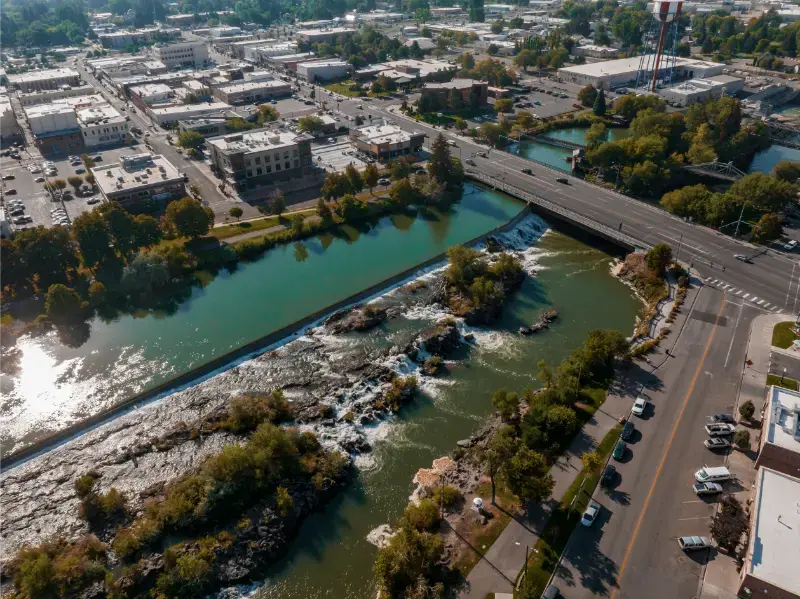
Spring begins unevenly. Lower valleys may warm quickly, but high country remains snowbound. This period can be excellent for Shoshone Falls because snowmelt increases Snake River flow, while Sawtooth hiking is still limited.
Bruneau Dunes and Boise can be comfortable in spring, though wind and rain remain possible. Do not assume that a sunny Boise forecast says anything about Galena Summit or Stanley.
May and June: green valleys, strong rivers and changing access
May brings longer days and improving road access, but mountain trails can remain muddy or snow-covered. By June, more campgrounds and scenic roads are opening, yet early-season hikers should still check snow conditions and stream crossings.
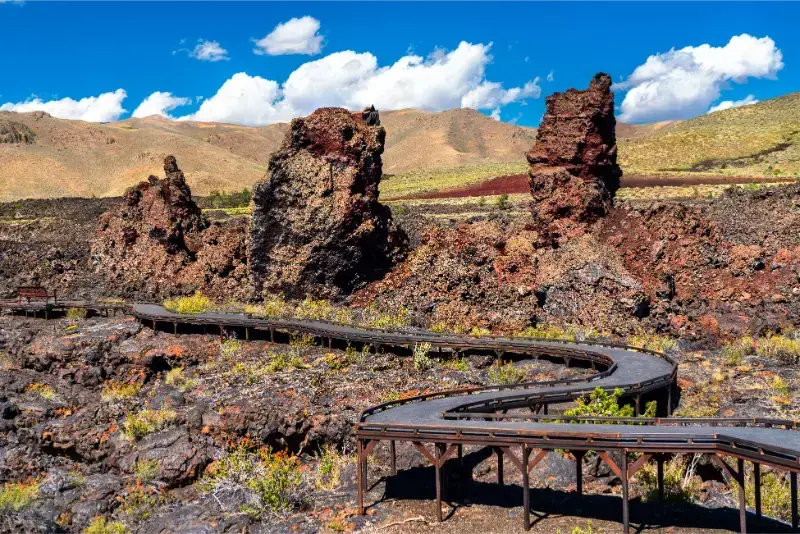
Craters of the Moon often has its Loop Road open by this period, subject to weather, and the black lava can be more comfortable before peak summer heat. June is also useful for rafting, though river conditions should always be matched to experience and outfitter advice.
July and August: maximum access and maximum demand
High summer offers the broadest access to alpine trails, Redfish Lake, mountain campgrounds and northern Idaho lakes. It is the easiest season for a first road trip because the major paved mountain routes are normally open and services operate longer hours.
The tradeoffs are heat at lower elevations, crowded weekends and wildfire smoke. Boise and Twin Falls can be very hot, while Sawtooth mornings remain cool. Start exposed activities early and keep air-quality checks in the daily routine.
September: one of the best all-around months
September often combines open high-country roads with cooler nights and reduced crowds. Stanley, Sun Valley, McCall and Coeur d’Alene can all be excellent, though early freezes become possible and seasonal businesses may begin shortening hours.
Wildfire smoke can still occur, so September is not guaranteed clear-sky season. Flexible bookings remain useful, especially on a trip built around long mountain hikes.
October and November: shoulder season and rapid change
Autumn color appears at different times by elevation and region, and the quieter roads can be a major advantage. However, the first significant snow can close high routes quickly, campgrounds shut down and daylight contracts.
Craters of the Moon may remain drivable into late autumn, but the NPS notes that the Loop Road typically closes when winter conditions arrive. Check exact operating status rather than relying on the date of a previous year.
Best time for Boise
Boise is most comfortable for walking and biking in late spring and early autumn. Summer still works if you plan Greenbelt rides and foothill walks early, then use museums, restaurants or shaded river areas in the hottest hours.
Winter Boise can be a good city break and a gateway to snow sports, with fewer tourists than mountain resorts. It is also one of the easiest Idaho destinations for a short trip because airport-to-downtown transfers are simple.
Best time for the Sawtooths and Stanley
July through early September is the most reliable hiking window for higher trails. June can retain substantial snow, while late September may bring freezing nights and early storms. Backpackers should look at current trail and fire conditions, not just historical averages.
Winter Stanley is beautiful but is a specialized trip involving snow travel, reduced services and winter-driving preparation. Do not expect the same itinerary you would use in August.
Best time for Shoshone Falls and southern Idaho
Spring is the strongest season for Shoshone Falls because flow is usually highest before major summer irrigation diversions. Summer offers easier road-trip weather but can produce a much smaller waterfall and intense heat in exposed parks.
Bruneau Dunes is especially pleasant in spring and autumn. In summer, sandboarding and dune hiking need to happen early because hot sand and air temperatures can become the limiting factor.
Best time for Coeur d’Alene and northern Idaho lakes
June through September is the classic lake season, with July and August best for swimming and boating. May and October are quieter and better for hiking or cycling if you are comfortable with colder water and variable rain.
Northern Idaho winters can be snowy and atmospheric, but many visitors will get more value from a winter trip if they pair the lakes with skiing or snowshoeing rather than expecting summer-style waterfront activities.
Wildfire smoke deserves its own plan
Across Idaho, late summer can bring smoke from local or regional fires. Conditions may change in a day, and a destination can be open while views and air quality are poor. Check fire maps, air quality and forest alerts before a long hike.
Build alternatives into the itinerary: museums in Boise, lower-effort lake days, a route change or an extra night in a clearer region. Travel insurance and flexible cancellation terms become more valuable during fire season.
How school holidays and weekends affect the trip
Summer weekends can feel much busier at Redfish Lake, McCall, Coeur d’Alene and popular campgrounds than nearby weekdays. If your dates are flexible, shift lake and trail days to midweek and use cities or transfer days on weekends.
Holiday periods in winter also raise prices in ski destinations. Booking Sunday-through-Thursday can sometimes create a noticeably calmer trip without changing the season.
How to choose dates when plans are flexible
List the two experiences that matter most, then select the overlap. If the priorities are Sawtooth hiking and lake swimming, choose midsummer or early September. If they are Shoshone Falls and comfortable desert hiking, spring may be better.
This simple priority method prevents a common planning problem: choosing July because it sounds like “summer vacation” even though the traveler’s real goal is a spring waterfall or winter ski trip.
Where to stay
Compare available accommodation for your dates, budget and preferred location before you finalize your route.
Where you stay depends on season as much as destination. Boise and Twin Falls have broad year-round hotel inventory, while Stanley, lake resorts and mountain campgrounds are more seasonal. Ski towns can be most expensive in winter, while lake towns peak in summer.
If dates are fixed around July, August or a holiday ski week, book the mountain bases first. If dates are flexible, compare weekday pricing and cancellation terms before choosing the exact month.
Check hotels and places to stay in Idaho, USA.
Getting there and getting around
Idaho’s major airports include Boise plus smaller regional gateways, but most statewide itineraries require a car. Mountain and rural travel should always include an Idaho 511 check, especially during shoulder seasons and winter.
High elevation creates big temperature differences within the same day. Keep layers accessible, download maps and avoid scheduling a long pass crossing after dark simply because the distance looks short.
Best time to visit
For the broadest first-trip access, choose late June through September. For high waterfalls, lean toward spring. For skiing, choose winter. For fewer crowds with mostly open mountain roads, September is often an excellent compromise.
There is no month that optimizes every Idaho experience at once. A strong itinerary accepts seasonal tradeoffs instead of trying to combine peak skiing, peak waterfall flow and snow-free alpine hiking in the same trip.
How to fit this into an Idaho road trip
Use this seasonal guide before choosing between Stanley, McCall, Coeur d’Alene and Twin Falls. Each peaks for different reasons.
Once the month is chosen, the 10-day Idaho itinerary can be adjusted by adding or removing mountain nights according to access and weather.
Useful official resources
Frequently asked questions
What is the best month to visit Idaho?
September is one of the best all-around months for open mountain roads, cooler nights and fewer crowds, but it is not ideal for every activity and wildfire smoke is still possible.
When is Shoshone Falls best?
Spring is usually best for stronger flow before summer irrigation diversions reduce the amount of water over the falls.
When can you hike in the Sawtooths?
July through early September is the most reliable period for snow-free high trails, though conditions vary by elevation and year.
Is Idaho good in winter?
Yes for skiing, snowshoeing, hot springs and winter town stays. It requires a different route, winter-driving preparation and fewer assumptions about scenic-road access.