

Birmingham Alabama Travel Guide. Birmingham is one of the best cities in Alabama for travelers who want history, food and an urban base that is easy to combine with a wider Deep South road trip. The city grew rapidly around iron and steel, then became one of the most important places in the history of the American Civil Rights Movement. Today those stories sit beside a strong restaurant scene, green spaces, museums, breweries and neighborhoods that feel very different from one another. A first visit should not be reduced to a single museum or a quick interstate stop. Birmingham rewards at least two nights because the major sites are spread between downtown, the Civil Rights District, Red Mountain and suburban areas such as Barber Motorsports Park.
Why add this stop to an Alabama itinerary?
Birmingham works especially well near the beginning of an Alabama itinerary. Its airport and interstate connections make it practical, while its museums provide historical context that makes later visits to Montgomery and Selma more meaningful. The city also offers enough non-history attractions to keep a mixed-interest group engaged. You can spend the morning at a major museum, walk Railroad Park in the afternoon, eat very well in the evening and still have a full second day for Vulcan, Sloss Furnaces, art or motorsports.
Alabama is compact enough for a multi-city road trip, but that does not mean every transfer is short once museums, meals, traffic and weather are included. The most satisfying trips use a few strong bases and leave enough room to understand each place. Treat the times shown by navigation apps as driving minimums, not as complete door-to-door travel times.
Best things to see and do
Birmingham Civil Rights District
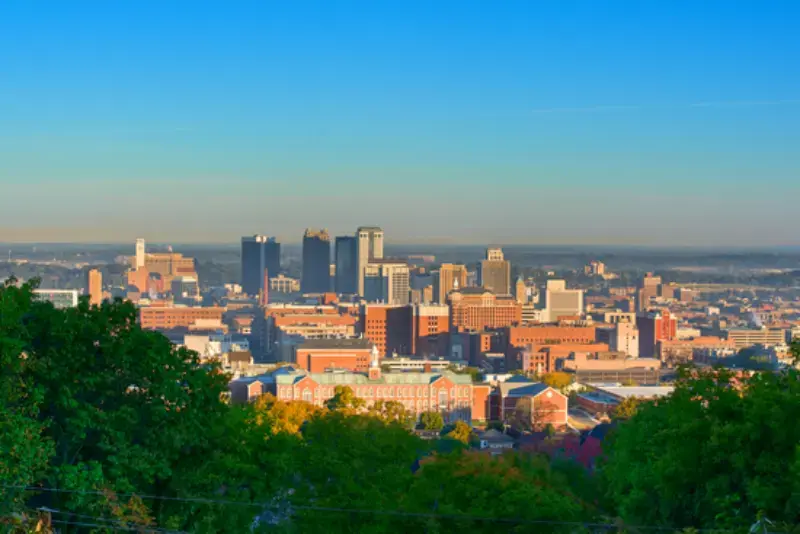
Begin with the Civil Rights District rather than treating it as an afterthought. The Birmingham Civil Rights Institute, 16th Street Baptist Church, Kelly Ingram Park and surrounding streets form a compact area where the geography itself helps explain the events of 1963. Allow time to read exhibits and markers instead of moving quickly from one photo stop to another. The strongest visit combines indoor interpretation at the institute with time outside in Kelly Ingram Park, where sculptures and signs connect national history to specific places in the neighborhood.
16th Street Baptist Church and Kelly Ingram Park
The church and park deserve separate attention even if you have already visited the Civil Rights Institute. The 16th Street Baptist Church bombing killed four girls in 1963 and became one of the defining events of the movement. Kelly Ingram Park, directly across the street, was a gathering place during demonstrations. Visit respectfully: the church remains an active congregation, and worship services, special events or restoration work can affect access. This is a place for historical understanding, not just a checklist of famous landmarks.
Vulcan Park and Museum
Vulcan is Birmingham’s most recognizable symbol and one of the clearest ways to understand why the city became an industrial powerhouse. The giant cast-iron statue was created for the 1904 St. Louis World’s Fair and now stands on Red Mountain above the city. The museum explains the iron-and-steel economy, while the observation area gives a useful visual sense of Birmingham’s geography. Go late in the day if you want softer light over downtown, but verify current hours before relying on a sunset visit.
Sloss Furnaces National Historic Landmark
Sloss Furnaces preserves the industrial infrastructure that powered Birmingham’s growth. The site is much more meaningful after learning why coal, iron ore and limestone made the region valuable to heavy industry. The preserved furnaces, pipes and machinery make the scale of that economy tangible in a way a conventional museum cannot. Surfaces can be uneven and parts of the site are exposed to heat or rain, so comfortable shoes and weather awareness matter. Check the official calendar because events can change normal access.
Railroad Park, Regions Field and downtown
Railroad Park is a useful reset between museum-heavy stops. The landscaped urban park sits beside active rail lines and provides skyline views, walking paths and open lawns. Regions Field, home of the Birmingham Barons, is nearby, so a baseball game can turn a sightseeing day into an easy evening. Downtown has improved substantially as a visitor district, but attractions are not all on one pedestrian corridor. Group nearby stops rather than assuming you can leave the car parked for the entire day.
Barber Vintage Motorsports Museum
Barber Vintage Motorsports Museum is worth the drive even for travelers who are only casually interested in motorcycles or racing. The collection is displayed in a modern, visually impressive building beside Barber Motorsports Park, and the museum’s official site publishes current seasonal hours and event information. Race weekends can change traffic, parking and ticket demand, so check the calendar before visiting. If motorsports is a priority, give the museum several hours rather than squeezing it between downtown attractions.
Birmingham food and neighborhoods
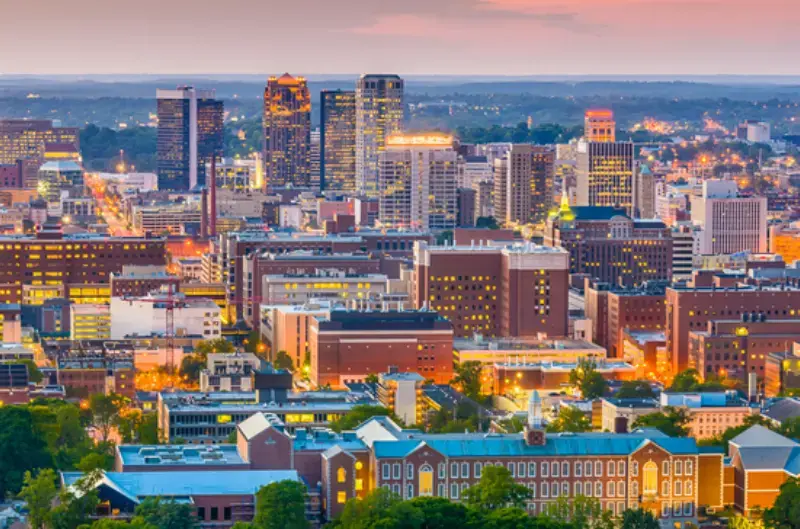
Birmingham’s food scene is one of the strongest reasons to stay overnight. Barbecue is important, but the city also has modern Southern cooking, immigrant-owned restaurants, bakeries and chef-driven dining. Avondale, Lakeview, Five Points South and downtown each offer different evening options. Do not build the trip around a long list of famous restaurants that forces you to cross the city repeatedly. Choose a neighborhood near the day’s final attraction and let dinner simplify the logistics.
How to connect Birmingham with the rest of Alabama
Birmingham sits naturally between north Alabama and the central part of the state. Huntsville is an easy next region for space and science, while Montgomery continues the Civil Rights story to the south. Tuscaloosa can be added west of the city, and a longer itinerary can continue toward Mobile and the Gulf Coast. If your trip includes several of these places, avoid returning to Birmingham every night. A one-way road trip is more efficient than using the city as a base for the entire state.
How many days do you need?
With one full day, focus on the Civil Rights District, Railroad Park and one evening neighborhood. With two days, add Vulcan and either Sloss Furnaces or the Barber Vintage Motorsports Museum. Three days makes sense for travelers who want art, baseball, a slower food itinerary or nearby hiking. Birmingham is also a practical first or final night on a statewide road trip because the airport is close to the city compared with many large U.S. metro areas.
Getting around
A car is the easiest way to visit Birmingham because Vulcan, Barber and several neighborhoods sit well beyond the compact downtown core. Downtown parking is usually simpler than in larger U.S. cities, but event nights can change the picture. Ride-hailing works well for restaurant evenings if you prefer not to drive. When planning museum days, check opening days carefully; many cultural attractions around the United States close one weekday, often Monday, and Birmingham is no exception to that general pattern.
If this stop is part of a longer road trip, avoid checking out at dawn simply to gain an extra sightseeing hour. A relaxed breakfast and a realistic transfer often produces a better day than arriving tired before the next attraction opens. Download offline maps for rural segments, keep fuel above a quarter tank and plan long drives for daylight whenever possible.
Where to stay
Compare available accommodation for your dates, budget and preferred location before you finalize your route.
Choose accommodation according to the first activity of the next morning, parking needs and evening plans rather than only the lowest nightly rate. A slightly more central hotel or well-located rental can save repeated driving and make dinner much easier. You can compare places to stay in Birmingham on Booking.com. Read recent reviews for noise, parking and actual walking distance before booking.
Best time to visit
Spring and fall are the most comfortable seasons for combining museums with outdoor walking. Summer is hot and humid, so schedule exposed sites such as Sloss or long park walks early in the day and use museums during the hottest hours. Winter can be a good value for city travel, although short cold spells are possible. Football weekends, major races at Barber and large conventions can raise hotel rates sharply, so check the event calendar before locking in dates.
Across Alabama, severe thunderstorms can develop quickly in warmer months. The Gulf Coast also requires tropical-weather awareness, while north Alabama can be noticeably cooler than Mobile or Gulf Shores. Check the forecast for the specific destination and keep one indoor or low-commitment alternative for outdoor days.
Traveling with children
Families can make Birmingham work by balancing serious historical sites with Railroad Park, McWane Science Center, baseball or the motorsports museum. The Civil Rights District is appropriate for school-age children and teenagers when adults are ready to discuss what they see rather than rushing through difficult material. Younger children may do better with a shorter museum visit followed by a park break. Build in snacks and downtime because two dense museums back-to-back can overwhelm even interested children.
Food and meal planning
Try Birmingham barbecue, but leave room for the city’s broader restaurant culture. Lunch is often the easiest time to try a celebrated barbecue or meat-and-three without committing the entire evening to a long wait. For dinner, choose a neighborhood where you can walk between a restaurant, café or brewery. Reservations are sensible for high-demand restaurants on Friday and Saturday nights, while casual places usually work better as flexible stops.
Budget and reservations
Hotel prices in Alabama change far more around football games, beach weekends, festivals and major events than around a simple high-season/low-season calendar. Reserve fixed-capacity tours and high-demand accommodation first, then keep ordinary meals and flexible attractions open. Admission fees, parking systems and event policies change, so use official sources for current costs rather than copying a budget from an older itinerary.
Accessibility and comfort
Accessibility varies between modern museums, historic churches, ships, older houses, beaches and nature trails. If step-free access, accessible parking, beach mats, elevators or mobility-device-friendly surfaces are important, check the individual attraction rather than assuming a destination-wide standard. Summer heat can also be an accessibility issue: schedule exposed walking early, carry water and use air-conditioned breaks before anyone becomes exhausted.
Mistakes to avoid
The biggest mistake is treating Birmingham as a quick stop on the way to somewhere else. Another is visiting only Civil Rights sites without learning about the industrial history that shaped the city, or doing the reverse and ignoring the movement entirely. Do not assume all attractions sit downtown, and do not schedule Barber immediately after a downtown museum without accounting for the drive. Finally, check church access and museum hours shortly before travel rather than relying on an old itinerary.
Continue planning your Alabama trip
- Montgomery Alabama travel guide
- Huntsville Alabama travel guide
- Tuscaloosa Alabama travel guide
- 10-day Alabama road trip
- Alabama destination guide
Official resources to check before you go
Opening hours, tour schedules, beach conditions, road access, event closures and admission systems can change. Check these official resources shortly before travel rather than relying on a saved screenshot or an old social-media post.
Frequently asked questions
Is this a good stop for a first Alabama trip?
Yes. This destination adds a distinct part of Alabama’s story rather than duplicating the surrounding stops. The key is to connect it geographically with the next region and avoid backtracking simply to keep the same hotel for the entire state.
Do I need a car?
For a statewide trip, yes. Some downtown areas can be explored on foot and ride-hailing is useful in larger cities, but beaches, parks, historic corridors and intercity transfers are much easier with a car. If you are flying, compare one-way rental fees with the cost of returning to your arrival airport.
What should I book in advance?
Book working-studio tours, limited-capacity historic tours, popular boat trips, special-event weekends and peak beach accommodation early. Ordinary museums and restaurants usually allow more flexibility, although popular weekend dining can still benefit from a reservation. Always prioritize reservations that would be difficult to replace if sold out.
How do I combine this with the rest of Alabama?
Use the internal guides above to build a route by region. Birmingham and Montgomery work naturally together, Mobile connects with the Gulf Coast, Huntsville pairs with The Shoals, and Selma belongs with Montgomery through the National Historic Trail. Grouping places this way minimizes driving and creates a more coherent trip.
More Alabama guides for this trip
- Alabama Civil Rights Trail road trip
- Cheaha State Park guide