

North Carolina travel guide › Charlotte North Carolina Travel Guide: Neighborhoods, Museums, Food & Easy Day Trips
Charlotte is often treated as an airport or business stop, but it works surprisingly well as a two- or three-night city break and as the easiest urban gateway for a broader North Carolina road trip. The city mixes major museums, professional sports, breweries, neighborhoods and family attractions without the density of a Northeast metropolis.
The key is to plan by district. Uptown, South End and NoDa each have enough to occupy part of a day, while attractions such as the U.S. National Whitewater Center sit well outside the central core. Constantly crossing the city wastes the advantage of a compact itinerary.
At a glance
| Ideal stay | 2–3 nights |
| Best for | Museums, sports, food, neighborhoods, family trips |
| Airport | Charlotte Douglas International (CLT) |
| Car | Optional for central districts; useful for outer attractions |
| Good add-ons | Blue Ridge foothills, Lake Norman, Asheville route |
Start with Uptown, not with the interstate view
Charlotte’s central business district is called Uptown. It contains many of the city’s most useful first-time attractions within a relatively small area: museums, sports venues, public spaces and light-rail connections. A visitor who only drives around I-277 misses the part of Charlotte that works best on foot.

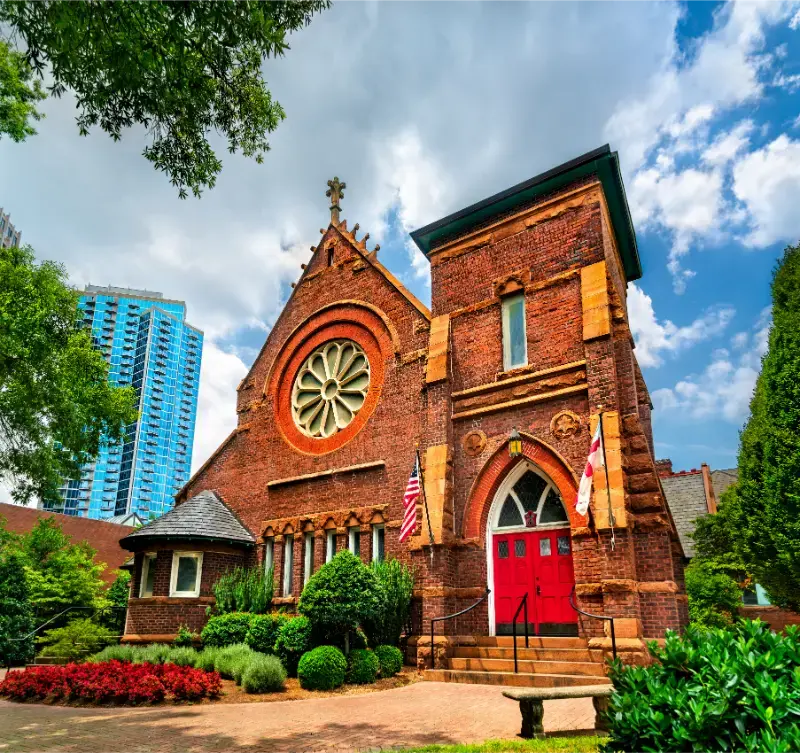
Begin with one cultural anchor, then walk between nearby stops. This keeps parking simple and gives the skyline and public spaces a chance to feel like a city rather than a sequence of garages.
Museums that give the city context
The Levine Museum of the New South, Mint Museum Uptown and Bechtler Museum of Modern Art each approach the city from a different angle. Check current locations, exhibitions and hours before building the day because museum operations can change. Pair institutions by proximity rather than trying to see every collection in one afternoon.
For families, Discovery Place Science is an easy central choice. Older children and adults may prefer mixing one museum with a sports or neighborhood activity rather than spending the entire day indoors.
Sports and event-night planning
Charlotte’s major venues bring NFL, NBA, soccer and other events into the central area. Event nights change traffic, restaurant reservations and hotel pricing well beyond the stadium. If a game is part of your trip, stay near transit or within walking distance when the budget allows.
If you are not attending, check the calendar anyway. A major event can make an otherwise simple dinner or parking plan unexpectedly difficult.
South End: transit, food and an easy evening
South End has grown around the light-rail corridor and combines restaurants, breweries, apartments, shops and the Rail Trail. It is one of the easiest neighborhoods to visit without moving a car, especially from Uptown.
Use the neighborhood for a late afternoon and evening rather than treating every brewery as a destination. Walk, choose a meal, and let the area function as a district. That is more enjoyable and safer than driving between tastings.
NoDa and Plaza Midwood
NoDa, centered around North Davidson Street, retains an arts-and-music identity alongside new development. Plaza Midwood offers another mix of independent food, nightlife and residential streets. Both give repeat visitors or longer stays an alternative to the polished Uptown core.
These neighborhoods are close enough to combine selectively, but do not schedule a rigid crawl. Check live-music calendars and restaurant hours because the most interesting reason to visit may be date-specific.
NASCAR and motorsport culture
The NASCAR Hall of Fame is one of Charlotte’s most distinctive attractions even for visitors who are not dedicated racing fans. It explains the sport’s regional roots, technology and personalities in a way that gives context to the wider Carolinas racing culture.
If motorsport is a major interest, research team shops and Charlotte Motor Speedway separately. They are not all downtown, and operating hours or public access can differ.
U.S. National Whitewater Center
The Whitewater Center west of the city can fill most of a day with rafting, climbing, trails, paddling and seasonal events. Activities, waivers and age/weight requirements vary, so book around the experience you want rather than simply arriving with a generic admission expectation.
Because the site is outside the urban core, combine it with airport-side logistics or give it its own day. Driving from Uptown, back to the center, then out again creates unnecessary mileage.

Charlotte with children
Families can combine Discovery Place, parks, a sports event and one active day outside the center. The city works best when each day has one major anchor and enough unstructured time for meals and pools. Do not assume children will enjoy a full adult museum itinerary simply because the attractions are close together.
Carowinds, on the South Carolina line, is another possible family day but should be planned as a separate destination with its own calendar, tickets and operating hours.
Best time to visit Charlotte
Spring and fall usually provide the easiest weather for walking and outdoor dining. Summer is hot and humid but works for events and family travel if you use mornings and evenings well. Winter is mild compared with northern cities, though occasional cold snaps or ice can disrupt roads.
Large conventions, races, football weekends and festivals can matter more to hotel price than the season itself. Check the event calendar before assuming a particular month is inexpensive.
Using Charlotte in a North Carolina road trip
Charlotte is a practical arrival point for Asheville, the Blue Ridge foothills and the Piedmont. If your route ultimately heads east to Raleigh or Wilmington, use the city as a first or final stop rather than repeatedly returning to the airport area.

A common mistake is adding Charlotte simply because the flight is cheaper, then spending no time there. If you are already staying two nights, give the city a real day; otherwise land, collect the car and move efficiently to the destination you actually want.
Public transport and the light rail
The LYNX Blue Line is useful for moving between Uptown, South End and parts of the university corridor without dealing with parking at every stop. It does not eliminate the need for a car on every itinerary, but it can make an event night much easier. Check current schedules and station parking rather than assuming service frequency. For travelers staying near a station, a central day plus South End evening can be built almost entirely around rail and walking.
Day trips from Charlotte
Lake Norman, small Piedmont towns and the foothills can all work as day trips, but Charlotte is not a realistic base for daily Blue Ridge Parkway sightseeing. Asheville deserves an overnight if mountain travel is important. Closer options such as Crowders Mountain can provide outdoor time without consuming the day in a vehicle. Choose the day trip based on what the city portion of your itinerary lacks: water, hiking, history or small-town atmosphere.

Build one day without the car
Charlotte becomes more enjoyable when at least one day is built around walking and light rail. Start in Uptown, visit one museum, have lunch nearby, then ride south for the Rail Trail and dinner. This removes repeated garage entries and lets the city feel connected. Keep the rental car for Whitewater Center, suburban family attractions or the next road-trip leg. Visitors who drive five minutes between every central stop often spend more time parking than exploring.
Match the neighborhood to the evening
A hotel near Uptown is practical for sports and museums, South End is convenient for restaurants and light rail, and NoDa can suit travelers who prioritize music and a neighborhood atmosphere. Airport hotels solve early departures but make spontaneous evenings less appealing. Before booking, map the final activity on two of your nights. The best Charlotte base is usually the one that lets you finish those evenings without a long rideshare or another parking search.
Before you leave for the day
Before leaving for Charlotte, check the exact attraction hours, road or beach conditions and the local event calendar for your dates. North Carolina trips often combine public lands, municipal attractions and private operators, so rules that apply at one stop may not apply at the next. Keep the first activity of the day close to your overnight base, carry confirmation details offline and leave a realistic margin for parking and weather. If conditions change, protect the main reason you chose Charlotte and remove a minor stop instead of compressing every remaining activity into a shorter window. That approach keeps the day useful and makes the itinerary feel like travel rather than a race between reservations. Before returning to the hotel, check the next morning’s route and weather so you can change departure time while the options are still easy rather than making the decision from a crowded parking lot.
Where to stay
Compare available accommodation for your dates, budget and preferred location before you finalize your route.
Choose accommodation to reduce the driving that matters for this itinerary, not simply by the lowest nightly rate. Compare accommodation in Charlotte and compare the final price, parking, cancellation rules and exact map position before you book. In high season, festival weekends and peak fall-color periods, the best-located options can disappear long before the cheapest rooms.
Useful official resources
Continue planning North Carolina
These guides work well together when you want to turn the destination into a realistic route rather than a list of disconnected stops.
- North Carolina road trip itinerary
- Asheville travel guide
- Raleigh, Durham & Chapel Hill guide
- North Carolina Travel Guide: Blue Ridge, Outer Banks & Cities