

Destinations › West USA › Montana › Glacier National Park Travel Guide: Roads, Hikes, Lakes & Practical Planning
Glacier National Park is one of the places where a map can make a trip look easier than it really is. The park is divided by mountains, seasonal roads and long driving distances, and the most famous corridor is only one part of the landscape. A good first visit usually needs at least three full days; four or five is much better if you want to see both the west and east sides without turning every day into a race.
Understand the park before booking hotels
Glacier is not a single valley with one central entrance. West Glacier and Apgar give access to Lake McDonald and the western end of Going-to-the-Sun Road. St. Mary is the main east-side gateway to the road. Many Glacier sits in a separate northeastern valley reached by its own road, and Two Medicine lies farther south. The North Fork has a much more remote feel and should not be treated as a quick add-on.
The biggest planning decision is therefore where you will sleep. Staying in one base for the entire trip can work, but it often creates long back-and-forth drives. Travelers who want Many Glacier and the western park in the same trip usually benefit from splitting the stay between two sides.
Going-to-the-Sun Road is spectacular but seasonal
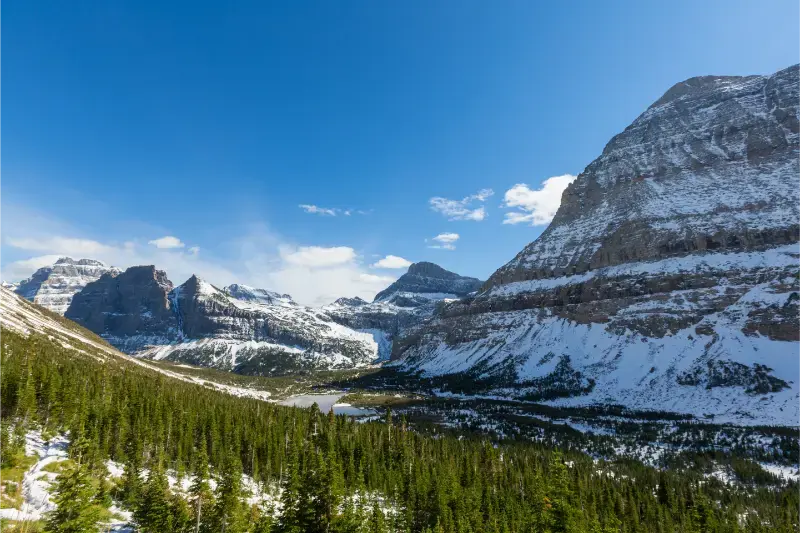
Going-to-the-Sun Road crosses the Continental Divide at Logan Pass and is the route most first-time visitors picture when they think of Glacier. The alpine section is seasonal because snow removal is a major operation every spring. In 2026 the full 50-mile road opened to motor vehicles on June 22. That date is useful context, not a promise for future years: opening depends on snow, avalanche conditions and road work.
In 2026 Glacier did not require a park-wide vehicle reservation. The park instead introduced a reservation-only Logan Pass shuttle and a three-hour parking limit at Logan Pass from July 1 through September 7. Those systems ended for the 2026 season on September 8, and the park can change access procedures again. Check the official Glacier access information for the year and dates of your trip.
Do not build the entire trip around Logan Pass parking
Logan Pass is beautiful, but it is also one of the park’s most constrained places. Parking can fill very early, and alpine trail conditions may remain wintry after the road itself opens. A stronger itinerary includes several days that do not depend on getting a parking space there.
Lake McDonald, Avalanche, Many Glacier, Two Medicine and east-side viewpoints all provide different experiences. If clouds cover the Divide, use the day for lower-elevation lakes or a valley walk and return to the alpine road when visibility improves.
Lake McDonald works well on arrival day
Lake McDonald is close to the West Entrance and easy to pair with Apgar Village, short shoreline walks and a relaxed first afternoon. The colored stones visible through clear water are famous, but the lake’s real value is the scale of the setting: mountains rise beyond a long glacial valley, and the light changes noticeably between morning and evening.
If you arrive after a flight into Glacier Park International Airport or a long drive from Missoula, do not force a major hike on the first day. A lake evening and an early start the next morning usually produce a better trip.
Many Glacier deserves its own day
Many Glacier is one of the best hiking areas in the park and feels distinct from the Going-to-the-Sun Road corridor. Trails lead toward lakes, waterfalls, glaciers and high passes, and wildlife sightings are possible in the surrounding valleys. Because the access road is separate, schedule Many Glacier as a full-day destination rather than combining it with a long west-side program.
Trail choice should depend on fitness, weather, bear activity and current closures. Carry bear spray where recommended, know how to use it, and never approach wildlife for a photograph. Glacier is grizzly country, and safe behavior matters on popular trails as much as on remote ones.
Two Medicine is more than a backup plan
Two Medicine receives less attention than Logan Pass or Many Glacier, which can make it especially rewarding for travelers who want mountain scenery without structuring the whole day around the park’s busiest corridor. Lakes, waterfalls and trail options create a useful half-day or full-day plan.
It also fits naturally when driving between the east side of Glacier and southern Montana. If weather makes high-elevation hiking unattractive, a lower valley can sometimes offer a better alternative, though conditions vary widely inside the park.
Hiking in Glacier requires conservative planning
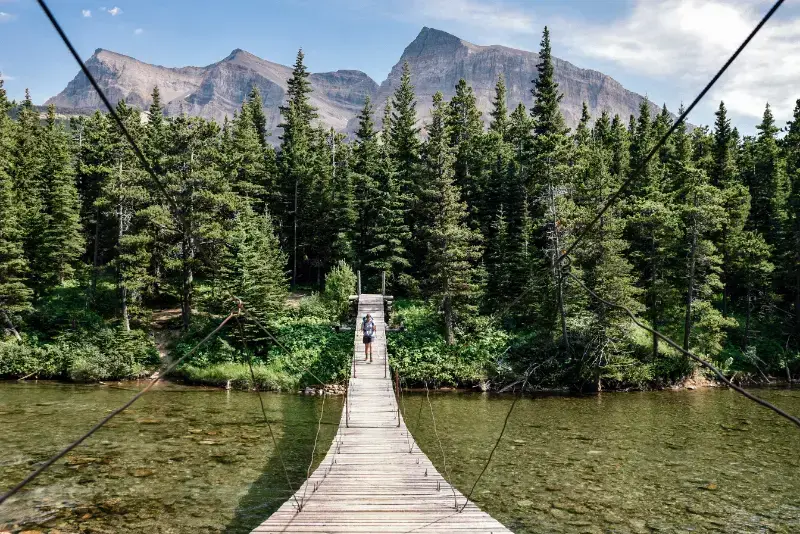
Trail mileage alone is not enough to judge difficulty. Elevation gain, exposed terrain, lingering snow, afternoon storms and wildlife can all change the experience. Start earlier for longer hikes, carry more water and food than you expect to need, and turn around when conditions deteriorate rather than trying to complete an itinerary at all costs.
Late June can still feel like early season in the high country. In September, nights cool quickly and services begin winding down even while hiking weather can be excellent. Check the NPS trail status shortly before each hike because a recommendation written months earlier cannot reflect a fresh closure or hazard.
Wildlife viewing is best when you stop chasing wildlife
Glacier supports bears, mountain goats, bighorn sheep, deer, moose and many smaller species. The most useful strategy is to spend time in good habitat at quieter hours rather than drive aggressively from reported sighting to reported sighting. Wildlife jams can create dangerous roadside behavior.
Use binoculars or a telephoto lens and follow NPS distance rules. Food storage rules are equally important at campgrounds and picnic areas. A successful wildlife encounter is one where the animal can continue behaving naturally.
A realistic four-day Glacier plan
Day one can focus on Lake McDonald, Apgar and the west side after arrival. Day two can be the Going-to-the-Sun Road, with stops chosen around parking and weather rather than a fixed minute-by-minute schedule. Day three can be Many Glacier, ideally with one substantial hike or a combination of shorter walks. Day four can use Two Medicine, the east side or another west-side hike depending on where you stay.
With five or six days, add a weather buffer, a North Fork day if road conditions and your vehicle are suitable, or a second hiking day. Glacier rewards repeat exposure to the same mountains in different light more than it rewards collecting every named viewpoint.
Best time to visit Glacier National Park
July and August offer the highest probability that the alpine road and high trails are accessible, but they also bring the heaviest crowds. Late June can be beautiful with long daylight and waterfalls, yet alpine snow may limit hiking. September often combines cooler temperatures with fewer visitors, but services and shuttles may reduce or end and early snow is possible.
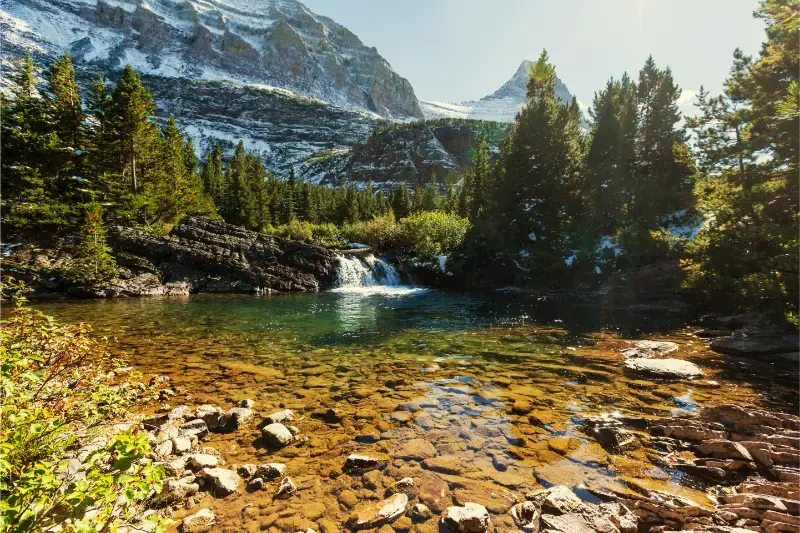
Winter and spring are specialized trips. Much of Going-to-the-Sun Road closes to vehicles, and access becomes about lower valleys, snow travel and local winter recreation rather than a standard summer park itinerary.
What to pack even in summer
Bring layers that work from warm valley afternoons to cold, windy alpine stops. A waterproof shell, sun protection, sturdy footwear and a refillable water bottle are basic items. For hiking, add food, a map or offline navigation, first-aid essentials and bear spray purchased where legal and appropriate.
Cell coverage is unreliable in many areas. Download maps and reservation details before entering the park. If you are driving the full Going-to-the-Sun Road, remember that vehicle size restrictions apply on the narrow alpine section; check NPS rules if you are in a large RV or towing.
West side, east side or both?
The west side has the easiest airport access, the most lodging in nearby communities and the classic Lake McDonald approach. It also feels wetter and more forested. The east side opens onto grasslands and broad mountain walls, and it puts St. Mary, Many Glacier and Two Medicine within a more logical driving pattern. Neither side is “the real Glacier”; they are different halves of the same park.
If you have only two nights, pick one side and accept that you will not cover the park. With four or five nights, a split stay becomes worthwhile. Moving once can save several hours of repeated driving and gives you a better chance to experience sunrise or evening light in two distinct landscapes.
Food, fuel and services need planning too
Glacier is not a place to assume that food will appear exactly when you are hungry. Visitor-service hours vary by area and season, and some trail zones have no convenient food at all. Carry lunch, snacks and enough water for the day, then treat restaurants as an evening bonus rather than a guarantee.
Fill the fuel tank before long east-side or North Fork excursions. A half-tank may look comfortable on a map, but slow park driving, detours and repeated searching for parking can use more time and fuel than expected. The same logic applies to charging an electric vehicle: confirm reliable charging locations before entering remote sections.
Photography is better when you stop chasing famous frames
Glacier’s famous compositions are beautiful, but weather and light decide what works. A smoky or cloudy afternoon at one viewpoint can become a dramatic lake scene elsewhere. Keep a short list of flexible sunrise and sunset locations near your lodging instead of crossing the park for a single photograph.
Wildlife photography deserves even more restraint. A longer lens is safer and produces more natural behavior than moving closer. Never block traffic, surround an animal or leave the trail to pressure wildlife into a better angle.
Where to stay for Glacier National Park
Compare available accommodation for your dates, budget and preferred location before you finalize your route.
West Glacier and the communities near the west entrance are convenient for Lake McDonald, Apgar and the western road corridor. Whitefish and Columbia Falls provide more restaurants and services but add driving. St. Mary is practical for the east side, while Many Glacier lodging puts you close to trailheads at the cost of fewer outside services.
For a first trip of four or more nights, consider splitting the stay between west and east rather than crossing the park every day. Book early for peak summer, especially if location matters more to you than price.
Compare accommodation near Glacier National Park before fixing the rest of your Montana route.
Continue planning northern Montana
Glacier combines naturally with Whitefish, Flathead Lake and a longer route through western Montana.
- Going-to-the-Sun Road Guide
- Whitefish Montana Travel Guide
- Flathead Lake Montana Guide
- Montana Road Trip Itinerary