

7-Day Kentucky Road Trip. A week is enough to experience Kentucky’s strongest first-time themes if the route stays focused: Louisville for museums and urban bourbon, Bardstown for bourbon country, Mammoth Cave for the national-park experience, Lexington for horses and Bluegrass scenery, and Red River Gorge for a final outdoor contrast.
This itinerary deliberately avoids trying to cover the entire state. Western Kentucky lakes and deeper Appalachian routes deserve separate trips. The goal here is a road trip with manageable transfers, enough time for ticketed attractions and evenings that do not end with exhausting drives after every full sightseeing day.
- Best for: first-time visitors who want cities, bourbon, caves, horse country and one major outdoor area
- Route: Louisville → Bardstown → Mammoth Cave/Bowling Green → Lexington → Red River Gorge → Frankfort → Louisville
- Realistic driving: most days keep the main transfer under roughly 2.5 hours, leaving time for actual sightseeing
- Best direction: clockwise as written for a balanced mix of city, cave and Bluegrass days
- Biggest mistake: adding too many distillery reservations or trying to include eastern and western Kentucky in the same week
Day 1 – Louisville: Museum Row, riverfront and an easy first evening
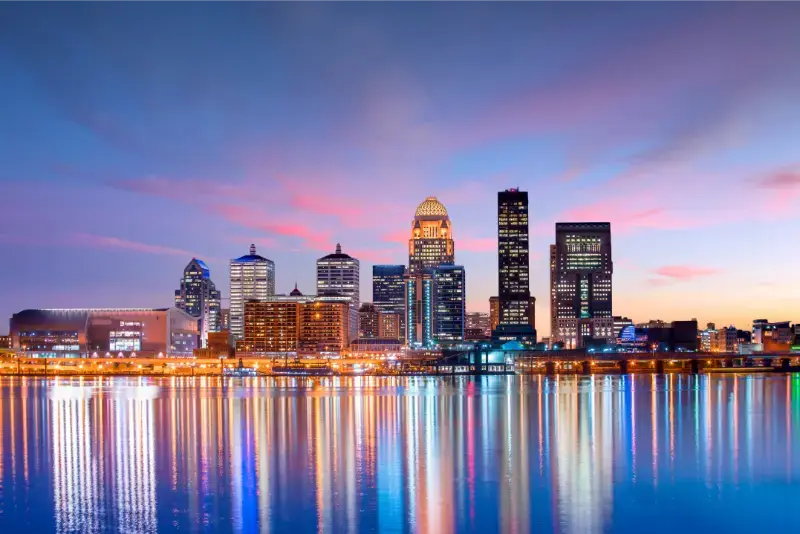
Start in Downtown Louisville and keep the first day mostly on foot. Choose two major Museum Row attractions, with the Muhammad Ali Center and Louisville Slugger Museum & Factory forming a strong combination for first-time visitors. Add the riverfront or Whiskey Row without turning the afternoon into a race between museums.
Have dinner in NuLu or downtown and resist the temptation to book a late bourbon tasting after a travel day. Louisville has enough atmosphere to justify an unscheduled evening, and starting the road trip rested makes the next six days better.
Day 2 – Churchill Downs and Bardstown
Begin with Churchill Downs and the Kentucky Derby Museum, then drive toward Bardstown. If bourbon is important, reserve one afternoon distillery experience in the Bardstown area rather than attempting several. The transfer is short enough that you still have time to walk Court Square before dinner.
Stay in or near central Bardstown. This lets you park the car after the tasting day and enjoy the historic center on foot. Travelers who do not drink can substitute My Old Kentucky Home or a local history museum without changing the route.
Day 3 – Bardstown to Mammoth Cave
Use the morning for a second bourbon experience or a historical stop, then drive toward Mammoth Cave National Park. If you can secure an afternoon cave tour with comfortable timing, take it; otherwise stay nearby and make the cave the first activity on Day 4.
Do not gamble the trip on a same-day tour if the reservation time leaves no margin for lunch, traffic and parking. The cave ticket is the fixed appointment, so adjust the Bardstown morning around i

Day 4 – Mammoth Cave and Bowling Green
Complete your reserved cave tour and allow time for the visitor center plus a short surface trail. In the afternoon, continue to Bowling Green. Car enthusiasts can visit the National Corvette Museum if the timing is comfortable; families may prefer Lost River Cave or a simple downtown evening.
This is intentionally a lighter transfer day. Trying to complete a long cave tour, the Corvette Museum and another scheduled cave attraction creates an itinerary that looks efficient on paper but feels rushed in reality.
Day 5 – Bowling Green to Lexington
Drive toward Lexington and use the afternoon to introduce horse country. Depending on schedules, visit the Kentucky Horse Park or reserve a guided farm tour. Avoid assuming you can simply enter private farms; many meaningful horse experiences require organized access.
Stay in Lexington and spend the evening downtown or in the Distillery District. This gives you a relaxed urban night after several road-focused days and positions you well for Keeneland or another horse-country activity the next morning.
Day 6 – Lexington and Red River Gorge
Use the morning for Keeneland, horse country or a short bourbon experience, then drive toward Slade and Red River Gorge. Choose one moderate hike or Natural Bridge rather than trying to collect several arches before sunset.
Stay near the gorge. A cabin or lodge night changes the rhythm of the trip and prevents a late drive back to Lexington after hiking. In peak fall foliage periods, arrive early enough to deal with busy trailhead parking.
Day 7 – Red River Gorge, Frankfort and return to Louisville
Start with an early hike or Natural Bridge if you did not complete it on Day 6. Then drive west. Frankfort makes a useful final stop for Kentucky history or a distillery experience, but keep it optional if the morning hike runs long.
Return to Louisville for the final night or flight. The important principle is to protect the departure schedule: do not add a late distillery tour or distant detour simply because the map shows a few remaining hours.
Common planning mistakes
- building the day around too many timed attractions with no parking or meal buffer
- choosing a hotel only by price and ignoring the next morning’s route
- linking several long driving segments with another demanding activity after dark
- assuming seasonal hours, tours or trail conditions will be the same every day of the year
The easiest way to improve the trip is to decide which experience matters most, reserve that first, and let the rest of the day stay flexible enough to absorb weather, traffic and normal travel delays.
Compare accommodation first, then check rental-car costs if your Kentucky route includes several stops.
- Louisville Kentucky travel guide
- Mammoth Cave National Park guide
- Lexington Kentucky travel guide
- Red River Gorge Kentucky guide
Final planning take
Kentucky works best when it is treated as a purposeful part of the Kentucky itinerary rather than another pin to collect. Build the day around two or three strong experiences, leave margin for driving and seasonal conditions, and keep at least one part of the schedule flexible. That approach usually creates a more useful and enjoyable trip than trying to fit every attraction into a single visit.
Frequently asked planning questions
Is seven days enough for Kentucky?
Yes for a focused first trip through Louisville, bourbon country, Mammoth Cave, Lexington and Red River Gorge. It is not enough to cover every region of the state without spending too much time driving.
How many hotels should I use?
Four bases are reasonable: Louisville, Bardstown/Mammoth Cave area, Lexington and Red River Gorge. You can reduce hotel changes by staying longer in Louisville or Lexington, but avoid long daily backtracking.
Should I book the cave or distilleries first?
Book Mammoth Cave first if a specific tour matters because tour inventory can control the route. Then reserve the most important distillery experiences around those fixed times.
Can I do this trip without drinking bourbon?
Absolutely. Substitute museums, horse farms, historic sites, food and scenic drives for tastings. Bourbon is culturally important but it does not need to dominate the itinerary.
When is the best season?
Spring and fall are especially comfortable for combining cities and hiking. Summer works with earlier outdoor starts, while winter can be quieter but requires more attention to seasonal schedules and weather.
Practical decision guide
If your schedule is already crowded, decide what Kentucky is supposed to add to the trip. Kentucky itineraries work best when each stop has a clear role: a city day, a cave experience, a horse-country drive, a bourbon-focused afternoon or a landscape day. When two consecutive stops offer nearly the same experience, cut the weaker one and use the time for a slower meal, an early start or a more relaxed drive.
For a fixed budget, prioritize location and timing over small price differences. A hotel that places you close to the next morning’s route can be more valuable than a cheaper room that adds forty minutes of backtracking. The same principle applies to attractions: reserve the experiences that are genuinely limited-capacity, then keep several flexible or free stops available so weather and energy can change the day without ruining it.
Weather should usually change the order of the day rather than cancel the day. Put indoor museums, visitor centers or tastings into the hottest, coldest or stormiest hours, and use the more comfortable part of the day for walking, overlooks and outdoor stops. In wooded and gorge areas, remember that wet rock, leaves and stairs can change the difficulty of a trail even when the mileage looks easy on paper.
When traveling with children or older relatives, reduce the number of transitions. Every extra parking search, ticket line and repacking of the car consumes energy. Two strong attractions with a comfortable meal and an outdoor break often feel like a fuller day than five rushed stops. Build the itinerary around realistic attention spans, not around the maximum number of pins you can place on a map.
Finally, protect the onward journey. Do not use every remaining daylight hour at the current destination if the next overnight requires an unfamiliar rural drive. Arriving rested, with fuel and enough daylight to find your lodging, is part of good road-trip planning rather than time lost from sightseeing.