

Lake Tahoe is one of California’s rare destinations that changes identity almost completely with the season. In summer it is a high-altitude lake vacation built around beaches, boats, hiking and long daylight. In winter the same basin becomes a ski-and-snow destination. Spring can offer skiing and quiet shoreline walks in the same week; fall brings cooler trails, clearer roads and fewer crowds.
The first planning decision is not simply where to stay—it is which side of the lake matches your trip. South Lake Tahoe has the broadest concentration of hotels, dining and nightlife. The north and west shores feel quieter and more residential, while the Nevada side adds casino resorts and easy access to some major ski areas. This guide helps you choose by season and travel style.
Lake Tahoe at a glance
| Question | Best answer |
|---|---|
| How many days? | 3–4 nights for a first trip; a week works well for winter skiing or a slower summer stay. |
| Best summer base? | South Lake Tahoe for convenience; Tahoe City/Incline Village for a quieter feel. |
| Best winter base? | Choose lodging around the ski area you actually plan to use; storm driving can make cross-basin plans difficult. |
| Car needed? | Usually yes for a broad lake trip, although local shuttles/transit can reduce driving in some areas. |
| Best time? | June–September for lake activities; December–March for snow sports; shoulder seasons for quieter travel with more weather variability. |
South Lake Tahoe vs North Lake Tahoe
South Lake Tahoe is the easiest first-time base if you want restaurants, nightlife, a broad hotel selection and quick access to Heavenly. It also puts Emerald Bay within a practical day trip. The Nevada line at Stateline creates a resort-and-casino zone that feels very different from the quieter residential stretches of the lake.
The north and west shores—including Tahoe City, Kings Beach and communities around the basin—are better for travelers seeking smaller-town atmosphere, trail access and a less entertainment-focused stay. They are not automatically quieter on peak summer weekends, but the rhythm is different from South Shore.
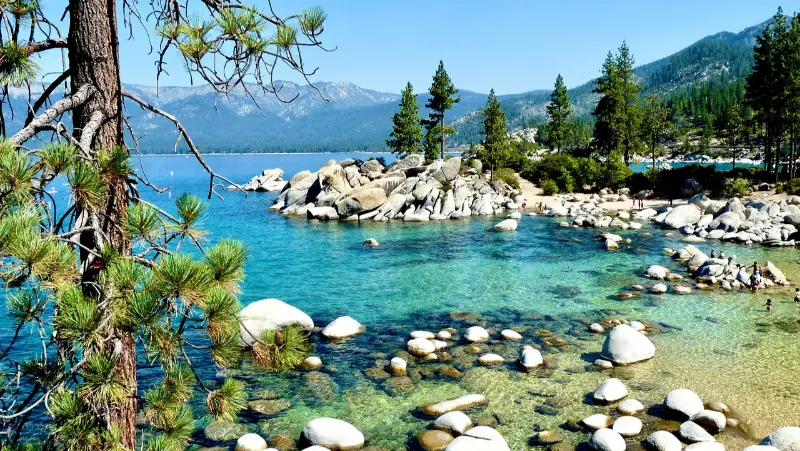
Emerald Bay: the classic Tahoe landscape
Emerald Bay State Park is the most recognizable Tahoe viewpoint, with deep blue water, granite slopes and Fannette Island. Arrive early in summer because parking near popular overlooks and trailheads fills quickly. The area is much more rewarding if you walk beyond the roadside viewpoint, whether toward Vikingsholm when access is open or along nearby trails.
In winter, road access and parking can change rapidly with snow. Never assume a scenic overlook will be usable just because the highway is technically open.
Best beaches and summer water time
Tahoe beaches vary from broad sandy stretches to small coves and rocky shoreline. Water is cold even in warm weather, and wind can build quickly in the afternoon. For swimming, paddling or boating, start early and treat weather forecasts seriously. Life jackets are essential for paddlers and children.
Popular summer beaches can require parking fees, reservations or early arrival depending on the site. Rather than chasing one ‘best beach,’ choose the shoreline that fits your base and build one major lake activity per day.
Hiking: choose by elevation and season
The Tahoe basin offers everything from short lake-view walks to demanding sections of the Tahoe Rim Trail. Snow can linger on higher trails long after roads and beaches feel like summer. In early season, check trail conditions rather than assuming June means dry hiking everywhere.
- Eagle Falls / Emerald Bay area: popular for a reason; start early and expect parking pressure.
- Van Sickle Bi-State Park: convenient from South Shore with growing views as you climb.
- Tahoe Rim Trail sections: excellent for stronger hikers who want ridge scenery without committing to the entire loop.
- Flume Trail area: famous for mountain-bike scenery; route choice and skill matter.
Winter: ski trip first, lake sightseeing second
A winter Tahoe vacation should be built around snow logistics. Pick accommodation near the resort you plan to ski, monitor storm forecasts and understand California/Nevada chain-control rules. A hotel that looks central on a summer map can become inconvenient when passes are snowy and traffic is heavy.
Heavenly, Palisades Tahoe, Northstar, Kirkwood and other resorts each create different trip patterns. Non-skiers can use snowshoeing, scenic gondola experiences, sledding and spa time to build a full winter stay without spending every day on lifts.
Spring and fall: Tahoe’s underrated seasons
Spring is transitional: lower elevations may be dry while high trails remain snow-covered, and ski operations can continue on the mountains. Fall brings cooler nights, lighter crowds and often excellent hiking weather before the first significant storms. Both seasons reward flexibility more than rigid advance scheduling.
The official Lake Tahoe tourism site describes the destination as a four-season playground, and that is accurate—but each season requires different expectations about roads, water access and daylight.
Where to stay around Lake Tahoe
Compare available accommodation for your dates, budget and preferred location before you finalize your route.
| Base | Best for | Trade-off |
|---|---|---|
| South Lake Tahoe / Stateline | First trip, dining, nightlife, Heavenly | Busy, more resort feel |
| Tahoe City | North/west shore access, relaxed lake town | Less nightlife |
| Kings Beach | Casual north-shore summer feel | Longer to Emerald Bay/South Shore |
| Incline Village | Nevada north shore, beaches, upscale stays | Can be expensive |
| Truckee | Food, historic town, ski access | Not directly on the lake |
Compare accommodation: compare hotels and other stays on Booking.com.
A 3-day summer itinerary
| Day | Plan |
|---|---|
| 1 | South or north-shore orientation, beach time and sunset by the lake. |
| 2 | Emerald Bay early, short hike, then west-shore drive and Tahoe City. |
| 3 | Choose one: longer hike, paddle/boat day, mountain biking or a scenic drive toward Truckee. |
Driving around the lake: do not over-plan the loop
The road around Tahoe is scenic, but a complete loop is not always the best use of a day. Traffic, roadwork, beach stops and parking can make it much slower than expected. In summer, choose two or three high-value areas rather than treating the lake as a racetrack. In winter, weather can make a full loop impractical or unsafe.
Lake Tahoe with kids
Families do best with a simple rhythm: beach or snow activity in the morning, one scenic or educational stop in the afternoon, and flexible evenings. Altitude can make everyone more tired on the first day. Hydration, sun protection and shorter hikes are more important here than at sea level.
How Tahoe fits into a California itinerary
Tahoe works naturally with Yosemite when high-country roads are open, but road access across the Sierra is highly seasonal. It also combines well with Sacramento, Gold Country or a Nevada extension toward Reno and Carson City. For first-time statewide planning, use our California travel guide and best time to visit California.
Official planning resources
- Visit Lake Tahoe — official South Shore travel planning, seasons and current destination updates.
- Caltrans QuickMap — road conditions and chain controls on the California side.
- Emerald Bay State Park — official park information.
Altitude, sun and water safety
Lake Tahoe sits above 6,000 feet, and many hikes climb substantially higher. New arrivals may notice faster breathing, headache or unusual fatigue. Keep the first day moderate, drink water and use strong sun protection: high elevation increases UV exposure even when the air feels cool.
The lake is exceptionally clear and inviting, but cold water can impair swimming ability quickly. Wear life jackets for paddling and boating, watch children closely and avoid treating calm morning water as a guarantee of calm afternoon conditions.
Common planning mistakes to avoid
The most common mistake is trying to combine too many distant California experiences because they appear on the same state map. Leave buffer time for traffic, weather, parking and spontaneous stops. Reserve only the activities that truly require a fixed time, then protect some unscheduled hours around them.
A second mistake is treating conditions as static. Coastal roads, mountain routes, wildfire restrictions, beach access and attraction operating hours can change. Recheck official sources shortly before travel and again on the morning of any weather-sensitive or road-dependent day.
Summer crowds, parking and fire season
July and August bring the highest demand for beaches, trailheads and lodging. Start early, avoid driving the busiest shoreline segments repeatedly and choose accommodation that lets you walk to dinner or a beach when possible. Afternoon traffic can turn simple cross-basin plans into frustrating transfers.
Late summer and fall can also overlap with wildfire and smoke impacts in the Sierra. Conditions may be localized or widespread and can change rapidly. Check air-quality forecasts as well as road closures; a technically open trail may still be unpleasant or unsuitable for sensitive travelers if smoke settles into the basin.
Lake Tahoe without skiing
Winter visitors who do not ski still have plenty to do: snowshoeing, sledding, scenic gondola rides when operating, lakeside walks, spas and restaurants can fill a long weekend. The key is choosing a base with non-ski activities close by so that one person is not driving around the entire lake while others are on the mountain.
Storm days are part of winter travel. Book lodging you would be happy to spend time in and keep one indoor or low-exposure day in reserve.
Leave room for conditions to change
Mountain and North Coast travel should always include a backup plan. Weather, wildfire, roadwork and trail maintenance can change access with little notice. Choose one alternative walk or viewpoint near your base so a closure does not force a long emergency drive.
Check official conditions the evening before and again in the morning. Screenshots of maps, permits and reservations are useful where mobile service is unreliable.
Continue into Nevada: Use our Nevada road trip itinerary to connect Lake Tahoe with Reno, U.S. 50, Great Basin and Las Vegas.