

Destinations › West › Nevada travel guide › Las Vegas Strip Guide: Sights, Walking Routes & Transport
The Las Vegas Strip looks compact on a map and enormous on foot. Resorts occupy multiple city blocks, pedestrian bridges control many crossings, and a destination that appears next door may require a long indoor route before you reach the entrance. A useful Strip plan therefore begins with geography, not a checklist.
This guide divides the boulevard into manageable zones, explains when to walk and when to use transport, and connects the route with our three-day Las Vegas itinerary. The goal is to enjoy the spectacle without spending the day retracing steps.
At a glance
| Best first-visit area | Central Strip |
| Best approach | One zone per half day |
| Car needed | No for a Strip-focused day |
| Main challenge | Distance, heat and indoor navigation |
| Useful companion | Las Vegas hotel-area guide |
How to explore the Las Vegas Strip by area
South Strip

The southern zone works well for arrivals, arena or stadium plans and visitors staying near the airport side of the boulevard. Begin with one major resort complex, then continue north only if energy and weather allow. Crossing wide roads outside designated bridges is unsafe and often impossible.
Central Strip
Central Strip concentrates famous fountains, themed architecture, shopping promenades and many showrooms. It is the easiest first-day base because several headline sights can be grouped without transport. Even here, allow time for elevators, bridges, photographs and casino-floor navigation.
North Strip
The northern section has its own resorts, convention access and major entertainment venues, but it does not combine naturally with a detailed south-Strip walk. Treat it as a separate block and confirm the best transit stop for the exact property.
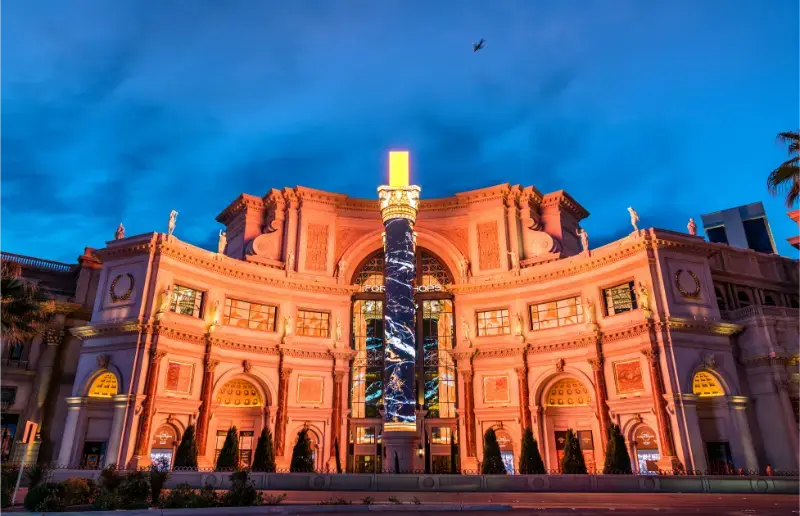
Bellagio and nearby landmarks

The fountain area, conservatory displays and surrounding resorts form a logical central walking circuit. Performance and display schedules change, so confirm them on official property pages and avoid building the entire evening around an old timetable.
The LINQ Promenade area
This pedestrian zone can provide meals, casual entertainment and observation experiences without another long road crossing. It also connects conveniently with several central resorts, making it a useful regrouping point for mixed-interest travelers.
Resort interiors
Casino resorts are attractions as well as hotels, but indoor routes can be disorienting. Use posted signs, identify a recognizable exit and meet at a named venue rather than “the lobby.” Children may pass through permitted routes but cannot remain in gaming areas.
Free Strip experiences
Fountains, gardens, public art and dramatic architecture can fill several hours. Use our free Las Vegas attractions guide to group current options by area instead of crossing the boulevard repeatedly.
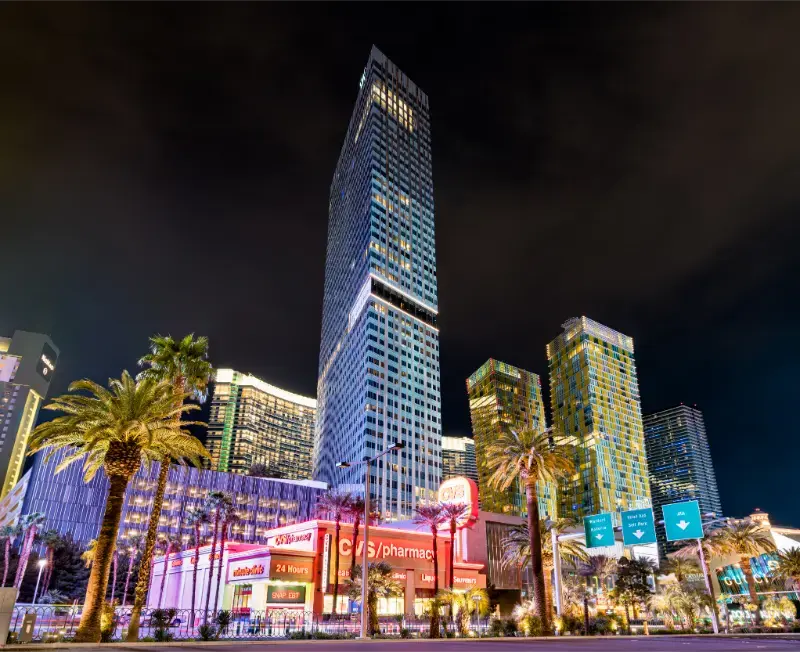
Evening views
Low light transforms the Strip, but crowds and ride demand also increase. Choose one viewpoint or outdoor walk close to dinner or a show. Never stop on a traffic island or roadside shoulder for a photograph.
Shows and timed attractions
Reserve only the experience that matters most, verify age rules and arrive well before the stated start. A venue inside a resort may still be a substantial walk from the rideshare entrance or parking garage.
A one-day route
Start in the central zone, take an indoor midday break, then continue within the same half of the Strip before one evening reservation. Trying to walk from the Welcome sign to the far north while visiting resorts produces distance rather than depth.
Practical planning advice
Walking strategy
Measure the day in zones rather than miles. Comfortable shoes, water and a midday reset matter more than an ambitious step target. In summer, move outdoor sections to morning and evening and use air-conditioned interiors without assuming they connect continuously.
Buses, Monorail and trams
The Deuce, the Las Vegas Monorail and limited resort trams serve different corridors. Check live routes through the RTC schedules and maps and current operator information before deciding which service fits the exact origin and destination.
Taxis and rideshare
Use designated pickup areas and confirm the resort entrance in the app. Large properties may have multiple doors, while event closures can move pickup points. A short-looking journey can take longer at peak times.
Accessibility
Pedestrian bridges, elevators, escalators and long indoor corridors can create barriers. Check accessible entrances with each venue, allow extra time and use direct transport when the group’s mobility or heat tolerance makes a long connection unsuitable.
Where to stay
Compare available accommodation for your dates, budget and preferred location before you finalize your route.
Read where to stay in Las Vegas before choosing the cheapest rate. Affiliate disclosure: we may earn a commission from qualifying bookings at no extra cost to you. Compare Las Vegas Strip hotels by total price, resort fees, parking and exact map position.
Build the route around fixed reservations
A show, restaurant or timed attraction should anchor the correct Strip zone. Put flexible displays before or after it and allow a generous indoor walk. This prevents a common failure: leaving a central resort for a distant sight, then paying for a ride back to the original area.
Frequently asked questions
Can I walk the entire Strip?
You can cover long sections, but seeing attractions inside the resorts makes an end-to-end visit unrealistic for most people in one day.
Is the Strip safe to walk at night?
Busy tourist sections are active late, but remain aware, use designated crossings and avoid isolated shortcuts.
Do I need a rental car?
No for a Strip-only stay. Rent a car for selected regional excursions and check hotel parking charges first.
Which section is best for first-time visitors?
Central Strip offers the most convenient concentration of classic sights and transport choices.
How long should I allow?
At least a full day for a useful overview; two or more days allow separate zones, shows and rest.
Turn priorities into a daily route
Start with South Strip and Central Strip as geographic anchors rather than isolated checklist items. Put the more time-sensitive experience first, then place meals, parking and flexible stops around it. This approach leaves room for delays without sacrificing the main reason for the day. It also prevents a common Nevada mistake: accepting every apparently short detour without considering heat, one-way roads, resort walking time or the long return to the hotel.
Allow a realistic time buffer
Maps describe distance, not the complete experience of North Strip or Bellagio and nearby landmarks. Parking searches, visitor-center stops, security, photographs and weather checks all use time. Add a buffer before any fixed reservation and avoid scheduling a nonrefundable evening immediately after a remote drive. If the day runs early, the spare time becomes a relaxed meal or viewpoint; if it runs late, the itinerary remains recoverable instead of turning into a sequence of missed bookings.
Check reservations in the correct order
Reserve scarce or regulated experiences before arranging the flexible parts of this Las Vegas Strip guide plan. A cave tour, timed-entry window, headline show or limited hotel should determine the day; a scenic stop with broad access can move around it. Recheck confirmation emails for arrival instructions, parking and cancellation deadlines. Save essential documents offline because mobile coverage can weaken outside urban areas, and never assume that an entrance pass automatically includes a timed reservation or guided activity.
Build the budget from the total cost
The true price of this trip is not only admission. Include accommodation taxes and fees, parking, fuel, meals, tips, reservation charges and the cost of moving between areas. A cheaper room can become expensive when it creates several rides each day, while a rental car can be wasteful during a Strip-only stay but essential for remote Nevada. Compare the complete daily cost and the time saved, then spend more only where location, flexibility or a meaningful experience clearly improves the trip.
Prepare for Nevada distances
Before leaving a major base, confirm the next fuel stop, food option and arrival window. Keep water available in the passenger area, not buried under luggage, and download the route. On remote roads, a weak signal is normal rather than an emergency, but it becomes dangerous when travelers have not shared their plan or checked the vehicle. Avoid driving tired after sunset merely to preserve an overfilled schedule; removing one stop is always cheaper than turning a vacation into a roadside problem.
Use weather as a decision tool
Nevada weather must be read by elevation and activity. A forecast for Las Vegas does not describe Lake Tahoe or Great Basin, and an acceptable city temperature may still be unsafe on exposed sandstone. Check hourly heat, wind, thunderstorms, air quality and overnight lows. Move outdoor time earlier, shorten the route or replace it with an indoor activity when conditions deteriorate. Flexibility is not a failure of planning here; it is the skill that makes a desert-and-mountain itinerary work.
Plan for different mobility and energy levels
A mixed group should choose the day around the least mobile or least heat-tolerant traveler. Provide seated breaks, accessible alternatives and a clear meeting point instead of pressuring everyone into the same trail or resort walk. Short scenic stops can be combined with one carefully selected longer activity. Confirm accessibility directly with official sites and venues because terrain, elevators, construction and shuttle operations can change. A smaller shared plan is usually more enjoyable than separating repeatedly to chase a longer list.
Travel responsibly
Stay on durable or designated surfaces, pack out waste and never remove rocks, plants or artifacts. Petroglyphs and historic structures should be observed without touching, tracing or climbing. Keep distance from wildlife and avoid feeding it for photographs. In cities, support local businesses beyond the largest resorts when it fits the route. These choices protect the places described in this guide and also create a calmer trip, because responsible travel naturally favors slower observation over hurried collection.
Continue planning your Nevada trip
Use the Nevada travel guide as the main state hub, then compare best things to do in Nevada, best places to visit in Nevada, best time to visit Nevada and where to stay in Nevada. For a city-focused trip, continue with the Las Vegas travel guide.
Continue exploring Nevada
Use the related Nevada guides below to connect Las Vegas logistics with historic towns, rural roads and longer statewide itineraries.
- Downtown Las Vegas & Fremont Street Guide: What to See and Do
- Las Vegas Airport Transportation: How to Reach the Strip & Downtown
- Best Day Trips from Las Vegas: 15 Realistic Excursions
- Boulder City, Nevada Travel Guide: Things to Do & Where to Stay
- Carson City, Nevada Travel Guide: History, Museums & Day Trips
- Virginia City, Nevada Travel Guide: Old West History & Attractions
- Ely, Nevada Travel Guide: Railway, Murals & Great Basin Base
- Tonopah, Nevada Travel Guide: Mining History & Dark Skies
- Extraterrestrial Highway Road Trip: Route 375 & Area 51 Tips
Compare accommodation for this route
For flexible planning, compare central Strip hotels and Las Vegas accommodation. Check the final price, mandatory fees, parking, cancellation conditions and exact map position before booking.