

Destinations › Northeast › New York › Long Island
Long Island is much more than the Hamptons, and treating the entire island as one beach destination is the easiest way to plan it badly. West of the famous East End are Gold Coast estates, Jones Beach, maritime towns and dense suburbs; the North Fork offers vineyards and farm country; Fire Island is car-free in key communities; the South Fork includes the Hamptons and Montauk. Distances are long enough that your hotel location can determine the shape of the entire trip.
This guide covers Long Island as a whole, while the Hamptons & Montauk Guide goes deeper into the South Fork. It is especially useful for travelers adding two or three coastal days to a New York City trip without flying elsewhere.
Spend 3–5 days if you want more than one region of Long Island. LIRR makes some towns accessible from NYC, but a car is very useful for beaches, North Fork wineries and multi-stop itineraries. Choose either North Fork or South Fork as your East End focus on a short trip.
Long Island at a glance
| Question | Best answer for most travelers |
|---|---|
| How many days? | Two nights for one area; four or five for beaches plus North Fork/Hamptons and Gold Coast. |
| Do you need a car? | Not always for a single rail-served town. Yes for a broad Long Island itinerary. |
| Best time? | Late spring through early fall for beaches; autumn is excellent for North Fork farms and wineries; winter is quiet. |
| Best first focus? | Jones Beach/Fire Island for beach time, North Fork for wine and farms, Hamptons/Montauk for South Fork scenery and resort towns. |
| Biggest mistake? | Assuming every attractive beach has simple visitor parking. Town and village beach rules vary dramatically. |
Understand Long Island geography
Long Island stretches east from New York City for more than 100 miles. Nassau County is closer to the city; Suffolk County contains most of the East End. At Riverhead, the island splits into the North Fork and South Fork. The forks may look close across bays, but road connections require returning west, so crossing between them repeatedly is inefficient.
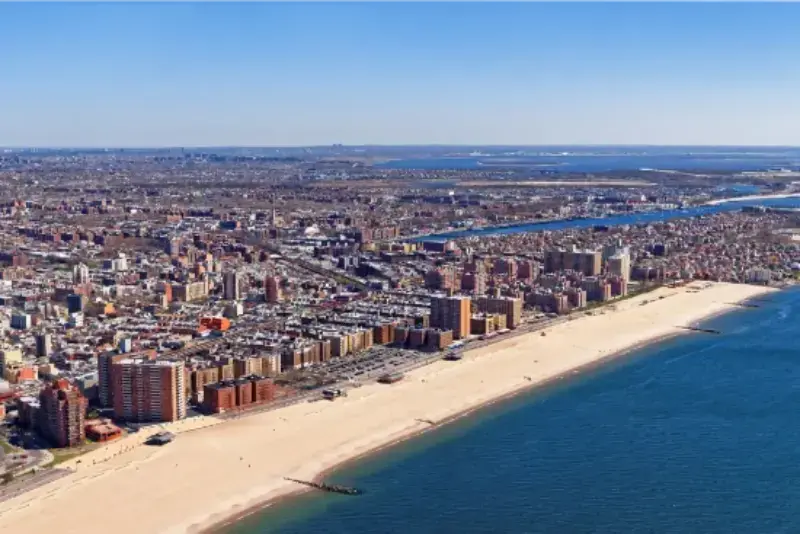
This geography is why a “Long Island day trip” can mean completely different things. Jones Beach is not Montauk. The North Fork is not the Hamptons. Choose the experience first, then the destination.
Jones Beach and the central South Shore
Jones Beach State Park is the classic large-scale ocean beach experience closest to much of metropolitan New York. It has enormous parking fields, a boardwalk and seasonal swimming areas, making it simpler for visitors than many town beaches that require resident permits. Current vehicle-use fees and swimming-area operations vary by season, so verify the park schedule before traveling.
The South Shore is also useful for travelers who want beach time without committing to the far East End. It can be combined with NYC more easily than Montauk, especially if you have limited days.
Fire Island: a different kind of beach trip
Fire Island National Seashore is a long barrier island with communities, beaches, dunes and protected landscapes. Many visitor areas are reached by ferry and are largely car-free, which creates a very different trip from driving to a large state beach. Ferry terminal, community and parking choice all matter, so “go to Fire Island” is not enough detail for a travel plan.
If you only have one day, choose one ferry route and one community rather than trying to sample the whole island. Fire Island is best understood slowly, on foot and by bike.
The North Fork
The North Fork combines vineyards, farm stands, Greenport and a maritime landscape. It attracts visitors who want a less formal East End experience than the Hamptons, although summer weekends can still be busy. Greenport is the strongest walkable base, while a car is useful for wineries, farms and beaches.
Wine tasting requires the same practical planning as the Finger Lakes: limit the number of stops, use a designated driver or tour, and leave time for lunch. The pleasure of the North Fork is the pace, not the tasting count.
Gold Coast mansions and North Shore history
The North Shore west of the forks carries the Gold Coast legacy of Gilded Age estates, gardens and maritime wealth that helped inspire the world associated with The Great Gatsby. This adds a cultural dimension to Long Island beyond beaches and vineyards. Estate opening days and tour requirements vary, so check individual sites before driving out.
The Hamptons and Montauk
The South Fork is the island’s most famous vacation zone, but the Hamptons are not one town. Southampton, East Hampton, Sag Harbor, Amagansett and Montauk differ in atmosphere, geography and beach access. Montauk is the farthest east and feels more exposed and maritime; Sag Harbor is harbor-oriented and compact; East Hampton and Southampton offer polished village centers.

Because beach parking rules can be confusing, use the dedicated Hamptons & Montauk Travel Guide before choosing accommodation based only on a beach photo.
Can you visit Long Island without a car?
Yes, selectively. I LOVE NY notes regular Long Island Rail Road service from Penn Station and Grand Central Terminal. Rail works especially well if your trip is centered on one town with a walkable core or if you plan to use local taxis/rideshares. It works less well for winery hopping, multiple beaches or a coast-to-coast island itinerary.
A useful strategy is to take the train out of Manhattan and rent a car farther east, avoiding NYC driving while preserving flexibility.
Best time to visit Long Island
Summer is the obvious beach season and also the period of highest accommodation prices and traffic. Late May/June and September can offer a strong balance if weather cooperates. Autumn is excellent for the North Fork, with farms, harvest events and wineries, while many beach communities become quieter.
Winter can be atmospheric in Montauk and North Fork towns, but many seasonal businesses reduce hours. Always confirm restaurants and attractions rather than assuming a summer schedule.
A 4-day Long Island itinerary
- Day 1: Gold Coast or Jones Beach depending on interests, then overnight farther east.
- Day 2: North Fork—Greenport, one or two wineries/farms and waterfront time.
- Day 3: South Fork—choose Southampton/East Hampton/Sag Harbor rather than trying to collect all three.
- Day 4: Montauk lighthouse/coast or Fire Island, then return toward NYC.
This itinerary is intentionally ambitious and requires a car. Without one, choose a single fork or a beach destination instead of copying the same route.
Where to stay
Compare available accommodation for your dates, budget and preferred location before you finalize your route.
For a North Fork trip, Greenport is convenient and walkable. For the South Fork, choose the town that matches your itinerary rather than the most famous name. Montauk works for ocean and a casual resort feel; Sag Harbor for harbor atmosphere; East Hampton/Southampton for classic villages. Staying farther west can save money but increases traffic exposure.
Compare accommodation: compare hotels and other stays on Booking.com.
Official planning sources
Continue planning New York State
- Hamptons & Montauk Travel Guide
- New York City Travel Guide
- New York State Road Trip
- New York State Travel Guide
Beach parking and local permits
Long Island beach access is fragmented among state, county, town and village systems. A beach can be publicly owned while its parking lot is permit-restricted. Confirm the operating authority, not just the beach name. State parks are often simpler for visitors, while local beaches can reward travelers staying in accommodations that include permits.
North Fork vs Hamptons
Choose the North Fork for vineyards, farms, Greenport and a slower road-trip rhythm. Choose the Hamptons for ocean beaches, polished villages and a more famous resort atmosphere. You can visit both on a long weekend, but the fork geometry means repeated switching is inefficient.
Frequently asked questions
How much time should you leave unplanned?
Keep at least one quarter of each day flexible. In New York State, weather, trail conditions, seasonal operating hours and traffic can alter a route quickly. Flex time is not wasted time; it is what lets you stop at a viewpoint, stay longer over lunch or move an outdoor activity to a better window.
Should you change hotels every night?
Usually no. Two-night bases create better mornings, easier parking and a stronger sense of place. Change hotels when geography demands it, not because the itinerary contains a new town name every day. The best regional trips use a base to explore a cluster.
A final planning rule
Build the trip around what would still be worth doing if the weather changes. A destination with only one must-do can feel fragile; a destination with a good town, food, indoor option and outdoor alternative remains rewarding. That is why the itineraries in this guide prioritize clusters rather than isolated attractions.
Traffic strategy matters more than mileage
Long Island driving is shaped by a narrow east-west road network and weekend demand. A 40-mile move can take far longer than expected on a summer Friday afternoon. Build the itinerary around direction: travel east when traffic is lighter, stay overnight rather than commuting back, and avoid scheduling a nonrefundable activity soon after a long drive. Rail can be a useful substitute for the most congested segments, especially when your destination is close to a station. If you do drive, compare departure windows rather than only route options.
Explore Long Island in more depth
- North Fork Long Island Travel Guide: Wineries, Farms, Beaches & Towns
- Fire Island Travel Guide: Ferries, Beaches, Communities & Tips