

Monterey and Carmel-by-the-Sea sit only a few miles apart, yet they offer two different versions of the Central Coast. Monterey is larger, more practical and anchored by the aquarium, Cannery Row, waterfront and working harbor. Carmel is smaller, prettier and built around galleries, restaurants, cottages, a white-sand beach and easy access to Point Lobos and 17-Mile Drive.
For most first-time visitors, the two places work best as one two- or three-night base. You can stay in either town and explore the peninsula without changing hotels. This guide explains how to divide your time, when 17-Mile Drive is worth it, how to use Point Lobos and why Monterey/Carmel is the natural gateway to Big Sur.
Monterey & Carmel at a glance
| Question | Best answer |
|---|---|
| How long? | 2 nights minimum; 3 nights if adding Point Lobos and a relaxed Big Sur day. |
| Where to stay? | Monterey for value/services; Carmel for romance, walkability and village atmosphere. |
| Car needed? | Useful for Point Lobos, 17-Mile Drive and Big Sur; less necessary inside Carmel/central Monterey. |
| Top sights? | Monterey Bay Aquarium, Carmel Beach, Point Lobos, 17-Mile Drive, Cannery Row/harbor. |
| Best onward route? | South to Big Sur or north toward Santa Cruz/San Francisco. |
Monterey Bay Aquarium: give it real time
The Monterey Bay Aquarium is one of the strongest family and marine-life attractions in California, and it can easily absorb half a day. Exhibits emphasize the ecosystems of Monterey Bay and the Pacific rather than presenting wildlife as isolated displays. Book timed or dated entry as required by the aquarium and avoid pairing it with an over-packed sightseeing schedule.
Afterward, walk the waterfront or continue onto the Monterey Bay Coastal Recreation Trail instead of driving immediately to another attraction.
Cannery Row: touristy, historic and still worth understanding
Cannery Row is commercial, but its sardine-industry history and literary association with John Steinbeck give it more context than a strip of souvenir stores. The best approach is to combine it with the aquarium and waterfront, then spend food and evening time elsewhere if you want a quieter local atmosphere.
Carmel-by-the-Sea: walk it slowly
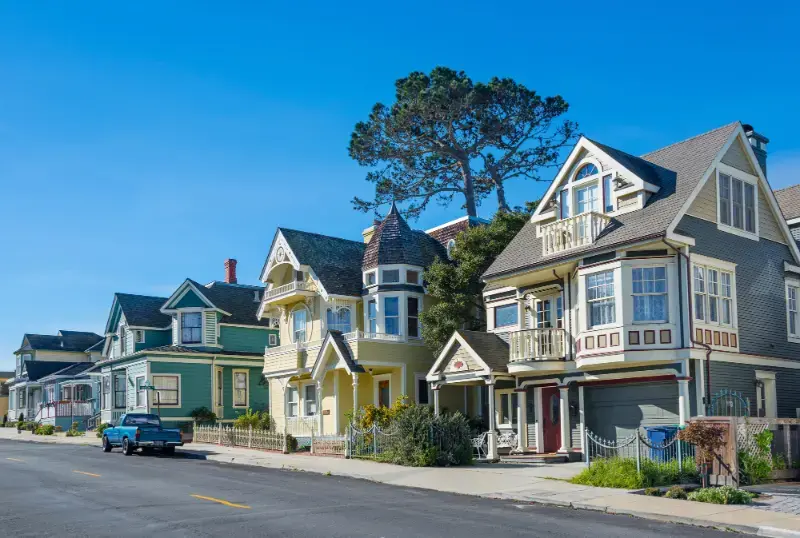
Carmel’s appeal comes from scale. The village is roughly one square mile, with galleries, boutiques, restaurants, courtyards and inns clustered above Carmel Beach. The official Carmel tourism site emphasizes exactly this walkability, and it is the main reason to consider staying overnight rather than visiting for lunch.
Park once and explore on foot. Streets can be confusing because Carmel’s addressing system and cottage-style lanes do not behave like a typical city grid; that is part of the character, but it rewards patience.
Carmel Beach and Scenic Road
Carmel Beach is broad, pale and backed by cypress trees, with sunset views that feel very different from Southern California beach culture. The water is cold and surf conditions can be strong, so most visitors come for walking, picnics and views rather than warm-water swimming.
17-Mile Drive: how to make it worth the fee
17-Mile Drive crosses the private Pebble Beach community between Pacific Grove and Carmel, passing coastline, cypress forest, golf courses and the Lone Cypress. Cars pay an admission fee that can change over time; walking and cycling policies differ, so confirm current rules before going.
The route is worthwhile if you enjoy scenic drives and can spend two or three relaxed hours stopping at overlooks. It is less compelling if your Central Coast trip already includes a full day in Big Sur and you prefer hiking to curated viewpoints. Do not rush both 17-Mile Drive and Point Lobos in the same short morning.
Point Lobos: the best nature experience near Carmel
Point Lobos State Natural Reserve is one of the most rewarding coastal landscapes on the Monterey Peninsula, with coves, cypress forest, cliffs and wildlife-viewing opportunities. Parking inside is limited, and popular days can fill early. Arrive in the morning and choose a few connected trails instead of trying to walk every spur.
Wildlife can include sea otters, harbor seals, sea lions and seasonal whales. Use distance and binoculars; cliff edges and surf require caution.
Pacific Grove and Lovers Point
Pacific Grove is quieter than Monterey and Carmel, with historic homes, coastal paths and a more residential feel. It can also be a smart lodging compromise. The waterfront around Lovers Point connects naturally with cycling or walking on the coastal trail.
Whale watching and the marine sanctuary
Monterey Bay is famous for marine wildlife and year-round whale-watching potential, though species and conditions vary by season. Choose reputable operators, bring layers and motion-sickness medication if needed, and understand that wildlife sightings are never guaranteed.
Where to stay: Monterey, Carmel or Pacific Grove?
Compare available accommodation for your dates, budget and preferred location before you finalize your route.
| Base | Best for | Trade-off |
|---|---|---|
| Monterey | Aquarium, families, broad hotel range | More commercial in tourist zones |
| Carmel | Romance, restaurants, walkability, beach | Higher prices, limited parking |
| Pacific Grove | Quiet atmosphere, coastal walking | Smaller hotel/dining selection |
Compare accommodation: compare hotels and other stays on Booking.com.
A 3-day Monterey & Carmel itinerary
| Day | Plan |
|---|---|
| 1 | Monterey Bay Aquarium, waterfront and Pacific Grove coastal walk. |
| 2 | Point Lobos early, Carmel village and Carmel Beach sunset. |
| 3 | 17-Mile Drive or full Big Sur day depending on priorities and road conditions. |
Families
This is one of California’s easiest family stops because the aquarium provides a weather-proof anchor and the rest of the trip can be built around beaches, short walks and wildlife. Avoid making young children spend the entire day in a car doing scenic pullouts. Choose either 17-Mile Drive or a shorter Big Sur section and include time to move.
How Monterey & Carmel connect to Big Sur
Carmel is the northern gateway to Big Sur. Check Highway 1 conditions before departure and allow far more time than the mileage suggests. If Big Sur is fully accessible and central to your trip, spend one full day south of Carmel rather than trying to fit it after the aquarium.
For the larger coastal route, see our Pacific Coast Highway road trip and Santa Barbara travel guide.
Official planning resources
- See Monterey — official Monterey County visitor information.
- Carmel-by-the-Sea official travel site — lodging, village events and visitor information.
- Point Lobos State Natural Reserve — official park information.
Weather and what to pack
The Monterey Peninsula can be cool and foggy even when inland California is hot. Bring layers in every season, especially for whale-watching boats, evening beach walks and exposed points at Point Lobos. A sunny midday can still turn windy by late afternoon.
This climate is part of the appeal: cypress, fog and cold Pacific water create the atmosphere that separates Monterey and Carmel from Southern California beach towns.
Common planning mistakes to avoid
The most common mistake is trying to combine too many distant California experiences because they appear on the same state map. Leave buffer time for traffic, weather, parking and spontaneous stops. Reserve only the activities that truly require a fixed time, then protect some unscheduled hours around them.
A second mistake is treating conditions as static. Coastal roads, mountain routes, wildfire restrictions, beach access and attraction operating hours can change. Recheck official sources shortly before travel and again on the morning of any weather-sensitive or road-dependent day.
Food, seafood and local rhythm
Monterey and Carmel have different dining personalities. Monterey’s harbor and tourist districts make seafood easy to find, while Carmel concentrates polished restaurants in a very walkable village. Pacific Grove often provides a quieter alternative with neighborhood-scale cafés and dining.
Reservations are useful for a special Carmel dinner, but keep daytime food flexible around the aquarium and coastal weather. A picnic can be ideal before Point Lobos if rules allow, while a long lunch may be the better choice on a foggy day.
Driving south toward Big Sur safely
Highway 1 becomes narrower and more exposed after Carmel. Use designated pullouts, never stop in the travel lane for a photograph and do not cross the road blindly near viewpoints. Cell service can be intermittent, so save maps and any lodging instructions offline.
Because Highway 1 conditions can change after fire, storms or rockfall, check Caltrans the morning you depart. If a closure interrupts the route, Monterey and Carmel still work as a complete destination rather than a failed Big Sur trip.
How to make a short visit feel longer
The easiest way to improve a short stay is to reduce the number of reservations. Choose one anchor experience each day, keep the rest geographically close and leave at least one unscheduled block. California destinations often reward a slower street, beach or meal more than another cross-town transfer.
When you do reserve, group experiences by area and confirm cancellation rules. This gives you room to adapt to weather, traffic or energy without losing the most important part of the trip.
Monterey or Carmel for the evening?
Monterey usually gives you more hotel choice and a practical waterfront, while Carmel gives you the stronger evening atmosphere for strolling between restaurants, galleries and the beach. If this is a romantic trip and budget allows, Carmel often feels more special after day-trippers leave. Families may prefer Monterey for easier access to the aquarium and a broader range of room types.
Whichever town you choose, avoid changing hotels between the two. The peninsula is compact enough that the packing and check-in time costs more than the short drive you save.