

Montgomery Alabama Travel Guide. Montgomery is Alabama’s capital and one of the most important cities in the United States for understanding both slavery and the modern Civil Rights Movement. The city was a center of the domestic slave trade, the first capital of the Confederacy and later the place where the Montgomery Bus Boycott helped transform the national struggle against segregation. That concentration of history makes Montgomery a powerful destination, but it also means a good itinerary needs time and emotional space. Two nights are far better than a rushed day trip, especially if you plan to visit the Legacy Museum, Rosa Parks Museum, Dexter Avenue sites and the Alabama State Capitol.
Why add this stop to an Alabama itinerary?
Montgomery belongs near the center of an Alabama itinerary because it connects several major historical narratives in one walkable downtown area. It also works as the natural eastern end of the Selma to Montgomery National Historic Trail. The city is not only a museum destination: Riverfront Park, baseball, restaurants, Old Alabama Town and arts attractions provide balance. That mix is important because spending an entire day moving from one heavy historical exhibit to another can become emotionally exhausting and reduce what you actually absorb.
Alabama is compact enough for a multi-city road trip, but that does not mean every transfer is short once museums, meals, traffic and weather are included. The most satisfying trips use a few strong bases and leave enough room to understand each place. Treat the times shown by navigation apps as driving minimums, not as complete door-to-door travel times.
Best things to see and do
The Legacy Museum and EJI sites
The Legacy Museum, created by the Equal Justice Initiative, examines slavery, racial terror, segregation and mass incarceration through immersive exhibits and extensive documentation. Give it a substantial block of time rather than squeezing it into an hour. EJI also operates the National Memorial for Peace and Justice and other sites in Montgomery, and ticketing or shuttle arrangements can change. Use EJI’s official planning information for your travel dates. The experience is intentionally serious, so consider a quiet meal or outdoor break afterward before moving to another major museum.
Rosa Parks Museum
The Rosa Parks Museum, affiliated with Troy University, stands near the site of Parks’ arrest in 1955. Its exhibits use multimedia and historical interpretation to explain the Montgomery Bus Boycott and the organizing that sustained it. This is a useful complement to the Legacy Museum because the focus is narrower and more chronological. Families with school-age children often find the museum accessible, but check current hours and ticket procedures. Pair it with a walk along Dexter Avenue so the geography of downtown becomes part of the story.
Dexter Avenue King Memorial Baptist Church
Dexter Avenue King Memorial Baptist Church is where Martin Luther King Jr. served as pastor from 1954 to 1960 and where mass meetings connected with the bus boycott took place. The church remains an active congregation, so visitor access should always be confirmed in advance. Nearby, Dexter Parsonage Museum preserves the house where King and his family lived. Seeing the church, parsonage and Rosa Parks Museum together makes the boycott feel less abstract because the sites are connected by ordinary city streets rather than isolated museum campuses.
Alabama State Capitol and Dexter Avenue
The Alabama State Capitol stands at the top of Dexter Avenue, creating one of the most historically dense urban corridors in the South. The building is associated with the Confederacy, state government and the 1965 Selma to Montgomery marches, which concluded on the capitol steps. Walk the avenue rather than driving between every stop. It helps reveal how government, commerce, churches and protest occupied the same compact landscape. Security procedures and public access can change because it remains a working government site.

Selma to Montgomery National Historic Trail
Montgomery is one end of the 54-mile National Historic Trail commemorating the 1965 voting-rights marches. If you have a car, driving U.S. Highway 80 between Montgomery and Selma adds enormous context. National Park Service visitor centers and interpretive sites explain the route, Lowndes County and the people who participated. Do not treat the drive as simply a transfer between cities. Allow enough time to stop, read and understand why the rural sections of the march mattered.
Old Alabama Town and layered history
Old Alabama Town preserves restored nineteenth- and twentieth-century buildings in central Montgomery. It can be useful after several Civil Rights sites because it broadens the historical timeline and shows domestic, commercial and working life across different periods. The key is to approach it critically rather than as nostalgia. Ask what parts of the past are being interpreted, whose lives are visible and how the buildings connect to the wider economic history of central Alabama.
Riverfront Park and an easier evening
Riverfront Park provides a change of pace along the Alabama River, with walking space and event facilities close to downtown. Depending on the season, a Montgomery Biscuits baseball game can make an easy evening after a museum day. The riverfront also helps explain why the city developed where it did. Do not expect it to be a beach-style waterfront district; its value is as a relaxed urban space within walking or short driving distance of many downtown attractions.
Music, food and modern Montgomery
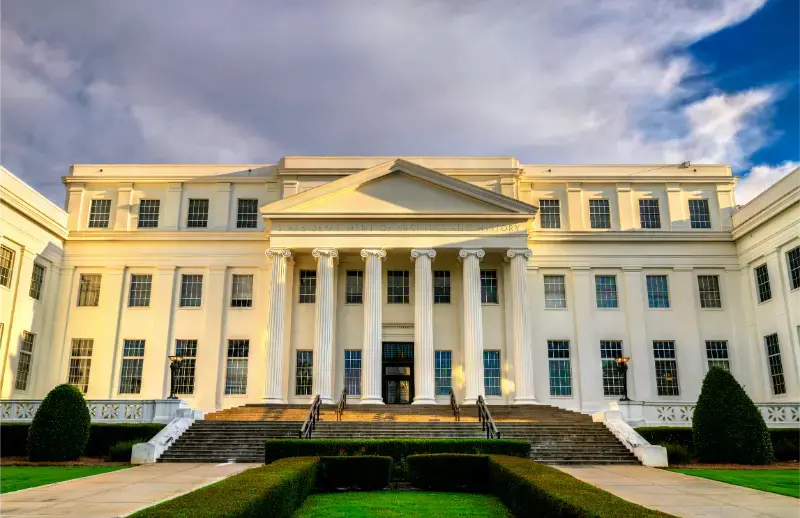
Montgomery also has a music story, most famously connected to Hank Williams, and a growing downtown food scene. These lighter themes are worth including because they prevent the city from becoming a single-topic destination. Try Southern food, barbecue or contemporary restaurants, but let geography guide your choices. A restaurant near your final museum or hotel is often a better travel decision than crossing town for a place that is only marginally more famous.
How many days do you need?
One day can cover the Legacy Museum or EJI sites, Dexter Avenue and the Rosa Parks Museum, but it will feel compressed. Two days is the practical minimum for a first trip: devote one day to EJI and central downtown history, then a second to Rosa Parks, Dexter Avenue, the Capitol and the riverfront. With three days, add Old Alabama Town, arts attractions or a half-day on the Selma to Montgomery National Historic Trail.
Getting around
Central Montgomery is more walkable than many visitors expect, especially around Dexter Avenue, the Rosa Parks Museum and the riverfront. A car is still useful for the parsonage, EJI sites depending on current shuttle arrangements, suburban hotels and the drive to Selma. Summer heat makes short distances feel longer, so do not judge walkability only from a map. Downtown parking rules, event closures and government security can change; follow current signs rather than an old travel post.
If this stop is part of a longer road trip, avoid checking out at dawn simply to gain an extra sightseeing hour. A relaxed breakfast and a realistic transfer often produces a better day than arriving tired before the next attraction opens. Download offline maps for rural segments, keep fuel above a quarter tank and plan long drives for daylight whenever possible.
Where to stay
Compare available accommodation for your dates, budget and preferred location before you finalize your route.
Choose accommodation according to the first activity of the next morning, parking needs and evening plans rather than only the lowest nightly rate. A slightly more central hotel or well-located rental can save repeated driving and make dinner much easier. You can compare places to stay in Montgomery on Booking.com. Read recent reviews for noise, parking and actual walking distance before booking.
Best time to visit
Spring and fall are excellent for Montgomery because outdoor walking is comfortable and the route to Selma is pleasant. March carries special historical significance because of commemorations connected with the 1965 marches, which can also mean larger crowds and special events. Summer is very hot and humid; use early mornings for walking and reserve air-conditioned museums for midday. Winter is generally quieter, although weather can vary sharply from mild to cold over short periods.
Across Alabama, severe thunderstorms can develop quickly in warmer months. The Gulf Coast also requires tropical-weather awareness, while north Alabama can be noticeably cooler than Mobile or Gulf Shores. Check the forecast for the specific destination and keep one indoor or low-commitment alternative for outdoor days.
Traveling with children
Montgomery can be an excellent educational trip for older children and teenagers. The Rosa Parks Museum is especially accessible, while the Legacy Museum contains material that adults may want to preview before visiting with younger children. Build time for questions and avoid turning the trip into a marathon of serious exhibits. Riverfront Park, baseball, the zoo or an arts stop can provide a necessary change of pace.
Food and meal planning
Southern staples, barbecue and contemporary restaurants are easy to find around Montgomery. On history-heavy days, plan meals as real breaks rather than eating in the car between attractions. Downtown works well for lunch if you are walking Dexter Avenue, while dinner can be closer to your hotel. Weekend reservations are useful at popular restaurants, but avoid overscheduling every meal because museum visits often take longer than expected.
Budget and reservations
Hotel prices in Alabama change far more around football games, beach weekends, festivals and major events than around a simple high-season/low-season calendar. Reserve fixed-capacity tours and high-demand accommodation first, then keep ordinary meals and flexible attractions open. Admission fees, parking systems and event policies change, so use official sources for current costs rather than copying a budget from an older itinerary.
Accessibility and comfort
Accessibility varies between modern museums, historic churches, ships, older houses, beaches and nature trails. If step-free access, accessible parking, beach mats, elevators or mobility-device-friendly surfaces are important, check the individual attraction rather than assuming a destination-wide standard. Summer heat can also be an accessibility issue: schedule exposed walking early, carry water and use air-conditioned breaks before anyone becomes exhausted.
Mistakes to avoid
Do not try to visit the Legacy Museum, National Memorial, Rosa Parks Museum, Dexter Church, Capitol and Selma all in one day. You will spend the trip checking boxes instead of understanding the history. Another mistake is presenting the city only through heroic national figures while ignoring local organizers and the longer history of slavery and segregation. Use primary institutions and National Park Service interpretation, and verify access to active churches before arriving.
Continue planning your Alabama trip
- Birmingham Alabama travel guide
- Selma Alabama travel guide
- Mobile Alabama travel guide
- 10-day Alabama road trip
- Alabama destination guide
Official resources to check before you go
Opening hours, tour schedules, beach conditions, road access, event closures and admission systems can change. Check these official resources shortly before travel rather than relying on a saved screenshot or an old social-media post.
Frequently asked questions
Is this a good stop for a first Alabama trip?
Yes. This destination adds a distinct part of Alabama’s story rather than duplicating the surrounding stops. The key is to connect it geographically with the next region and avoid backtracking simply to keep the same hotel for the entire state.
Do I need a car?
For a statewide trip, yes. Some downtown areas can be explored on foot and ride-hailing is useful in larger cities, but beaches, parks, historic corridors and intercity transfers are much easier with a car. If you are flying, compare one-way rental fees with the cost of returning to your arrival airport.
What should I book in advance?
Book working-studio tours, limited-capacity historic tours, popular boat trips, special-event weekends and peak beach accommodation early. Ordinary museums and restaurants usually allow more flexibility, although popular weekend dining can still benefit from a reservation. Always prioritize reservations that would be difficult to replace if sold out.
How do I combine this with the rest of Alabama?
Use the internal guides above to build a route by region. Birmingham and Montgomery work naturally together, Mobile connects with the Gulf Coast, Huntsville pairs with The Shoals, and Selma belongs with Montgomery through the National Historic Trail. Grouping places this way minimizes driving and creates a more coherent trip.
More Alabama guides for this trip
- Alabama Civil Rights Trail road trip
- Auburn Alabama travel guide