

Destinations › Northeast › New York › Niagara Falls
Niagara Falls is easy to underestimate because the headline is so familiar. You know there will be enormous waterfalls; what surprises many first-time visitors is how much the experience changes depending on where you stand, how close you get to the water, whether you explore the gorge, and whether you build the trip around a rushed photo stop or give the region enough time to breathe. The American side is not simply the “other side” of the Canadian skyline. Niagara Falls State Park puts you on islands, overlooks and walkways beside the river itself, with direct access to Goat Island, Cave of the Winds and the Maid of the Mist departure area.
This guide focuses on the New York side and on practical planning: how many days you need, whether to add Buffalo, how to handle the international border, when the seasonal attractions operate, and how to avoid spending more time parking than looking at the falls. For broader planning, keep the New York State Travel Guide and the New York State Road Trip open alongside this page.
Give Niagara Falls one full day at minimum and two nights if you can. Stay close enough to walk to the state park, see the falls in both daylight and after dark, and choose at least one close-up experience such as Cave of the Winds or Maid of the Mist. Add a second day for the Niagara Gorge, Lewiston, Old Fort Niagara or Buffalo.
Niagara Falls at a glance

| Question | Best answer for most travelers |
|---|---|
| How many days? | One full day covers the core park; two days creates a much better trip and room for Buffalo or the gorge. |
| Do you need a car? | Not for the central falls if you stay nearby. A car is useful for Lewiston, Old Fort Niagara, wineries or Buffalo. |
| Best time? | Late spring through early fall for the broadest attraction schedule; winter for fewer crowds and dramatic ice, with more limited operations. |
| U.S. or Canada? | The U.S. side is strongest for being close to the water and park landscapes; Canada is famous for the wide frontal panorama. Many travelers enjoy both. |
| Biggest mistake? | Treating Niagara as a 60-minute photo stop and missing Goat Island, the gorge and an after-dark view. |
How the New York side is laid out
Niagara Falls State Park is compact enough to explore on foot, but its geography matters. The Niagara River splits around Goat Island before plunging over the American Falls, Bridal Veil Falls and Horseshoe Falls. Goat Island connects you to viewpoints such as Terrapin Point and Luna Island, while the mainland side gives access to the Observation Tower and the Maid of the Mist area. You are not walking along one continuous “front” the way many people imagine from photos; you are moving between river edges, islands and overlooks.

The park is open year-round, while major attractions operate on different seasonal calendars. That distinction matters. A winter visit can be beautiful and the park itself remains accessible, but you should never build a winter or shoulder-season itinerary around a boat, trolley or deck experience without checking the official operating page immediately before travel.
The experiences worth prioritizing
Cave of the Winds
Cave of the Winds is less about “seeing the falls” and more about feeling their force. You descend into the Niagara Gorge and follow walkways near Bridal Veil Falls. Expect spray, noise and wet surfaces. Footwear with grip matters more than a perfect outfit, and camera protection is sensible. If you have mobility concerns, review the current accessibility details rather than assuming every deck is equally easy.
Maid of the Mist
The boat ride provides the classic approach from the river below the falls. It is one of the most effective ways to understand the scale of the gorge because the skyline disappears and the water surrounds the experience. Seasonal operation and weather can affect service, so confirm the current schedule instead of treating an old blog timetable as permanent.
Goat Island and the overlooks
Even if you skip every paid attraction, walk Goat Island. The island gives the American side its strongest advantage: you can stand between the American and Horseshoe Falls, hear the river accelerate and see how the landscape funnels water toward the brink. Terrapin Point is especially valuable because it looks toward Horseshoe Falls from the U.S. side, while Luna Island separates American Falls from Bridal Veil Falls.
A smart one-day Niagara Falls itinerary
- Start early on Goat Island before the busiest part of the day.
- Walk the major overlooks and Terrapin Point while the light is changing.
- Choose Cave of the Winds or Maid of the Mist before lunch; do both only if Niagara is the main purpose of the day.
- Take a slower afternoon walk toward the Observation Tower and gorge views.
- Leave a buffer for weather, lines and a meal away from the exact park entrance.
- Return after sunset for the illuminated falls rather than treating daylight as the end of the visit.
The important principle is not the exact order; it is keeping the day geographically compact. Constantly moving your car between lots or crossing the international border in the middle of your core sightseeing can turn an impressive place into a logistical exercise.
Should you cross to Canada?
If you have the correct travel documents and enough time, the Canadian side adds a different perspective. The broad panoramic view across Horseshoe and American Falls is the image most travelers have seen. But crossing is an international border, not a casual bridge stroll with no paperwork. Entry requirements depend on nationality and immigration status, so verify them before the trip rather than relying on advice written for U.S. citizens.
A good rule is to stay focused on the New York side if you only have one day. With two nights, the Canadian panorama can be an excellent addition. Never sacrifice Cave of the Winds, Goat Island and a relaxed state-park walk simply to say you crossed the border.
Niagara Gorge, Lewiston and Old Fort Niagara
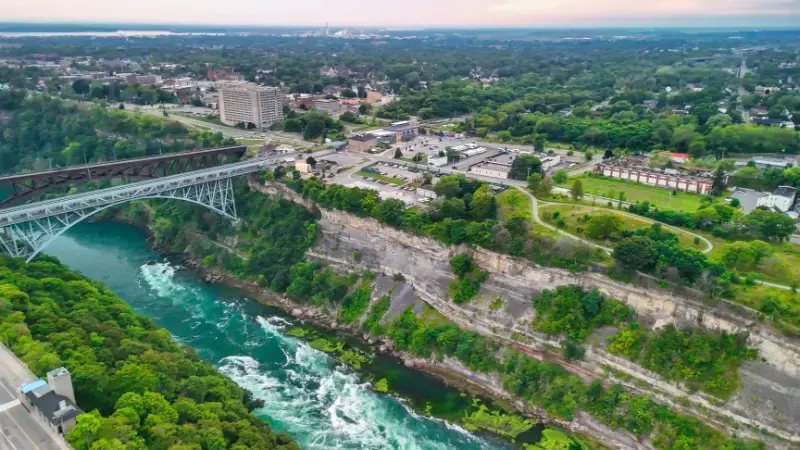
The falls are the centerpiece, but the river north of them creates a second layer of the trip. Whirlpool and Devil’s Hole areas reveal the scale of the gorge after the water has already dropped over the falls. Trails here can involve major elevation change and wet or uneven conditions, so they should be treated as hikes rather than as urban promenades.
Lewiston makes a pleasant food and riverfront stop, while Old Fort Niagara adds colonial and military history at the point where the Niagara River meets Lake Ontario. These are the kinds of additions that justify a second day instead of trying to manufacture more time in the immediate waterfall zone.
Niagara Falls and Buffalo: combine them or choose one?
Buffalo and Niagara Falls are close enough to combine in the same short trip, but they deserve different mental categories. Niagara is a natural-landscape trip; Buffalo adds architecture, museums, neighborhoods, food and a revitalized waterfront. If you have three nights, a strong pattern is two nights around the falls and one in Buffalo, or the reverse depending on arrival logistics.
Do not reduce Buffalo to a dinner stop for wings. If architecture, industrial history or art interest you, the city can easily fill a full day. Conversely, if your trip is short and Niagara is the dream, there is nothing wrong with keeping the itinerary narrow.
Best time to visit Niagara Falls
Summer offers the broadest set of attractions but also the heaviest crowds and highest accommodation pressure. Late spring and early fall often provide an attractive compromise: more services than winter, generally pleasant walking weather and less peak-summer intensity. Autumn foliage can add color to the gorge, although exact peak timing varies from year to year.
Winter is a legitimate season, not a consolation prize. Ice formations, snow and mist can transform the landscape. The trade-off is that some experiences are seasonal or weather-dependent. Dress for wind and spray, and treat icy surfaces seriously. The official park currently emphasizes year-round access while noting that attraction schedules vary.
Where to stay
Compare available accommodation for your dates, budget and preferred location before you finalize your route.
For a first visit without a car-heavy itinerary, prioritize walking distance to Niagara Falls State Park over a generic “Niagara area” label. A cheaper hotel several miles away can cost you time, parking fees and evening spontaneity. If you want a more local small-town atmosphere, Lewiston is an alternative, but it changes the trip from walkable waterfall stay to drive-based regional stay.
Travelers combining Buffalo may prefer to split nights instead of commuting back and forth. The two places are close on a map but have different evening experiences, and changing hotels once can sometimes be less annoying than repeated drives and parking.
Compare accommodation: compare hotels and other stays on Booking.com.
Getting to Niagara Falls from New York City
Niagara Falls is not a day trip from New York City. Driving takes most of a day once stops and traffic are included. Amtrak offers a scenic but long rail journey, while flying to Buffalo can save time if the schedule and airport transfer work for your trip. For a broader state vacation, a rental car makes the most sense once you leave the Hudson Valley and begin linking regions such as the Finger Lakes and Niagara.
If you are building a one-way state road trip, avoid returning all the way to Manhattan only because that is where you started. Open-jaw flights, Buffalo airport returns or a rail segment can reduce unnecessary backtracking.
Practical questions most Niagara guides skip
Will you get wet?
Yes, potentially very wet on close-up attractions, and mist can reach walkways even when the sky is clear. Keep electronics protected and do not assume a disposable poncho will keep shoes dry. A spare pair of socks can be more useful than another sightseeing gadget.
Is Niagara good with children?
Yes, especially because the core park offers immediate visual impact without requiring a long hike. The challenge is safety near wet surfaces, railings and crowds. Plan fewer transitions and use the park’s natural drama rather than stacking every ticketed attraction.
Is one night enough?
One night works if you arrive before midday and depart the next afternoon. Two nights are much better if you want both the falls and the surrounding region. A same-day arrival and departure often leaves no room for weather delays or an evening return after illumination.
Official planning sources
- Niagara Falls State Park — New York State Parks
- I LOVE NY — Greater Niagara
- Old Fort Niagara National Historic Landmark information via NPS resources
Continue planning New York State
- Finger Lakes Travel Guide
- New York State Road Trip
- New York State Travel Guide
- New York City Travel Guide