

Destinations › Pacific USA › Oregon travel guide › Oregon Travel Guide: Coast, Portland, Crater Lake, Mountains & Road Trips
Oregon rewards travelers who resist the urge to reduce it to Portland plus a quick look at the coast. Within one state you can move from Pacific headlands to temperate forest, waterfall corridors, volcanic peaks, wine country and high desert, often in a single road trip.
How to think about Oregon before drawing a route
The state makes more sense as a set of distinct landscapes than as a checklist of cities.
Portland anchors the north; the Columbia River Gorge and Mount Hood sit close enough to combine with it; the Willamette Valley fills the fertile middle; Bend opens the door to Central Oregon; Crater Lake dominates many southern itineraries; and Highway 101 creates an entirely different trip along the ocean. A first visit is usually stronger when it chooses three or four of those regions rather than trying to touch all seven tourism regions in one week.
The Oregon Coast deserves more than a day trip
Oregon's coastline is public, dramatic and slow by design. Highway 101 passes headlands, beaches, lighthouses, dunes and working fishing towns, but the road is rarely about covering miles quickly.
Cannon Beach is the famous introduction, while towns such as Manzanita, Newport, Yachats, Florence and Bandon reveal very different versions of the coast. Fog and wind are part of the experience, even in summer, so pack layers instead of treating beach weather as guaranteed.
Portland works best as a neighborhood city
Portland is easy to undersell if you focus only on a downtown attraction list. Its appeal is distributed through neighborhoods, parks, food carts, independent shops, coffee, beer and a strong habit of turning ordinary streets into places to linger.
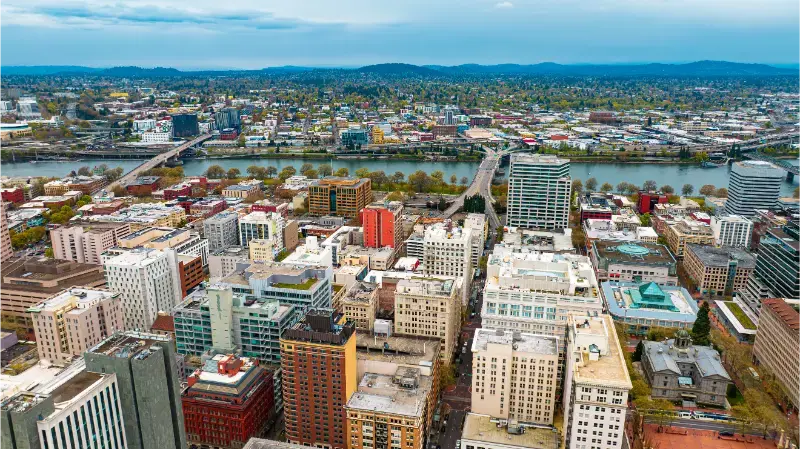
Use downtown and the Pearl District for central access, then spend time east of the river in areas such as Alberta, Mississippi, Hawthorne or Division depending on your interests. A car is useful for leaving the city but often unnecessary for a city-focused day.
Waterfalls, volcanoes and high desert change the trip
The Columbia River Gorge provides the state's most accessible concentration of major waterfalls, while Mount Hood adds alpine scenery and year-round recreation. Farther south and east, Bend feels drier, sunnier and more volcanic than western Oregon.
Crater Lake then shifts the scale again: this is a high-elevation national park where snow controls access for much of the year. These contrasts are exactly why Oregon is such a satisfying road-trip state.
When to go
July through early September gives the most reliable access to high mountain roads and long daylight, but it is also the busiest period and wildfire smoke can alter plans. Late spring brings powerful waterfall flow and greener valleys, while September can be excellent after school holidays if fire conditions cooperate.
Winter is not simply an off-season: Mount Hood, Bend and Crater Lake become snow destinations, while the coast turns stormy and atmospheric. Always check road, fire and air-quality information shortly before travel.
How many days make sense
Five days can support Portland plus the Gorge and a short north-coast stay. Seven to ten days allows a more satisfying loop with the coast, Bend or Mount Hood added.

Two weeks makes it realistic to include Crater Lake and a longer stretch of Highway 101 without turning every morning into a checkout. The best rule is to protect two-night stays in places where weather matters; one flexible morning can rescue a mountain or coast experience after fog, rain or smoke.
Getting around Oregon
A rental car is the easiest option for a multi-region itinerary. Distances look modest on a map, but mountain roads, coastal curves and scenic stops stretch driving time.
Portland can be explored without a car, and there are car-free options to several recreation areas, but statewide travel is still much simpler with your own vehicle. In winter, understand Oregon chain requirements and check TripCheck before crossing passes.
Where to stay in Oregon
Compare available accommodation for your dates, budget and preferred location before you finalize your route.
Choose lodging by geography, not by the idea of one central base.
Portland suits city days and Gorge access; Hood River is stronger for the eastern Gorge; Bend is the practical center for Central Oregon; coast trips work best with one or more oceanfront bases; and Crater Lake is remote enough that staying nearby matters. On a first trip, fewer hotel changes usually beat saving a few dollars by driving back and forth.
Check accommodation options and current rates for Oregon.
A practical first-time route
A balanced ten-day trip can begin with two nights in Portland, use one day for the Columbia Gorge, move to two or three nights on the coast, cross inland toward Bend, then continue to Crater Lake before returning toward a major airport.
The exact order matters less than avoiding unnecessary backtracking. If Crater Lake access is limited by snow, build the same trip around Mount Hood, Bend and the coast instead.
Small decisions that make Oregon easier
Download offline maps before entering forests or remote coast sections, keep fuel above a quarter tank outside urban areas, and never assume summer means dry trail conditions at elevation. Bring a real waterproof shell.
Check parking and permit rules for marquee sites before leaving the hotel. Most importantly, leave room for unscheduled stops: Oregon's best road-trip moments are often a viewpoint, bakery, short trail or empty beach you did not know existed that morning.
Driving times are not sightseeing times
Road estimates around Oregon travel guide are only the time the wheels are moving. Scenic pullouts, food stops, parking searches and short walks can double the useful time assigned to a segment. When Google Maps says a transfer takes three hours, avoid scheduling three more hours of fixed activities immediately afterward.
What to check the evening before
Review the next day's road and trail conditions, weather, wildfire and air-quality information, parking or permit rules, and the official page for the main destination. Download confirmations and offline maps while you still have reliable service. Oregon's remote stretches are exactly where assuming continuous mobile coverage causes avoidable problems.
Packing for Oregon rather than for one forecast
Use layers. A waterproof shell, warm mid-layer, sun protection and shoes that tolerate wet ground cover most itineraries better than highly specialized outfits. Coast, high desert and mountain weather can differ on the same day. Keep water and a few snacks in the car even when the next town appears close on the map.
Leave one part of the day unscheduled
The most rewarding part of Oregon travel guide may be a stop you did not know to reserve: a viewpoint after cloud lifts, an uncrowded beach, a farm stand, a short forest trail or a meal recommended locally. Protecting an hour or two of unassigned time makes those discoveries possible and gives the itinerary room to absorb small delays.
Who this trip suits best
Oregon Travel Guide works best for travelers who value scenery and local atmosphere as much as headline attractions. Families should shorten long transfer days, photographers should protect early and late light, and hikers should choose fewer trails with more margin. Travelers with limited mobility can still build a strong trip around viewpoints, towns and scenic drives, but should verify accessibility at individual sites.
Responsible travel matters here
Stay on durable surfaces and established trails, respect closures, never approach wildlife for a photograph, and follow local fire restrictions. On the coast, treat tide pools as habitat. In wine and brewery regions, plan a sober driver. Small choices protect places that receive heavy visitation and also reduce the chance that your own day ends with a preventable problem.
How to budget time, not just money
A useful budget for Oregon travel guide includes time as a real cost. A cheaper hotel that adds an hour of driving each morning can be poor value, and squeezing two distant sights into one day often means paying for parking, fuel and meals while enjoying neither place. Prioritize location for the hardest-to-reach experience, then save money on nights when geography matters less.
Crowds are easier to manage with timing than with avoidance
Popular Oregon places rarely need to be skipped completely. For Oregon travel guide, an early start, a weekday visit, a shoulder-season date or an overnight nearby can change the experience more than searching for a supposedly secret alternative. When a parking area is full, do not wait illegally on the road; move to the backup stop and return later if conditions improve.
Food, fuel and services can shape the route
Urban Oregon makes spontaneous meals easy, but the coast, mountain corridors and high desert can have long gaps between the specific services you want. Check restaurant opening days in small towns, refuel before entering remote stretches and carry enough water for an unplanned delay. Electric-vehicle travelers should plan charging around the route rather than assuming every scenic stop has reliable fast charging.
Photography and the best light
If photography matters, choose one location around Oregon travel guide for early or late light instead of trying to photograph every stop at sunset. Morning often brings quieter parking and cleaner air, while evening can improve coastal and mountain atmosphere. Weather may erase the expected view, so build a second opportunity into multi-night stays rather than forcing a dangerous drive for one photograph.
Build a backup that is genuinely different
A useful backup for Oregon travel guide should not depend on the same weather that ruined the first plan. If a mountain is hidden by cloud, move to a town, lower forest or food-focused stop rather than driving to another high viewpoint. If smoke affects inland Oregon, the coast may be better; if coastal wind is severe, a museum, market or inland route can preserve the day. This kind of flexibility is more valuable than a minute-by-minute itinerary.
A final planning principle
Do not judge a successful Oregon travel guide trip by how many names you can cross off. Oregon is a state where the quality of an itinerary usually improves when one destination is removed. Use that extra time to walk farther, wait for better weather, eat without rushing and arrive at the next hotel before you are exhausted.
Continue planning Oregon
Use the following guides to connect this trip with another Oregon region without rebuilding the itinerary from scratch.
- Portland Oregon Travel Guide: Neighborhoods, Food, Parks & a 3-Day Plan
- Columbia River Gorge Oregon Guide: Multnomah Falls, Waterfalls, Hikes & Hood River
- Oregon Coast Road Trip: Highway 101, Beaches, Towns & a 7-Day Route
- Cannon Beach Oregon Travel Guide: Haystack Rock, Ecola State Park & Where to Stay
- Crater Lake National Park Guide: 2026 Closures, Rim Drive, Hikes & Where to Stay