

Tulsa Travel Guide. Tulsa is one of the most rewarding city stops on Route 66 because the road is only one layer of the experience. Art Deco architecture, Greenwood history, music, major museums and a remarkable riverfront park give the city enough depth for several days.
This guide focuses on decisions that make the trip work in practice: how long to stay, what deserves priority, where driving becomes inefficient, how weather changes the day, and which experiences are worth protecting when time is limited.
- Ideal stay: 2–3 nights
- Best for: architecture, history, music, museums and Route 66
- Best outdoor stop: Gathering Place
- Best planning style: downtown cluster + riverfront + Route 66 day
- Good pairing: Claremore, Catoosa and Oklahoma City
Downtown Art Deco
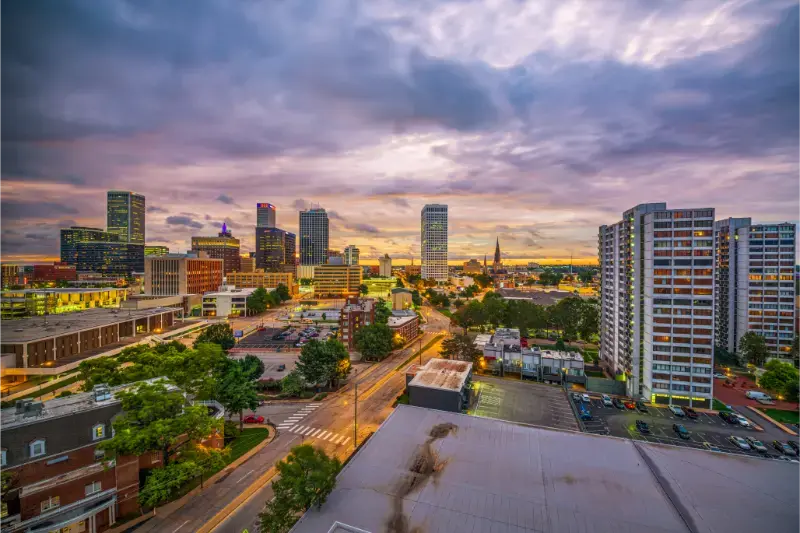
Tulsa’s downtown architecture rewards a deliberate walk rather than a quick drive. Look up, slow down and use a self-guided route or tour that explains the buildings.
Morning or late afternoon light can make the details easier to appreciate and photograph.
Greenwood history
The Greenwood District is central to understanding Tulsa. Approach the area with time and context rather than treating it as a single memorial photo stop.
Check museum and cultural-site hours in advance because your visit is stronger when interpretation accompanies the streetscape.
Gathering Place
Gathering Place is a major riverfront park and an easy way to balance museum-heavy days. It works for families, walkers and anyone needing unstructured time.
Go early or later in the day during hot weather and combine it with nearby riverfront plans.
Route 66 in Tulsa
Tulsa contains a dense collection of Mother Road landmarks, neon and modern Route 66 interpretation.
Choose a coherent east-to-west or west-to-east sequence rather than repeatedly crossing the city.
Music and nightlife
Tulsa’s music identity extends from historic venues to contemporary performances.
Check event calendars before booking hotels because a concert can become the strongest evening of the trip.
Museums
Select museums based on your interests rather than trying to see all of them. Art, music and local history can each fill several hours.
On very hot or stormy days, museum time can move to midday while architecture walks shift to cooler hours.
Food
Tulsa deserves intentional meals, including at least one place outside the most obvious visitor corridors.
Keep one dinner reservation flexible if your Route 66 day runs long.
Two-day itinerary
Day one: downtown architecture, Greenwood and an evening meal or show. Day two: a major museum, Gathering Place and Route 66.
This gives the city two different rhythms instead of compressing everything into one day.
Three-day itinerary
Use the third day for additional museums or an excursion to Catoosa, Claremore, Pawhuska or another nearby destination.
The extra night reduces pressure and makes Tulsa a genuine base for northeast Oklahoma.
Where to stay
Downtown is convenient for first-time visitors, while other districts may suit travelers focused on riverfront parks, nightlife or lower rates.
Compare parking, driving and evening plans together when choosing accommodation.
How to build the route without wasting time
Start with geography rather than a list of attractions. Put the nights on a map, estimate the real transfer time, then add experiences that sit naturally along that line. In Oklahoma, this matters because Tulsa, Oklahoma City, the Wichita Mountains, southeast lake country and western Route 66 pull in different directions. A route that looks reasonable when every stop is viewed separately can become tiring once check-out, fuel, meals, museum hours and parking are included.

Use two-night stays whenever a place has severa
Driving, parking and realistic timing
Oklahoma is a car-oriented destination outside a few compact central districts. Even when distances look modest, allow extra time for urban traffic, construction, scenic pullouts, museum visits and unplanned food stops. Do not schedule a long rural transfer after a full museum day simply because the map labels it as a few hours.
Keep fuel comfortable on rural stretches and avoid arriving at nature areas with an almost-empty tank. Download offline maps before remote drives, especially around wildlife areas where cellular coverage may be inconsistent.
Weather and safety
Weather should influence the order of each day. In warm periods, move exposed walks to morning and use museums or long lunches during the hottest hours. In spring, pay attention to severe-weather forecasts and alerts; in winter, watch for ice or rapidly changing road conditions.
A flexible itinerary is safer and usually more enjoyable. If conditions deteriorate, swap an outdoor block with a museum or city day instead of forcing the original plan. The goal is not to complete a spreadsheet of stops; it is to have a good trip.
Costs and booking priorities
The largest variable costs are usually accommodation, car rental and special events rather than general sightseeing. Book the nights that are difficult to replace first: festival weekends, cabins, small-town events and nature-focused stays with limited inventory. Ordinary city hotels can often remain flexible until flights and the road-trip sequence are settled.
Compare the total cost of a hotel, including parking and the extra driving it creates. A cheaper room far from the places you plan to visit may cost more in time, fuel and parking than a better-located option.
Who this trip suits
Oklahoma works particularly well for travelers who enjoy road trips with a strong sense of place: history, architecture, food, music, roadside culture and landscapes all appear without requiring cross-country distances. Families can simplify the route around parks and interactive museums; couples can slow it down around food and boutique stays; photographers can prioritize early mornings, neon and open landscapes.
The state is less rewarding when treated only as a corridor between Texas and the Midwest. Even two carefully chosen nights can reveal a much more distinctive destination than the interstate view suggests.
Where to stay and how to book
Choose accommodation based on the next morning, not only the previous evening. A well-located hotel can save an hour of driving at exactly the point when you want to start early. For road trips, check parking policies, cancellation terms and whether breakfast timing fits an early departure.
Useful official resources
Opening hours, road access, trail conditions, event schedules and temporary closures can change after publication. Use official sources for the final check before building a day around a specific attraction.
Practical decision guide
When two attractions compete for the same half-day, choose the one that is hardest to replace elsewhere on your trip. A locally distinctive museum, landscape or cultural site normally deserves priority over a generic activity you could find in another city. This is especially useful in Oklahoma because the most memorable experiences are often separated by driving time.
Use meal stops and short walks as part of the route rather than as interruptions to it. A road trip becomes much less tiring when every transfer contains one deliberate break. On days with a long drive, avoid adding a second major museum or a demanding hike late in the afternoon. Save high-energy experiences for mornings and use evenings for neighborhoods, food or simple scenic stops.
Finally, protect margin. Arriving thirty minutes earlier than necessary at a museum, trailhead or restaurant is rarely a problem; arriving late can remove the very experience that justified the drive. A realistic plan should survive a fuel stop, traffic delay, weather change or unexpectedly interesting roadside discovery without collapsing.
How to improve the trip if you have extra time
An extra half-day is most valuable when it removes pressure rather than when it adds another distant attraction. Use that time for a slower museum visit, a neighborhood meal, a second short trail, a sunset stop or a late checkout before a long transfer. Oklahoma rewards these small pauses because much of the experience comes from connecting cities, landscapes and roadside culture rather than racing between headline sights.
If you have a full extra day, extend the place you already enjoy most. Add a third night in Tulsa or Oklahoma City, stay near the Wichita Mountains for another morning, or give Route 66 a slower museum-and-small-town day. This normally creates a better trip than inserting a far-away destination that forces two additional long drives.
Frequently asked questions
How many days do you need in Tulsa?
Two full days is a good first visit; three days is better if you want museums plus nearby Route 66 towns.
Is Tulsa worth visiting without Route 66?
Yes. Architecture, Greenwood history, museums, music and Gathering Place justify the city independently.
Can Tulsa and Oklahoma City be combined?
Yes. They are a natural pair and the Route 66 drive between them can become a sightseeing day rather than a transfer.
Continue planning your Oklahoma trip
Use the Oklahoma travel guide as the main hub. As this Oklahoma cluster expands, only published guides should be linked from visible pages, so the site never sends readers to a scheduled or unavailable article.