

Destinations › West › Nevada travel guide › Valley of Fire State Park Guide: Trails, Scenic Drive & Planning Tips
Valley of Fire is close enough to Las Vegas for a day trip but dramatic enough to deserve deliberate planning. Red Aztec sandstone, pale rock layers, petroglyphs and winding roads create a landscape that changes constantly with light.
The central issue is heat. Nevada State Parks closes many trails annually from May 15 through September 30, and even open roadside stops can become unsafe in extreme temperatures. Build the visit around current rules, sunrise-to-sunset access and your group’s real tolerance.
At a glance
| Location | Southern Nevada, northeast of Las Vegas |
| Typical visit | Half day to full day |
| Park access | Open daily from sunrise to sunset for day use |
| Seasonal trail issue | Many trails close May 15–September 30 |
| Day-use fee | Check current Nevada State Parks rates; out-of-state vehicles are typically higher |
| Best broad season | Late fall through early spring |
What to see and how to plan the route
Start with the visitor center
The visitor center explains geology, ecology, Indigenous history and current trail conditions. Ask which routes are open and safe that day; a saved social-media map cannot replace live heat or maintenance information.
Drive Valley of Fire Road
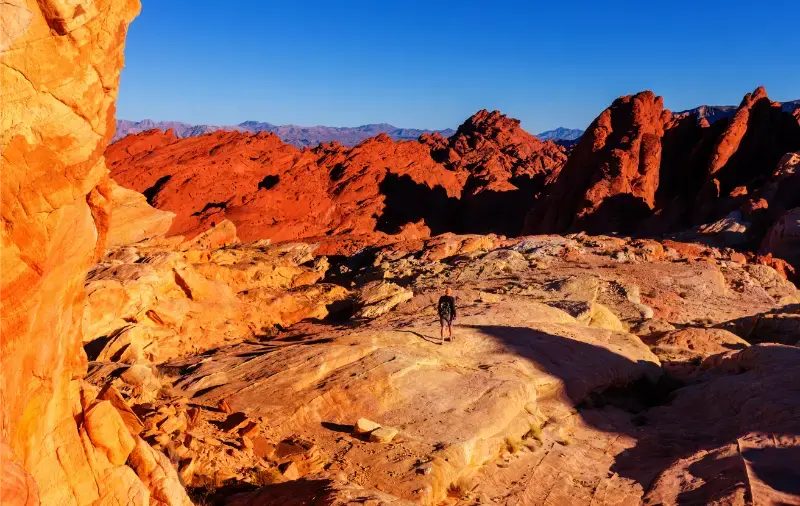
The east–west road provides a strong overview even for travelers doing limited hiking. Pull into designated areas only, watch for wildlife and do not stop in traffic for photographs.
Follow Mouse’s Tank Road
This scenic road leads into layered sandstone and several famous trail areas. It is exceptionally photogenic, but parking fills quickly during comfortable months. Early arrival reduces congestion.
See Atlatl Rock respectfully
A staircase provides a view of petroglyphs. Do not touch, trace or wet them for photographs. Cultural markings are not props, and damage is permanent.
Walk the Petroglyph Canyon route when open
The Mouse’s Tank area combines a sandy wash with visible petroglyphs. Trail length does not predict heat difficulty; sand, exposure and radiant rock temperatures increase effort.
Consider Fire Wave and Seven Wonders only when open
These popular routes showcase striped rock and sculptural formations. Seasonal closures are enforced for safety. If closed, accept the limit and use scenic drives and legal overlooks.
Stop at Rainbow Vista
Rainbow Vista offers broad views across multicolored formations. The short access can still feel punishing in heat, so carry water even when the car is nearby.
Photograph Elephant Rock without climbing it
Elephant Rock is visible near the east entrance. Park rules prohibit climbing on this formation. Use the designated trail and avoid standing in the roadway.
Look for bighorn sheep from a distance
Wildlife sometimes appears near roads and developed areas. Slow down, never feed animals and keep enough distance that behavior does not change because of your presence.
Stay for low-angle light safely
Early and late light deepen the sandstone color, but day users must leave by the posted closing time. Know the route to your chosen exit and avoid beginning a trail too late.
Practical planning advice
Getting there from Las Vegas
The drive is roughly an hour or more depending on starting point and traffic. Entering one side and exiting the other can reduce backtracking when continuing toward Mesquite or Utah.
Fees and passes
Valley of Fire is a Nevada state park, so the federal America the Beautiful pass does not cover ordinary state-park admission. Check official fees immediately before the visit.
Heat closures are not suggestions
Many trails close annually from May 15 through September 30. Other areas can also be dangerous. Move the trip to a cooler season rather than searching for loopholes.
What to bring
Carry abundant water, electrolytes, sun protection, food and offline directions. Wear shoes suited to hot rock and sand. Mobile coverage should not be assumed.
Camping
Campers have different access conditions from day users, but reservations, site rules and seasonal demand matter. Camping does not make closed trails available.
Combine the park intelligently
Valley of Fire pairs with a Las Vegas travel guide, Lake Mead or a northbound Utah Mighty 5 road trip. Adding Hoover Dam on the same day creates inefficient backtracking.
Official information
Check Nevada State Parks for current closures, hours and alerts before leaving.
Frequently asked questions
How long do I need?
Allow at least four hours for scenic stops; a full day is better when trails are open and conditions are comfortable.
Can I visit in summer?
The park may be open, but many trails close and extreme heat can make even short stops hazardous. A cooler season is strongly preferable.
Is Valley of Fire good for children?
Yes in suitable weather with close supervision, realistic walks and strict hydration. Rock edges, traffic and heat require attention.
Do I need a reservation?
Check the current official park page. Rules can change for camping or specific uses even when ordinary day entry is available.
Is it better than Red Rock Canyon?
They are different. Valley of Fire is farther and often feels like a full desert outing; Red Rock is closer to Las Vegas and has a structured scenic loop.
Turn priorities into a daily route
Start with Start with the visitor center and Drive Valley of Fire Road as geographic anchors rather than isolated checklist items. Put the more time-sensitive experience first, then place meals, parking and flexible stops around it. This approach leaves room for delays without sacrificing the main reason for the day. It also prevents a common Nevada mistake: accepting every apparently short detour without considering heat, one-way roads, resort walking time or the long return to the hotel.
Allow a realistic time buffer
Maps describe distance, not the complete experience of Follow Mouse’s Tank Road or See Atlatl Rock respectfully. Parking searches, visitor-center stops, security, photographs and weather checks all use time. Add a buffer before any fixed reservation and avoid scheduling a nonrefundable evening immediately after a remote drive. If the day runs early, the spare time becomes a relaxed meal or viewpoint; if it runs late, the itinerary remains recoverable instead of turning into a sequence of missed bookings.
Check reservations in the correct order
Reserve scarce or regulated experiences before arranging the flexible parts of this Valley of Fire State Park guide plan. A cave tour, timed-entry window, headline show or limited hotel should determine the day; a scenic stop with broad access can move around it. Recheck confirmation emails for arrival instructions, parking and cancellation deadlines. Save essential documents offline because mobile coverage can weaken outside urban areas, and never assume that an entrance pass automatically includes a timed reservation or guided activity.
Build the budget from the total cost
The true price of this trip is not only admission. Include accommodation taxes and fees, parking, fuel, meals, tips, reservation charges and the cost of moving between areas. A cheaper room can become expensive when it creates several rides each day, while a rental car can be wasteful during a Strip-only stay but essential for remote Nevada. Compare the complete daily cost and the time saved, then spend more only where location, flexibility or a meaningful experience clearly improves the trip.
Prepare for Nevada distances
Before leaving a major base, confirm the next fuel stop, food option and arrival window. Keep water available in the passenger area, not buried under luggage, and download the route. On remote roads, a weak signal is normal rather than an emergency, but it becomes dangerous when travelers have not shared their plan or checked the vehicle. Avoid driving tired after sunset merely to preserve an overfilled schedule; removing one stop is always cheaper than turning a vacation into a roadside problem.
Use weather as a decision tool
Nevada weather must be read by elevation and activity. A forecast for Las Vegas does not describe Lake Tahoe or Great Basin, and an acceptable city temperature may still be unsafe on exposed sandstone. Check hourly heat, wind, thunderstorms, air quality and overnight lows. Move outdoor time earlier, shorten the route or replace it with an indoor activity when conditions deteriorate. Flexibility is not a failure of planning here; it is the skill that makes a desert-and-mountain itinerary work.
Plan for different mobility and energy levels
A mixed group should choose the day around the least mobile or least heat-tolerant traveler. Provide seated breaks, accessible alternatives and a clear meeting point instead of pressuring everyone into the same trail or resort walk. Short scenic stops can be combined with one carefully selected longer activity. Confirm accessibility directly with official sites and venues because terrain, elevators, construction and shuttle operations can change. A smaller shared plan is usually more enjoyable than separating repeatedly to chase a longer list.
Travel responsibly
Stay on durable or designated surfaces, pack out waste and never remove rocks, plants or artifacts. Petroglyphs and historic structures should be observed without touching, tracing or climbing. Keep distance from wildlife and avoid feeding it for photographs. In cities, support local businesses beyond the largest resorts when it fits the route. These choices protect the places described in this guide and also create a calmer trip, because responsible travel naturally favors slower observation over hurried collection.
Keep one backup plan
Choose an alternative for the part of the day most exposed to closure, heat, snow or sold-out parking. The backup should be nearby and genuinely appealing, not another long drive. Museums, scenic overlooks, a neighborhood meal or a shorter official trail can preserve the character of the day. Write the alternative down before departure; decision-making becomes harder when the group is tired, hungry or standing in a car park with limited reception.
Continue planning your Nevada trip
Use the Nevada travel guide as the main state hub, then compare best things to do in Nevada, best places to visit in Nevada, best time to visit Nevada and where to stay in Nevada. For a city-focused trip, continue with the Las Vegas travel guide.
Looking for the right place to stay? Compare Nevada hotels and accommodation on Booking.com.