

A practical guide to Vermont’s mountain towns, Lake Champlain, scenic drives, foliage, winter trips and realistic itineraries. This guide focuses on practical choices that make a Vermont trip more enjoyable and less rushed.
Understand the shape of Vermont
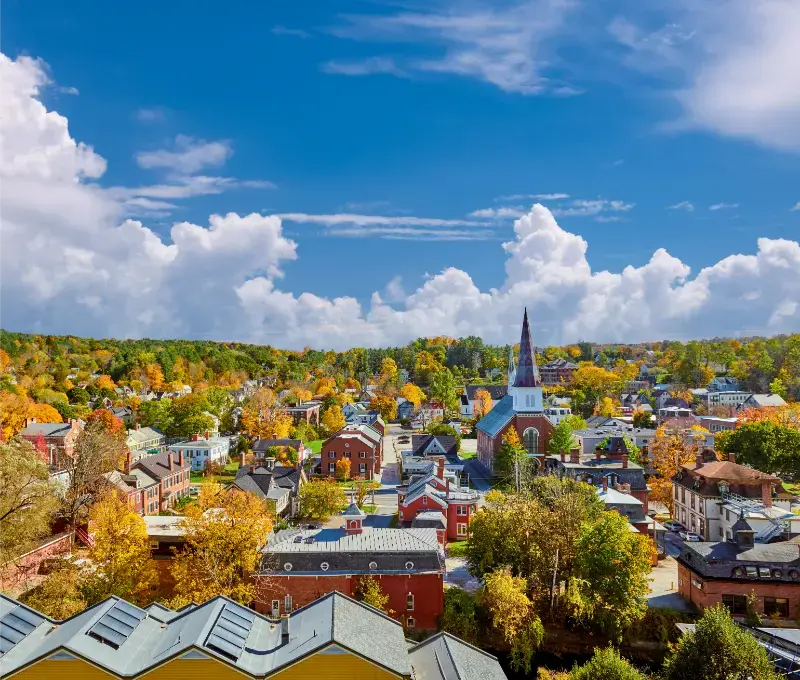
Vermont rewards travelers who resist the urge to race from one famous village to the next. Lake Champlain creates a broad, relatively gentle western corridor, while the Green Mountains shape the center of the state. The Northeast Kingdom in the northeast is a quieter patchwork of working farms, forests and lakes. Southern Vermont brings historic downtowns, ski mountains and easier access from Massachusetts. These regions may look close together on a small map, but winding two-lane roads mean that a busy itinerary can quickly become a driving itinerary.
Choose a region before choosing a hotel
For a first-time trip with lakefront walks, restaurants and museums, Burlington and nearby Shelburne are useful bases. Stowe works for mountain scenery, the Mount Mansfield area and the Waterbury corridor. Woodstock is a good fit for traditional village landscapes and family attractions, with Quechee nearby. Manchester suits southern Vermont gardens, shopping and hikes. Montpelier places you near a compact state capital and central Vermont's valleys. Choose two bases for a week rather than switching rooms every night.
What Vermont does particularly well
Travel here is often about modest moments rather than blockbuster attractions: an unhurried village breakfast, a covered bridge over a river, a maple sugarhouse during the sugaring season, or an afternoon overlooking a broad lake. The Shelburne Museum offers a dense collection of historic buildings and American art, while nearby farms and markets demonstrate Vermont's agricultural identity. At the same time, the state is a serious destination for hiking, cycling, paddling and downhill skiing. Match the activities to the season rather than assuming every attraction operates year-round.
How to build a short visit
With three days, choose one region: Burlington and the Champlain shore, Stowe and Waterbury, or Woodstock and central Vermont. Give one day to the primary town, another to the surrounding countryside and a third to weather-dependent outdoor time. A five- to seven-day journey can link Burlington with Stowe, Montpelier and Woodstock without requiring heroic driving days. If your trip begins in Boston or New York, a southern Vermont base may save hours that would otherwise be spent crossing the state.
Getting around the state
A car is the practical choice for most scenic itineraries. Amtrak's Vermonter and Ethan Allen Express serve different corridors, and local transit can be useful in Burlington, but rail service does not reach most mountain trailheads or small villages. Rural roads are frequently narrow, and unpaved routes are not automatically good shortcuts. In winter, pay attention to tires, forecasts and mountain-road conditions; in foliage season, expect slowdowns at popular viewpoints. Never assume a scenic road is suitable for a large RV without checking restrictions.
When to visit
Late spring brings green hills and seasonal trail reopening, but mud can affect unpaved roads and hiking routes. Summer is ideal for swimming, lake ferries, farmers markets and outdoor performances. Fall is famous for foliage, yet peak color moves with weather, elevation and latitude rather than following a fixed calendar. Winter transforms resorts such as Stowe, Killington, Okemo and Sugarbush, while smaller towns provide snowshoeing and cozy indoor options. April and early May are qui
Food, lodging and budgeting
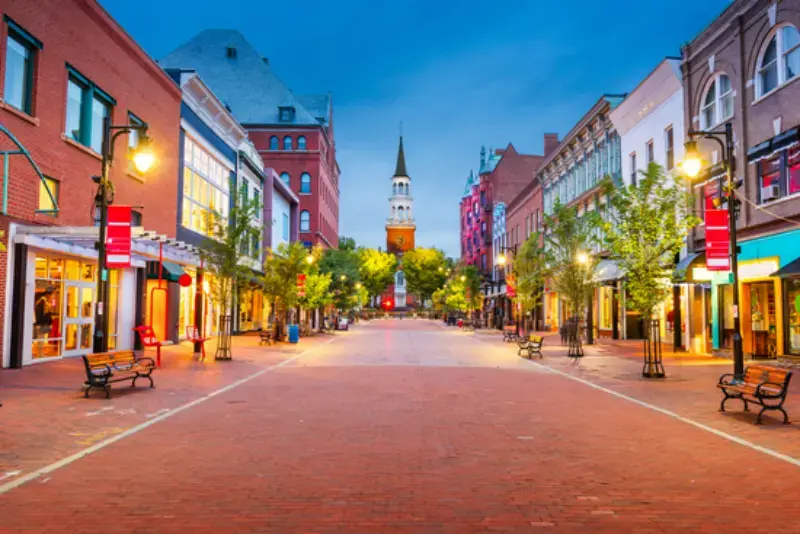
Vermont's food identity extends beyond maple syrup: look for local cheddar, cider doughnuts, seasonal berries, orchard products and farm-to-table menus. Rural inns are atmospheric but may require driving to dinner. Burlington has the broadest selection of urban-style lodging, while ski towns command premiums during holiday weekends and major winter events. For foliage weekends, book early and consider a base one town away from the best-known villages. Always check whether accommodation taxes, resort fees, parking or breakfast are included.
Responsible travel
Stay on marked trails, respect private farms and never block roads to photograph a covered bridge. Vermont's picturesque fields are working landscapes, not unrestricted public parks. Check state park policies before bringing a dog and follow seasonal trail advisories intended to prevent erosion. In winter, avoid entering closed mountain terrain. Supporting local stores and restaurants is particularly meaningful outside peak tourism periods, when many small communities balance visitor demand with everyday life.
Small towns worth adding
Beyond the best-known destinations, towns such as Middlebury, Brattleboro and Bennington reveal different sides of Vermont. Middlebury combines a college-town atmosphere with the Otter Creek landscape and nearby farms. Brattleboro has independent cultural venues and access to southern river valleys. Bennington offers history and regional museum options. None should be added casually to a short northern Vermont trip, but each makes sense if your arrival route passes through that corner of the state. Decide whether you prefer small-town culture, mountain activity or lake scenery, then let that priority shape the drive.
Covered bridges are not a scavenger hunt
Vermont's historic covered bridges are appealing, but their locations and access rules vary. Some can be driven through, others are pedestrian-only, and many stand near private property. Rather than aiming to photograph a dozen bridges, look for one or two that fit naturally into your route, such as the Middle Covered Bridge in Woodstock. Learn why timber trusses were protected from weather and how bridges served local farms and communities. A slow walk beside one bridge often tells more of a story than a series of hurried stops.
Outdoor alternatives for mixed groups
A mixed group rarely shares one appetite for long hikes. Pair a challenging activity with a low-key alternative in the same region: a Mount Mansfield outing for fit hikers and a Stowe village or recreation-path visit for others, for example. Around Burlington, some can ride the waterfront trail while others visit an indoor museum. This avoids spending the day ferrying people between distant attractions. Keep the group's meeting point and time clear, particularly where mountain cell coverage is unreliable.
Understanding Vermont distances
Vermont maps invite optimistic plans because straight-line distances appear small. Actual travel takes longer on curving mountain roads, particularly when autumn traffic, school buses or winter weather intervene. Treat a drive between Burlington and Woodstock as a substantial transfer with possible stops, not as an effortless local errand. If you want one scenic byway, leave room to pull into designated village parking and walk. Planning fewer stops is not a compromise here; it is often what makes the landscape memorable.
A practical first-visit decision
Choose summer if you want the greatest flexibility for lake activities and open-air sightseeing; choose winter if snow sports are your main purpose. For the famous red-and-gold landscapes, autumn is rewarding but expensive and unpredictable. An early June or late spring visit can be quieter, though high trails may remain wet. Travelers mostly interested in food, independent shops and museums can enjoy a shoulder-season trip as long as they verify opening days. The most successful Vermont vacation starts with a realistic season-and-region match rather than a single viral photograph.
Practical planning
| Planning question | Best approach |
|---|---|
| Best length of visit | Allow more time for one well-chosen region than for a rushed circuit of distant towns. |
| Transport | Check actual local transport or rental-car needs; rural connections are limited. |
| Seasonality | Confirm seasonal openings, trail notices, and current weather shortly before departure. |
| Reservations | Book limited-capacity attractions and busy-season lodging ahead; policies can change. |
| Local etiquette | Respect private property, signed parking and fragile trails. |
Frequently asked questions
How much time should I allow?
The right duration depends on whether you want a brief introduction or time for a deeper visit. For Vermont travel guide, start with the principal experience and leave at least one flexible period for weather or an unexpected discovery. Avoid counting only the drive time between points; parking, short walks, meals and entry procedures all add time.
Do I need a car?
For Vermont travel guide, a vehicle is often the easiest way to reach the surrounding countryside, although some central downtown and shoreline experiences can be explored on foot. Check current public-transit routes separately: a nearby station on a map does not necessarily offer a convenient connection to the attraction you want.
Can I visit year-round?
Many landscapes in Vermont are accessible in every season, but trails, park facilities, guided tours, lake activities and ski services have different schedules. The best approach for Vermont travel guide is to confirm the relevant operator schedule and current local conditions rather than assume an attraction is open whenever the destination itself is accessible.
Is it suitable for families?
Families can enjoy Vermont travel guide when the day is paced around realistic attention spans, restroom access and weather. Choose shorter routes when traveling with small children, bring snacks and layers, and verify any age or height requirements for paid activities. A relaxed half-day can be more rewarding than a complicated checklist.
What should I check before leaving?
Review official notices for your main stop, current weather, parking rules and any required timed entry. For Vermont travel guide, preserve a weather alternative and avoid relying on an old screenshot for operating hours or entrance prices. When a trail or road is closed, use a designated alternative rather than bypassing a barrier.
Official sources
Check current information before traveling: official visitor information, official visitor information.