

- Best first-time base: Indianapolis for city attractions and central positioning
- Best nature weekend: Brown County/Nashville or a state-park inn/cabin
- Best Lake Michigan base: Porter/Chesterton area or nearby South Shore communities
- Best northern culture base: South Bend, Fort Wayne or Shipshewana depending on focus
- Best southern road-trip bases: Corydon, Jasper, French Lick/West Baden and Madison
- Indianapolis: best all-around first base
- Indiana Dunes and the South Shore
- Brown County and Nashville
- Turkey Run, Shades and Parke County
- South Bend, Fort Wayne and Shipshewana
- Southern Indiana: Corydon, Jasper, French Lick and Madison
- How many hotel changes for a road trip?
- Hotel, cabin, state-park inn or vacation rental?
- When to book early
- Related Indiana guides
- How to plan this trip without overloading the day
- Families, accessibility and different travel styles
The biggest lodging mistake in Indiana is choosing a hotel only because it is geographically “central.” Indiana trips are much easier when the hotel is close to the next morning’s first major activity. A cheaper room 45 minutes away can cost more in fuel, parking and lost time than a slightly higher rate in the right town. This is especially true for early park starts, theme-park days and fall weekends.
Think in bases, not in one statewide hotel. Indianapolis is excellent for central Indiana, but it is not a sensible base for repeated day trips to Lake Michigan and southern cave country. For a week-long road trip, two or three bases usually provide the best balance between unpacking fatigue and backtracking.
Indianapolis: best all-around first base
Indianapolis is the easiest first choice for museums, sports, food and a central-city experience. Stay downtown if walkability to major attractions matters, or choose another neighborhood if restaurant character and easier parking are more important. For day trips to Brown County or Bloomington, a location with straightforward interstate access can save time.

Indiana Dunes and the South Shore
For Indiana Dunes National Park, staying near Chesterton, Porter or another South Shore community gives you earlier beach and trail access than commuting from central Chicago. Chicago can still be part of the trip, but if the Dunes are the priority, sleep closer to the park. Summer weekends reward early starts.
Brown County and Nashville
Stay in or near Brown County if the goal is fall color, state-park time and Nashville. Cabins are attractive for families and groups, while a park inn can simplify an outdoors-focused weekend. October demand can be intense, so location matters more than chasing a last-minute bargain far outside the area.
Turkey Run, Shades and Parke County
For ravine hiking and covered bridges, staying near Turkey Run or Rockville is much more practical than driving back to Indianapolis every night. Rockville works best for bridge routes; state-park-area lodging works best for early hiking. This is a compact two-night stop rather than a base for the entire state.
South Bend, Fort Wayne and Shipshewana
South Bend works for Notre Dame and northern cultural attractions; Fort Wayne is excellent for families and the zoo; Shipshewana is the best choice when Amish Country itself is the reason for the trip. These are not substitutes for each other. Choose the base that minimizes the first and last drive of each day.
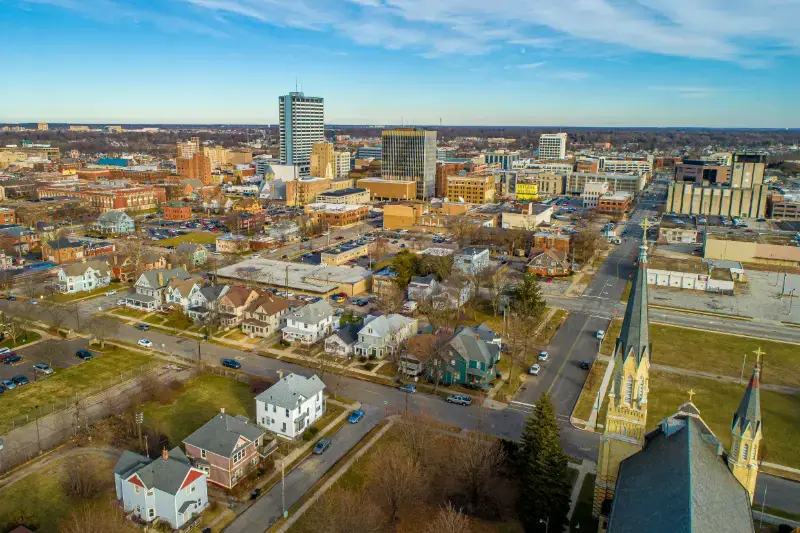
Southern Indiana: Corydon, Jasper, French Lick and Madison
Corydon is ideal for Indiana Caverns and historic first-state-capital sites. Jasper is a practical base for Holiday World and a broader southern loop. French Lick and West Baden suit resort-style weekends and nearby outdoor attractions. Madison combines an attractive historic town with Clifty Falls and the Ohio River.
How many hotel changes for a road trip?
For four nights, use no more than two bases unless the trip is linear. For seven nights, three bases are usually enough. A useful statewide pattern is Indianapolis (2 nights) → one southern or western base (2–3 nights) → one northern base (2 nights). Constant one-night stays create packing work and make bad weather harder to absorb.
Hotel, cabin, state-park inn or vacation rental?
Hotels are easiest for city trips and late arrivals. Cabins are useful for families who want kitchens and outdoor space. State-park inns reduce early-morning driving and can turn the lodging into part of the trip. Vacation rentals work well for groups, but verify parking, cleaning fees and minimum stays before assuming they are cheaper.
When to book early
Reserve early for Brown County fall weekends, major Indianapolis events, Notre Dame football weekends, Holiday World peak dates and popular state-park cabins. For ordinary weekday travel, flexibility can be better. Always compare the total trip cost: parking, resort fees, breakfast, distance and cancellation terms matter as much as the headline room rate.
Compare places to stay across Indiana
If the trip is a fly-drive itinerary, use the hotel choice and rental-car pickup together. A downtown stay may make a car unnecessary for the first two nights, while a road-trip hotel with free parking can be better once you leave the city.
Compare rental cars for an Indiana itinerary
Related Indiana guides
Continue planning with Indiana in Summer, Parke County Covered Bridges Guide, Holiday World & Splashin’ Safari Guide. They pair naturally with this itinerary and can help you choose the next stop without adding unnecessary driving.
How to plan this trip without overloading the day
The most useful way to plan where to stay in Indiana is to start with one non-negotiable experience and then add two or three flexible stops around it. Indiana distances look modest on a map, but a day becomes tiring when every hour is assigned to a different town. For two nights for a city break; five to seven nights for a multi-region trip, choose a compact geographic area, leave room for meals and weather, and treat scenic drives as part of the experience rather than dead time between attractions.
Good bases include Indianapolis plus one regional base that matches your priority. Staying close to the next morning’s first stop is usually worth more than saving a small amount on a hotel farther away. In rural areas, dinner options often close earlier than in Indianapolis or Fort Wayne, so check restaurant hours before a late arrival. If you are combining this trip with a broader itinerary, our Indiana places-to-visit guide is the easiest overview for deciding what belongs in the same route.

Compare rental cars for an Indiana road trip
Families, accessibility and different travel styles
Families often benefit from two-night minimum stays, breakfast availability and rooms large enough to avoid repacking every morning. Cabins and suites can be worth the premium when they simplify meals and bedtime.
Accessibility varies by property. Modern chain hotels usually publish room features clearly; historic inns, cabins and vacation rentals need closer checking. Ask specifically about step-free routes, bathroom layout and parking-to-room access.
When to go
Hotel demand peaks differently by region: summer near the Dunes and theme park, fall in Brown County and Parke County, event weekends in Indianapolis and South Bend. Book according to the destination’s demand cycle, not one statewide rule.
Compare places to stay in Indiana
Schedules, operating days, trail conditions, attraction access and seasonal services can change. Recheck these official sources shortly before your trip:
Visit Indiana – regions
Visit Indiana – places to stay
Mistakes to avoid
- Trying to cross several Indiana regions in one short weekend instead of choosing a compact route.
- Relying on an old screenshot for hours, prices, seasonal schedules or road conditions.
- Booking the cheapest hotel without considering the time and parking cost added by its location.
- Scheduling every hour and leaving no margin for weather, meals, queues or a place you enjoy more than expected.
- Assuming every cave, historic building, beach access or trail has the same accessibility profile.
- Adding distant attractions just because they look close on a statewide map; route time matters more than straight-line distance.
How this fits into a wider Indiana itinerary
Indiana rewards route-building more than isolated sightseeing. Before adding another stop, look at the next overnight base and ask whether the detour improves the day or merely fills the map. A useful rule is to keep one anchor experience, one secondary stop and one flexible meal or walk in each half-day. That still leaves room for unexpected weather, a longer museum visit, a scenic road that deserves photographs or a child who needs a slower afternoon.
If your trip is longer than a week, divide the state into north, central/west and south. The north combines Lake Michigan, South Bend, Shipshewana and Fort Wayne; central and west connect Indianapolis, Parke County, Turkey Run, Bloomington and Brown County; the south links Corydon, cave country, French Lick, Jasper, Santa Claus and Madison. This structure reduces backtracking and makes hotel choices easier.
Budgeting time and money realistically
A practical Indiana budget is easier to control when you separate fixed costs from optional ones. Lodging and transportation usually determine the shape of the trip; admissions, meals and souvenirs then fit around that structure. Compare the total cost of a cheaper hotel with the fuel, parking and extra driving it creates. In the same way, a paid attraction can be good value when it replaces several smaller stops and gives the day a clear focus. Free parks, scenic drives and town walks are excellent balancing activities, but they still require time, parking and sometimes equipment.
Leave a small daily buffer for unplanned expenses and a larger time buffer around timed tours. Rural Indiana restaurants may close earlier than expected, weather can slow country-road driving, and popular attractions can create queues even when the drive there was easy. A schedule with thirty to sixty minutes of flexibility is usually more enjoyable than one that looks efficient on paper but collapses after the first delay.
Who this experience suits best
The right Indiana itinerary depends on travel style. Fast-paced first-time visitors may prefer a city, one major outdoor experience and one distinctive attraction. Repeat visitors can slow down for small towns, food stops and scenic roads. Families usually benefit from shorter activity blocks and reliable meal times, while photographers and hikers often want earlier starts and fewer destinations per day. Couples may value a historic hotel or walkable dinner base more than maximum sightseeing density. Matching the route to the people traveling is more important than reproducing someone else’s “perfect” itinerary.
Older travelers and visitors with limited mobility can still build excellent Indiana trips by emphasizing scenic drives, museums, accessible overlooks, historic downtowns and attractions with published access information. The important step is to check the exact site rather than assuming an entire park, cave or town is either accessible or inaccessible.
Frequently asked questions
What is the best area to stay in Indiana for a first trip?
Indianapolis is the easiest first base, then add a second regional base near the outdoor or small-town area you most want to see.
Can I stay in Indianapolis and day-trip everywhere?
No. Brown County and some central trips are reasonable, but Lake Michigan, southern cave country and far-northern destinations deserve their own bases.
Where should I stay for Indiana Dunes?
Chesterton, Porter and nearby South Shore communities keep you close to beach and trail access. Choose Chicago only if the city is an equal priority.
Where should I stay for Holiday World?
Near Santa Claus is easiest for a park-first trip; Jasper works well if you are continuing through southern Indiana.
How far ahead should I book?
Book early for October in Brown County, major event weekends, popular park cabins and peak theme-park or lake dates. Ordinary midweek travel can be more flexible.