

Where to Stay in Milwaukee: Best Neighborhoods for First-Time Visitors. Where you stay in Milwaukee changes how easy the trip feels. The city is compact compared with many major US destinations, but the best base still depends on whether your priorities are museums, nightlife, food, lakefront walks or a wider Wisconsin road trip. Downtown and the Historic Third Ward are usually the easiest first-visit choices because they keep major attractions close together. The East Side offers more neighborhood energy, while Bay View works better for repeat visitors or travelers who value local restaurants over walking to the main downtown sights.
Why this guide matters for a Wisconsin trip
This topic becomes more useful when it is connected with the rest of the state rather than treated in isolation. Wisconsin trips often combine a Great Lakes city, a smaller community and at least one outdoor region. For broader planning, use our Best Places to Visit in Wisconsin overview and then narrow the route using the specific guides linked below. Keep driving time realistic: Wisconsin looks compact on a national map, but moving between Milwaukee, Door County, Bayfield and the far north can consume a substantial part of a day.
Compare available accommodation for your dates, budget and preferred location before you finalize your route.
Essential places and experiences
Downtown: easiest for a first visit
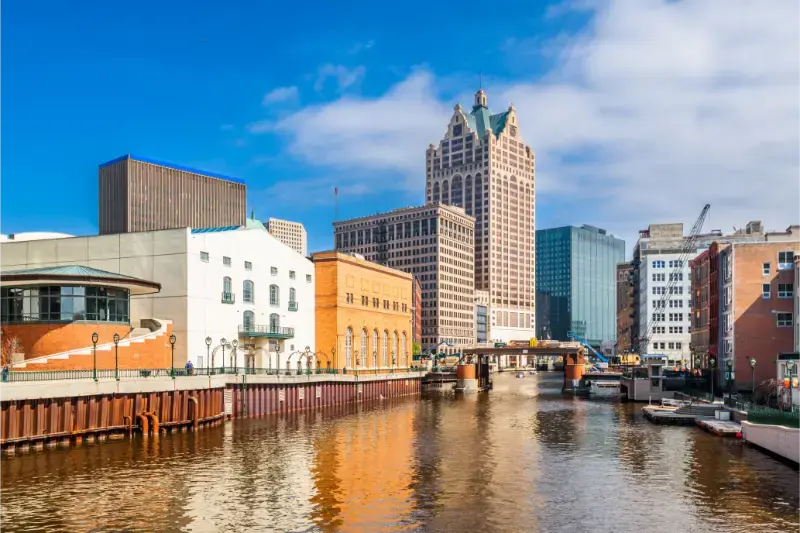
Downtown minimizes logistical friction. It is convenient for the RiverWalk, theater district, downtown architecture and access toward the lakefront. It is also practical if your visit includes events or if you prefer to leave the car parked for long stretches. The trade-off is that event nights and premium central hotels can become expensive.

Historic Third Ward: best blend of character and convenience
The Third Ward is one of the strongest all-round bases because restaurants, Milwaukee Public Market, galleries and converted warehouse architecture are concentrated in a walkable district. It also works well for travelers who want evenings to feel active without relying on a long ride back to the hotel.
East Side and Brady Street: nightlife and neighborhood atmosphere
The East Side is a better fit for travelers who want bars, restaurants and a younger neighborhood rhythm. It remains connected to downtown, but you trade some immediate access to the museum core for a stronger residential and nightlife feel.
Bay View: local food and a slower base
Bay View makes sense for repeat visitors, road trippers with a car and travelers who enjoy independent restaurants and neighborhood cafés. It is not the most efficient base for someone planning to walk to every first-time attraction.
Airport area: practical, not scenic
Airport hotels can make sense for a late arrival, early departure or lower room rate. For a sightseeing-focused stay, however, the savings may disappear once transport time and parking are added. Use the airport area strategically rather than automatically.
Parking and total trip cost
Always compare the total stay cost rather than the headline nightly rate. Downtown parking can materially change the budget. A more expensive central hotel with walkability can sometimes cost less overall than a cheaper outer hotel plus daily parking, rideshares and lost time.
How to plan the visit
For most first-time visitors, Downtown or the Third Ward is the simplest answer. Families may prefer a quieter hotel with straightforward parking, while nightlife-focused travelers may enjoy the East Side. If Milwaukee is the first stop on a wider Wisconsin itinerary, parking and quick highway access matter more than they would on a city-only weekend.
Build each day around one geographic cluster. Group nearby sights, meals and walks instead of crossing the same city or region repeatedly. In outdoor destinations, check the weather and official alerts the evening before. Around Lake Michigan and Lake Superior, wind and temperature can change quickly even when inland forecasts look comfortable. During festivals, football weekends, foliage peaks and school holidays, accommodation can sell out earlier than expected.
Compare current accommodation options and choose a base that matches the actual geography of your itinerary.
Check hotels and staysHow many days do you need?
Two full days are enough for a focused first visit, while three days create room for neighborhoods, slower meals and a seasonal event without rushing. If Milwaukee is part of a statewide itinerary, avoid using it as a base for every distant destination; changing hotels strategically can save hours of backtracking.
Getting around and parking
A car is optional for a short central Milwaukee stay but becomes much more useful once the itinerary includes outer neighborhoods, family attractions or other Wisconsin destinations. If you keep a car downtown, include hotel parking in the accommodation comparison. Walking, local transit and rideshare can cover many central trips more efficiently than repeatedly moving a parked vehicle.
Where to stay and how to choose a base
Choose accommodation for the actual itinerary rather than the lowest nightly rate. In cities, a central base can reduce parking and transport costs. In rural or outdoor regions, being close to the first trail, ferry or scenic road can be more valuable than staying in the largest nearby town. Always compare cancellation terms when weather or seasonal conditions could materially change the plan.
- Check the total price including parking, resort or destination fees where applicable.
- For busy summer and foliage weekends, reserve earlier than you would for an ordinary weekday city stay.
- If the trip includes several regions, use two or three bases instead of returning to the same hotel every night.
- For lakefront and island travel, confirm ferry, cruise or seasonal transport before booking a non-refundable room.
Compare current accommodation options and choose a base that matches the actual geography of your itinerary.
Check hotels and staysFood, breaks and daily rhythm
Wisconsin travel works better when food is part of the route rather than an afterthought. Markets, supper clubs, cheese-focused stops, bakeries and neighborhood restaurants can break up driving or museum-heavy days. Reserve only meals that would be difficult to replace and leave space for spontaneous local stops. On hiking or rural days, carry water and snacks because services can be farther apart than they appear on a map.

Seasonal planning
Summer generally offers the broadest range of lake activities and seasonal businesses, but it also brings the strongest demand. Autumn is excellent for hiking and scenic driving, with color usually developing from north to south rather than peaking statewide at once. Spring can be quiet but muddy or cool, while winter requires a deliberately cold-weather itinerary. Use current official reports rather than relying on fixed historical dates for foliage, snow or marine conditions.
Check current tours, attraction tickets and guided experiences for your dates. Availability changes by season and event calendar.
Common planning mistakes to avoid
- Trying to combine distant Wisconsin regions in a single day simply because they appear close on a small map.
- Treating Lake Michigan or Lake Superior weather as identical to the inland forecast.
- Assuming a famous park, ferry, festival or seasonal attraction will be available without checking the official calendar.
- Booking the cheapest accommodation without adding parking and transport costs.
- Filling every hour with ticketed attractions instead of leaving time for waterfronts, neighborhoods and unplanned stops.
Useful Wisconsin guides to combine with this article
- Milwaukee travel guide
- best things to do in Milwaukee
- Lake Geneva travel guide
Official resources to check before you travel
Opening hours, admission policies, trail conditions, event calendars, ferry schedules and seasonal operations can change. Check the official source again shortly before departure, especially when one attraction is essential to the trip.
A more detailed planning framework
Before finalizing the itinerary, look at the route on a full-size map and calculate realistic door-to-door time rather than highway mileage alone. Add time for parking, meal stops, trailhead congestion and weather changes. Wisconsin travel is particularly sensitive to seasonal demand around lake communities and state parks, so a plan that works effortlessly on a Tuesday can feel very different on a Saturday. Keep one secondary option nearby in case a parking lot fills, a trail closes or lake conditions make the original activity less appealing. This simple backup-plan habit improves the trip more than adding another distant attraction.
For photography and quieter sightseeing, the first and last hours of the public-access day are usually more pleasant than midday, but always respect posted opening times. Families and mixed-age groups should schedule the most important activity when energy is highest and use markets, waterfronts, easy trails or café stops as flexible blocks later. If the destination is part of a longer road trip, pack the car so that water, layers, chargers and day-use items remain accessible without unloading the entire luggage compartment at every stop.
Frequently asked questions
Is this suitable for a first trip to Wisconsin?
Yes, provided you match the topic to your interests and avoid building the entire trip around a single checklist. Use Milwaukee or Madison for an urban anchor, then add a lake, park or smaller community that gives the itinerary a different landscape and pace.
Do I need to book far in advance?
Ordinary weekdays often allow flexibility, but summer weekends, Door County, popular lake resorts, major events and peak foliage periods can require earlier reservations. Limited-capacity tours, ferries and special experiences should be booked before generic attractions that have many alternatives.
Can I do this without a car?
Milwaukee itself can be visited without a car if you stay centrally, but most statewide trips are substantially easier by car. Rural parks, waterfalls, small towns and scenic drives rarely fit well into a public-transport itinerary.
More Wisconsin travel guides
More Wisconsin guides will appear here as they are published.