

Where you stay in Los Angeles changes the trip more than almost any other hotel decision in California. Two properties can have the same nightly rate and completely different real cost once you add parking, traffic and the time spent crossing the city.
There is no single “best neighborhood” for every visitor. The right base depends on whether your priority is beaches, museums, nightlife, Hollywood, Universal Studios, Downtown events or simply minimizing daily transfers. This guide compares the most practical areas for first-time visitors and explains who each one suits.
Compare available accommodation for your dates, budget and preferred location before you finalize your route.
In this guide
- At a glance
- West Hollywood
- Santa Monica
- Hollywood/Los Feliz
- Downtown
- Beverly Hills
- Venice
- South Bay
- Universal City
- LAX
- Parking
- Without a car
- Traveler types
- Split stay
- Read the hotel map
Best Los Angeles areas at a glance
| Area | Best for | Main tradeoff |
|---|---|---|
| West Hollywood / Beverly Grove | Central first-time base, dining, nightlife, museums | Not on a Metro rail line everywhere; parking can be costly |
| Santa Monica | Beach, walkability, relaxed evenings | Far from Hollywood/DTLA and inland attractions |
| Hollywood / Los Feliz | Griffith, Hollywood, Universal access | Touristy pockets; exact block matters |
| Downtown LA | Events, museums, rail connections, historic districts | Atmosphere varies block by block |
| Beverly Hills | Upscale hotels, shopping, polished environment | Expensive; not ideal for every attraction |
| Venice / Marina del Rey | Coastal lifestyle, beach-focused trips | Long transfers to central/east LA |
| South Bay | Local beach towns, airport access | Poor base for classic city sightseeing |
| Universal City | Theme-park priority | Limited reason to stay if Universal is only one day |
West Hollywood and Beverly Grove: best all-round first-time base
West Hollywood and Beverly Grove are strong compromises because they sit between Hollywood, Beverly Hills, the museum corridor and much of the Westside. Restaurants and nightlife are abundant, and you can build several days without constantly returning to a freeway.

The weakness is rail coverage: depending on the exact hotel, you may rely on buses, rideshare or a car. That is not necessarily a problem if your itinerary is neighborhood-based. Check parking charges before booking because a seemingly reasonable room can become expensive once nightly parking is added.
Santa Monica: best for beach and walkability
Santa Monica is one of the easiest Los Angeles bases to enjoy without a car every hour. The beach, pier, restaurants, shopping and Metro E Line are close together, and evenings are simple after a long sightseeing day. It is especially attractive for families and travelers who want the California coast to feel central to the trip.
The tradeoff is geography. Hollywood, Griffith Park and Downtown are far enough away that several consecutive cross-city days can become tiring. Santa Monica is best when at least one or two of your sightseeing days remain on the Westside/coast.
Hollywood and Los Feliz: best for Griffith, Universal and first-time icons
Staying near Hollywood can make sense if Griffith Observatory, the Hollywood Sign, Walk of Fame, theaters and Universal Studios are major priorities. Metro rail also helps with connections to Downtown and Universal.
The key is choosing the exact micro-location. Hollywood Boulevard changes quickly from block to block, and being directly beside a famous attraction does not automatically produce the best neighborhood experience. Los Feliz offers a more residential feel while keeping Griffith Park close.
Downtown Los Angeles: best for events, culture and transit-oriented trips
Downtown can be an efficient base for concerts, sports, conventions, The Broad, MOCA, Little Tokyo, the Arts District and historic districts. Union Station and multiple rail lines create strong connections compared with many parts of the city.
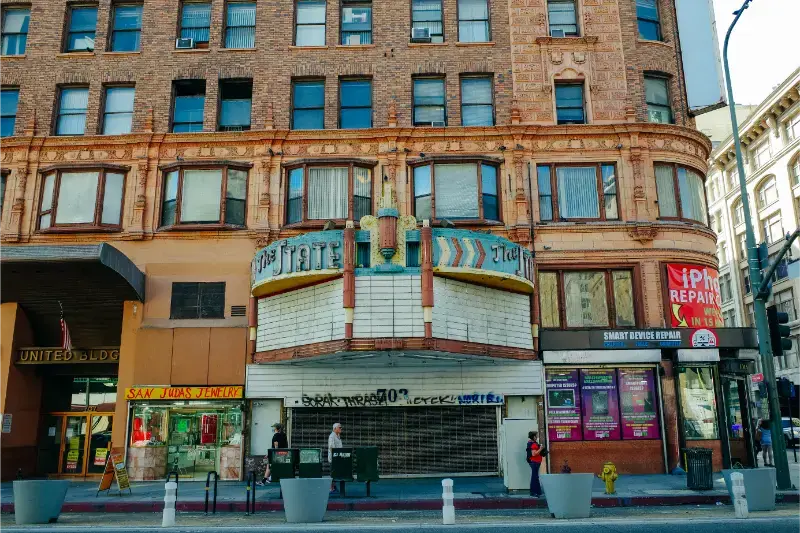
Downtown is not a universal first-time recommendation because street atmosphere and convenience vary significantly by block. Choose a well-reviewed property near the specific venues and transit you plan to use rather than booking based only on the “Downtown” label.
Beverly Hills: best for upscale stays and a polished central location
Beverly Hills offers luxury hotels, clean streets, high-end shopping and relatively central access to the Westside and museum areas. It suits travelers who value hotel experience and are comfortable paying more for it.
It is not necessary to stay here to visit Rodeo Drive, and budget travelers generally get better value in adjacent neighborhoods. The location can still be useful when your trip focuses on West LA rather than Downtown or the beaches.
Venice and Marina del Rey: best for a coast-first trip
Venice places you inside a distinctive beach culture, while Marina del Rey is calmer and often more resort-like. Both work well for travelers who want morning beach walks, cycling, coastal restaurants and easy access to Santa Monica.
They are poor choices if every day involves Hollywood, Pasadena, Downtown or Universal. Choose them because you want the coast—not because the map makes Los Angeles look smaller than it is.
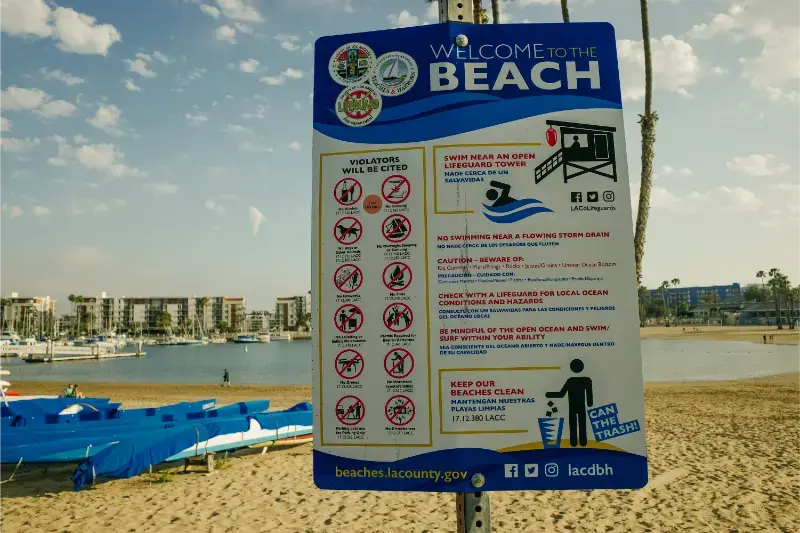
South Bay: Manhattan Beach, Hermosa Beach and Redondo Beach
The South Bay beach cities feel more local and less tourist-dense than Santa Monica and Venice. Manhattan Beach is polished and walkable; Hermosa has a lively beach-town feel; Redondo offers a broader waterfront. They also sit relatively close to LAX.
For a repeat visitor or a beach-first stay, they can be excellent. For a first trip built around Hollywood, museums and Griffith, the daily commute is the problem.
Universal City: stay here only if the park is central
A hotel near Universal Studios Hollywood is useful for families or fans planning one or two intensive park/studio days. It eliminates a stressful early drive and makes returning to the room easier.
If Universal is only one attraction in a four-day city trip, a more central base often makes better overall sense. Consider splitting hotels only if the park is truly a major part of the vacation.
What about staying near LAX?
Airport hotels are useful for a very early flight, late arrival or one-night stopover. They are not good sightseeing bases for several days. Saving money on the room can be erased by rideshare costs, parking, traffic and the feeling that every day starts with a commute.
Do you need parking at your hotel?
If you rent a car, verify the hotel’s current parking cost before booking. Valet-only properties can add a substantial nightly charge. In some neighborhoods, you may be able to stay car-free for part of the trip and rent only for Malibu, the South Bay or the onward California road trip.
Where to stay without a car
Prioritize direct rail access and the ability to walk to food. Santa Monica near the E Line, Hollywood near B Line stations and Downtown near major rail hubs are among the most straightforward options. West Hollywood can still work car-free with buses/rideshare, but the itinerary should be designed around nearby clusters.
The 2026 transit expansions make this strategy more realistic than older LA advice suggests, particularly for airport connections, Mid-Wilshire and rail-linked attractions.
Compare accommodation: compare hotels and other stays on Booking.com.
Best area by traveler type
| Traveler | Area to consider |
|---|---|
| First visit, balanced itinerary | West Hollywood / Beverly Grove |
| Beach-focused couple | Santa Monica or Venice |
| Family with Universal priority | Hollywood/Universal City |
| Museums + nightlife | Beverly Grove / West Hollywood |
| Event/convention trip | Downtown near venue |
| Luxury | Beverly Hills or high-end West Hollywood |
| Repeat visitor seeking local beach feel | Manhattan Beach / Hermosa Beach |
Should you split your Los Angeles stay?
Most travelers should not change hotels during a three- or four-night LA stay. The packing and check-in time rarely compensates for the driving saved. A split can make sense for five or more nights when the trip has two distinct halves—for example, three nights central plus two nights by the beach, or a city stay followed by Disneyland in Anaheim.
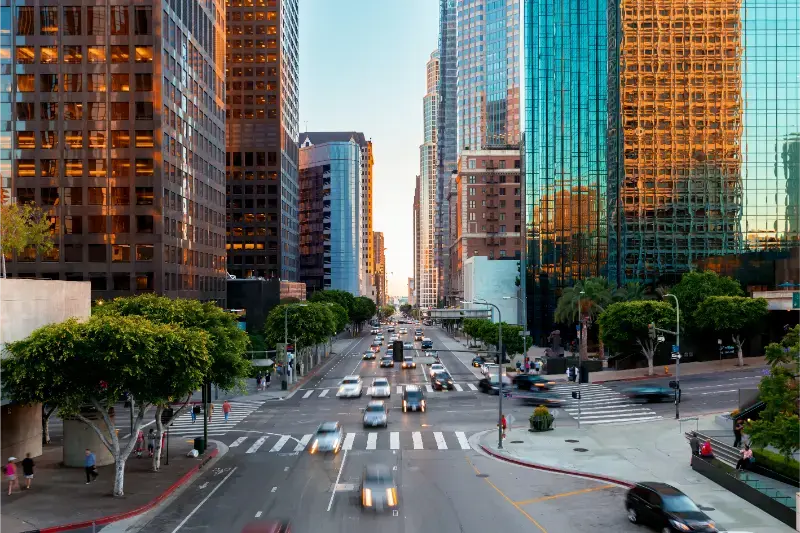
Booking mistakes to avoid
- Choosing a hotel by distance from “Los Angeles center” rather than your actual attractions.
- Ignoring parking fees and resort/destination charges.
- Booking Anaheim as a cheap LA base when Disneyland is not your main focus.
- Staying at LAX for multiple sightseeing days.
- Changing hotels after one or two nights without a strong geographic reason.
- Assuming every area with a famous name is pleasant on every block.
- Not checking late-night transport options after concerts or sports events.
How to read an LA hotel map before booking
Open a map and pin the three or four places you care about most. Then look for a hotel that reduces the average transfer, not one that appears “central” to the entire county. Check whether the nearest Metro station is realistically walkable, whether the hotel has restaurants nearby for tired evenings, and whether your route back at night feels practical.
For car-based stays, look at freeway access but do not assume a hotel directly beside a freeway is pleasant on foot. For car-free stays, proximity to a rail line and everyday food matters more than being a few miles closer to an attraction you will visit once.
Official planning sources
- Discover Los Angeles — official neighborhood and visitor information
- LA Metro — current public transportation network and service
Keep planning California
Once you choose a base, build your days with the Los Angeles travel guide, Best Things to Do in Los Angeles and 3-day itinerary.
When two hotels are otherwise similar, choose the one that simplifies most of your days—even if the nightly rate is slightly higher. In Los Angeles, saving time and unnecessary cross-city drives can be worth more than a small difference in room price.