

Redwood National and State Parks protect some of the tallest trees on Earth, but the destination is more than one forest with one entrance. The redwood coast is a patchwork of national and California state park lands stretching across far Northern California, with old-growth groves, wild beaches, elk meadows, scenic drives and trailheads spread over a surprisingly large area.
That geography changes how you should plan. A successful first trip is usually built around two or three nights, one northern or central base, and a short list of high-value walks rather than an attempt to visit every grove. This guide explains where to stay, which permits matter, how Fern Canyon works and how to connect the redwoods with San Francisco, Mendocino or southern Oregon.
Quick planning: Redwood National and State Parks
| Question | Practical answer |
|---|---|
| How long? | 2 full days is a strong first visit; 3 days allows a slower coast-and-forest rhythm. |
| Best season? | Late spring through early fall for easier logistics; winter is lush but wetter and stormier. |
| Best bases? | Crescent City for the north; Trinidad/Arcata for central and southern access. |
| Reservations? | Some specific trailhead/parking areas require free permits even though general park entry is not a timed-reservation system. |
| Car needed? | Yes. The park units and trailheads are widely dispersed. |
What exactly are Redwood National and State Parks?
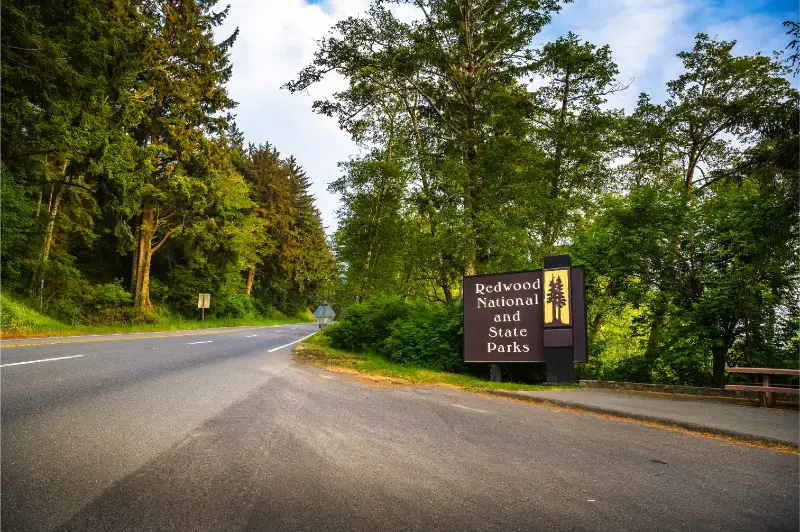
The protected landscape combines Redwood National Park with Prairie Creek Redwoods, Del Norte Coast Redwoods and Jedediah Smith Redwoods state parks. For visitors, the boundaries matter less than understanding that different highlights sit many miles apart. Jedediah Smith has extraordinary river-and-grove scenery near Crescent City; Prairie Creek combines old-growth forest, elk meadows and access toward Fern Canyon; the southern units connect naturally with Trinidad and Arcata.
Do not search for a single ‘Redwood National Park entrance’ and assume everything radiates from it. Build the itinerary around specific groves and trailheads instead.
Tall Trees Grove: beautiful, quieter and permit-controlled
Tall Trees Grove offers a more deliberate old-growth experience, but access is intentionally limited. The National Park Service requires a free reservation for the Tall Trees Trailhead year-round. The permit controls vehicle access to the small parking area; it does not turn the hike into an easy sightseeing stop.
The trail is a real outing with elevation change and time commitment. Choose it if you want a quieter forest experience and are comfortable giving much of a day to one hike. Visitors with only one full day may get more variety from Prairie Creek, Newton B. Drury Scenic Parkway and shorter grove walks.
Fern Canyon and Gold Bluffs Beach: understand the seasonal permit
Fern Canyon is one of the region’s most photographed walks, where walls covered in ferns create a narrow green corridor. Access through Gold Bluffs Beach Day-Use Area is permit-controlled during the busiest part of the year. NPS currently requires a free parking/day-use reservation from May 15 through September 15, including access to the Fern Canyon trailhead by that route.
You can still reach the broader area by alternative hiking routes, but that is a different plan with more distance. If Fern Canyon is a must-do, secure the appropriate permit and verify road conditions, especially after heavy rain.
Prairie Creek Redwoods: the best all-round first-timer area
Prairie Creek Redwoods State Park is often the most versatile first-day choice because it combines old-growth forest, meadows where Roosevelt elk may appear, scenic drives and access toward the coast. The Newton B. Drury Scenic Parkway is slower and more atmospheric than simply staying on US 101.
Several trails begin close to the parkway and visitor facilities, letting you tailor the day to weather and energy. This flexibility is valuable on the North Coast, where rain, fog and changing conditions are part of the landscape rather than an exception.
Jedediah Smith Redwoods: river, huge trees and a more remote feel
Near Crescent City, Jedediah Smith Redwoods State Park protects spectacular groves along the Smith River. The forest can feel denser and more primeval than many roadside stops farther south. Howland Hill Road is famous for its narrow forest drive, but it is partly unpaved and conditions or vehicle suitability should be checked before treating it as a guaranteed route.
If you stay in Crescent City, pair a grove walk with Smith River scenery and a coastal stop. This creates a richer day than driving from trailhead to trailhead looking only for the tallest possible tree.
The coast is half the experience
The redwood region meets a rugged Pacific coast of sea stacks, headlands, dark sand and driftwood beaches. Gold Bluffs Beach, Enderts Beach and coastal viewpoints near Crescent City add open horizons after hours beneath the canopy. Weather changes quickly, and beaches can have powerful surf and sneaker waves, so treat them as scenic environments rather than automatically safe swimming beaches.
Fog is not a failed weather day here. It often makes the forest more atmospheric, while clearer breaks may arrive later on the coast. Keep one flexible viewpoint or beach stop that can move between days.
Roosevelt elk: where and how to watch
Elk often appear around Prairie Creek and nearby meadows. Watch from a long distance, never approach for photographs and never place yourself between an animal and its escape route. Rutting and calving periods can make elk especially unpredictable. A telephoto lens is the right tool; walking closer is not.
Best hikes for a first visit
- Lady Bird Johnson Grove: a classic moderate-length introduction to redwood forest near the national park area.
- Prairie Creek / Foothill trail combinations: flexible old-growth walking with options to adjust distance.
- Fern Canyon: short but distinctive; expect wet feet or slippery conditions depending on season.
- Stout Grove: one of the signature Jedediah Smith experiences, especially beautiful in soft light.
- Tall Trees Grove: a longer permit-controlled hike for travelers prioritizing solitude and scale.
Where to stay: Crescent City, Trinidad or Arcata?
Compare available accommodation for your dates, budget and preferred location before you finalize your route.
Crescent City is the practical base for Jedediah Smith, northern coast access and travelers continuing to Oregon. Trinidad is smaller and scenic, well placed for Prairie Creek and coastal stops. Arcata/Eureka offers the widest range of restaurants and services but adds driving to northern trailheads.
For a two-night stay, choose one base rather than changing hotels. For three or four nights, a split between Crescent City and Trinidad/Arcata can reduce backtracking.
Compare accommodation: compare hotels and other stays on Booking.com.
A realistic 2-day redwood itinerary
| Day | Morning | Afternoon |
|---|---|---|
| 1 | Prairie Creek old-growth walk + elk meadows | Newton B. Drury Parkway, coastal stop or Fern Canyon if permitted |
| 2 | Jedediah Smith / Stout Grove | Smith River + Crescent City coast, or Tall Trees if reserved |
If you are based farther south, reverse the order and reduce the northern section rather than forcing a long late-night drive.
How to include the redwoods in a California road trip
The far North Coast is not a casual day trip from San Francisco. It deserves its own leg, often combined with Mendocino, Sonoma County or southern Oregon. From San Francisco, build at least one intermediate stop or accept a long transfer day. A redwood trip works especially well after wine country because the scenery becomes progressively wilder as you travel north.
For a wider route, return to the broader California travel guide.
Official planning resources
- NPS permits and reservations — Tall Trees, Fern Canyon/Gold Bluffs, camping and special-use permits.
- NPS current conditions — trail, road and area alerts.
- NPS plan your visit — maps, hiking and visitor centers.
Weather, rain and what to pack
The North Coast can be cool and damp even when inland California is hot. Pack a waterproof layer, shoes that tolerate mud, and a warm mid-layer for mornings and beaches. Summer fog is normal. Instead of waiting for perfect blue sky, use brighter periods for the coast and embrace softer conditions in the forest.
Protect camera gear and electronics from moisture, but do not let rain cancel the trip automatically. Redwood forest often looks exceptional in wet weather as long as roads, rivers and trail conditions remain safe.
Common planning mistakes to avoid
The most common mistake is trying to combine too many distant California experiences because they appear on the same state map. Leave buffer time for traffic, weather, parking and spontaneous stops. Reserve only the activities that truly require a fixed time, then protect some unscheduled hours around them.
A second mistake is treating conditions as static. Coastal roads, mountain routes, wildfire restrictions, beach access and attraction operating hours can change. Recheck official sources shortly before travel and again on the morning of any weather-sensitive or road-dependent day.
Driving the Redwood Highway
US 101 is the backbone of the redwood coast, but many of the best forest experiences sit on slower scenic roads. Allow extra time for Newton B. Drury Scenic Parkway, coastal detours and trailhead roads. Narrow or unpaved roads should be checked for current conditions before entering with large RVs or low-clearance vehicles.
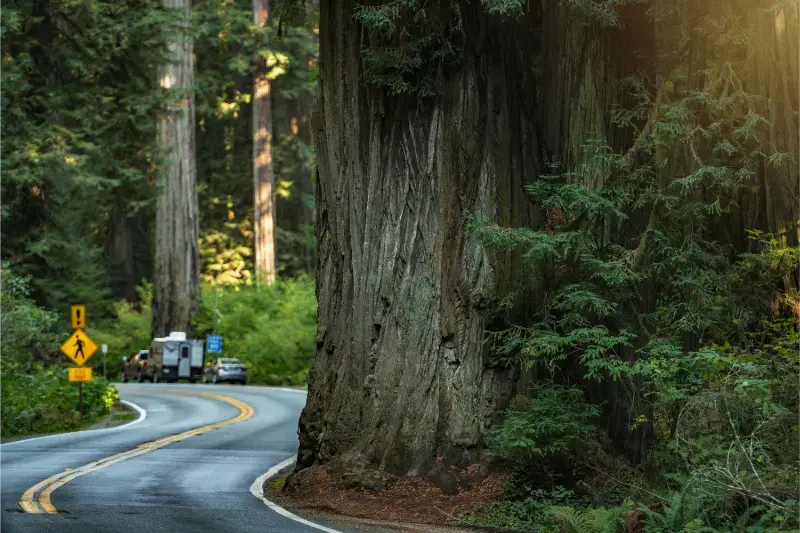
Fuel is available in the region, but remote sections feel more isolated than the map suggests. Top up before a long day, carry snacks and download offline maps. The goal is to remove small logistical pressures so that an unexpected elk sighting or foggy beach walk can become part of the day rather than a problem.
Redwoods with children
The forest works exceptionally well for families because the visual impact is immediate. Children do not need to hike ten miles to understand the scale of the trees. Combine a short grove walk with a beach, river stop or visitor center and keep one longer hike only if everyone is enthusiastic.
Wet roots, slippery bridges and uneven forest surfaces are more important than mileage when judging difficulty. Bring spare socks and shoes that can get muddy; keeping children comfortable after a damp walk can save the rest of the day.
Continuing north beyond Sonoma? Our Mendocino travel guide covers the next major North Coast stop.