

Your first New York subway journey usually becomes easier at the moment you stop following colors and start following a train’s letter or number. Know the service you need, the direction it is traveling and the stop where you will get off. Those three details do more for a relaxed trip than memorizing the whole map.
The subway is useful for long jumps across the city and for returning to your hotel after a day on foot. It is less useful when a short walk avoids a large station, or when the accessible route requires a lengthy detour. A little familiarity at the beginning makes the next few journeys much easier to follow.
The 2026 fare, without an unnecessary pass purchase
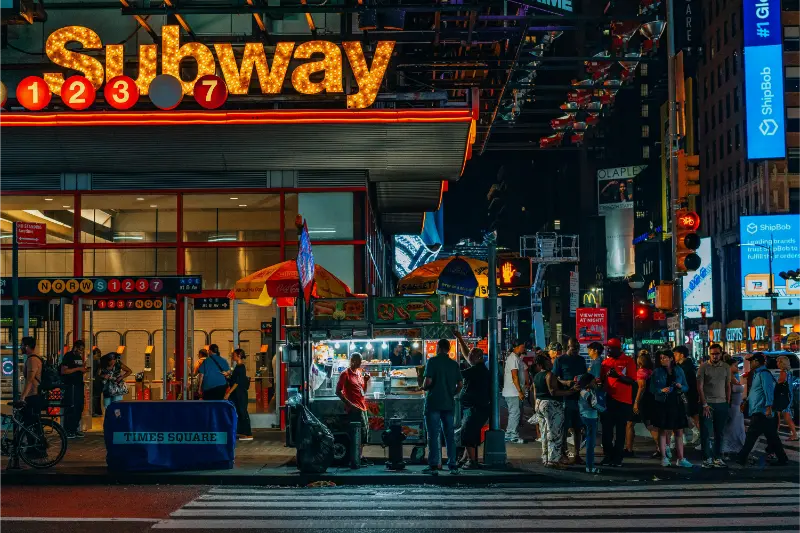
The ordinary subway fare is $3 as checked in October 2026. Paying contactlessly with a bank card, phone, wearable or reloadable OMNY Card is the usual starting point. You do not need to create an account or buy a sightseeing pass to use it. A reloadable OMNY Card is also available if you prefer to set aside a travel balance in advance.
With the same payment method throughout, ordinary subway and local-bus spending is capped at $35 over a seven-day period beginning with the first tap. Spend less and you pay less. The calculation belongs to an individual rider using that particular payment method; it is not a household allowance. AirTrain, commuter rail and ferries have separate arrangements and should not be included in this subway budget.
Use the MTA fare page for current categories and eligibility. Reduced fares have eligibility and enrollment arrangements to check before using them. A single-ride ticket is a different product with different transfer conditions. For an ordinary multi-day visit, understanding how your own contactless payment works is more useful than shopping for a pass you may not need.
Keep each traveler's payment method consistent
A physical card and a digital version of that card are not interchangeable for fare-capping purposes. Nor should you switch freely between a phone and a watch and expect one continuous tally. Choose a workable method for each paying person at the beginning of the trip, then keep using it. That also makes it easier to recognize your own transactions later.
The MTA's tap-and-ride instructions warn that a card’s first-ever tap cannot immediately be passed back to pay for the rest of a group while the initial transaction is being approved. On later journeys, group payment is possible within the stated limits, but extra group taps do not give everyone an individual cap. Separate payment methods are the clearer arrangement for several adults traveling together over multiple days.
At the turnstile, tap once and watch for confirmation before moving through. Keep your wallet closed enough that several contactless cards are not presented together. If the reader refuses payment, pause and check the message instead of repeatedly trying different cards without knowing which one worked. If a payment problem continues, contact the official support service and keep your account details private.
MetroCard advice from an old guide may be out of date
MetroCards have not been available to buy or reload since January 1, 2026. The MTA’s current guidance still explains how to spend valid remaining value during the transition and says the final acceptance date will be announced. That is not a reason for a new visitor to look for an old seven-day MetroCard product.
If you already possess a card, check the current rules and its validity directly. If you are arriving without one, plan around OMNY. Be cautious with articles, videos or photographs showing older vending-machine menus: a transport explanation can look familiar while describing a payment choice that is no longer sold. The current MTA instructions should decide the practical details.
Read the station entrance before going down the stairs
Some entrances serve only one direction, while others lead to a concourse where you can choose. Look at the signs at street level. In Manhattan, uptown generally means north and downtown means south; signs may also name the borough or final destination. Entering on the correct side is easier than discovering after payment that the opposite platform is not connected inside the fare area.
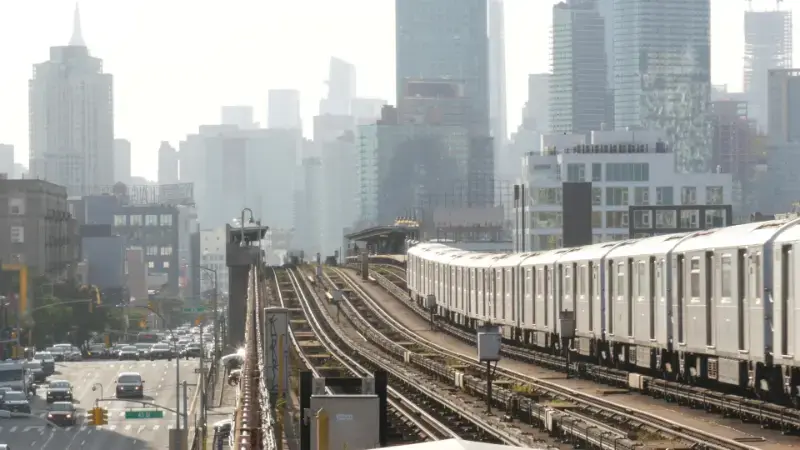
The station name can describe a large complex with several services and lengthy passageways. Save the entrance that suits your route, not just the broad station label. If you are meeting someone, specify the street corner or a clearly identified exit. “Times Square station” leaves plenty of room for two people to be in the same complex without finding each other.
Letters and numbers matter more than colors
Colors group services sharing a Manhattan corridor; they do not mean every train goes to the same places. Read the route identifier and destination on the platform and arriving train. A correct color with the wrong letter can still take you away from your intended stop, particularly where services branch into different boroughs.
Start with the complete instruction from a current journey planner, then use platform signs to confirm it. If the advice says a particular letter, do not substitute another because it appears to follow the same colored line for a while. As you get comfortable, the map will make these patterns clearer. On the first few trips, there is little benefit in improvising a different connection to save a minute.
Local and express: check whether your stop is served
An express train can be useful for traveling farther, but it can also carry you past a local stop. The important question is not whether express is faster in general. It is whether that particular service, in that direction and at that time, calls at your destination. Use the stop list and announcements along with the map.
If you pass your stop, get off at a suitable later station and find the appropriate return service. Avoid stepping onto the first opposite-bound train without checking whether it will also skip the stop you need. Staying calm and taking one clear correction is easier than making several hurried changes. Leave extra time before timed tickets so an ordinary navigation mistake does not spoil the morning.
Transfers: stay inside unless the instructions say otherwise
Changing subway trains within the connected paid area normally does not require another fare. Follow signs for the next service before approaching an exit. A station transfer may involve stairs, a long corridor or a different level, so “one transfer” does not always mean a few steps across a platform.

There are specific recognized out-of-system transfers, but walking out of an arbitrary station and entering another is not automatically free. Check the official conditions whenever a transfer requires leaving the fare area. Subway-to-bus and bus-to-subway transfers also depend on the fare product and consistent payment. Our bus guide explains where the street-level option can simplify a journey.
Weekend and late-night service deserves a fresh check
The subway operates around the clock, but that does not mean every service runs its daytime route all night. Planned maintenance can change stopping patterns, platforms and connections, especially at weekends. A route that worked on Tuesday may need a different journey on Sunday. Check the MTA's live service information shortly before departure.
Treat a screenshot as a useful reference, not a guarantee that later conditions are unchanged. Read notices at the station and listen for announcements after boarding. When a change is unclear, a station agent or Help Point is more useful than following another traveler who may be making a completely different trip. For the airport, build in enough margin to accommodate a revised route.
Stairs, elevators, luggage and children
An accessible station symbol is the beginning of an accessible journey plan. Check the exact entrance, platform connection and current elevator status at both ends. Nearby stations with similar names may provide different access. If an essential elevator is unavailable, a bus or a different station may offer a better solution than arriving at the stairs and trying to solve it there.
With luggage, choose manageable bags and let passengers leave the train before boarding. Keep the doorway clear and position bags where you can see them without occupying extra seats. Up to three children under 44 inches tall can travel free with a fare-paying adult on the subway under MTA rules. Height, supervision and a practical way through the gate matter more than assuming a broad age-based child discount.
Small habits that make the ride more comfortable
Have your route and payment ready before reaching the gate, then move away from it when you need to consult a map. On the platform, stand back from the edge and keep children beside you. If something falls onto the tracks, leave it and tell staff. Inside the train, hold on, keep belongings close and give priority seats to riders who need them.
There is no useful blanket promise that every journey will feel identical. Choose a carriage where you feel comfortable, remain aware of your surroundings and change plans if necessary. After a late evening, a straightforward route or a taxi may be worth the additional cost. The aim is to make a sensible choice for your group, without treating one mode as compulsory for every trip.
Build the subway into a better sightseeing day
Use a train for the long gap, then explore a neighborhood on foot. Constantly entering and leaving stations for tiny distances can consume more effort than a pleasant walk. A day with one area in the morning and another later is usually easier to follow than one that zigzags repeatedly across the map.
When selecting accommodation, check the actual station walk and route to the places you care about, not only the number of nearby colored lines. Our New York accommodation guide helps connect that choice with the rest of the trip. A comfortable base and a few familiar journeys will soon matter more than knowing every subway service by memory.
Save enough information to navigate when the phone is awkward
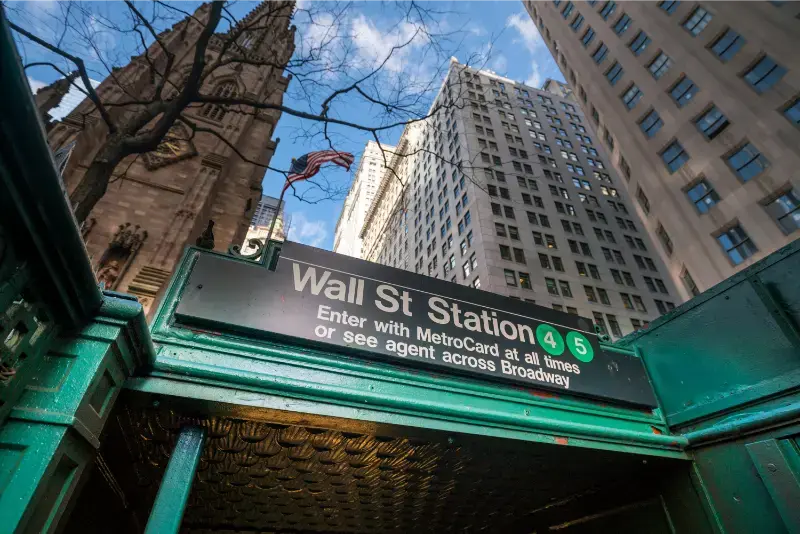
Before leaving your hotel, save the destination address, train identifier, direction and exit street in a form you can consult easily. A downloaded map or screenshot is useful when connectivity is poor, provided you still check current service before departure. Keep enough battery for the return and for any device you intend to use as payment. Do not make a whole group’s journey depend on one nearly empty phone.
At your destination, pause inside the station where you are not blocking movement and look at the exit signs. Choosing the correct street corner can avoid another road crossing or a walk around a large block. Once outside, take a moment to find your direction before setting off. Many apparent subway mistakes are simply a correct train followed by the wrong final walk.
Compare the options
| Choice | What to expect | Planning detail |
|---|---|---|
| Fare | Ordinary subway $3 | Other transport may have separate charges |
| Individual cap | $35 in one seven-day period | Keep one consistent payment method |
| Train choice | Letter or number and destination | Color alone does not identify service |
| Access | Entrance, platforms and elevators | Check the entire route on the day |
Find your bearings
Open the map in a new tab · Orientation map only; use official maps and current notices for routes and entrances.
Estimate ordinary subway and local-bus spending
For paying full-fare travelers who each use their own consistent payment method, all within one seven-day cap period. Enter the same expected number of chargeable journeys for every person; eligible free transfers do not add a journey. Excludes express buses, AirTrain, railroads, ferries and reduced fares. Start a separate calculation for another cap period.
At current ordinary fares: group estimate = travelers × the smaller of ($3 × chargeable journeys per traveler) and $35. Ten journeys each cost $30 per traveler; twelve reach the $35 cap. This model does not combine several people’s fares under one card.
Frequently asked questions
Does the $35 cap cover AirTrain and LIRR?
No. The ordinary cap concerns the relevant subway and local-bus travel; airport and railroad products are separate.
Can several people share one individual cap?
No. Additional group taps do not give every rider an individual cap. Separate payment methods make independent caps possible.
Does the subway run all night?
The system operates around the clock, but routes, stopping patterns and connections can change overnight and during works.
Plan the next part of your trip
- Where to Stay in New York City: Best Areas for Every Trip
- New York City Airports Guide 2026: JFK, LaGuardia & Newark
- How to Use Buses in NYC: OMNY, Fares, Stops & Visitor Tricks
Arrange your stay and activities
Some booking links below are affiliate links. We may earn a commission if you book through them.
Compare stays: Manhattan New YorkBrowse New York tours and experiences
Match the location, meeting point and cancellation terms to your itinerary before booking.
Official sources and visitor information
- MTA — subway and bus fares
- MTA — tap and ride, individual fare caps and group taps
- MTA — riding the subway
- MTA — current service and journey planning
- MTA — accessible travel resources
Last updated: October 18, 2026.