

Where you sleep in New York changes the shape of each day. A room near Grand Central makes a Midtown morning feel straightforward; an Upper West Side address might begin with a bakery and a walk toward the park. In Williamsburg, dinner can become the evening’s destination instead of the thing you fit in after returning from Manhattan.
For a first visit focused on the familiar sights, Midtown is a practical starting point. Families who expect to spend time around Central Park should also examine the Upper West Side. Travelers who care most about restaurants and smaller streets may prefer a downtown neighborhood, while Brooklyn and Long Island City deserve a closer look when their actual transport connections suit the itinerary. There is no single area that wins for every trip.
Compare available accommodation for your dates, budget and preferred location before you finalize your route.
The useful question is what you want to do from the hotel, morning and night. Pick several likely outings, check their routes from two or three candidate addresses, and compare the complete stay price. This guide explains the differences between the areas, including the compromises that can disappear behind a flattering room photograph.
Midtown East and Grand Central: a dependable first-visit base
Midtown East suits a trip with several days in Manhattan and a preference for a recognizable transport landmark. Grand Central gives you subway connections and a place that is easy to find again. Bryant Park, the New York Public Library’s main building and Fifth Avenue can fit into walks from the surrounding blocks, depending on the hotel’s exact position.
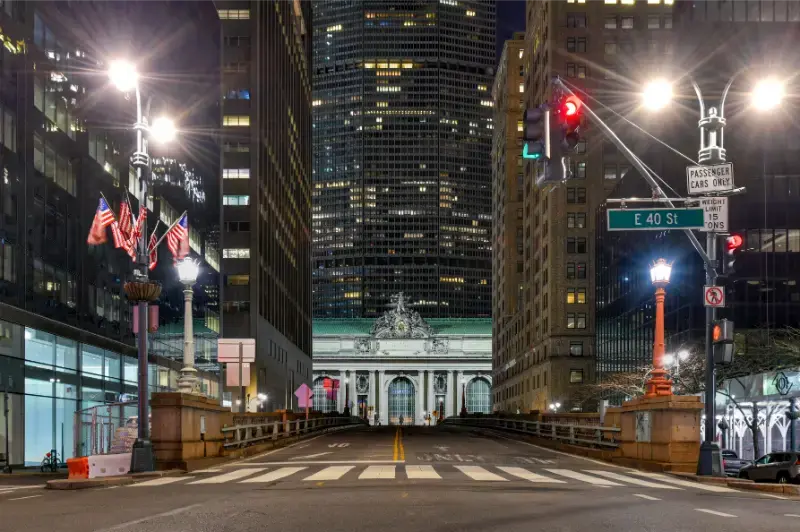
The atmosphere changes from avenue to side street. Lexington and Madison have substantial weekday activity; streets nearer the East River can feel more residential but also sit farther from the subway. Do not assume every listing using the words Midtown East is equally close to Grand Central. Plot the entrance of the property and the station entrance you would actually use with luggage.
Library Hotel, at Madison Avenue and East 41st Street, is one specific option to compare if a smaller, book-themed property appeals. Its published room categories range from a petite room with a full bed to larger rooms and suites. That range illustrates why the category matters as much as the hotel’s name: a couple traveling light and three people sharing a room need different arrangements.
The hotel currently advertises a daily resort fee of $25 associated with amenities including a light continental breakfast. Treat that as dated information and confirm the total on your reservation. A breakfast described on the hotel website is not automatically free of an associated charge. Compare it with another property’s all-in price and the breakfast you would otherwise buy.
Times Square and the Theater District: convenient for late curtains
Staying near the Theater District is especially appealing when Broadway is a priority. You can have dinner, see a show and return without turning the final part of the night into another outing. The location also puts several subway routes within reach, though the closest useful entrance depends on the block and the direction you need.
The tradeoff is the intensity at street level. Around Times Square, crowds, advertising screens and traffic are part of the setting. Some visitors enjoy that arrival every evening; others find it tiring after a long day. A room described as high-floor or interior-facing may change the experience, but neither description is a reliable guarantee of silence. Ask about the specific room location if sleep is a major concern.
Look just beyond the busiest blocks as well as directly around the square. A hotel a little west can suit dinners in Hell’s Kitchen; a position farther north may improve walks toward Central Park. Distances that look small on a map still deserve examination if someone will be walking slowly after a performance or negotiating luggage at a busy hour.
This area makes sense for a short, sightseeing-heavy stay. It is less compelling if most of the planned evenings are in the East Village, Williamsburg or another distant neighborhood. Choose the convenience you will actually use, rather than paying for the famous location simply because it is familiar from photographs.
Chelsea, NoMad and Flatiron: useful middle ground
These neighboring parts of Manhattan offer different settings, so keep the labels separate when comparing addresses. NoMad and Flatiron place you around the middle of the island, with Madison Square Park and the Broadway corridor as useful reference points. Chelsea extends west toward galleries, the High Line and the Hudson, where a hotel can be attractive but farther from some subway routes.
A stay near the central avenues can work well for a visitor dividing time between Midtown and downtown. The days need not begin with a long journey in one direction. Restaurants and casual food options make it possible to have an ordinary meal near the room, which can be welcome after several evenings built around reservations.
For a hotel toward the western edge, check the walk back from the station as carefully as the walk to the High Line. They serve different purposes. A scenic afternoon route does not make every evening transfer equally convenient, particularly in rain. Our transport guide explains how to compare actual subway journeys rather than counting nearby colored lines on a map.
This region is a useful compromise when nobody in the group wants to stay beside Times Square but everyone expects regular Manhattan sightseeing. Examine room dimensions, street exposure and the daily charges closely. A stylish lobby can be enjoyable; enough usable room for suitcases and the people sleeping there is more consequential over a week.
Upper West Side: parks, museums and an easier family rhythm
The Upper West Side is a strong candidate for travelers who want neighborhood routines around the larger attractions. Central Park lies to the east and Riverside Park to the west. Between them are residential streets, grocery shops and places for breakfast, giving a longer stay a rhythm beyond entering and leaving a hotel tower.
This is particularly useful when the American Museum of Natural History is high on the list. You can give the museum a fresh morning and leave a nearby park interval afterward. It also helps families who expect an afternoon rest: returning to the room is more plausible when the day’s principal activity is nearby, rather than at the opposite end of Manhattan.
Hotel Beacon, at 2130 Broadway, is an example to investigate for its apartment-style accommodation and larger suite categories. The hotel’s own site currently states that it does not charge a facility or resort fee. Verify the exact room layout, kitchen facilities, bed arrangement and final quote for your party; the existence of a two-bedroom suite does not mean that every listed room has those features.
The main compromise is the journey to downtown and the harbor. A stay here does not put the Statue of Liberty departure point around the corner. Group southern-Manhattan sights into a deliberate day, and avoid scheduling a distant early admission immediately after a late evening. The neighborhood works best when its parks and practical services are part of the reason for choosing it.
Upper East Side: Museum Mile and a more residential setting
Across Central Park, the Upper East Side suits art-centered trips and travelers who enjoy a less theater-focused evening. The Metropolitan Museum of Art gives the western edge a major destination, while the streets farther east have their own food shops, restaurants and residential character. A morning here can begin with a short neighborhood walk rather than a crowded landmark circuit.
The exact avenue matters. A property close to Fifth Avenue can be convenient for the museum and park but farther from the subway than a visitor expects. Lexington Avenue and Second Avenue serve different rail corridors. Compare the line useful for your plans and include the walk at both ends, especially if someone cannot comfortably manage repeated long blocks.
This can be a rewarding base for a longer visit with several museum days. It is less obviously efficient for a three-night trip focused on downtown, Brooklyn and Broadway. You can still make those journeys, but they should be choices you have allowed for rather than surprises discovered after checking in.
Before paying a premium for a residential-sounding address, ask what the room itself provides. Floor, exposure, connecting-room availability and usable space remain property-specific. A neighborhood’s reputation cannot tell you whether your room faces construction, whether the elevator serves the room you have booked or how well a particular layout suits an older traveler.
Greenwich Village, the West Village and the East Village
These areas appeal when the streets and evening meals are central to the visit. Around Washington Square, the street pattern and university life create a different feeling from Midtown’s commercial avenues. The West Village offers smaller streets and restaurants; the East Village has its own lively dining and nightlife, with considerable variation from one block to the next.
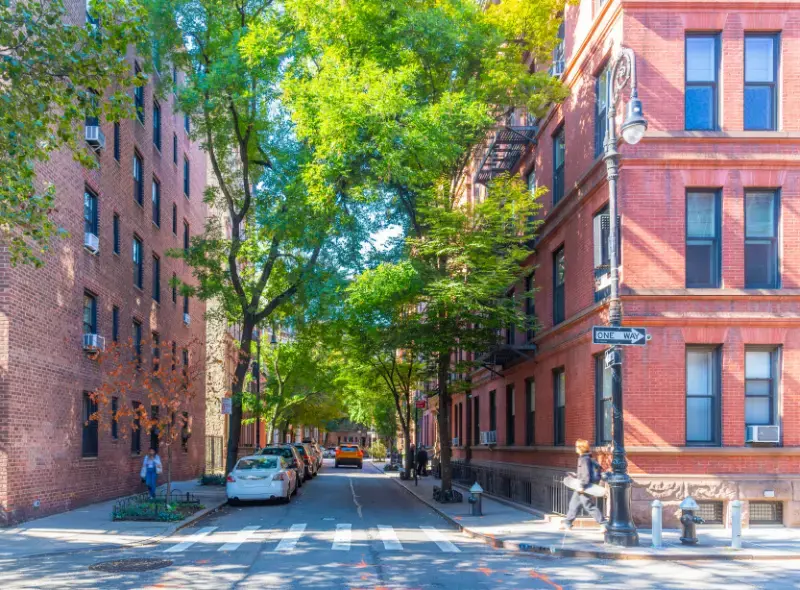
For couples or returning visitors, that can be an excellent reason to stay downtown. A walk after dinner may be the best part of the evening, and the room becomes a nearby place to return to. You can enjoy familiar Manhattan landmarks during the day without asking the hotel district to reproduce their atmosphere at night.
Hotel choice can be narrower here than in the large Midtown clusters, and the word Village does not guarantee a large, quiet room. Examine the actual bed size and whether the bathroom is private. In an older building, ask about steps, elevators and cooling arrangements. Bars, deliveries and weekend activity can affect a room even on a street that looks peaceful at lunchtime.
Use the exact subway route before treating the whole downtown area as equally connected. A hotel near an effective interchange can support a busy itinerary; another address several avenues away may require more walking every day. This is a good place to pay for the setting when you intend to enjoy it, rather than choosing it as an assumed budget alternative.
Lower Manhattan: harbor days and historic streets
The Financial District and nearby lower-Manhattan areas can work particularly well for a trip with the islands, the waterfront and the Brooklyn Bridge in view. The buildings and street pattern tell a different city story from Midtown. Early in the day, you can step into the harbor end of New York before undertaking a cross-town journey.
Choose this base if the Statue of Liberty and Ellis Island visit is a major priority, or if you enjoy the possibility of waterfront walks around the southern tip of Manhattan. One World Observatory, the 9/11 Memorial area and connections toward Brooklyn provide other reasons to spend time here. These are separate visits, and a well-placed room does not make all of them short stops.
Evening atmosphere varies considerably between an office-dominated block, a residential stretch and the Seaport area. Check current dinner choices around the actual property, including opening days. For a short stay with several Broadway nights, compare the return journeys before deciding that the lower room quote is the better value.
Connections also need names, not just symbols. Subway, PATH and ferry services are different systems with different fares. A nearby boat landing may be pleasant without being the quickest route to the attraction you have booked. For Newark arrivals in particular, distinguish Newark Penn Station in New Jersey from New York Penn Station in Manhattan when evaluating the transfer.

Brooklyn: choose a neighborhood rather than the borough label
Brooklyn is too large to treat as one hotel district. Downtown Brooklyn and the Boerum Hill area have a different relationship with Manhattan than Williamsburg does. A waterfront property near Brooklyn Bridge Park provides a different daily walk again. Begin with the neighborhood you want to enjoy, then examine its useful station and the trip back from your likely evening plans.
Williamsburg is appealing if restaurants, shops and spending time in Brooklyn are part of the holiday. Wythe Hotel, at 80 Wythe Avenue, is a specific option in a preserved industrial building, with several room and loft categories. Its restaurants are another reason to examine the setting, but a meal, a room and a skyline-facing category are separate purchases and choices.
Do not book a Williamsburg address on the assumption that Brooklyn Bridge Park is a short stroll from the lobby. Both are Brooklyn waterfront destinations, but the geography between them matters. Likewise, a hotel close to the L train supports different direct journeys from one near the routes through Downtown Brooklyn. Our Brooklyn guide helps turn those distinctions into a realistic day.
Brooklyn can offer a memorable base for a returning visitor or a mixed Manhattan-and-Brooklyn itinerary. It is not automatically cheaper than Manhattan. Compare the same dates and room needs, and include the value of the neighborhood you will actually experience. Staying across the river is rewarding when you are pleased to come back across it in the evening.
Long Island City: compare the connection, not just the skyline
Long Island City is in Queens, across the East River from Midtown. It can be useful for a visitor who finds a suitable hotel near an effective subway connection and wants to compare alternatives to Manhattan. Some properties advertise skyline views, while the western waterfront provides public places to enjoy that perspective without needing to pay for a view from bed.
The district contains several different hotel clusters. An address near Queensboro Plaza, Queens Plaza or Court Square supports a different first walk and set of routes. A property nearer the waterfront may add walking to every subway journey. Check the exact station entrance and the route at the time you expect to travel, including planned weekend changes.
The useful comparison is door to door. A room on the other side of the river with one straightforward train can be more convenient for your plans than a Manhattan room requiring a long walk and a change. It can also be less convenient if your evenings repeatedly finish far downtown. Neither result follows from the borough name alone.
Long Island City is worth examining for longer stays and travelers prepared to use the subway. If you are arriving exhausted with children or substantial luggage, make the airport transfer a separate comparison. Proximity on the map to LaGuardia does not promise a direct train to the hotel. Leave time to explore the waterfront or another part of Queens so the stay adds something beyond a room saving.
Match the room to the people sleeping in it
For families, enter every guest and the correct children’s ages before comparing prices. A low quote for two adults may not describe a permitted or comfortable arrangement for three or four people. Check whether the advertised bed is a full, queen or king, whether a sofa bed is made up, and whether a cot or extra bed can actually fit in that category.
Connecting rooms should be confirmed, not inferred from a request box. If a separate sleeping area is the reason you are paying for a suite, study the plan and ask where the door closes. A larger open room can provide space without providing the separation a family needs when a child goes to sleep earlier.
For a traveler using a mobility device, a generic accessibility label is only the beginning. Discuss the approach from the street, the entrance, elevator, bed clearance and bathroom arrangement for the booked category. Then check the accessible route to transport. An accessible room beside an unusable station connection can still produce a difficult holiday.
Consider practical comfort for everyone: cooling in summer, a manageable walk to breakfast, luggage storage around the flight and a room where bags do not obstruct movement. These details rarely produce the most dramatic hotel photograph, but they influence every morning and every return from sightseeing.
Compare the full stay price before deciding
Use the same dates, occupancy and cancellation conditions in every comparison. Add taxes and mandatory charges, and distinguish a refundable reservation from a prepaid nonrefundable promotion. Breakfast, a view or a higher floor can make the quote different even when the hotel’s name and displayed nightly amount look similar.
The hotel comparison tool below uses your all-in nightly quotes and the ground-transport allowance for each option. Enter mandatory hotel charges within the nightly total once, and include the actual airport and local-transfer expenses you expect. It provides a clear cost difference without pretending to know live hotel rates or placing a cash value on your walking time.
For a short first visit, paying somewhat more for a location that simplifies most of the planned days may be worthwhile. For a week or more, a room with better space and a neighborhood you enjoy can become more important. Look at the five-day itinerary alongside the shortlist: the right base is the one that supports the journey you are actually organizing.
Compare the options
| Choice | What it offers | Planning detail |
|---|---|---|
| Midtown East | First visits and Grand Central connections | Compare the real station walk and room size |
| Theater District | Broadway evenings and central sightseeing | Busy streets; ask about room exposure |
| Chelsea / NoMad | A middle-Manhattan base | Western addresses can add subway walking |
| Upper West Side | Parks, natural history and family routines | Allow a deliberate journey to the harbor |
| Upper East Side | Art and residential streets | Choose the useful avenue and subway corridor |
| Village / Lower Manhattan | Dining or harbor-focused stays | Different nightlife and transport by block |
| Brooklyn | Neighborhood evenings and borough time | Choose the actual district, not just Brooklyn |
| Long Island City | A connected Queens alternative | Compare the door-to-door journey |
Find your bearings
Open the map in a new tab · Hotel-area orientation only; check the exact property address and useful station entrance.
Compare two complete hotel-base budgets
Use quotes for the same dates, guests and cancellation conditions. Each nightly figure must cover the whole party and include taxes and mandatory hotel charges. Add the full transport allowance for each location once, including the airport journeys and any other transport you intend to compare. This tool uses your entries and does not retrieve hotel rates or price your walking time.
Hotel A = nights × all-in nightly quote A + transport allowance A. Hotel B = nights × all-in nightly quote B + transport allowance B. Difference = the absolute cost gap. A zero is an amount not yet entered, not a verified free stay.
Compare accommodation in your shortlisted areas
These searches use affiliate links. We may earn a commission if you book. Enter your dates, full party and room requirements, then compare the final charges and exact address.
Frequently asked questions
Where should a first-time visitor start looking?
Midtown is a useful starting comparison for a sightseeing-heavy stay. The Upper West Side also deserves a look for museum-and-park trips, while other areas suit different priorities.
Is Brooklyn or Long Island City always cheaper?
No. Compare the same dates, occupancy, cancellation terms and complete charges, then examine the actual connection from each property.
Does a room described as a suite guarantee separate bedrooms?
No. Read the layout and confirm the sleeping arrangement, doors, bed sizes and permitted occupancy for that category.
Plan the next part of your trip
- 5 Days in New York City: The Perfect First-Time Itinerary
- Getting Around New York City: Subway, OMNY, Ferries, Taxis & Airports
- Brooklyn Travel Guide: Best Neighborhoods, Things to Do & Tips
- Queens Travel Guide: Food, Neighborhoods, Things to Do & Tips
Arrange your stay and activities
Some booking links below are affiliate links. We may earn a commission if you book through them.
Compare stays: New York CityBrowse tours and experiencesCompare rental cars
Match the location, meeting point and cancellation terms to your itinerary before booking.
Official sources and visitor information
- NYC Tourism: Manhattan neighborhood orientation
- MTA: riding the subway and understanding routes
- Hotel Beacon: rooms, location and fees
- Library Hotel: room categories, amenities and daily fee
- Wythe Hotel: Williamsburg accommodation and location
Last updated: October 18, 2026.