

Destinations › Northeast › New York › Finger Lakes
The Finger Lakes are not a single lake destination but a broad region where water, wineries, waterfalls and small cities compete for your time. Eleven long glacial lakes stretch across central-western New York, and the strongest trips come from choosing two or three bases rather than attempting to circle every shoreline. Seneca and Cayuga are the most practical first anchors because they combine wineries, state parks, towns and major sights, while Keuka adds a quieter wine-country feel.
Combine Ithaca, Watkins Glen, Taughannock Falls, Seneca Lake, Cayuga Lake, Keuka Lake and Corning according to the time available, with a safe transport plan for winery visits. The region can also form part of a New York State Road Trip between the Hudson Valley/Adirondacks and Niagara Falls.
Plan 3–5 days. Base near Ithaca/Cayuga for gorges and a college-town atmosphere, around Watkins Glen/Seneca for waterfalls and wine, or on Keuka for a quieter lakeside trip. A car is close to essential unless you book a very limited tour-based itinerary.
- 1Day 1: Ithaca, Cornell area and one or two local gorge parks
- 2Day 2: Cayuga Lake, Taughannock Falls and a small number of wineries or cideries
- 3Day 3: Watkins Glen in the morning, then one shore of Seneca Lake with lunch and tastings
- 4Day 4: Keuka Lake and Hammondsport, or Corning Museum of Glass before continuing toward Niaga…
Finger Lakes at a glance
| Question | Best answer for most travelers |
|---|---|
| How many days? | Three days gives one lake cluster; four or five allows Ithaca plus Seneca/Keuka and Corning. |
| Do you need a car? | Yes for most itineraries. The region is spread out and wineries, trailheads and lake towns are not linked by one visitor transit network. |
| Best time? | Late spring through fall; autumn combines harvest, wine and foliage. Winter can be atmospheric but has reduced outdoor operations. |
| Best first bases? | Ithaca for gorges; Watkins Glen/Geneva for Seneca; Hammondsport/Penn Yan for Keuka. |
| Biggest mistake? | Booking wineries across multiple lakes on the same day and spending the trip driving instead of experiencing a place. |
Which Finger Lake should you choose?
Cayuga Lake suits travelers who want Ithaca, waterfalls and wineries in one zone. Seneca Lake offers the densest classic wine-country itinerary and pairs naturally with Watkins Glen. Keuka Lake has a more intimate scale, attractive small towns and a relaxed driving loop. Canandaigua works well for travelers arriving from Rochester or wanting a polished town-and-lake base.
You do not need to “see all eleven lakes.” In fact, trying to do so is the fastest way to reduce the region to windshield scenery. Choose two lakes and explore them well.
Ithaca and the gorge landscape
Ithaca is the best base if waterfalls are more important than wineries. The city sits near dramatic gorge systems, Cornell University and Cayuga Lake. Buttermilk Falls, Robert H. Treman and Taughannock Falls all create different experiences: stone staircases and cascades, wooded gorge hiking, and a high waterfall with an accessible overlook.
Trail status is seasonal and weather-dependent. Gorge trails can close because of ice, flooding or maintenance even when the broader park is open. This is one reason to build two or three waterfall options into the day rather than depending on one exact trail.
Watkins Glen: spectacular and busy
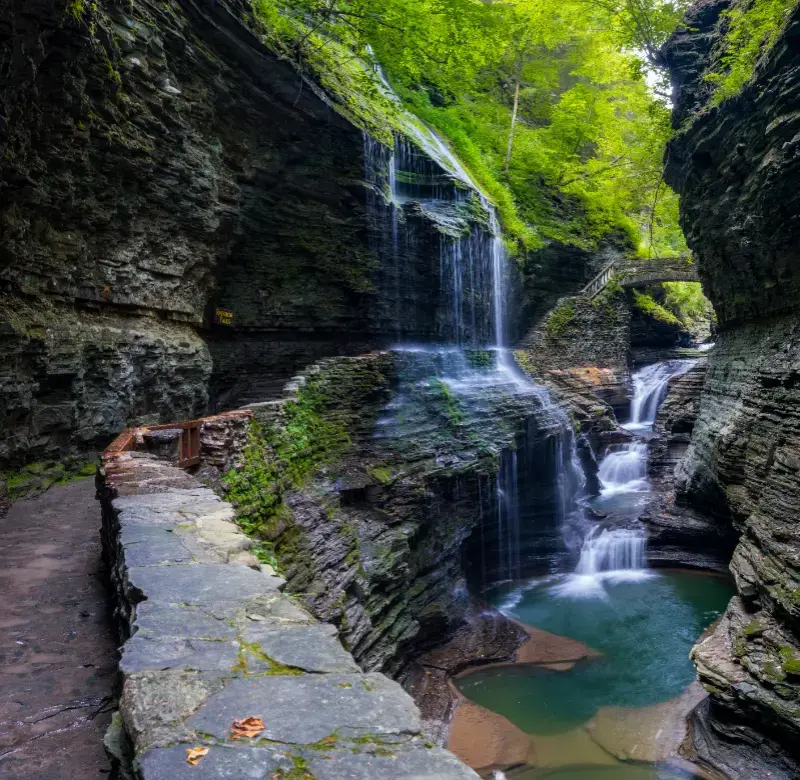
Watkins Glen State Park is one of the most photogenic places in New York, with a narrow gorge, stone bridges and repeated waterfalls. It is also one of the easiest places to plan badly. Peak summer and foliage weekends can feel extremely crowded, and the gorge path involves stairs and wet surfaces.
Start early or visit later in the day, check the current trail opening status, and do not schedule a rigid winery appointment immediately after your hike. The park experience is more enjoyable when you are not watching the clock.
Wine country without turning the trip into a tasting marathon
The Finger Lakes have become one of the most important cool-climate wine regions in the United States. Riesling is the famous calling card, but producers work with sparkling wine, Cabernet Franc, Chardonnay and other varieties. I LOVE NY’s 2026 planning material notes more than 120 wineries across the region, with established wine trails around Cayuga, Keuka and Seneca lakes.
The practical issue is transport. Distances between tasting rooms look small until you add lake geography, rural roads and appointment times. Designate a driver, book a local tour, or keep the day intentionally small. Three meaningful tastings with a long lunch is usually a better experience than racing through seven.
Seneca Lake
Seneca Lake is the easiest lake to build a classic first wine-country itinerary around. Geneva anchors the north end, Watkins Glen the south, and wineries line both shores. The lake is long, so crossing from one side to the other repeatedly wastes time. Pick a shore or create a loop that naturally ends near your accommodation.
The region is not only wine. Watkins Glen, lake cruises, farm stands and small towns provide enough variety for non-drinkers and families. This makes Seneca especially useful for mixed-interest groups.
Cayuga Lake and Taughannock Falls
Cayuga combines Ithaca, the Cayuga Lake Wine Trail and Taughannock Falls State Park. Taughannock’s main waterfall drops more than 200 feet, and the park offers both an overlook and a relatively approachable gorge route when conditions allow. The difference between “overlook stop” and “gorge walk” matters when building your schedule.
Cayuga is a strong choice for travelers who want one hotel base and do not want every day to center on wine. Ithaca provides restaurants, cultural life and university energy after the countryside closes down.
Keuka Lake and Hammondsport
Keuka Lake’s Y-shape gives it a distinctive map and a quieter rhythm. Hammondsport is a pleasant small base, and the area has deep wine history. Travelers who dislike the busier tasting-room atmosphere of Seneca often prefer Keuka. It also combines well with the Corning Museum of Glass.
Corning and Rochester: are they part of a Finger Lakes trip?
Yes, depending on your route. Corning’s glass museum can easily justify half a day or more and is especially valuable in bad weather. Rochester sits on the broader region’s western side and adds museums, food and urban culture. You do not need either on a short three-day lakes trip, but they are strong additions on a longer road trip.
Best time to visit the Finger Lakes
Late spring brings strong waterfall flow and fresh landscapes, though some gorge trails may still have seasonal limitations. Summer is best for lake activity but also brings crowds. Early fall is arguably the most complete season: harvest energy, pleasant temperatures and changing foliage. Peak-foliage weekends require earlier accommodation planning.
Winter is quiet and can work for wineries, cozy stays and museums, but it is not the season to assume every gorge trail or lake activity will be available. Keep itineraries flexible and check operating days.
A 4-day Finger Lakes itinerary
- Day 1: Ithaca, Cornell area and one or two local gorge parks.
- Day 2: Cayuga Lake, Taughannock Falls and a small number of wineries or cideries.
- Day 3: Watkins Glen in the morning, then one shore of Seneca Lake with lunch and tastings.
- Day 4: Keuka Lake and Hammondsport, or Corning Museum of Glass before continuing toward Niagara Falls.
This route intentionally leaves out many excellent places. That is the point. The Finger Lakes reward repeat visits and slower loops more than an exhaustive first attempt.
Where to stay
Ithaca is the strongest all-round base for restaurants and non-wine activities. Geneva is useful for north Seneca and a more polished small-city feel. Watkins Glen is practical for the park and south Seneca, while Hammondsport or Penn Yan suit a quieter lake-country stay. If you have four or five nights, split the trip between Ithaca and Seneca/Keuka rather than driving back to one central hotel every evening.
Compare accommodation: compare hotels and other stays on Booking.com.
Official planning sources
Continue planning New York State
- Niagara Falls Travel Guide
- New York State Road Trip
- Adirondacks Travel Guide
- New York State Travel Guide
Driving around the lakes
Finger Lakes driving is scenic but not fast. Long north-south lakes force you to choose a shore, and crossing from one side to the other can require a substantial detour. When booking tastings or dinners, check the actual road route rather than the straight-line distance across the water.
Traveling with non-drinkers
A Finger Lakes trip still works extremely well without alcohol. Waterfalls, Corning glass, lake cruises, farm stands, university museums, paddling and small-town food can easily fill the itinerary. If part of the group wants wineries, pair each tasting block with a nearby outdoor or cultural activity rather than separating the group for an entire day.
Frequently asked questions
How much time should you leave unplanned?
Keep at least one quarter of each day flexible. In New York State, weather, trail conditions, seasonal operating hours and traffic can alter a route quickly. Flex time is not wasted time; it is what lets you stop at a viewpoint, stay longer over lunch or move an outdoor activity to a better window.
Should you change hotels every night?
Usually no. Two-night bases create better mornings, easier parking and a stronger sense of place. Change hotels when geography demands it, not because the itinerary contains a new town name every day. The best regional trips use a base to explore a cluster.
Go deeper in the Finger Lakes
- Rochester NY Travel Guide: Museums, History, Food & Finger Lakes
- Ithaca Travel Guide: Waterfalls, Cornell, Cayuga Lake & Tips
- Watkins Glen Travel Guide: Gorge Trail, Waterfalls & Finger Lakes
- Letchworth State Park Guide: Waterfalls, Trails, Viewpoints & Tips
Looking for the right place to stay? Compare hotels and accommodation on Booking.com.