

Destinations › West USA › Colorado travel guide › Breckenridge Travel Guide: Historic Main Street, Trails & Year-Round Planning
Breckenridge is famous for skiing, but a first visit makes more sense when you think of it as a historic high-elevation town with a major resort attached, not merely a collection of lifts. Main Street, free local transit, summer trails and a surprisingly walkable center make it one of Colorado’s easiest mountain towns to enjoy without driving between every stop.
Its weakness is the same thing that makes it popular: easy access from the Front Range can produce heavy I-70 traffic, weekend demand and expensive peak dates. The best plan uses two advantages deliberately—walkability once you arrive and an early or off-peak transfer from Denver.
Breckenridge at a glance
| Elevation | About 9,600 feet in town; acclimatization matters |
| Ideal stay | 2–3 nights |
| Best for | Skiing, a walkable historic center, families and summer mountain activities |
| Transport advantage | Free local buses/trolley plus lodging shuttles |
| Road-trip risk | I-70 congestion and winter weather |
Main Street is not filler between mountain activities
Historic Main Street gives Breckenridge a stronger town identity than resort bases built primarily around lifts. Victorian-era buildings, shops, restaurants and side streets make it worthwhile to reserve time with no agenda beyond walking. This is especially useful on arrival day, when your body may not appreciate a hard hike at nearly 10,000 feet.
If you stay within walking distance of Main Street or a frequent free-bus route, park the car and leave it. GoBreck specifically encourages visitors to use free bus, trolley or lodging shuttles because downtown lots fill and many are paid. That advice is not just environmental messaging; it is a practical way to remove parking from the trip.
Summer Breckenridge: the mountain operates on a schedule
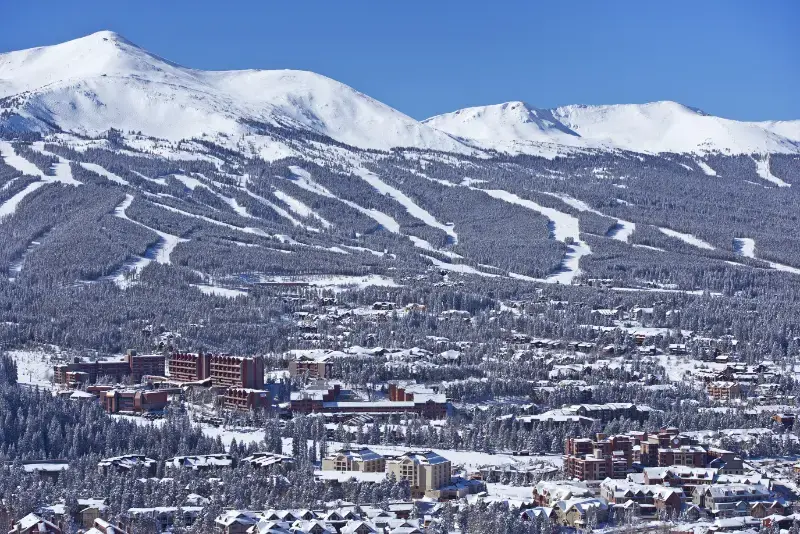
Summer visitors should not assume the ski-resort gondola and mountain activities operate every day from snowmelt to snowfall. For 2026, GoBreck listed Epic Discovery operations from June 12 through September 7, with closures August 31 through September 3 before reopening September 4–7. Specific lifts and activities had their own start dates. Check the operating calendar before promising children a gondola ride or building a day around lift-served hiking.
Choose one of three summer styles
- Town-first: Main Street, history, an easy walk and a relaxed meal. Best for arrival day or unsettled weather.
- Mountain-resort: gondola/lift-served activities when operating. Good for families and mixed abilities, but verify tickets and opening hours.
- Trail-first: independent hiking or biking away from the busiest base-area attractions. Start early and choose a route appropriate for altitude and weather.
Winter: the lodging location can save more than a cheaper room
In ski season, compare lodging by walking distance or shuttle convenience to the lifts rather than by nightly price alone. A cheaper property that forces daily paid parking, gear hauling and traffic can be poor value. If your goal is skiing, choose the base that simplifies ski mornings. If your group contains non-skiers, access to Main Street and town transit may matter just as much.
Winter road travel from Denver is the variable you cannot fully control. Snow, crashes and weekend ski traffic can stretch I-70 travel times dramatically. Avoid planning a flight home immediately after a mountain transfer when weather is uncertain. A final Denver night can be cheap insurance on a complicated winter itinerary.
A realistic two-day Breckenridge itinerary
Day 1: settle into the altitude
Arrive outside the worst traffic window if possible, check in, walk Main Street and keep the first evening easy. Hydrate, eat normally and sleep. Visitors arriving from sea level often feel the elevation even before doing anything athletic.
Day 2: one major mountain day
In winter, make this the ski day. In summer, choose either resort activities or a proper trail day rather than trying to do both. Start early for weather, then return to town for the evening. The value of Breckenridge is that the second half of the day can be enjoyable even after you are done with the mountain.
Breckenridge as a base for central Colorado
Breckenridge can work as a base for Frisco, Dillon, Keystone and parts of Summit County, but do not use it as a universal base for Aspen, Rocky Mountain National Park or Southwest Colorado. Mountain passes, I-70 and seasonal roads make “nearby” subjective. If the next destination requires several hours, move hotels rather than turning two vacation days into commuting days.
Small decisions that improve the trip
- Reserve a central hotel early for peak ski weekends and summer event dates.
- Use free transit rather than changing parking lots several times in one day.
- At altitude, place the hardest activity on day two or later when possible.
- Keep sunscreen, layers and water with you even on a short summer outing.
- Check COtrip before driving I-70 and understand Colorado traction requirements in winter.
- Do not assume shoulder season means every restaurant, lift or attraction is open.
Continue planning Colorado
- Denver Travel Guide
- Best Time to Visit Colorado
- Best Mountain Towns in Colorado
- Best Scenic Drives in Colorado
- Colorado travel guide
Where to stay and how to compare bases
Compare available accommodation for your dates, budget and preferred location before you finalize your route.
Affiliate disclosure: we may earn a commission from qualifying bookings at no extra cost to you. Compare Breckenridge hotels, Frisco stays and Dillon accommodation. Look beyond the headline nightly rate: mountain-town parking, resort or destination fees, breakfast, shuttle access and cancellation flexibility can materially change the real cost of a stay.
Useful official resources
Should you rent a car?
For a stay entirely in Breckenridge, a car can be more burden than benefit if your hotel has good transit and you arrive via shuttle from Denver. For a multi-town road trip, the car is useful, but still park it once after check-in. Compare airport shuttle costs against rental rate, winter tires, parking and the stress of I-70 in snow.
Shoulder season can be excellent—but verify operations
Late spring and late fall may offer lower lodging prices and quieter streets, but the mountain can be between operating seasons. Gondolas, lifts, guided activities and some restaurants may close for maintenance. Travelers who want hiking and town atmosphere can love this period; travelers who want a full resort product should check exact opening dates first.
How many nights do you really need?
One night gives you only a taste and makes weather or traffic disproportionately important. Two nights allow one full mountain day plus an arrival evening. Three nights are better for ski trips, families or summer visitors who want both trails and town. If you are continuing to Aspen or the San Juans, do not keep Breckenridge simply because unpacking again feels inconvenient; moving once can save many hours of driving over the following days.
Planning margin: the detail that makes this itinerary work
Keep at least two unscheduled hours in the day. Colorado travel is unusually sensitive to altitude, mountain weather, road incidents, trailhead parking and seasonal operations. The margin lets you wait out a shower, stop at an overlook, eat when you are actually hungry or shorten an activity without making the rest of the itinerary collapse. The goal is not to leave time empty; it is to avoid spending the most scenic part of the trip watching the clock.
Use the evening before each major mountain day to check road status, weather, reservation times and the first parking decision. Put clothes, water and simple breakfast items where you can reach them quickly. This small routine protects the morning, when Colorado often offers the coolest temperatures, clearest skies and easiest access. It also reduces the temptation to make unsafe choices later because an avoidable delay consumed the schedule.
A note on responsible mountain travel
Stay on durable surfaces and marked trails, respect seasonal wildlife closures, keep a safe distance from animals and pack out what you bring. Mountain communities and public lands receive intense seasonal pressure, and seemingly small choices—parking outside a legal space, stepping around mud, feeding wildlife, or creating a new viewpoint path—scale badly when thousands of visitors repeat them. Good travel planning protects both the experience and the place.
Parking is part of that responsibility. Use legal spaces even when a trailhead looks full and walking an extra few minutes feels inconvenient. Never block gates, emergency access, private driveways or narrow mountain roads. If the intended lot is full, use the designated overflow, shuttle or a different activity. The same principle applies to photography: a viewpoint is not worth trampling restoration areas or standing in traffic. Colorado offers more scenery than any single schedule can consume, so changing plans is usually cheaper than damaging a place or creating a safety problem.
Finally, treat mountain communities as lived-in places rather than theme parks. Keep noise reasonable in residential areas, follow local fire restrictions, support businesses without assuming every service stays open late, and understand that staffing and weather can change hours unexpectedly. A little flexibility makes the trip better for visitors and residents alike, especially during peak summer, fall-color and ski weekends when small towns are operating near capacity.