

Destinations › Southeast USA › Georgia travel guide › Augusta, Georgia Travel Guide: Riverwalk, James Brown & Beyond the Masters
Augusta is globally associated with golf, but building a trip only around that reputation misses the city’s deeper identity. The Savannah River, African American music history, historic neighborhoods, museums and a changing downtown create a worthwhile stop even for travelers who have no interest in the Masters. The city makes particular sense on an eastern Georgia route or as a slower weekend between larger destinations.
Two nights is enough for a strong first visit. One full day can cover the riverfront, downtown and one major museum, but the second day allows you to add history, outdoor time or a James Brown-focused route without turning every stop into a drive-by.
Augusta at a glance
Use this map to locate the destination; check the official visitor information for entrances and access.
| Best for | Riverfront walks, music history, golf culture, museums and an eastern Georgia city break |
| Ideal first stay | 2 nights |
| Core orientation zone | Downtown and Riverwalk |
| Music connection | James Brown and broader soul/funk history |
| Major demand period | Masters Tournament week |
| 2026 context | America 250 programming and continued downtown development |
Start at the river, because Augusta makes more sense there
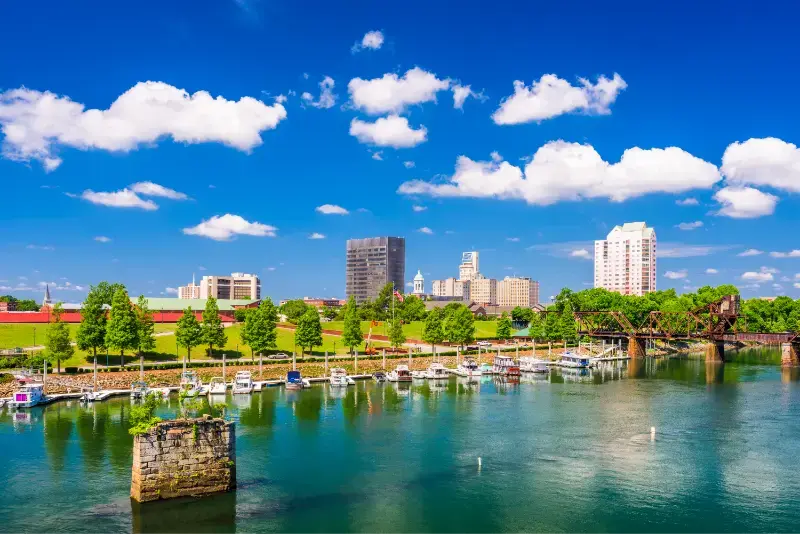
The Savannah River is not just scenery; it explains the city’s geography, trade and regional importance. Walk the Riverwalk early or late in the day when temperatures are comfortable, then move into downtown rather than treating the riverfront as an isolated park. Seeing South Carolina across the water also reinforces how closely Augusta’s story is tied to a border region rather than only to Georgia’s interior.
Use Augusta & Co. as a practical orientation stop
Destination Augusta operates Augusta & Co. at 1010 Broad Street as a visitor experience center with local information and trip-planning resources. For first-time visitors, this is a useful place to ask about current closures, events and neighborhood recommendations rather than relying entirely on an itinerary saved months earlier.
James Brown is central to Augusta’s cultural story
Augusta’s relationship with James Brown is one of the city’s most important cultural connections. Look beyond a single statue or photo and use museums, self-guided materials and local interpretation to understand his career and the city environment around it. Destination Augusta promotes a James Brown Journey as one of its digital experience passes, making it easier to connect multiple sites without inventing your own route from scattered online references.
Do not confuse Masters access with visiting Augusta
Augusta National Golf Club is private, and Masters Tournament access depends on tickets/badges and event rules. You cannot plan an ordinary sightseeing stop inside the club simply because you are in town. During Masters week, accommodation prices and availability change dramatically across the region. If golf is not the reason for your visit, another week will usually provide a more representative and easier city experience.
Museums and history add depth
Augusta has museums and historic sites that cover regional history, art and local figures. Choose one or two based on your interests rather than attempting every indoor attraction. A history-focused morning pairs well with a riverfront afternoon, particularly in summer when midday heat makes long outdoor walks less appealing.
2026: America 250 creates additional heritage programming
In 2026, Augusta tourism organizations are promoting America 250-related historic experiences and a digital history trail tied to the United States’ 250th anniversary. Special programming can be a useful bonus, but check the exact date and venue rather than assuming anniversary activities run continuously every day of the year.
Downtown is changing, so current information matters
Augusta is in a period of redevelopment, with tourism officials highlighting Broad Street revitalization, a new arena project, an Outdoor Adventure Center and the return of professional hockey. Construction and openings can change traffic or visitor patterns. Use current local information rather than relying on a streetscape description from several years ago.
Outdoor Augusta: canal, river and trails
The Augusta Canal and river corridor offer opportunities to add walking, cycling or paddling to a cultural trip. Water-based activities are weather- and operator-dependent, so reserve or confirm close to the visit. Even without a formal tour, the river and canal provide a useful way to understand Augusta as an industrial and transportation city.
Choose between regional history and Southern art
The Augusta Museum of History is a useful place to connect the river city with its industries, communities and musical figures. It can anchor a history-focused afternoon after the Riverwalk. Read the current exhibition information and give yourself enough time for more than one familiar name. James Brown is an important reason to visit, but understanding the wider city helps his story sit in a meaningful setting.
The Morris Museum of Art offers another direction, focusing on art associated with the American South. Because it is near the riverfront, it can fit a central walking day without turning the afternoon into a long transfer. Check its exhibition calendar and admission information directly. Choose the museum that best matches your interests first; visiting both is easier with a second day than by trimming every gallery into a hurried circuit.
Know whether you want the canal museum, boat or towpath
The Augusta Canal Discovery Center at Enterprise Mill explains the canal’s industrial role. The address is 1450 Greene Street, separate from a generic Riverwalk starting point. A guided boat trip and the museum displays are related but need their own timing and ticket checks. The Canal Authority lists boat options by day and advises visitors to call for availability, so do not assume a sailing begins whenever you arrive.
If you prefer a walk or bike ride, use the towpath information to choose an actual entrance. The Headgates at Savannah Rapids Park, Lake Olmstead and the Enterprise Mill area provide different starting points. Check the current trail status before planning a long through-route: maintenance and storm-related damage can interrupt connections. A shorter out-and-back from a confirmed open entrance is often the better choice for a visitor with limited time.
The towpath has both natural and more urban surroundings, and the surface is not identical along its length. Allow for heat, water and the return distance. A cyclist should use the stated trail etiquette and slow around pedestrians. Keep away from wildlife and do not treat the canal edge as a swimming access point. For paddling, arrange a suitable operator and transport plan instead of assuming you can launch and easily return against the current.
Turn James Brown’s name into a connected visit
Begin with the city’s official James Brown Journey information, then choose sites that are accessible during your stay. A statue, a museum display and an organized tour offer different levels of context. You do not have to visit every marker to appreciate the connection; a museum visit followed by a downtown walk can be more satisfying than driving between photographs without understanding what each place represents.
Use the available interpretation to connect performance, the city and the artist’s wider influence. If music is the main purpose of the trip, check the local performance calendar as well. A historical itinerary and a live show are different experiences and may not coincide on your date. Leave the evening open enough to attend something you actually want to hear rather than assuming there must be a suitable concert because Augusta has a music legacy.
Leave Augusta National out of an ordinary sightseeing route
Visitors who do not hold appropriate event access should plan around the public city rather than attempting to enter the private golf club. The Masters changes accommodation demand across a much larger area than the venue itself, and a room described as near Augusta can still require a significant drive. If attending the tournament, follow the ticket and visitor arrangements for that event; an ordinary city guide cannot replace them.
If golf is not your priority, compare another week. You can then choose a central stay around the riverfront and downtown instead of letting tournament availability determine every decision. This also makes a two-day museum-and-canal visit easier to plan. Check for other major events before booking, because sports and conventions can still affect a weekend outside Masters week.

Work around construction without losing the walking day
Broad Street and the central area can have changing work zones during redevelopment. Ask Augusta & Co. for current advice, particularly if you need accessible sidewalks or intend to park near a specific business. Save the destination’s exact address instead of navigating to a broad downtown label. A short detour is easier to handle when you have left time for it and know which attraction matters most that afternoon.
Keep a meal stop in the same area as your last visit. Downtown dining can complete the cultural day without sending you back to an interstate shopping corridor. If you choose an outlying hotel for value or onward travel, compare the full cost of those repeated journeys. Central convenience and easy road-trip access are different benefits; pick the one that matches the visit rather than assuming the cheapest room produces the cheapest stay.
Use the Georgia–South Carolina border deliberately
Aiken and North Augusta can add another chapter to a longer regional stay, but they should be planned as separate outings with their own attractions and driving time. Seeing South Carolina across the river does not mean every nearby destination is part of one easy walking circuit. For a first two-night visit, keep Augusta’s riverfront, one museum and the canal as the core, then add a neighboring town only if a third day gives it adequate time.
A realistic two-day Augusta itinerary
Day 1: Riverwalk, downtown and James Brown history
Begin along the river, then move into downtown and use a James Brown-focused route or museum stop to anchor the afternoon. Finish with dinner downtown instead of driving to a highway corridor simply because parking looks easier there.
Day 2: museum or canal experience
Choose a museum, historic house or canal-focused activity for the morning, then use the afternoon for another neighborhood or outdoor stop. If you are traveling during a major event, reverse the schedule to avoid peak traffic around event zones.
Augusta with kids
Families can combine the Riverwalk, interactive or history museums and outdoor experiences without making the trip golf-centric. Younger children generally need fewer indoor sites and more movement. In summer, plan outside early and shift indoors at midday; heat and humidity can make a “short” walk feel much longer.
Where to stay
Compare available accommodation for your dates, budget and preferred location before you finalize your route.
Downtown lodging is strongest for a first leisure trip because it reduces driving for riverfront and central attractions. Suburban or interstate hotels can be practical for road trippers and may offer lower rates, but compare the inconvenience of repeated parking and travel. During Masters week, normal pricing logic may not apply at all.
Best time to visit
Spring is attractive but includes the enormous demand spike around Masters week. Fall often brings pleasant outdoor weather. Summer is workable if you plan around heat, and winter can be quiet for museums and food. Check the event calendar before booking because Augusta’s hotel market can move sharply around major sports, conventions and festivals.
Mistakes to avoid
- Assuming you can casually tour Augusta National without event access.
- Visiting only golf-related places and missing the river/music story.
- Booking Masters week by accident and being surprised by hotel prices.
- Using old downtown information during a period of active redevelopment.
- Planning all outdoor activity at midday in summer.
Continue planning Georgia
- Atlanta Travel Guide
- Athens Georgia Travel Guide
- Georgia Road Trip Itinerary
- Best Time to Visit Georgia
- Georgia Travel Guide
Where to stay and how to compare hotels
A useful way to plan Augusta is to separate “event Augusta” from “ordinary Augusta.” Masters week is a global sports phenomenon with unusual demand; most of the year is not like that. Outside major events, you can focus on riverfront, museums, food and music at a much calmer pace. Reading reviews written only during Masters week can give a distorted picture of everyday logistics.
Official visitor information
- Destination Augusta visitor information
- Augusta museums and history
- Augusta Canal museum and boat tours
- Augusta Canal trails and access
Last updated: October 13, 2026 at 21:59 (Italy time).