

Destinations › Pacific USA › Oregon › Eugene Oregon Travel Guide
Eugene is easy to overlook when an Oregon itinerary is dominated by Portland, the coast and Bend. That can be a mistake. The city has a strong river-and-bike culture, a major university, excellent access to the Cascades and enough food, markets and green space to make it more than a sleep stop on Interstate 5.
Why add Eugene to an Oregon itinerary
Eugene works especially well as a transition between the Willamette Valley, central coast and Cascade Mountains. It has enough urban infrastructure to reset laundry, food and logistics after a road-trip segment, yet nature begins almost at the edge of town. If you are driving from Newport toward Bend or Crater Lake, an overnight here can make the route more comfortable.
The city is also worth a dedicated weekend for travelers interested in track and field, University of Oregon culture, cycling, craft food and access to nearby hiking.
Start with the Willamette River paths
The network of paved paths along the Willamette is the best introduction to Eugene’s everyday rhythm. Walking or cycling between parks shows how strongly the city is organized around the river rather than only around downtown streets. Bridges create easy loops, so you can choose a short stroll or a much longer ride.
Bike rentals are useful if the weather is good, but rain can arrive quickly. Keep the day flexible and do not force a long ride when conditions make a museum, café or campus walk more pleasant.
University of Oregon and Hayward Field
The University of Oregon campus gives Eugene much of its energy. Hayward Field is one of the most important track-and-field venues in the United States, and major events can change hotel availability and traffic dramatically. If your dates overlap a large meet, plan accommodation much earlier than you would for an ordinary weekend.
Even without an event, the campus is a pleasant walk with architecture, museums and green spaces. Check visitor access rules for any facility you specifically want to enter instead of assuming event venues are open for casual touring.
5th Street, downtown and the market culture
Eugene’s visitor districts are not concentrated in one perfect historic center. Downtown, the 5th Street area and the Saturday Market zone each have a different character. Food trucks, local makers, bookstores and breweries matter as much as conventional sightseeing.
The Eugene Saturday Market is seasonal and schedule-dependent, so check its current calendar if it is important to your trip. Building an entire day around a market that is not operating is an avoidable mistake.
Food and beer without chasing a checklist
Eugene has a strong casual food culture influenced by the university, local agriculture and Oregon craft brewing. Rather than driving across town to collect famous names, choose one neighborhood and walk between dinner, a brewery or tasting room and dessert. This gives the city more atmosphere and reduces parking friction.
If you drink, plan the return to your hotel before the first tasting. Ride-share coverage is generally easier in Eugene than in rural wine country, but late-night availability can still vary.
Hendricks Park and Spencer Butte
Hendricks Park is an easy nature stop close to the city, known for mature forest and seasonal rhododendrons. Spencer Butte provides a more substantial hike and a broad view over Eugene and surrounding valleys. Together they show how quickly you can move from urban streets into forested terrain.
Spencer Butte can be muddy in wet months and exposed near the summit. Wear appropriate footwear and do not assume a city-adjacent trail is automatically easy in winter conditions.
Day trip east: McKenzie River corridor
The McKenzie River Highway leads toward waterfalls, forest hikes and the Cascades. Sahalie and Koosah Falls are among the most accessible major stops when roads and trails are open. Hot springs in the region require extra care because access, reservation systems and operating status can change.
Do not try to combine every McKenzie waterfall with a full Eugene city day. Choose a focused half-day or full day, especially if you plan a longer hike.
Day trip west: Florence and the Oregon Dunes
Eugene is also a practical inland base for reaching Florence and the central coast. The drive crosses the Coast Range and gives you access to dunes, beaches and the Siuslaw River. This can be useful when coastal accommodation is expensive or fully booked, but remember that a round trip adds significant driving.
If the coast is one of your trip priorities, staying at least one night by the ocean is still better than commuting from Eugene repeatedly.
A relaxed two-day Eugene plan
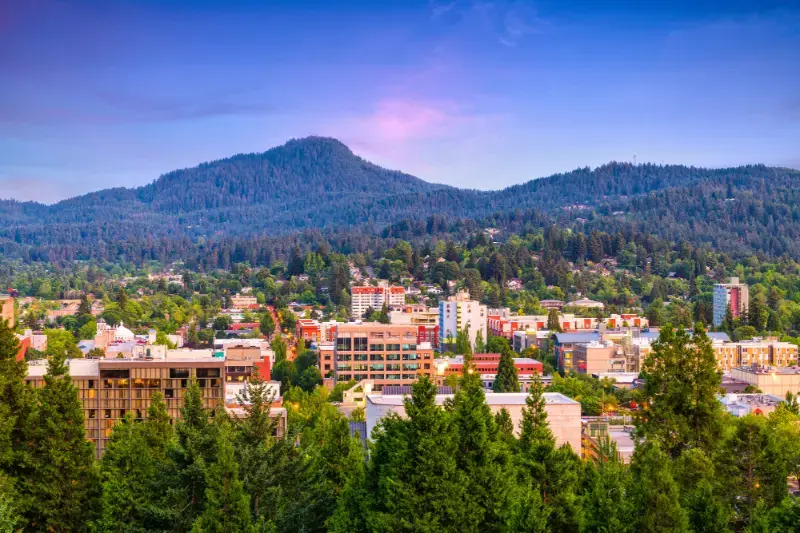
Day one: river paths in the morning, campus and Hayward Field area around midday, then downtown or 5th Street for food and an evening drink. Day two: choose Spencer Butte plus city time, or dedicate the day to the McKenzie River corridor. Keep a rainy-weather alternative such as a museum or café-heavy neighborhood day.
This structure reflects what Eugene does well: easy movement between active outdoor time and an unhurried city pace.
Best seasons
Late spring through early autumn offers the broadest range of outdoor activities. Summer is dry but can be hot, and smoke from regional wildfires may affect air quality. Autumn can be beautiful in the valley. Winter is wet and quieter, with mountain routes requiring more careful road-condition checks.
If you travel during a major University of Oregon event, crowd level may matter more than season. Check the university and city event calendar before assuming a normal weekend.
Who will enjoy Eugene most
- Road-trippers who want an easy reset between coast and mountains.
- Cyclists and runners who enjoy river paths and track culture.
- Food-focused travelers who prefer casual local neighborhoods over formal attractions.
- Families who want parks and short day trips without constant hotel changes.
- Visitors building a slower Willamette Valley itinerary rather than only wine tastings.
Eugene with children
Families can build an easy day around river paths, parks and one indoor attraction. The Cascades Raptor Center can be a strong wildlife-focused outing, while playground and picnic stops keep the schedule flexible. If you add the McKenzie River, select one or two waterfalls instead of turning the day into a long sequence of trailheads.
Without a car
Eugene is easier than many western U.S. cities to experience without a car if you stay centrally and focus on downtown, campus and river paths. A car becomes much more useful for Spencer Butte, wineries or the McKenzie corridor. Travelers arriving by train or bus can therefore enjoy a city break without automatically renting a vehicle for every day.
Track-town identity beyond one stadium
Eugene’s running culture is visible beyond Hayward Field. River paths, local races, specialty shops and the presence of elite and recreational athletes give the city a distinctive rhythm. Visitors do not need to be runners to enjoy it, but runners may want to pack shoes and use a morning jog as sightseeing. The flat river network is an easier introduction than immediately tackling Spencer Butte.
Museums and rainy-day options
The University of Oregon campus includes museums that can rescue a wet afternoon without feeling like a compromise. Check opening days and current exhibitions before walking across campus, because university schedules can differ from typical tourist attractions. Downtown bookstores, coffee shops and covered food areas provide additional low-effort options. Eugene is at its best when the itinerary can switch between outdoors and indoors without a long drive.
Eugene as a train stop
Amtrak service makes Eugene one of the more practical Oregon cities to include without driving every segment. A central stay allows access to downtown, food and parts of the river network on foot or by local transport. If you later rent a car for the Cascades or coast, consider starting the rental only when you leave the city. This can reduce parking costs and simplify the urban portion of the trip.
Coffee, breakfast and a slower morning
Eugene supports the kind of morning that works well on a long road trip: coffee, a bakery or breakfast, then a walk before getting back in the car. Use that advantage. Leaving immediately after waking to chase another distant landmark misses one of the reasons to stop here. A slower first hour can make the later mountain or coast transfer feel much less tiring.
Where to stay
Compare available accommodation for your dates, budget and preferred location before you finalize your route.
Downtown and the 5th Street area are convenient for restaurants and a walkable evening. Hotels near the university work well for campus events and Hayward Field. Properties near the interstate may be cheaper and easier for road trips but offer less atmosphere after you park.
If your visit coincides with a major track meet, football game or university weekend, book early and verify parking arrangements with the hotel. Event demand can change normal price patterns dramatically.
Check accommodation options and current rates in Eugene.
Continue planning your Oregon trip
Eugene is most useful as a bridge between the Willamette Valley, the central coast and Cascade routes.
- Willamette Valley Oregon Guide
- Newport Oregon Travel Guide
- Oregon Travel Guide
- 10-Day Oregon Road Trip