

Destinations › West USA › Montana › Montana Road Trip Itinerary: 10 Days from Glacier to Yellowstone
A Montana road trip becomes much better when you accept one fact early: the state is enormous. Glacier National Park and Yellowstone can fit in the same vacation, but they are not neighboring attractions. The most satisfying 10-day route gives both ends of the trip real time and uses Flathead Lake, Missoula and Bozeman as meaningful stops rather than treating the middle of Montana as dead mileage. This itinerary is designed for summer or early autumn when the major mountain roads are open.
- 1Day 1: arrive in Whitefish or West Glacier
- 2Day 2: Going-to-the-Sun Road → , swap the order and return to Going-to-the-Sun Road when visibility improves
- 3Day 3: Many Glacier or a major hiking day
- 4Day 4: Flathead Lake and a slower transfer
- 5Day 5: Missoula
- 6Day 6: Missoula to Bozeman
- 7Day 7: Bozeman and Paradise Valley
- 8Day 8: Lamar Valley and Mammoth Hot Springs
- 9Day 9: Yellowstone interior
- 10Day 10: return to Bozeman or continue into Wyoming
The route in one line
A practical north-to-south route is Glacier National Park → Whitefish or Flathead Lake → Missoula → Bozeman → Gardiner and northern Yellowstone. You can reverse it depending on flights and accommodation. Glacier Park International Airport is useful in the north, while Bozeman Yellowstone International Airport is the most practical southern gateway.
An open-jaw flight can save a full day of backtracking. Compare one-way rental-car fees against the cost of returning to the original airport before assuming a round trip is cheaper.
Day 1: arrive in Whitefish or West Glacier
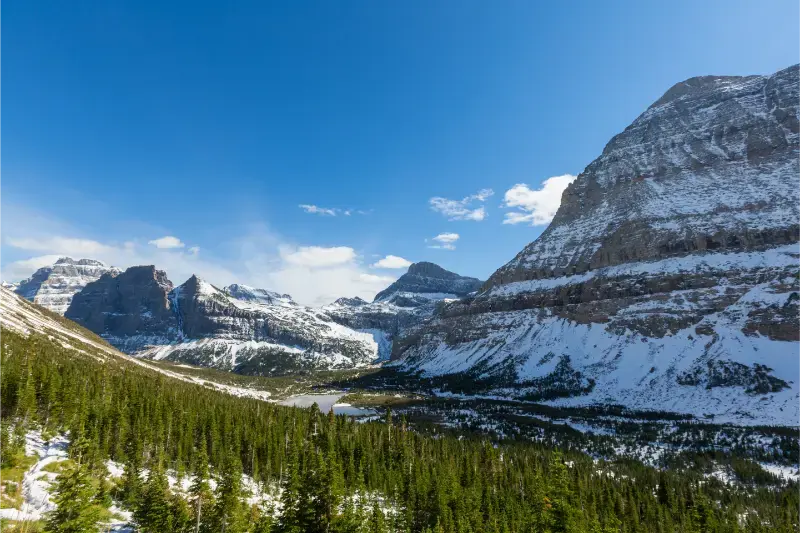
Keep arrival day simple. Collect the car, buy snacks and bear spray if you will hike in bear country, then settle into Whitefish, Columbia Falls or West Glacier. Use the evening for Lake McDonald or downtown Whitefish depending on arrival time.
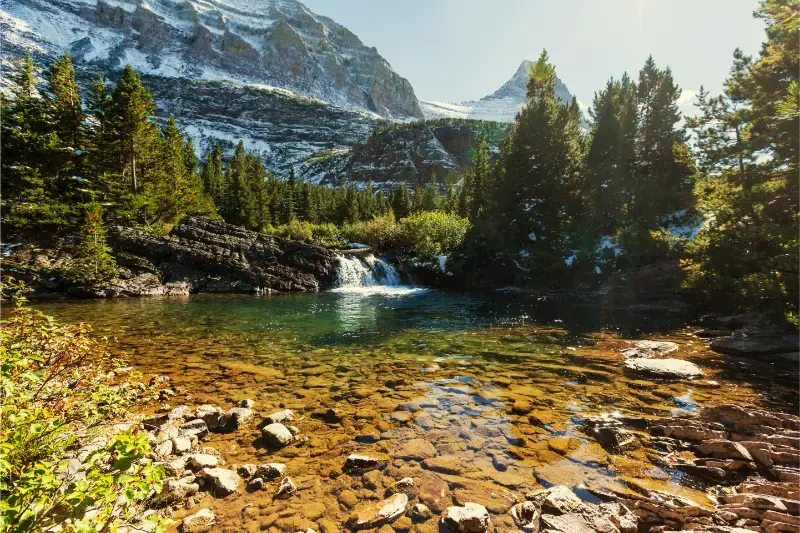
Do not schedule Going-to-the-Sun Road on a late arrival day. Flight delays and rental-car queues can turn an ambitious plan into stress.
Day 2: Going-to-the-Sun Road
Use a full day for Glacier’s famous mountain road. In 2026 the park did not require vehicle reservations, but Logan Pass used a seasonal three-hour parking limit and ticketed shuttle during the core summer period. Access systems can change, so verify the current year before travel.
Choose a few stops instead of every pullout. Continue across the Divide if the road is fully open and consider ending the day on the east side if your next accommodation is there.
Day 3: Many Glacier or a major hiking day
Use the third day for the part of Glacier that most matches your interests. Many Glacier is ideal for mountain hiking and lake scenery, while travelers based on the west side may choose Avalanche, Lake McDonald or another trail suited to current conditions.
This is also your weather buffer. If clouds hid the Divide on day two, swap the order and return to Going-to-the-Sun Road when visibility improves.
Day 4: Flathead Lake and a slower transfer
Leave the park region and drive toward Flathead Lake. If you stayed in Whitefish, the lake is a natural southbound route. Stop in Bigfork, Lakeside or Polson depending on which shoreline you choose.
Spend one night near the lake if your schedule allows. A beach, short paddle or waterfront dinner provides a welcome change from high-elevation hiking.
Day 5: Missoula
Continue to Missoula and use the city as a genuine rest stop. Walk the Clark Fork River, explore downtown and choose the Mount Sentinel M trail only if your legs want another climb. This is the day to do laundry, eat well and reset.
Driving directly from Glacier to Bozeman is possible, but breaking the route in Missoula produces a much more pleasant trip.
Day 6: Missoula to Bozeman
The transfer across western Montana is long enough to deserve most of the day. Leave after breakfast and arrive in Bozeman with time for downtown, Museum of the Rockies or a relaxed dinner. Do not add Yellowstone on the same day unless you are simply continuing to Gardiner.
If your interests lean toward history or smaller towns, later itineraries can route through Helena. For this 10-day version, direct travel keeps the pace manageable.
Day 7: Bozeman and Paradise Valley
Spend the morning in Bozeman, then move south/east through Livingston and Paradise Valley toward Gardiner. The valley drive is scenic enough that it should not be treated as empty transit.
Arrive in Gardiner before evening, walk near the Roosevelt Arch and prepare for an early Yellowstone wildlife morning.
Day 8: Lamar Valley and Mammoth Hot Springs
Start early for Lamar Valley or the northern range, then return through Tower Junction toward Mammoth Hot Springs. Wildlife is unpredictable, so do not structure the day around seeing a specific animal.
Gardiner is an excellent base for the north because the entrance is minutes away. Use pullouts, keep legal wildlife distances and bring binoculars.
Day 9: Yellowstone interior
When seasonal roads are open, use one long day for Canyon, geyser basins or another interior section. Do not try to see Old Faithful, Grand Prismatic, Canyon, Yellowstone Lake and Lamar all in a single loop. Choose one geographic zone and allow for traffic.
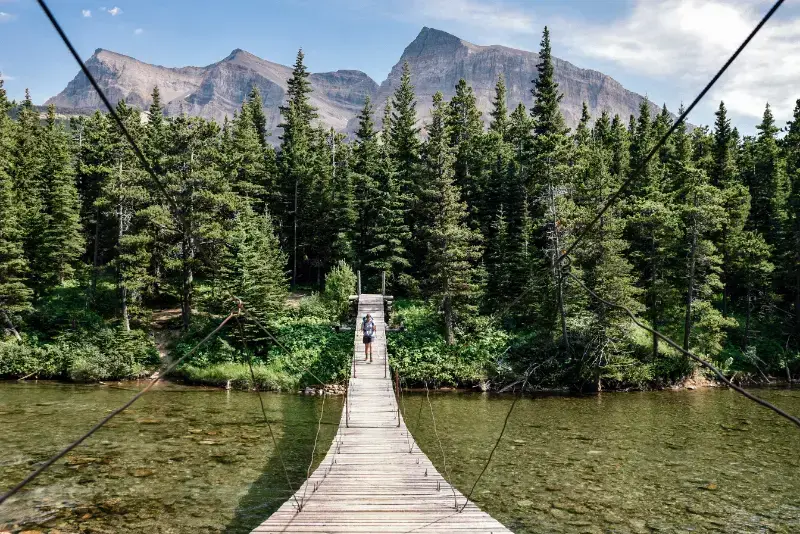
If your Yellowstone plans are broader than the north, consider moving to an interior lodge or West Yellowstone instead of returning to Gardiner.
Day 10: return to Bozeman or continue into Wyoming
Drive back through Paradise Valley for a Bozeman flight, or continue through Yellowstone toward Grand Teton and Jackson if the Montana trip is part of a larger western road trip. Leave a generous airport buffer because wildlife, construction and weather can slow the park roads.
If your flight departs early, spend the final night in Bozeman rather than gambling on a pre-dawn drive from Gardiner.
How much driving this itinerary really contains
Montana distances are substantial. Glacier to Missoula is several hours, Missoula to Bozeman is another long transfer, and Yellowstone itself adds slow park mileage. The itinerary works because the long drives alternate with multi-night stays.
Avoid adding Helena, Great Falls, Billings and the Beartooth Highway to the same 10 days. Those places deserve their own time and can form a second Montana route later.
Best direction for the trip
North-to-south works well if Glacier is the emotional highlight and Yellowstone is the finale. South-to-north can be better if you want to finish with Glacier’s alpine scenery and fly home from the Kalispell area. Airfare and rental-car logistics may make the decision for you.
Check one-way rental pricing before booking flights. Sometimes two separate airport choices save time but cost much more; other times the extra fee is modest compared with a full-day backtrack.
When to drive this route
July through early September provides the strongest probability that Going-to-the-Sun Road and Yellowstone’s summer road network are open. Late June can work but Glacier’s alpine access may still be limited. September offers cooler weather and fewer families while early snow becomes a real possibility.
Outside this window, redesign the route around seasonal access rather than forcing a summer itinerary into spring or winter.
What to cut if you only have seven days
With one week, do not try to preserve every stop by shortening all of them. Choose either Glacier plus western Montana or Bozeman plus Yellowstone. Two major regions with meaningful time are better than touching Glacier and Yellowstone for one day each.
If Glacier is the priority, spend three or four nights near the park, one around Flathead Lake or Missoula and use the remaining nights for Whitefish or another western base. If Yellowstone is the priority, combine Bozeman, Gardiner and perhaps Big Sky.
What to add if you have two weeks
Fourteen days allows a much better split: four or five nights for Glacier, two around Flathead and Missoula, two around Bozeman or Big Sky and three or four around Yellowstone. You can also add Helena, Great Falls or another central Montana stop without turning the trip into constant hotel changes.
A second week also provides weather insurance. If smoke or storms affect one region, you have room to shift days rather than losing the trip’s main hike or scenic road entirely.
Rental cars and one-way fees deserve early attention
Open-jaw flights are attractive because they remove backtracking, but rental-car pricing can change the equation. Search the complete package: airfare, car, one-way drop fee, extra hotel night and fuel. The cheapest flight pair is not always the cheapest trip.
Reserve an appropriate vehicle rather than the largest one available. Going-to-the-Sun Road has vehicle size restrictions, while ordinary passenger cars are sufficient for the paved route described here. Remote gravel detours should only be added after checking road conditions and rental-car rules.
Wildfire smoke and weather can force route changes
During late summer, keep an eye on air quality and fire closures. A fixed hotel sequence does not mean every day’s activity must remain fixed. If smoke is severe near one mountain range, use a city or lake day and save strenuous hiking for clearer conditions.
Early snow creates the opposite problem in September and October. Check high roads every morning and never let a prepaid hotel pressure you into an unsafe pass crossing.
Where to stay on a Montana road trip
Compare available accommodation for your dates, budget and preferred location before you finalize your route.
Use multiple bases rather than changing hotels every night. Three nights around Glacier, one around Flathead or Missoula, one or two in Bozeman and two in Gardiner creates a reasonable rhythm. If hiking is a priority, pay more for proximity to trailheads and save money in city stops where accommodation supply is broader.
Book Glacier and Yellowstone gateway lodging first because those nights are hardest to replace. City hotels can usually wait until the route is stable.
Compare Montana accommodation starting with Bozeman, then search Whitefish/West Glacier, Missoula and Gardiner according to the route.
Essential planning links inside this itinerary
Use the destination guides to refine each section rather than stretching one generic road-trip article to cover every detail.
- Glacier National Park Travel Guide
- Flathead Lake Montana Guide
- Missoula Montana Travel Guide
- Bozeman Montana Travel Guide
- Gardiner Montana & Yellowstone North Entrance Guide