

North Carolina is unusually easy to shape around a family because the state offers several completely different vacations without requiring a flight between them. You can base a trip in the Blue Ridge and spend mornings on short trails and afternoons in small towns, choose the coast for beaches, ferries and lighthouses, or build an urban break around museums and neighborhoods in Charlotte or the Triangle. The challenge is not finding things for children to do; it is resisting the urge to combine too many regions in one week.
A successful family itinerary uses shorter driving days, predictable meal stops and activities with different energy levels. A scenic road that looks easy on a map can take much longer with overlooks, bathroom breaks and mountain curves. A beach day can end early because of surf conditions. Leaving room for those changes makes the trip more enjoyable for adults as well as children.
The best North Carolina region depends on your children’s ages
Families with toddlers often benefit from one base with simple outdoor time and indoor backups. Wilmington, the central Outer Banks, Asheville and the Triangle all work well because you can reach several attractions without changing hotels constantly. School-age children may enjoy ferries, wildlife programs, mountain overlooks and hands-on museums, while teenagers can handle longer hikes, rafting or more ambitious road trips.
Do not assume every child will enjoy the same “family attraction.” A lighthouse climb, waterfall walk and science museum ask for different kinds of attention. Mix active and slower experiences instead of stacking three educational stops or three hikes in one day.
Asheville and the western mountains with children
Asheville works as a comfortable gateway because restaurants, parks and indoor options are close to mountain scenery. From the city you can reach sections of the Blue Ridge Parkway, waterfalls and family-friendly towns without committing to a remote cabin. The Asheville guide is a good starting point for families who want flexibility.

For a more outdoors-focused trip, Bryson City gives families easy access to the Great Smoky Mountains side of North Carolina, the railroad and the Nantahala Gorge. Older children may enjoy rafting with an appropriate outfitter, while younger families can focus on riverside walks and scenic drives. See our Bryson City and Nantahala guide before choosing activities.
Great Smoky Mountains without turning the day into a marathon
The Smokies can be ideal with children when you choose a few concrete goals. Oconaluftee, Mingus Mill when open, elk viewing at a respectful distance, short nature walks and scenic pullouts provide variety without requiring a major summit hike. Early starts improve parking and increase the chance of seeing wildlife during cooler hours.
Wild animals should never become a photo opportunity at close range. Keep children near you, follow park distance rules and never feed wildlife. Pack snacks, water and layers because mountain weather changes faster than many first-time visitors expect. Our North Carolina Smokies guide covers the main western gateways.
Boone, Blowing Rock and the High Country
The High Country works well for families who like cool summer weather, mountain views and short scenic outings. Boone offers services and restaurants, Blowing Rock is compact, and nearby attractions can be combined with easy hikes. Grandfather Mountain can be memorable for the swinging bridge, wildlife habitats and nature programs, but timed admission to the private attraction should be planned in advance.
Mountain roads can make children carsick, especially when a route follows the Blue Ridge Parkway for long periods. Bring water, keep the first day easy and avoid scheduling a long scenic drive immediately after a heavy meal. The Boone and Blowing Rock guide helps you choose a base.
The Outer Banks for ferries, dunes and aviation history
The Outer Banks are more than a beach vacation. Jockey’s Ridge gives children a giant landscape to explore, the Wright Brothers National Memorial adds a clear story to the trip, and lighthouse areas break up long beach days. Soundside water can feel calmer than the open Atlantic, but parents still need to check local conditions and supervise closely.
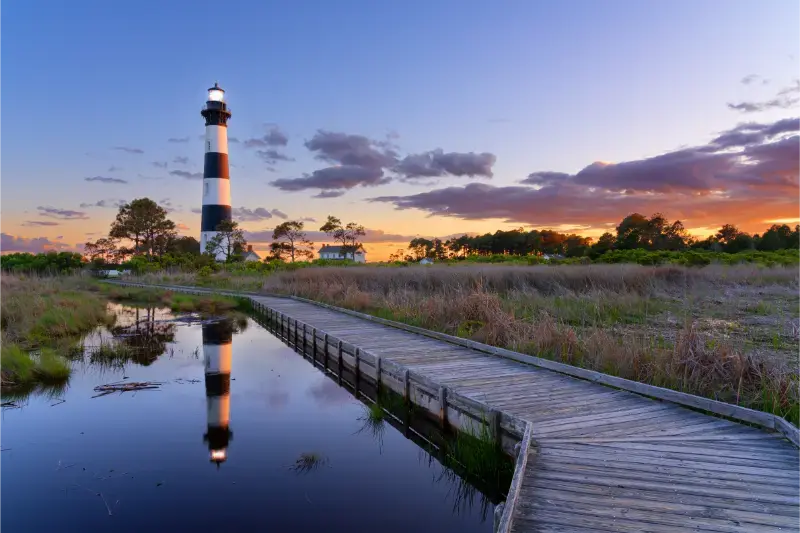
For families, central towns such as Nags Head and Kill Devil Hills are often more convenient than remote stretches because supermarkets, restaurants and rainy-day options are close. If your children enjoy ferries and slower travel, add Ocracoke as an overnight rather than forcing a rushed out-and-back. Start with the Outer Banks guide.
Wilmington and the beaches for an easy mixed itinerary
Wilmington is one of the simplest coastal bases with children because the riverfront, beaches, aquarium area and historic attractions are within the same region. You can choose Wrightsville Beach for convenience, Carolina Beach for a casual family atmosphere, or Kure Beach to stay closer to Fort Fisher. A rental with laundry and a kitchen can be more useful than a larger room if you are staying for a week.
Plan one anchor activity per day and treat the beach as flexible time. If storms or rough surf arrive, swap in museums, the aquarium or a walk in Wilmington rather than trying to preserve the original schedule. The Wilmington guide gives the regional layout.
Charlotte for museums, sports and a city break
Charlotte makes sense for families who prefer a city-focused weekend or need a convenient arrival point before driving west. Interactive museums, parks, sports and nearby attractions provide enough variety for several days. Uptown is easy for some major sights, while suburban areas may offer larger rooms and easier parking.
If the city is only the first night of a mountain trip, do not overfill arrival day. A walk, simple meal and early night can make the next morning much smoother. For a dedicated urban stay, use our Charlotte guide.
Raleigh, Durham and Chapel Hill with curious kids
The Triangle is strong for museums, science, gardens, campuses and food. It is also a good shoulder-season destination because many highlights do not depend on perfect weather. Families can spend a morning at a museum, take a long lunch and use a park or garden for the afternoon rather than driving hours between attractions.
The three cities form one metro region but are not a single walkable center. Choose accommodation according to the attractions you expect to use most, and budget for driving or rideshares. Our Triangle guide explains the tradeoffs among the three bases.
Waterfalls with children: choose access, not just the photo
North Carolina has hundreds of waterfalls, but a beautiful image does not tell you whether the trail is suitable for your family. Check distance, elevation change, footing and the presence of steep drops before promising a waterfall stop to young children. Never treat wet rock as a play surface; currents and slick ledges are serious hazards.
Brevard and the forests southwest of Asheville are good bases because several waterfalls can be reached on relatively short outings. Families with older children can add longer hikes, but two well-chosen falls usually create a better day than six rushed parking stops.
How much driving is reasonable?
With children, the state is best divided into regions. Asheville to the Outer Banks is not a casual transfer day; it crosses a large part of North Carolina. If you have one week, choose mountains plus Piedmont, or Piedmont plus coast. With ten to fourteen days, you can combine western mountains, a city stop and one coastal base without every other day becoming a relocation.
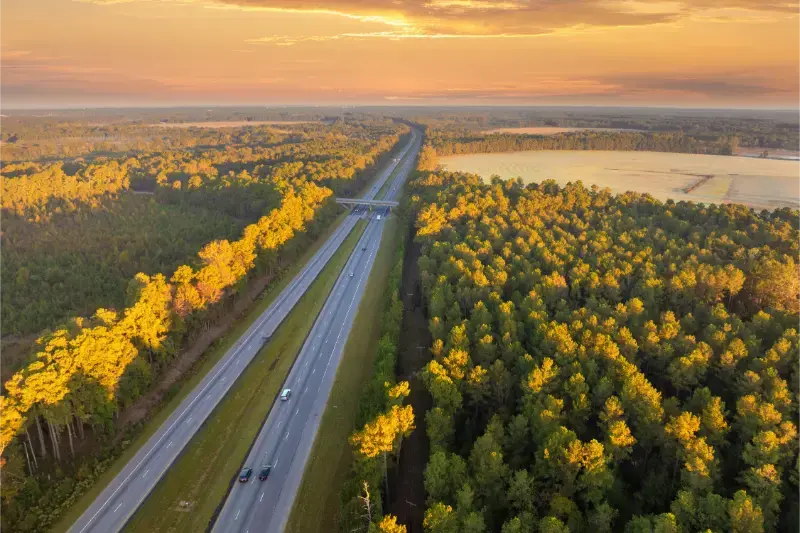
Build lunch and playground stops into long transfers before everyone is tired. A two-hour drive on paper can become three with traffic and family stops, and mountain routes are slower than interstate miles. The 10-day North Carolina road trip shows how to pace the state.
Where to stay with kids
Compare available accommodation for your dates, budget and preferred location before you finalize your route.
Prioritize location, parking, breakfast or kitchen access and the ability to return to the room midday. In the mountains, Asheville, Boone and Bryson City are practical. On the coast, central Outer Banks towns, Wilmington and the Crystal Coast provide the broadest mix of services. In cities, staying near the attractions you actually plan to visit is worth more than choosing a hotel only because it is cheaper on the opposite side of the metro area.
Affiliate disclosure: we may earn a commission from qualifying bookings at no extra cost to you. Compare family-friendly stays across North Carolina and filter for the room layout, parking and cancellation conditions your family needs.
A sample seven-day family plan
For a mountain-focused week, spend three nights around Asheville, two around Bryson City or Cherokee and two in Boone or Blowing Rock. For a coastal week, choose four or five nights in one Outer Banks base and add two nights on Ocracoke or in Beaufort. For a mixed trip, keep it simple: three nights Asheville, one or two nights in the Triangle and three nights near Wilmington.
The specific attractions matter less than preserving downtime. Children often remember a hotel pool, a beach sunset or a roadside picnic as vividly as the ticketed attraction adults planned for months. Leave space for those moments.
Family safety and practical preparation
Carry refillable water bottles, sun protection, light rain layers, basic first aid and offline directions. On the coast, check rip-current and tropical weather information. In the mountains, verify road closures and trail conditions. Around waterfalls, stay away from the edge of wet rock and moving water. For ferries or timed attractions, keep confirmations available offline.
A family trip becomes much easier when one adult is not constantly solving avoidable logistics. Pack a small day bag the night before, decide where breakfast will happen and know the first parking destination before leaving the hotel.
Continue planning North Carolina
Pair this family overview with the North Carolina beaches guide, High Country guide and Wilmington guide to build an itinerary around your children’s ages rather than around a generic checklist.