

Idaho is much larger than it looks when a map compresses the mountains, and a good 10-day road trip should not try to cover the entire state from Coeur d’Alene to the Utah line. For a first visit, the most efficient route focuses on southern and central Idaho: Boise, the Sawtooths, Sun Valley, Craters of the Moon and the Snake River Canyon. That loop gives you city time, alpine scenery, volcanic landscapes, hot-spring country and major waterfalls without spending every day on the highway.
This itinerary assumes a rental car, summer or early-autumn conditions and moderate interest in hiking. It can be adapted for families, winter travel or slower pacing. The key principle is to keep several two-night bases instead of changing hotels every day.
- 1Day 1: arrive in Boise and keep the first evening easy
- 2Day 2: Boise Greenbelt, museums and foothills → Return the car with enough time for airport procedures rather than ending the trip wit…
- 3Day 3: Boise to Stanley with scenic stops
- 4Day 4: Redfish Lake and a Sawtooth hike
- 5Day 5: Stanley to Sun Valley over Galena Summit
- 6Day 6: Sun Valley and Ketchum
- 7Day 7: Craters of the Moon and on to Twin Falls
- 8Day 8: Shoshone Falls and Snake River Canyon
- 9Day 9: Bruneau Dunes or a slower southern Idaho day
- 10Day 10: Boise departure or an extra city morning
Day 1: arrive in Boise and keep the first evening easy
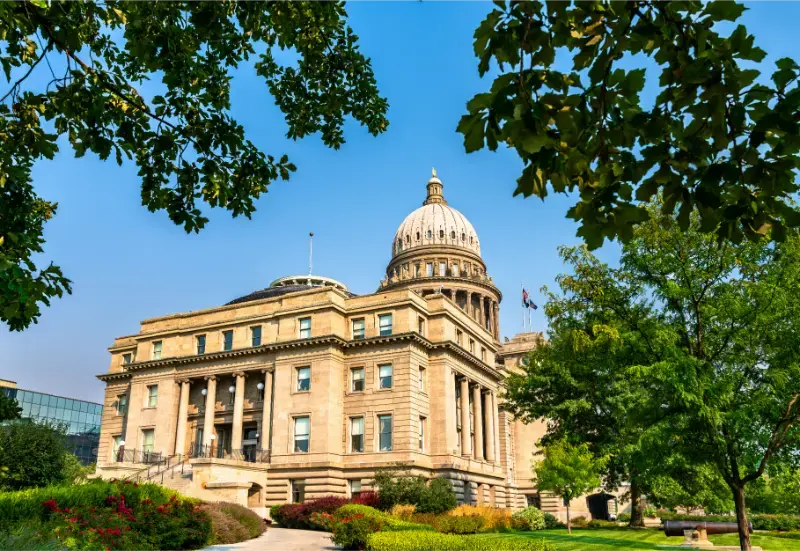
Collect the rental car only if you need it immediately, check into a downtown hotel and walk the Capitol, Basque Block and central streets. After a flight, the goal is orientation rather than a packed sightseeing list.
Use dinner to reset your schedule and buy any road-trip supplies that are awkward to find in mountain towns: snacks, water, sunscreen, basic first-aid items and a phone charger for the car.
Day 2: Boise Greenbelt, museums and foothills
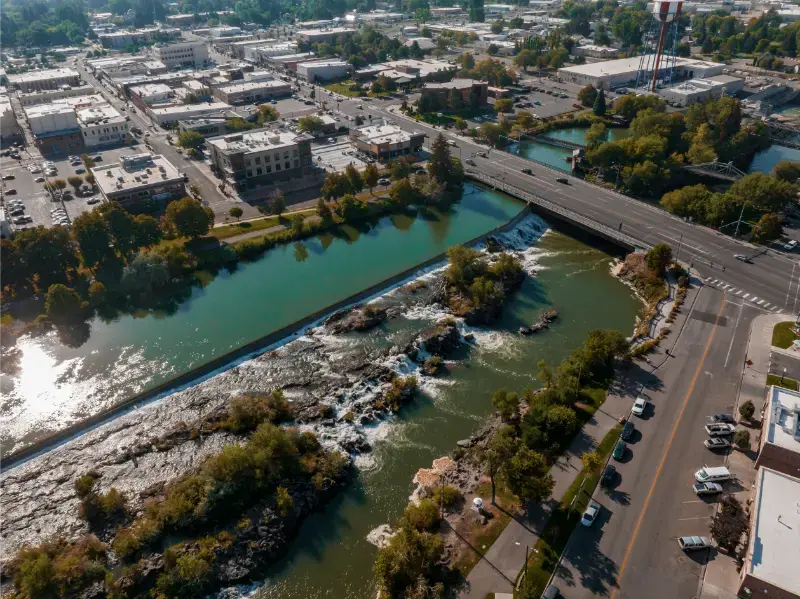
Spend the morning on the Boise River Greenbelt by bike or on foot, then choose the Idaho State Museum or Old Idaho Penitentiary for the hotter part of the day. Finish with a short foothill walk if temperatures and trail conditions cooperate.
Read the full Boise guide before deciding whether you need a second city night or want to leave early the next morning.
Day 3: Boise to Stanley with scenic stops
The drive to Stanley is part of the trip, not dead time. Leave Boise with a full tank, check Idaho 511 and allow room for river and mountain stops. Arrive early enough to see the Sawtooth skyline in daylight and settle in before dinner.
If mountain weather is poor, keep the day flexible and spend more time in lower-elevation communities rather than racing a storm into Stanley.
Day 4: Redfish Lake and a Sawtooth hike
Use the morning for a trail suited to your group, then spend the afternoon around Redfish Lake. Do not combine the hardest available hike with a long evening drive; this is one of the nights when staying in the same bed improves the trip.
The Stanley and Sawtooth guide explains lake access, hiking choices and wilderness planning in more detail.
Day 5: Stanley to Sun Valley over Galena Summit
Follow Highway 75 south, stopping at established overlooks around Galena Summit. The drive is not long, but the scenery deserves a half day. Reach Ketchum with enough time to walk the center and have a relaxed evening.
If everyone still has energy, ride a short section of the Wood River Trail. Save Bald Mountain or a longer hike for the next morning rather than forcing it into arrival day.
Day 6: Sun Valley and Ketchum
Choose one major outdoor activity: hiking, biking, lift-assisted mountain time or a winter ski day. Pair it with town rather than adding another long scenic drive. This creates a useful recovery day in the middle of the road trip.
The Sun Valley and Ketchum guide includes seasonal tradeoffs and lodging options in Ketchum, Sun Valley and Hailey.
Day 7: Craters of the Moon and on to Twin Falls
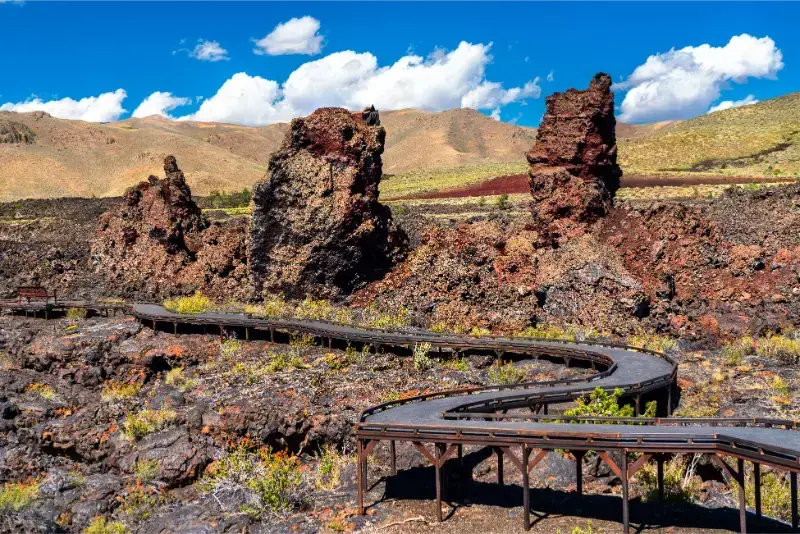
Leave the Wood River Valley for Craters of the Moon. Allow three to four hours for the Loop Road, visitor center and several short trails. If caves are open and you want to enter one, obtain the required cave permit at the visitor center.
Continue to Twin Falls before dark. This is a moderately full day, so resist adding unrelated detours. The transition from mountains to lava to the Snake River Plain is already the experience.
Day 8: Shoshone Falls and Snake River Canyon
Start at Shoshone Falls, especially if you are traveling in spring when flows are usually stronger. Continue to Perrine Bridge and the canyon-rim trail, then choose a waterfront activity or a slower afternoon.
The Twin Falls guide explains why waterfall flow changes by season and how to add Thousand Springs with more time.
Day 9: Bruneau Dunes or a slower southern Idaho day
If the weather is mild, detour to Bruneau Dunes for dune hiking and, on the right date, an observatory program. In hot summer weather, visit early and return toward Boise before the sand becomes extreme.
If the group is tired, skip Bruneau and use the day for Thousand Springs, a relaxed drive or an early return to Boise. A road trip improves when optional stops are genuinely optional.
Day 10: Boise departure or an extra city morning
Keep the final morning close to Boise if you have a flight. Use any spare time for breakfast, the Greenbelt or a museum you skipped on day two. Return the car with enough time for airport procedures rather than ending the trip with a rushed drive.
If your flight is late, a short trip into the foothills can work, but avoid a distant excursion that depends on perfect traffic or road conditions.
How to add McCall without making the route too fast
McCall is worth visiting, but adding it to a 10-day loop means removing a night elsewhere. The cleanest variation is Boise–McCall for two nights, then McCall–Stanley, followed by Sun Valley, Craters and Twin Falls. That version needs either faster pacing or one fewer night in Boise/Sun Valley.
Read the McCall and Payette Lake guide before deciding whether lake time matters more than an extra hiking day in the Sawtooths.
Why Coeur d’Alene is not in this 10-day loop
Northern Idaho is excellent, but Coeur d’Alene is far enough from Boise and the central mountains that squeezing it into this route creates multiple long transfers. A better trip gives the Panhandle its own segment with Coeur d’Alene, Sandpoint, Lake Pend Oreille and rail trails.
If you have 14 to 17 days, the Coeur d’Alene guide can become the start or finish of a longer north-to-south Idaho journey.
Road-trip budget priorities
Fuel and lodging are the biggest variable costs on this loop. Boise and Twin Falls provide broad hotel choice, while Stanley can be much more expensive or limited. Book the scarce mountain nights first and use the cities for value.
Pack picnic supplies for transfer days. Buying every meal in a resort town can be costly and also ties the schedule to restaurant hours when you might prefer to stay at a lake or trailhead.
Driving safety on mountain days
The route uses paved highways, but mountain curves, wildlife and construction can slow progress. Avoid setting a hotel check-in time that requires speeding through the final scenic hour of the day.
If thunderstorms, wildfire smoke or road incidents change the plan, shorten the day. Missing one optional stop is far better than turning a vacation into a late, tired drive on an unfamiliar road.
Where to stay
Compare available accommodation for your dates, budget and preferred location before you finalize your route.
The itinerary works best with two nights in Boise, two in Stanley, two in Ketchum/Sun Valley and two in Twin Falls, plus one flexible night near Boise, McCall or Bruneau depending on your route. Avoid one-night stays in every destination; unpacking time quickly becomes a hidden cost.
Book Stanley and Sun Valley first because mountain lodging has less inventory than Boise or Twin Falls. Keep at least one reservation flexible if wildfire smoke or weather could force a route change.
Check hotels and places to stay in Idaho, USA.
Getting there and getting around
Boise Airport is the simplest round-trip gateway for this loop. A normal passenger car is sufficient for the paved route, though winter trips need appropriate tires and a very different schedule. Do not take a rental car onto rough forest roads unless the vehicle and contract allow it.
Download offline maps, use Idaho 511 for road conditions and refuel before mountain segments. Distances are manageable, but services can be widely spaced in central Idaho.
Best time to visit
Late June through September is easiest for this exact high-country route. July and August offer the most reliable mountain access but also the highest demand and possible wildfire smoke. September can be excellent with cooler nights and fewer crowds.
Spring is better for Shoshone Falls than for high Sawtooth trails. Winter requires a completely different itinerary focused on Boise, Sun Valley, McCall and maintained roads rather than the same summer loop.
How to fit this into an Idaho road trip
This itinerary is designed as the backbone of an Idaho trip. Use the individual destination guides to decide where your extra nights belong rather than adding new stops indiscriminately.
For seasonal planning before booking, read the best time to visit Idaho guide, especially if waterfalls, skiing or high-elevation hiking is a priority.
Useful official resources
Frequently asked questions
Is 10 days enough for Idaho?
Yes for a focused southern and central loop. It is not enough to cover both the Panhandle and every major mountain region without spending too much time driving.
How much driving is involved?
Most transfer days are manageable, but mountain highways and scenic stops make them longer than raw mileage suggests. Plan by time and daylight, not only distance.
Should you include Coeur d’Alene?
Only if you extend the trip or drop several central/southern stops. Northern Idaho deserves more than a rushed overnight.
Do you need a four-wheel-drive vehicle?
Not for this paved itinerary in normal summer conditions. A standard car is adequate, but weather and any optional unpaved side roads can change vehicle needs.